
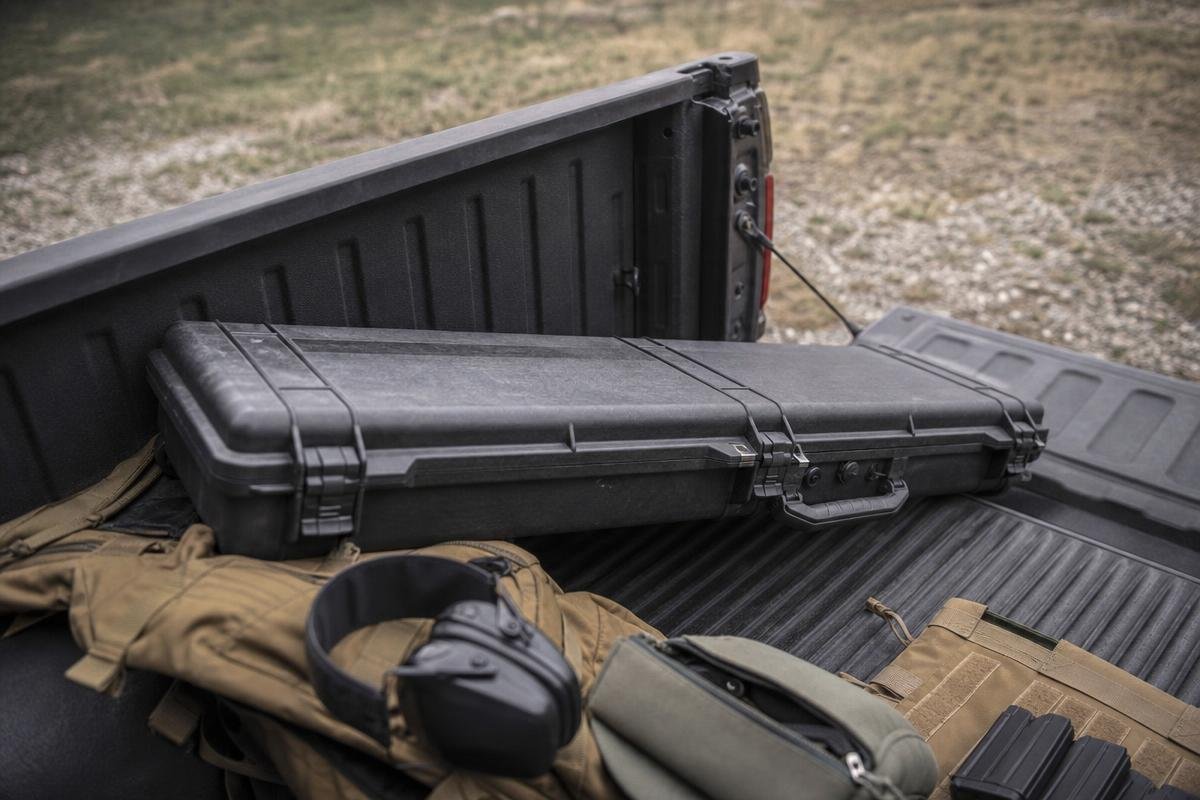
We help shooters compare protective firearm cases for rifles, pistols, optics, magazines, and other range equipment. The right gun case for transport supports an unloaded firearm, protects mounted accessories, and keeps loose gear from striking it on the way to the range. Before any trip, review the specific facility’s current arrival, uncasing, and safety procedures. Need help with rifle, upper, or optic compatibility questions for your range setup?
Key Takeaways
- Choose interior length and depth based on the firearm’s actual configured dimensions, including its optic, sling, light, and muzzle device.
- Hard cases offer better protection from stacking and impact, while padded soft cases can be practical for controlled vehicle-to-bench trips.
- Support the firearm at durable contact points, not against optic turrets, lights, controls, or exposed sling hardware.
- Plan separate spaces for magazines, ammunition, tools, hearing protection, and other hard range gear.
Why the Right Gun Case Matters for Range Transport
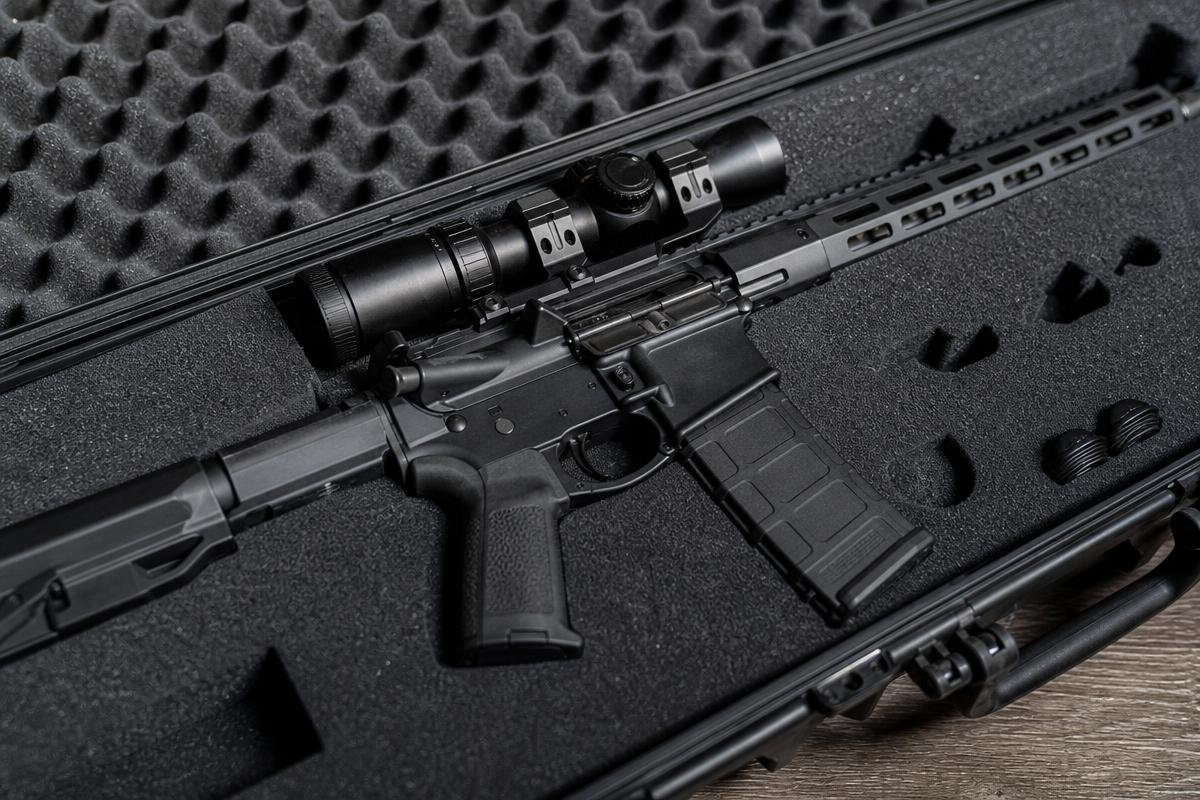
A case can close while still allowing an unloaded rifle, pistol, optic, magazines, or muzzle device to shift during the drive. That movement can mark an optic, stress a sling mount, or allow hard equipment to contact the firearm. A properly fitted transport case holds the fully configured but unloaded firearm in place.
Your case should match real-world length, height, interior layout, carrying method, and the kind of range day you have planned. A scoped AR-15 needs lid clearance above its optic. A compact handgun needs a pistol case with retention that does not crush a red dot or weapon light. A sling-equipped rifle needs room that does not pinch the sling or leave the rifle loose.
AR15Parts.com ships from our facility at 4000 Texoma Pkwy, Denison, TX 75020. If you are comparing cases before a trip, have the actual unloaded, cased setup measurements ready, including the optic height and overall length. Start with the dimensions of your complete AR-15 rifle, then select a case that protects the setup from vehicle to bench.
What Size Gun Case Do I Need for an AR-15?
Measure the rifle in its normal transport configuration, then choose a case with clearance at the muzzle, stock, optic, and lid. Barrel length alone is not enough for selecting a rifle case.
Measure an AR-15 in Its Actual Transport Setup
Set the stock where you normally transport the rifle, then measure from the end of the muzzle device to the rear of the stock. Next, measure depth from the bottom of the pistol grip or magazine well to the highest point of the optic, mount, turret, or folded sight.
Use this sizing checklist before buying:
- Overall rifle length with stock position, muzzle device, and mounted accessories included.
- Maximum height at the optic, scope mount, red dot, backup sight, or bipod.
- Space for the sling, especially at swivels, QD mounts, and buckle hardware.
- Clearance around a suppressor mount or longer muzzle device.
- Enough lid depth that the case closes without pressing on the firearm.
Leave room around optic turrets, the charging handle, sling swivels, weapon lights, and the muzzle. Those parts should not touch the shell or lid. A longer handguard, taller scope mount, suppressor mount, or different sling arrangement can change the interior size you need.
Size a Pistol Case for Support, Not Empty Space
A pistol case should hold the handgun firmly without crushing the slide, optic, or controls. Too much open space lets the pistol move in transport. Too little space can put pressure on a red dot, light, threaded barrel, or magazine release.
Choose a pistol case with deliberate room for magazines, eye protection, and small gear only when the layout separates those items from the handgun. Keep loaded magazines and loose accessories from contacting the pistol. Foam-lined cases work best when the cutout follows the firearm and its installed accessories.
Pre-cut foam is not automatically a proper fit. A cutout that is too tight creates pressure points, while one that is too loose allows movement. Test the fit by closing the case gently, reopening it, and checking that no foam has shifted onto the optic, controls, or slide.
Is a Hard or Soft Gun Case Better for Range Transport?
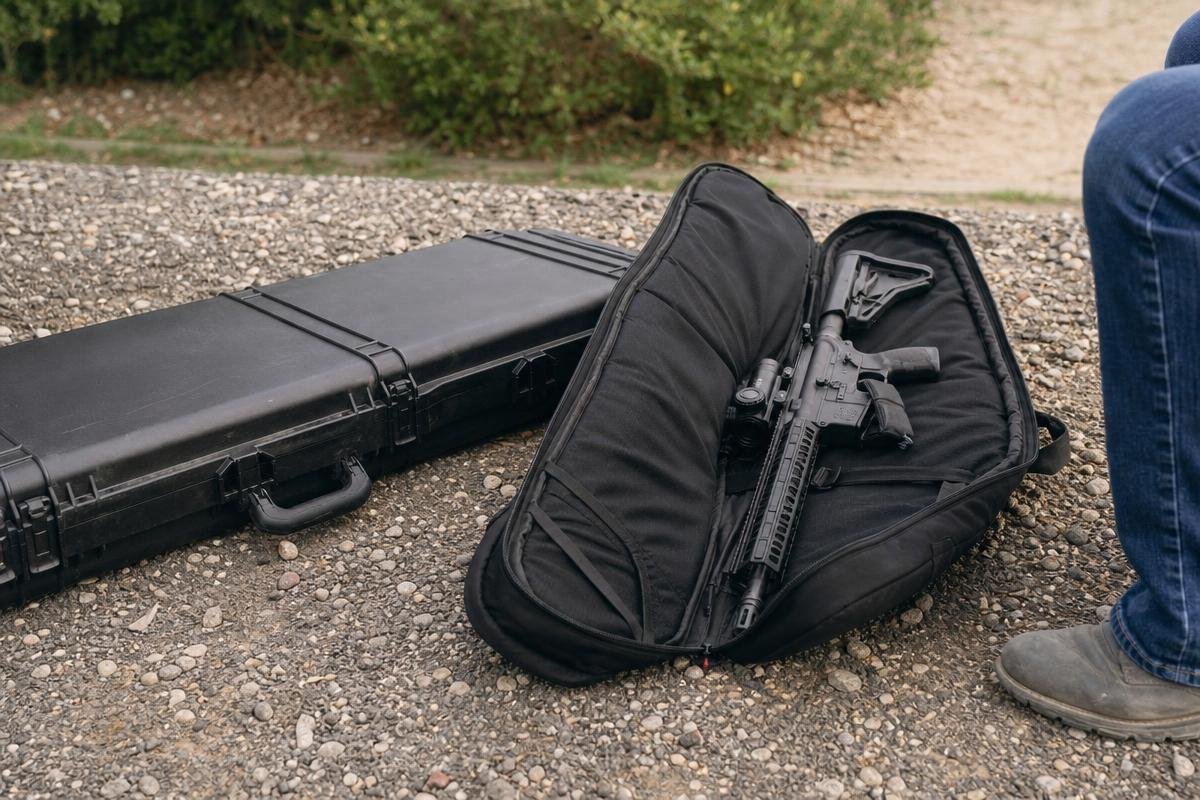
Hard cases are generally better for impact and stacking protection, while padded soft cases are often easier to carry for controlled vehicle-to-range travel. The better choice depends on your firearm, optic, vehicle load, and handling conditions.
| Setup or Trip | Best Starting Point | What to Check |
|---|---|---|
| Scoped AR-15 with mounted accessories | Hard rifle case | Interior length, optic depth, foam support, latch security |
| Simple vehicle-to-bench range session | Padded soft case | Padding density, zipper condition, carry strap, separate pockets |
| Pistol with red dot and weapon light | Fitted pistol case | Cutout clearance around optic, light, magazines, and controls |
| Multiple firearms and heavy range gear | Separate cases or compartments | Prevent ammunition, tools, and hard objects from contacting firearms |
| Longer trip or cargo that may shift | Hard case | Rigid shell, handle, wheels if needed, and model-specific lock points |
When a Hard Gun Case Makes Sense
A hard gun case is a strong choice for an AR-15 when it may be stacked, bumped, or carried with other equipment. Its rigid shell helps protect mounted optics, lights, bipods, and spare magazines from impact better than a padded sleeve alone.
Check for recessed latches that will not snag, a solid carry handle, wheels on longer cases, and lockable points if that model includes them. Waterproof, dustproof, airtight, and lockable ratings vary by model, so verify the manufacturer specifications before buying.
A hard protective case is especially useful for a scoped rifle or a configured rifle with accessories that need more support than a soft case can provide.
Where a Padded Soft Case Fits
A padded soft case cannot prevent crushing or provide the rigid support of a hard shell. It can work well for controlled vehicle-to-range movement when you carry the firearm directly, avoid stacking gear on it, and need abrasion protection with less bulk.
Look for dense padding, stitched carry handles, a shoulder strap, and separate pockets that keep magazines or small accessories from contacting the firearm. Check the zipper path and seams, because a case that opens easily at home may be less manageable when carrying ear protection, targets, and other range items at the same time.
For help with rifle, upper, and optic compatibility questions, contact our team at (888) 706-0633.
How Should a Case Interior Hold Firearms and Gear?
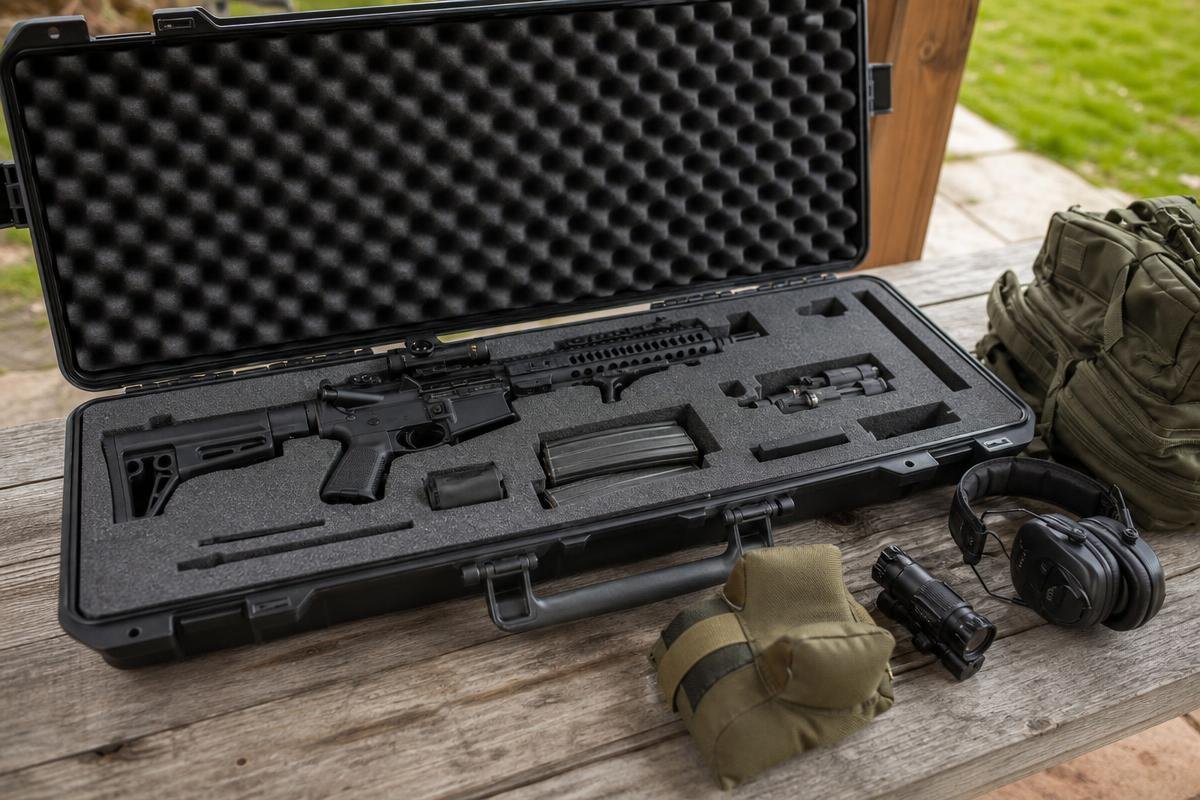
A firearm case should stop parts from contacting each other while avoiding pressure on sensitive components. Support the firearm at stable surfaces, such as the stock, receiver, handguard, and barrel channel.
Pre-Cut Foam Must Match the Firearm
Pre-cut foam is useful only when the profile actually matches your firearm. A pistol case cut for a bare handgun may not fit a red dot, weapon light, extended magazine, or threaded barrel without placing pressure on those parts.
Check that foam remains around the optic housing and light body without pressing into them. The firearm should lift out without dragging against tight foam edges. For a rifle, compare interior dimensions with the setup you carry, including the optic and folded or fixed stock. Review your rifle’s configuration before choosing its case size.
Plan Custom Foam Before Removing Material
Customizable foam needs a layout before you remove material. Set the unloaded firearm and accessories on the foam first. Leave a solid border around each cavity and enough material between items to prevent loose edges.
For rifles, let foam support the stock, receiver area, handguard, and barrel contour where appropriate. Avoid making the optic, scope mount, charging handle, safety selector, or light the primary contact point. An oversized cutout allows movement, while an overly tight one can place pressure on a component when the lid closes.
Use Separate Compartments for Range Gear
Keep magazines, ammunition boxes, hearing protection, cleaning gear, and small tools out of the firearm’s padded area. Compartment-style carrying cases help prevent hard objects from striking the receiver, optic, or finish while you load and unload the vehicle.
- Place magazines in dedicated sleeves or divided pockets.
- Keep tools and cleaning rods in zippered compartments.
- Use a separate padded space for a pistol case or handgun.
- Pack ammunition according to applicable laws and the range’s posted policies.
For range trips, organize the interior before loading the vehicle. Heat, dust, and sudden wet conditions can make it especially important to avoid returning damp or dirty gear to a closed case. Check current legal requirements before traveling.
How Should You Match a Case to Range Days, Field Use, Storage, and Travel?
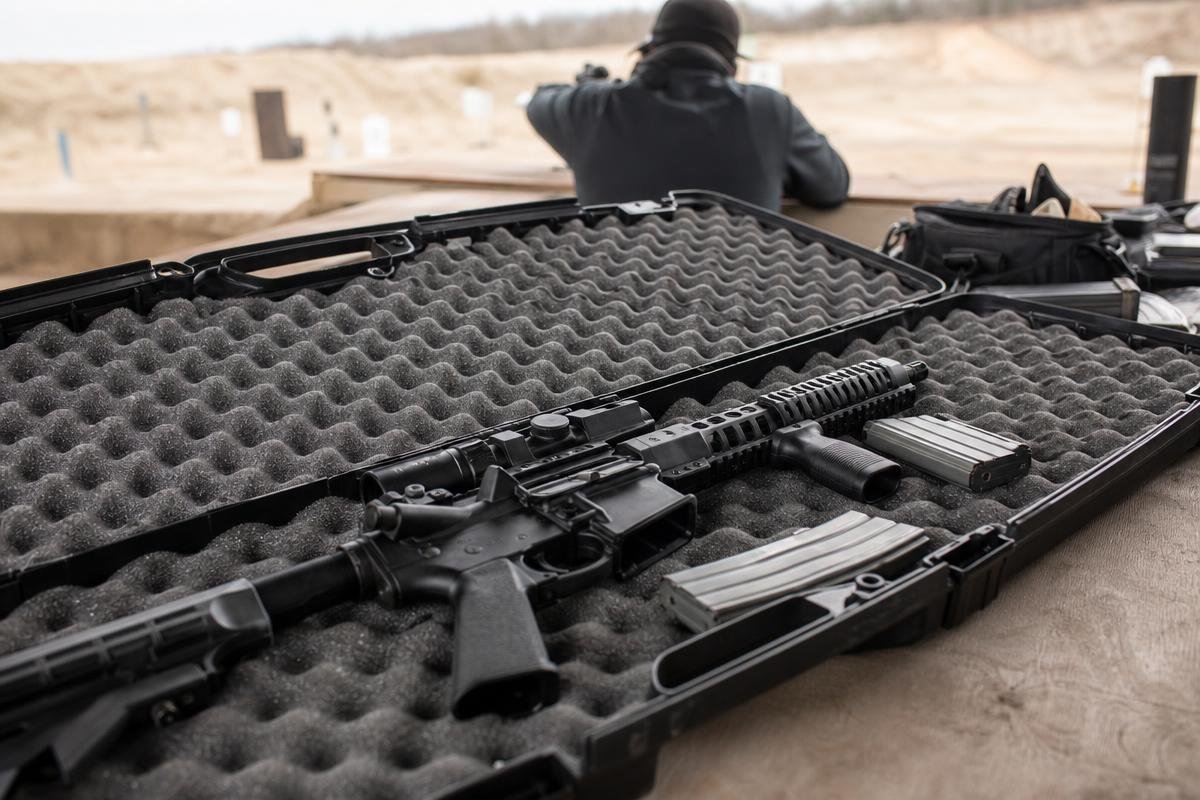
The best case for transport fits the trip as well as the firearm. A routine range session may need manageable carry and quick bench access, while storage and longer travel call for more attention to retention, moisture, and model-specific features.
Range Days Need Easy Access and Manageable Carry
A rifle case for range transport should be easy to carry from your vehicle and simple to open only where the facility permits uncasing. Choose handles that sit comfortably in your hand, plus room for eye protection, ear protection, magazines, and a chamber flag without allowing those items to strike the rifle.
Soft carrying cases can work for protected vehicle-to-bench movement. A hard case makes more sense when other gear may stack against the rifle or when the firearm has a taller optic and more accessories.
Scoped Rifles Need Clearance Around the Optic
A scoped rifle loses protection if the lid presses on the optic. Measure the rifle with the scope, rings, mount, sling, and bipod installed, then choose interior depth that leaves clearance around the scope body, adjustment turrets, and ocular end.
Foam that supports the rifle at the stock and handguard helps prevent contact with the optic. That reduces avoidable bumps, but any hard impact still calls for a function check and a zero check before serious shooting. This applies to precision builds and configured AR-style rifles alike.
Travel and Storage Require Model-Specific Checks
Travel and storage place more demands on firearm cases than a standard range day. Before relying on a case, verify the exact model’s lock points, hinge and latch construction, interior retention, and any carrier or destination requirements that apply to your trip.
For longer storage, keep the firearm clean and dry before it goes into the case. Check the interior periodically for moisture, compressed foam, and hardware that has loosened. A protective case can reduce damage risk, but it does not replace routine inspection and maintenance.
Need help with rifle, upper, or optic compatibility questions? Call us at (888) 706-0633.
A Practical Packing Checklist Before You Leave for the Range
Run this final check before your firearm transport case goes into your vehicle. Confirm each firearm is unloaded, handled in a safe direction, and cased in accordance with the facility’s posted procedures.
Confirm the Firearm and Case Are Ready
- Check the chamber, action, and magazine well before casing the firearm.
- Confirm the lid closes without force. A bent sling, tall optic, inserted magazine, or muzzle device can place pressure on the firearm.
- Inspect zippers, latches, handles, shoulder straps, and foam for damage before loading the vehicle.
- Make sure lock points engage if your case has them. Do not rely on a partly closed zipper or latch.
A properly fitted case protects rifles and optics during normal range travel. Compare your rifle’s assembled dimensions, including accessories, before selecting a new case.
Secure Loose Gear Before Loading the Vehicle
- Place magazines, ammunition boxes, tools, cleaning rods, and batteries in separate compartments or secured pouches.
- Keep hard items away from glass, turrets, charging handles, and exposed finishes.
- Secure hearing protection, eye protection, and targets so they cannot move against firearm cases during the drive.
- Check that each carrying case stays flat and cannot slide or tip in the vehicle.
First-time visitors should review the facility’s arrival, bench, and case-handling instructions before leaving home or work. Follow the posted rules at that location, since check-in and uncasing practices can differ.
If you need help with rifle, upper, or optic compatibility questions, contact AR15Parts.com at (888) 706-0633.
What to Consider Before Heading to a Range
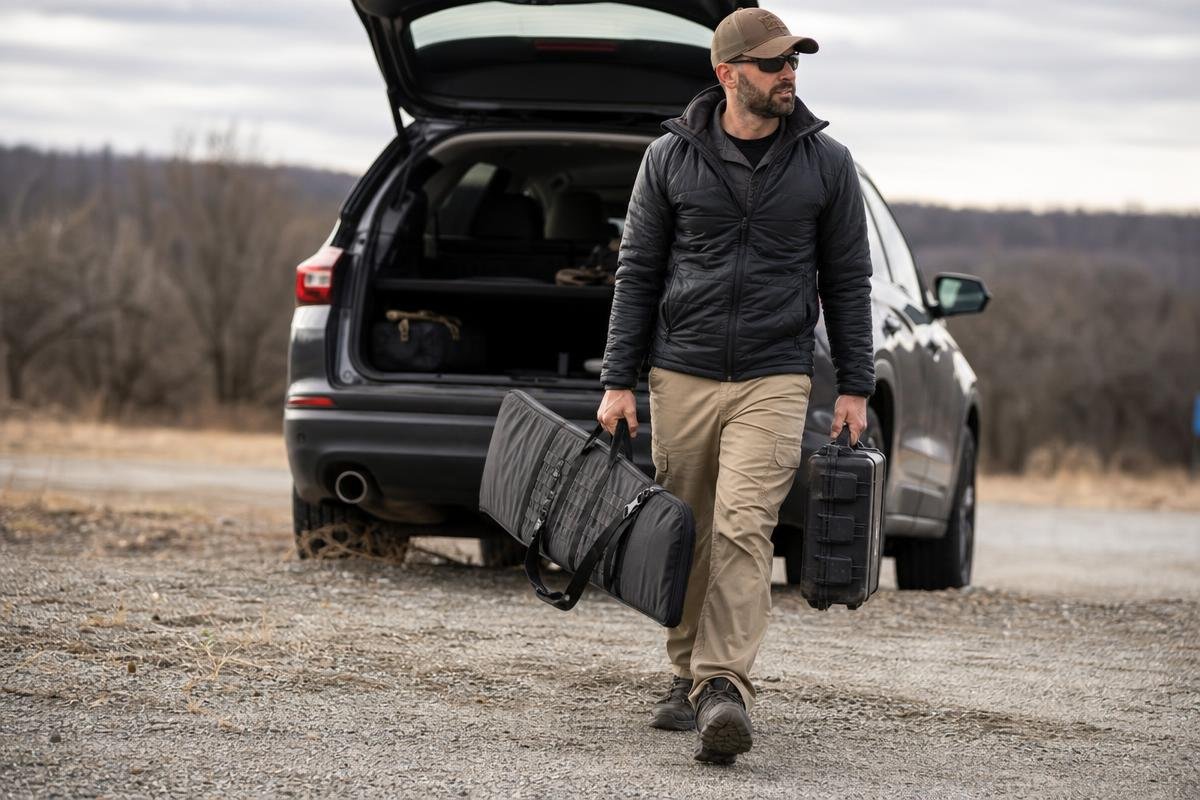
Plan your transport setup around the full trip, not just firearm protection. Shooters leaving home or work should be able to move a cased rifle, hearing protection, eye protection, magazines, and other equipment safely from vehicle to firing line.
Carry the Full Load Safely From Vehicle to Firing Line
A rifle case needs a carrying method that matches its loaded weight. Check whether handles, shoulder straps, and wheels are included on the exact case model. Do not assume every hard case has wheels or every soft case includes a padded strap.
Weather can shift from heat and dust to rain during a range day. Keep optics, ammunition, and electronics in protected interior compartments or separate carrying cases. Let wet or dusty gear dry and clean it as needed before sealing it back inside a case, since not every model is waterproof or dustproof.
Check the Range's Posted Case-Handling Procedures
Ranges do not all handle cased firearms the same way. Check each range’s current arrival, unloading, chamber-clear, muzzle-direction, and case-handling procedures before you leave.
First-time visitors should review range planning guidance separately from legal research. If you need help with complete AR-15 rifle or upper compatibility questions, contact AR15Parts.com at (888) 706-0633.
Frequently Asked Questions
What Size Case Do I Need for an AR-15?
Buy a gun case for transport that fits your complete configured AR-15, not its catalog barrel length. Measure it with the stock in your normal transport position. Include optic height, sling mounts, muzzle device, and clearance at both ends.
Leave enough interior room so foam does not compress your charging handle, optic, or controls. A rifle with a tall scope mount often needs more case depth than a basic carbine.
Is a Hard Case Better Than a Soft Case?
A hard gun case is better for impact protection, stacked cargo, and longer travel. Rigid walls and a lockable design protect firearms from crushing pressure that can damage an optic or bend a sling swivel.
A soft case is easier to carry for a simple range trip. Pick one with padding, full-length zippers, and separate pockets for magazines. Match case construction to planned handling, not just rifle length.
Should Foam Touch My Optic or Controls?
Foam should support your firearm without pressing on turrets, red-dot housings, safety selectors, or mounted lights. A foam-lined gun case needs contact along the stock, handguard, receiver, and barrel contour.
After a hard impact, check optic mounts, fasteners, and zero before shooting. Run a basic function check with the firearm unloaded before packing it again.
Can I Pack Ammunition and Magazines in the Same Case?
You can pack magazines and ammunition in the same case only if applicable laws and your range's policies allow it. Keep ammunition in factory boxes or secure containers. Keep loaded magazines controlled and separated from loose gear.
Review current transport requirements and range procedures before leaving. If your setup includes a new rifle or upper, compare its fit against our AR-15 complete rifles and configured accessories before selecting a case.
What Should I Do Before Arriving at a Range?
Review the facility's posted procedures and its first-time visitor checklist before arriving at a range. Confirm case-handling rules, chamber flag requirements, ammunition restrictions, and where firearms may be uncased.
How Should I Store a Gun Case Between Range Trips?
Empty the case after each trip, wipe away moisture and debris, and let the interior dry before closing it for storage. Inspect foam, zippers, latches, and lock points for damage. Store the unloaded firearm according to applicable laws and keep the case where unauthorized users cannot access it.
Need help selecting parts and accessories for your next range setup? Contact AR15Parts.com at (888) 706-0633. AR15Parts.com is based at 4000 Texoma Parkway, Denison, TX 75020.
Ready to Get Started with AR15Parts.com?
Call (888) 706-0633 to speak with our team directly. We're ready to answer your questions, walk you through your options, and help you find the right solution for your needs. Whether you're just starting to plan or ready to move forward, we'll make the process simple and stress-free. Reach out today and let's talk about how we can help.