
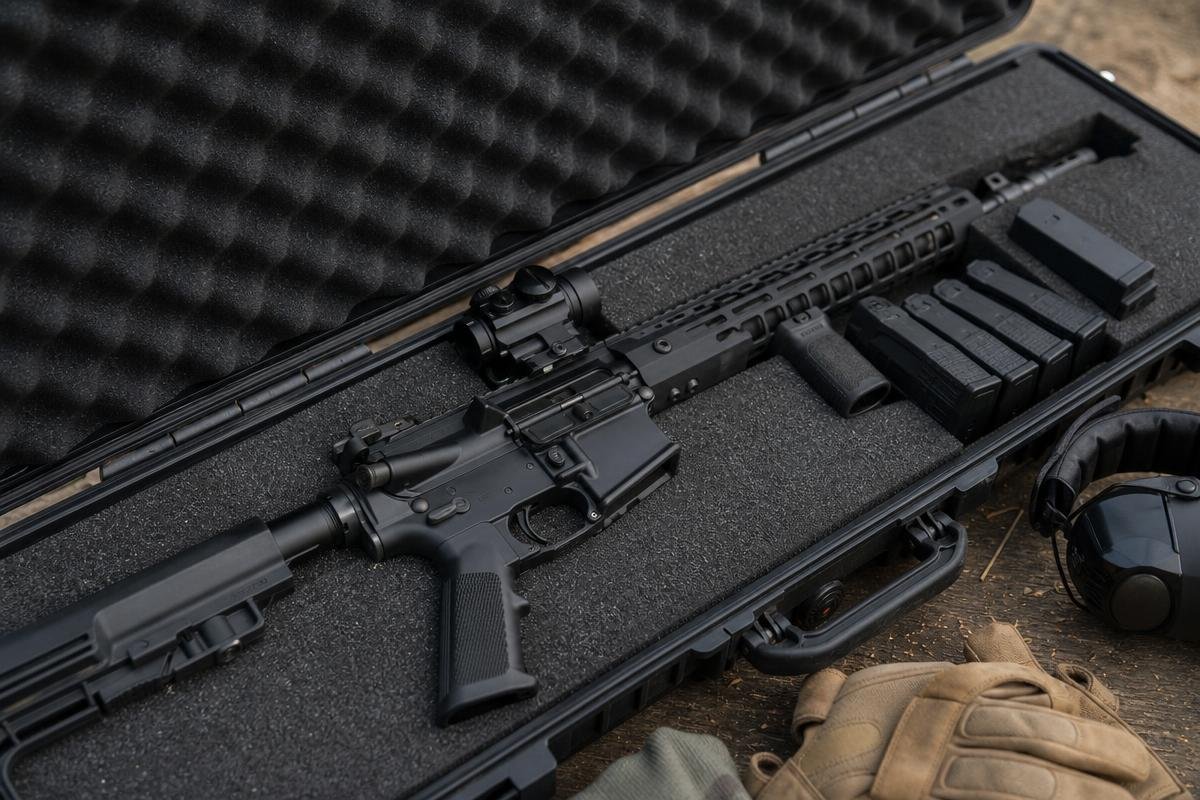
The right AR-15 rifle case is sized for your rifle as it is actually carried, including its stock position, muzzle device, optic, sling hardware, and other mounted accessories. Start by measuring the assembled rifle, then compare those numbers with a case’s usable interior dimensions. We ship from our facility at 4000 Texoma Pkwy, Denison, TX 75020.
Need a case-fit check before you buy? Call us with your rifle’s outside measurements for help confirming its configured dimensions.
Key Takeaways
- Measure your AR-15 with the stock configured as you plan to carry it.
- An AR-15 rifle case needs enough interior height to protect mounted optics and sights.
- Hard cases add impact protection, while padded rifle bags reduce bulk for routine range trips.
- Foam, locks, and storage compartments should match the gear you carry with your rifle.
What Size AR-15 Rifle Case Do I Need?
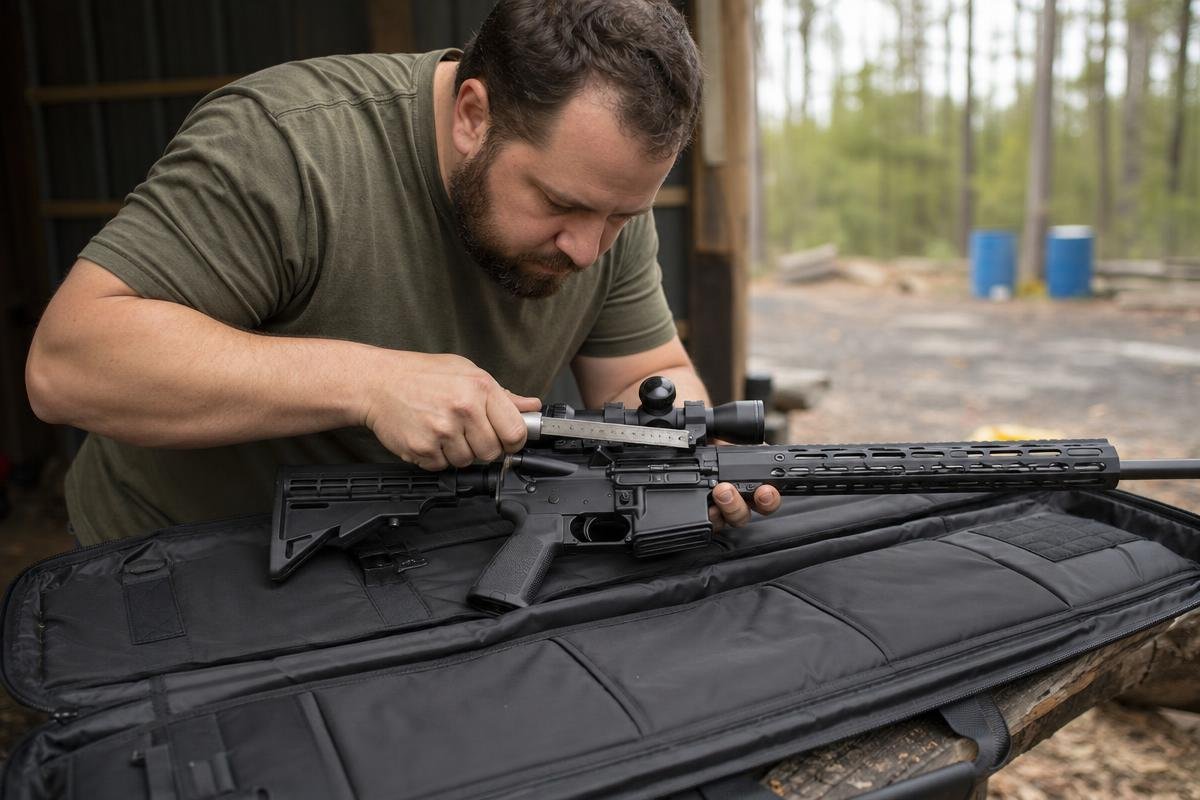
Choose a case with usable interior length longer than your rifle’s fully configured outside length, plus enough width and depth for the optic and padding. As a practical fit rule, leave clearance at both ends and around high points so the rifle is supported by the case rather than pressed into a zipper, wall, or lid foam.
How Do You Measure the Longest Transport Configuration?
Measure from the rearmost point of the stock to the forward-most point of the muzzle device. Set a telescoping stock in its normal transport position first. A collapsed stock changes the number, but it does not help if you normally store or carry the rifle extended.
Measure height from the bottom of the grip or magazine area to the top of the optic. LPVO mounts, red dots with magnifiers, backup sights, bipods, large charging-handle latches, and sling mounts can all create clearance problems. Check the dimensions of your complete AR-15 rifle after accessories are installed.
What Measurements Should You Write Down Before Shopping?
Use the manufacturer’s interior dimensions, not the exterior measurement or case name, to make the final decision. Foam thickness, padded walls, lid contours, and tapered corners reduce the room available inside.
- Overall rifle length, from stock to muzzle device
- Maximum height, from the lowest point of the grip area to the tallest optic or sight
- Maximum width, including side-mounted accessories, sling hardware, or bipod legs
- Stock position during transport
- Whether the rifle will travel assembled, with an upper removed, or beside another rifle
- Required clearance around the rifle, optic, and accessories
Labels such as 38.5-inch, 41-inch, 42-inch, and 48-inch are useful shopping examples, not fit guarantees. A compact carbine may fit a shorter bag with its stock collapsed, while a rifle with a longer barrel, suppressor mount, or optic may need a larger interior. Record the longest and tallest setup you expect to carry, then compare it to each manufacturer’s listed interior length, width, and depth.
For a practical fit check, compare those measurements with the case dimensions you are considering. This helps prevent buying a case that fits the barrel length on paper but leaves no room for the optic, sling, eye protection, or hearing protection.
Is a Hard or Soft AR-15 Case Better for Transport?
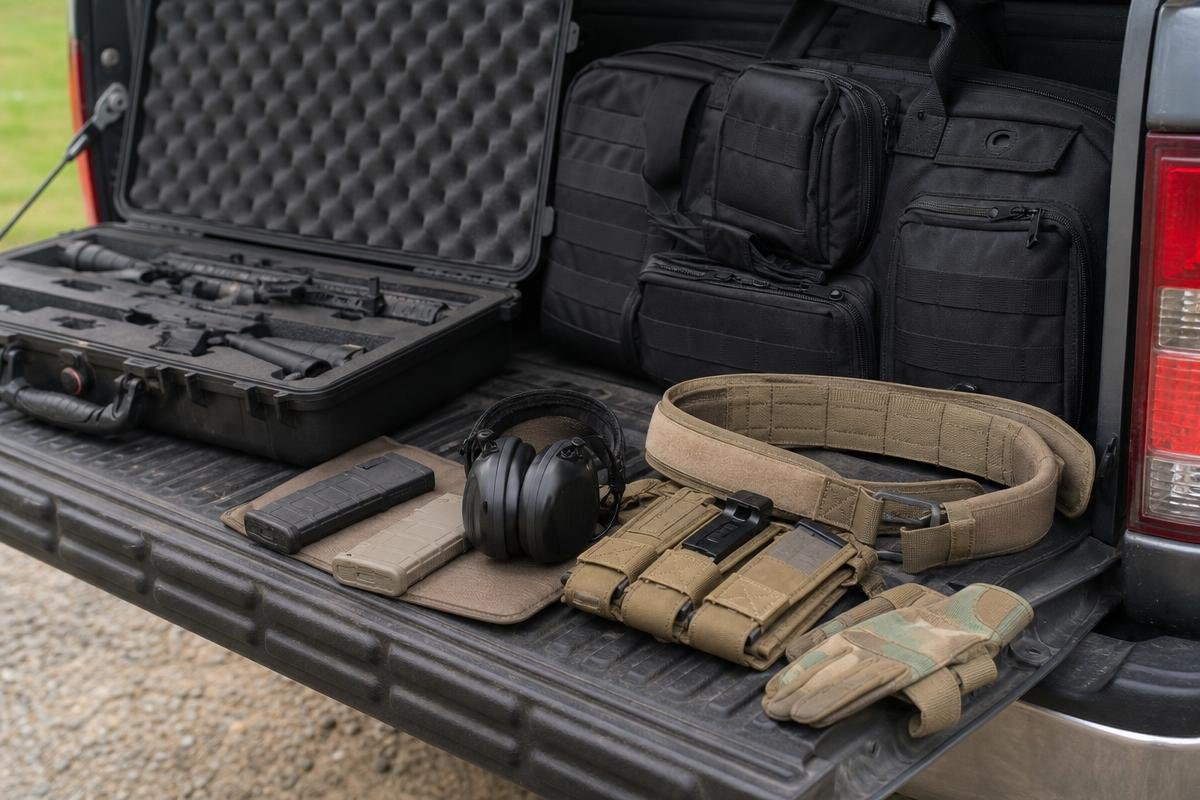
A rigid transport case is generally better when the rifle may be stacked under other equipment, while a padded soft case is often easier for a straightforward range trip with organized gear. Neither style is automatically right for every setup. Choose based on impact risk, storage conditions, carry distance, and the amount of equipment sharing the vehicle.
| Case style | Best for | What to check |
|---|---|---|
| Rigid hard case | Vehicle loading with other equipment, longer storage, and optic-equipped rifles that need crush protection | Usable interior dimensions, foam support, latches, lock provisions, and overall weight |
| Padded soft case | Routine trips where the rifle is carried separately and not buried under heavy gear | Padding thickness, zipper quality, reinforced strap points, internal retention, and pocket layout |
| Double-rifle case | Two rifles or a rifle plus an upper, when each item has a separate protected channel | Full-length divider, retention straps, depth for optics, and contact points between gear |
When Does a Hard Case Make Sense?
A hard case makes sense when other equipment can land on top of the rifle. Its rigid shell and foam support keep the receiver, optic, handguard, and muzzle device from taking direct pressure during equipment-heavy travel or storage.
Check for foam that supports the rifle at several points, not just around the barrel. A rigid case is also a practical choice for a configured rifle with a mounted optic. Measure your complete AR-15 rifle with the stock set to its normal transport position before buying.
When Does a Soft Rifle Case Make Sense?
A padded rifle bag makes sense for lighter range trips and organized vehicle loading. Padded handles, shoulder straps, and exterior pockets can reduce the loose gear you carry separately.
A soft case can protect an optic from routine bumps if the rifle is secured inside and nothing heavy is stacked on it. A single-rifle layout works well for one carbine, magazines, eye protection, and basic tools. It is not the right choice for long storage under stacked gear or situations where the rifle needs rigid crush protection.
What Should You Check in a Double-Rifle Layout?
A double-rifle case is only as protective as its divider and retention system. The two rifles should not touch through a thin divider or shift into each other during loading, carrying, or vehicle travel.
Look for separate padded channels, secure tie-down points, and enough depth for both configured rifles. Optics, charging handles, sling swivels, and controls can strike adjacent equipment if the divider is thin or the retention straps are loose. If you transport an upper and lower separately, the space requirement changes. A short upper may fit diagonally, but its optic and charging handle still need clearance. This matters with complete AR-15 uppers carried beside another rifle.
For questions about current transport rules, consult official state and destination-specific sources before a trip. Case selection is a product-fit decision, not legal advice, and laws can change.
How Should Foam, Locks, and Compartments Protect the Rifle?
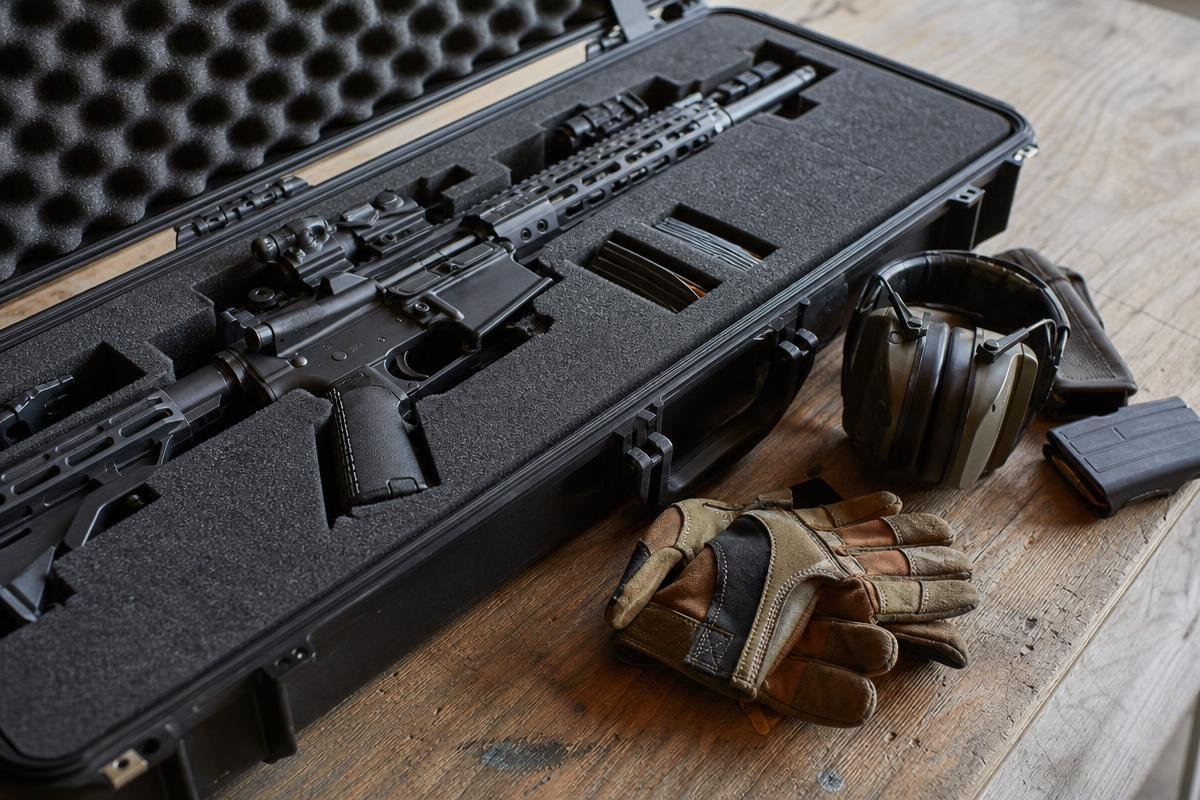
A case that fits the rifle can still allow damage if the rifle shifts inside it. Foam should hold the rifle without pressing on controls, lock hardware should be evaluated on the individual product, and loose equipment should ride in separate pockets or compartments.
How Do You Choose Foam That Stops Movement?
Layered foam or custom-cut foam is usually the best choice for an AR-15 with an optic. The rifle should stay in place without pressure on scope turrets, red-dot housings, magnifiers, charging handles, or exposed adjustment controls.
Basic egg-crate foam cushions the rifle but does little to control side-to-side movement. Pluck foam lets you shape a pocket around a rifle, optic, and stock. It works well for changing setups, but unsupported pluck sections can tear or sag over time.
Custom or laser-cut foam gives a fixed complete AR-15 rifle the most precise support. Check that the lid foam touches lightly. Foam packed too tightly can press on an optic and shift a zero or damage an exposed control.
What Lock Hardware and Storage Features Matter?
Inspect the hasps on the specific case before assuming it accepts a lock. Some cases have padlock holes, while others only have latches. Confirm the manufacturer’s specifications instead of assuming any rigid case is lockable, waterproof, or dustproof.
Keep loose gear out of the rifle cavity. Magazines, eye protection, tools, documents, and spare parts belong in separate compartments or pouches. A loose steel tool or magazine can rub against a receiver, optic, or finish during vehicle loading.
- Use exterior pockets for paperwork and flat items.
- Use padded compartments for optics-related tools and eye protection.
- Keep loaded range bags and loose parts separate from the rifle.
For any legal question, verify current federal, Texas, and destination-specific requirements with official sources or qualified legal counsel. A case’s lock hardware does not by itself determine whether a transport method complies with applicable rules.
What Carry Layout Works Best for Range Trips and Vehicle Loading?
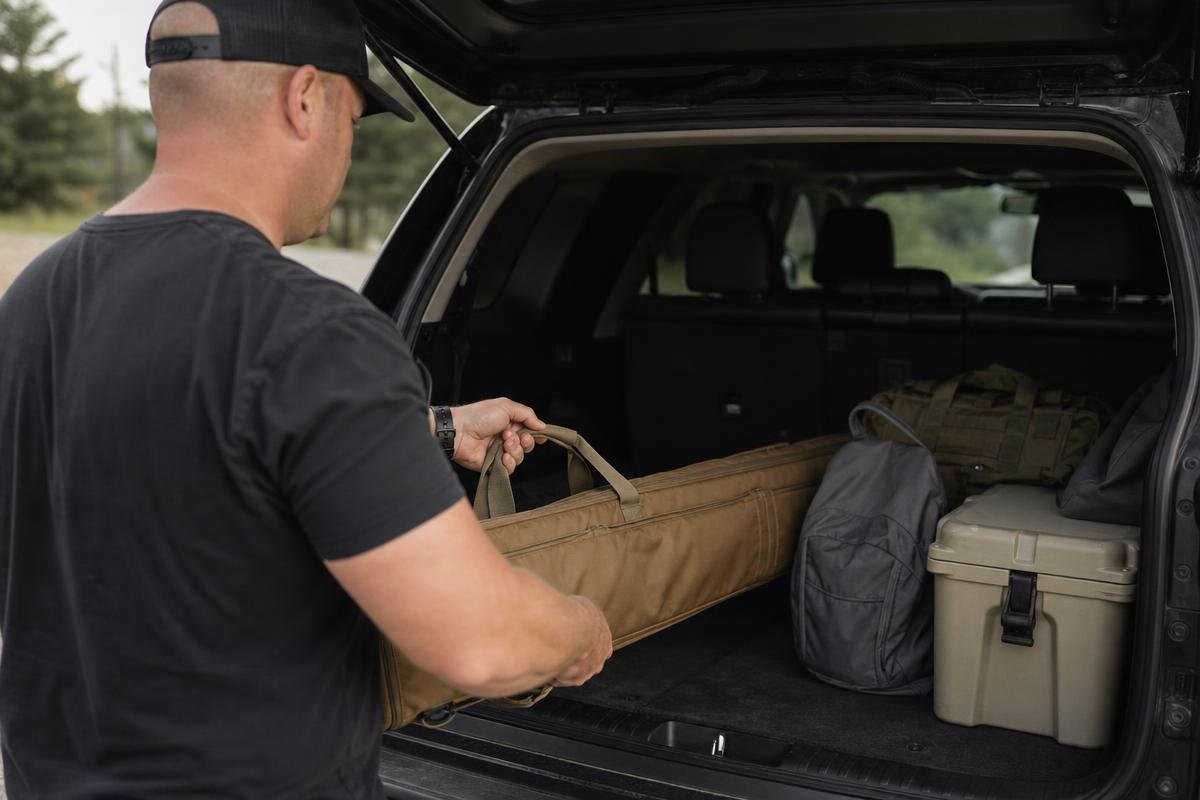
The best carry layout keeps the rifle stable, separates hard gear from the optic and finish, and suits the distance between your vehicle and the firing line. For Denison-area trips, plan for a case that is easy to load, unload, and keep organized through changing North Texas weather.
How Should You Match the Carry Method to the Walk?
A centered grab handle works for short carries from your vehicle to a bench. It also keeps an AR-15 complete rifle balanced while you load and unload the vehicle.
Choose a padded shoulder strap if you carry a rifle bag across a parking area with other range gear. Backpack-style straps keep both hands free for ammunition, hearing protection, and a range bag. Check that strap attachment points are stitched into reinforced panels, not only the outer fabric.
Exterior pockets are useful, but measure them before relying on them. Confirm the closures hold magazines, eye protection, and small tools without opening during vehicle loading.
How Do You Keep One or Two Rifles From Contacting Each Other?
A single-rifle layout is the cleanest choice for one configured rifle with an optic. A properly padded case keeps the rifle from shifting against loose accessories and sling hardware.
A double-rifle case needs a full-length divider or two separate padded channels. The rifles should not contact each other through the divider, especially around optics, charging handles, controls, and mounted slings. Load each rifle with its muzzle and stock oriented consistently, then secure internal retention straps before closing the case.
Before leaving for the range, use a simple loadout check: rifle secured, chamber condition confirmed, optic protected, sling contained, magazines separated from hard tools, eye protection packed, hearing protection packed, and small maintenance items stowed in a separate pocket. In hot, humid, or wet conditions, let a damp case air out after the trip and avoid storing moisture against metal surfaces for extended periods.
Need help choosing a case layout for your range gear? Call us at (888) 706-0633.
How Do You Match a Case to a Carbine, Precision Build, or Multi-Rifle Setup?
An AR-15 case size that works for one build can bind another at the muzzle, optic, or stock. Measure each rifle as it will ride, then choose the interior layout around the longest and tallest configuration you plan to carry.
What Does a Compact Carbine Need?
A compact carbine can fit a shorter case, but only after you measure it with the stock and muzzle device in the transport configuration. A collapsed telescoping stock saves length, while a pinned muzzle device, suppressor mount, or extended flash hider can add enough length to contact the case wall.
Measure from the rear of the stock to the end of the muzzle device. If you swap configurations, measure the longest assembled rifle, including any complete AR-15 uppers you intend to run.
What Does an Optic-Equipped Rifle Need?
A precision build needs enough case depth to protect the optic without crushing it into the foam. Check clearance over scope tubes, red-dot housings, magnifiers, backup sights, exposed elevation turrets, and tall mounts.
Close the empty lid slowly after placing the rifle inside. Foam should support the rifle around the handguard, stock, and receiver, not press hard on turret caps or optic controls. A hard case with layered foam can be cut to support the rifle at multiple points.
What Does a Multi-Rifle Owner Need?
A double-rifle case must separate both rifles so their optics, sling hardware, controls, and magazine wells do not rub together. Interior length alone does not prevent damage during vehicle loading or a walk from home to the range.
Use padded dividers, individual channels, or shaped foam between rifles. A second upper can ride in the same case, but it needs its own padded channel or compartment. Do not place it loose beside an assembled rifle.
Measure the rifle in its normal setup, including the optic, sling, and any upper you plan to transport. Comparing the build’s actual footprint to the listed case interior is the most reliable way to avoid a poor fit.
What Should Denison Shooters Consider When Choosing an AR-15 Rifle Case?
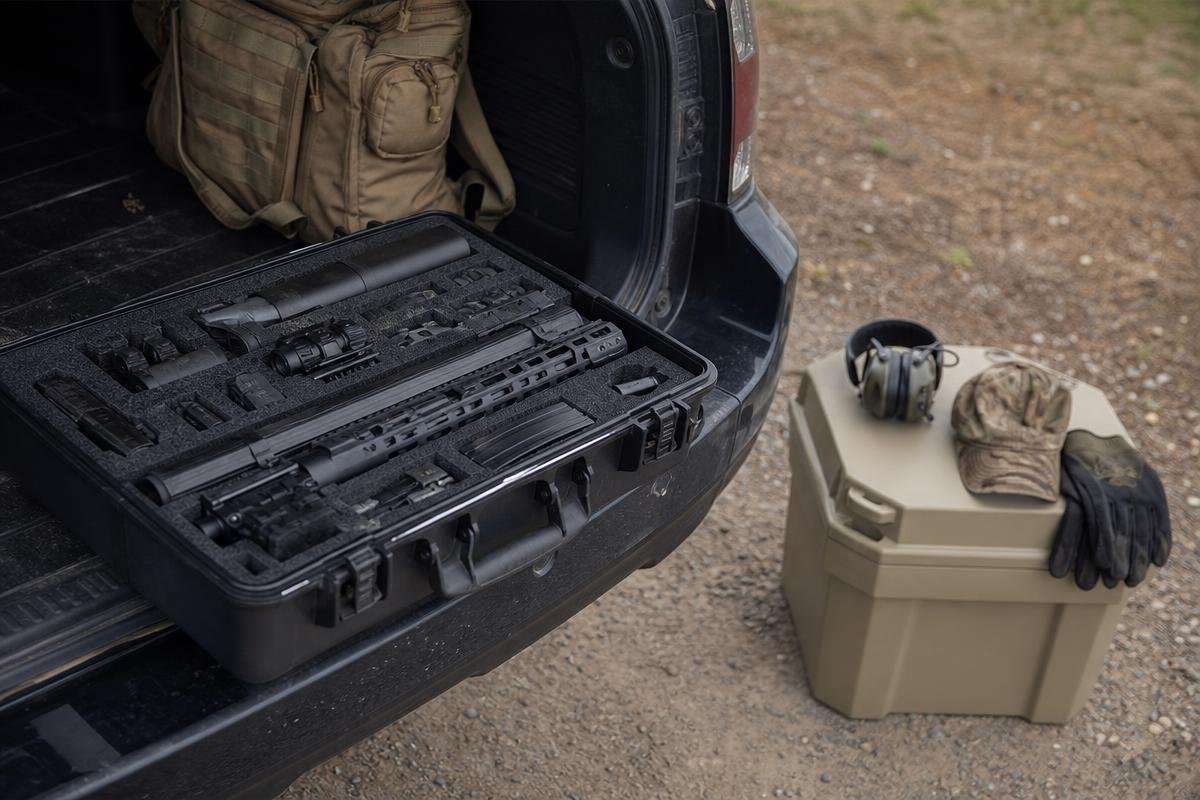
Denison shooters should choose an AR-15 rifle case for the full home-to-vehicle-to-range routine, not just for a rifle’s listed barrel length. A case should keep the firearm protected during loading, keep small gear organized, and be dried or aired out after exposure to rain, humidity, or wet ground conditions common during changing North Texas seasons.
How Do You Build a Controlled Home-to-Range Loadout?
Keep one protected rifle space, eye protection, hearing protection, loaded magazines only where appropriate, and basic maintenance items together. A bore snake, chamber flag, lubricant, and small tool kit fit well in separate pockets or compartments.
A case with lock provisions adds a controlled closure point during transport. For a rifle with a removable upper, keep components secured so they do not shift against optics, controls, or muzzle devices. Measure your assembled setup before selecting a case, especially when changing barrel length, optic height, or upper configuration.
Why Should You Separate Product Selection From Legal Questions?
Case selection answers product questions about length, padding, locks, and storage. It does not answer every transport or home-storage question, and one case rarely covers every long-term storage need.
Before traveling, verify current federal, Texas, and destination-specific requirements through official resources. Do not rely on a hard case, soft case, or lock provision as a substitute for checking the rules that apply to your route, destination, and circumstances.
Frequently Asked Questions
What Size Case Do I Need for an AR-15?
Buy a case with usable interior length that exceeds your rifle’s configured outside length. AR-15 case size labels such as 42 inches or 48 inches are only a starting point. Measure with the stock, muzzle device, optic, sling mounts, and bipod in their transport position. Leave enough room that foam does not press against the rifle at either end.
Can an AR-15 Case Protect a Rifle With an Optic?
Yes, an AR-15 hard case or AR-15 soft case can protect an optic if it has enough vertical clearance. A scope tube, red-dot housing, magnifier, and exposed turrets should not contact the lid or sit under constant foam pressure. Close the empty case slowly around the rifle first, then check for contact marks before loading it for a trip.
Should I Buy a Lockable Rifle Case?
A lockable rifle case adds a locking point, but you need to verify the hardware on that specific case. Check whether it has reinforced lock holes, compatible latches, and enough clearance for your chosen lock. Independently confirm applicable requirements before transport, since case features and rules are separate questions.
Is a Rifle Case Enough for Home Storage?
No, a transport case is not a complete secure-storage plan. A case protects the rifle from impacts, dust, and gear contact, while secure storage requires a separate method that limits unauthorized access. Keep your rifle configuration current if you change to complete AR-15 uppers, since a longer barrel or larger optic can change fit.
Before you buy, measure your rifle in its actual transport setup and compare that number with each case’s usable interior dimensions. If you are building or updating your rifle, call AR15Parts.com at (888) 706-0633 or browse our AR-15 parts, complete rifles, and uppers for your setup.
Is a Hard or Soft AR-15 Case Better for Transport?
A hard case offers rigid protection when other equipment may be stacked around the rifle. A padded soft case is easier to carry for organized range trips. Choose based on impact risk, carry distance, storage conditions, and the gear sharing the vehicle.
Can a Double-Rifle Case Carry Two AR-15s Safely?
Yes, if it has a full-length padded divider or separate channels, secure retention straps, and enough depth for both configured rifles. Confirm that optics, controls, charging handles, and sling hardware cannot contact each other during transport.
Ready to Get Started with AR15Parts.com?
Call (888) 706-0633 for help matching a case to your rifle's length, optic, and carry setup. We can also help you choose complete rifles and uppers for your next build.