
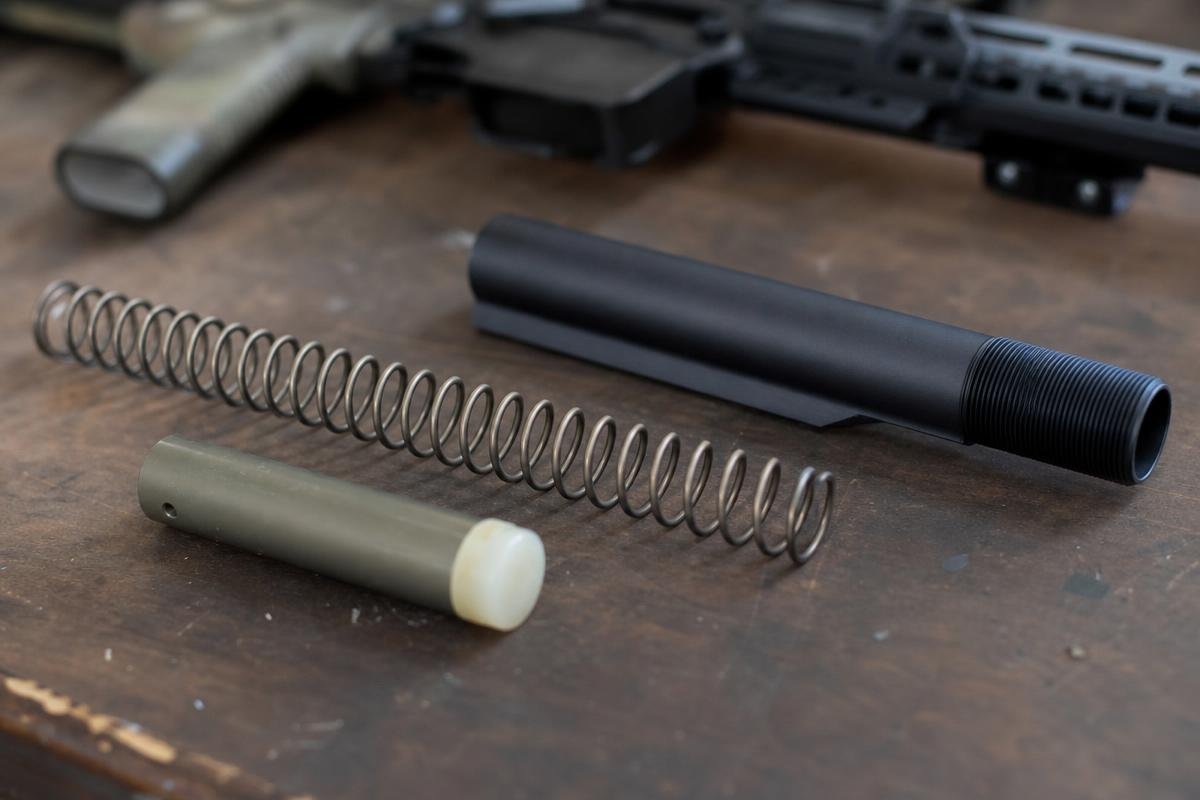
The AR-15 buffer spring is one of the most overlooked components in a build, and an incompatible choice can contribute to short-stroking, bolt bounce, or accelerated wear. Gas system length, barrel length, and ammunition all affect how much spring tension your rifle actually needs. We ship AR-15 lower and receiver-extension components from our Denison, TX facility, and local shooters should compare each spring's material and finish when corrosion resistance matters between range trips. Need help matching a spring to your build? We can point you in the right direction.
Key Takeaways
- The right AR-15 buffer spring must first match the receiver-extension system, followed by the manufacturer's guidance for the complete firearm configuration.
- Gas-system position and barrel length together affect port pressure and dwell time, which can influence cycling.
- Shooters in humid climates should choose coated or stainless springs to resist corrosion.
- Changing buffer weight without also evaluating spring rate can shift cycling problems rather than fix them.
- A mismatched spring causes symptoms ranging from failure to eject to bolt carrier bounce on reset.
Buffer-system mismatches can cause cycling problems, but similar symptoms can also come from magazines, ammunition, gas delivery, extraction, lubrication, or damaged components. Diagnose the complete system before attributing short-stroking, failure to eject, or bolt bounce to the spring or buffer alone. The buffer system is a tunable component. The spring and buffer weight must be chosen together, matched to your gas system, barrel length, and ammunition.
Below, we cover buffer weight categories, spring types, tube compatibility, and how to match all three to your specific build. We ship buffer components nationwide from Denison, TX, and we can help you check compatibility before your parts arrive. If you are also sorting out your upper configuration, browse our complete AR-15 uppers while you plan your build.
How Does an AR-15 Buffer Spring Work?
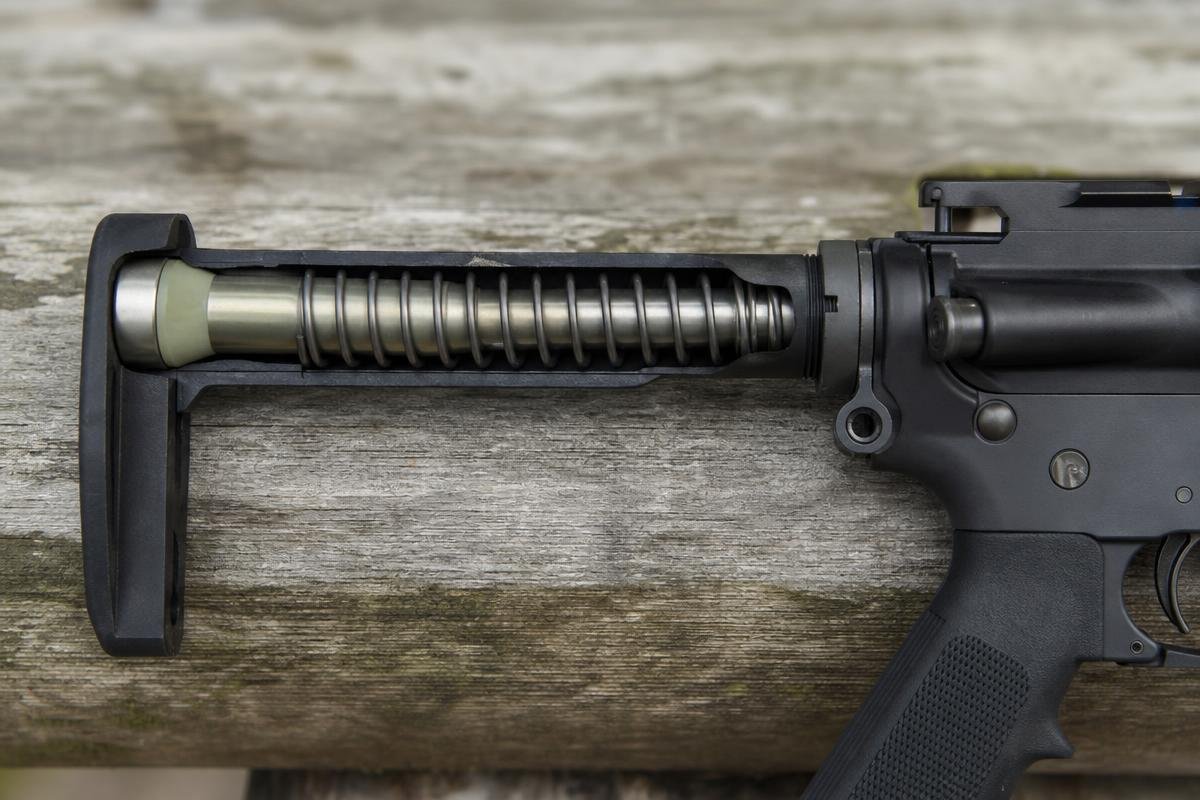
The AR-15 buffer spring and buffer live inside the buffer tube, behind the bolt carrier group. When you fire a round, propellant gas drives the BCG rearward. The buffer compresses the spring, absorbing that rearward energy. Then the spring pushes the BCG back forward, stripping a fresh round from the magazine and returning the bolt to battery.
The Role of the Buffer in the BCG Cycle
The buffer's job is to control how fast the BCG travels rearward after each shot. A heavier buffer slows that rearward travel, which reduces bolt bounce and gives the magazine more time to present the next round. A lighter buffer lets the BCG move faster, which can improve reliability in under-gassed builds but increases felt recoil and wear on the lower receiver. Browse our bolt carrier groups while comparing BCG and gas-system components.
The buffer weight you choose directly affects timing. Get it wrong and the carrier either outruns the magazine or fails to travel far enough to feed. These are not spring problems in isolation. They are system problems.
Ready to shop? Browse our available lower and receiver-extension components online.
How Spring Rate Affects Cycling Speed
Spring rate controls how quickly the BCG returns to battery. A stiffer spring increases resistance during rearward travel and return force during forward travel, while a softer spring can permit greater carrier velocity. Spring rate is measured at a defined compression length, so diagnose the complete gas, buffer, spring, ammunition, and magazine system before changing it.
The Geissele Super42 is a braided aftermarket carbine spring designed to reduce spring harmonics and noise. The carbine-length spring must be used with the compatible Geissele buffer, so verify the current manufacturer instructions before changing the recoil system.
The spring and buffer must both be compatible with the receiver extension. Standard carbine buffer weights can be changed while retaining a serviceable compatible carbine spring, while proprietary systems may require matched components. Change one variable at a time and confirm function before making another adjustment.
AR-15 Buffer Weight Categories: Which One Does Your Build Need?
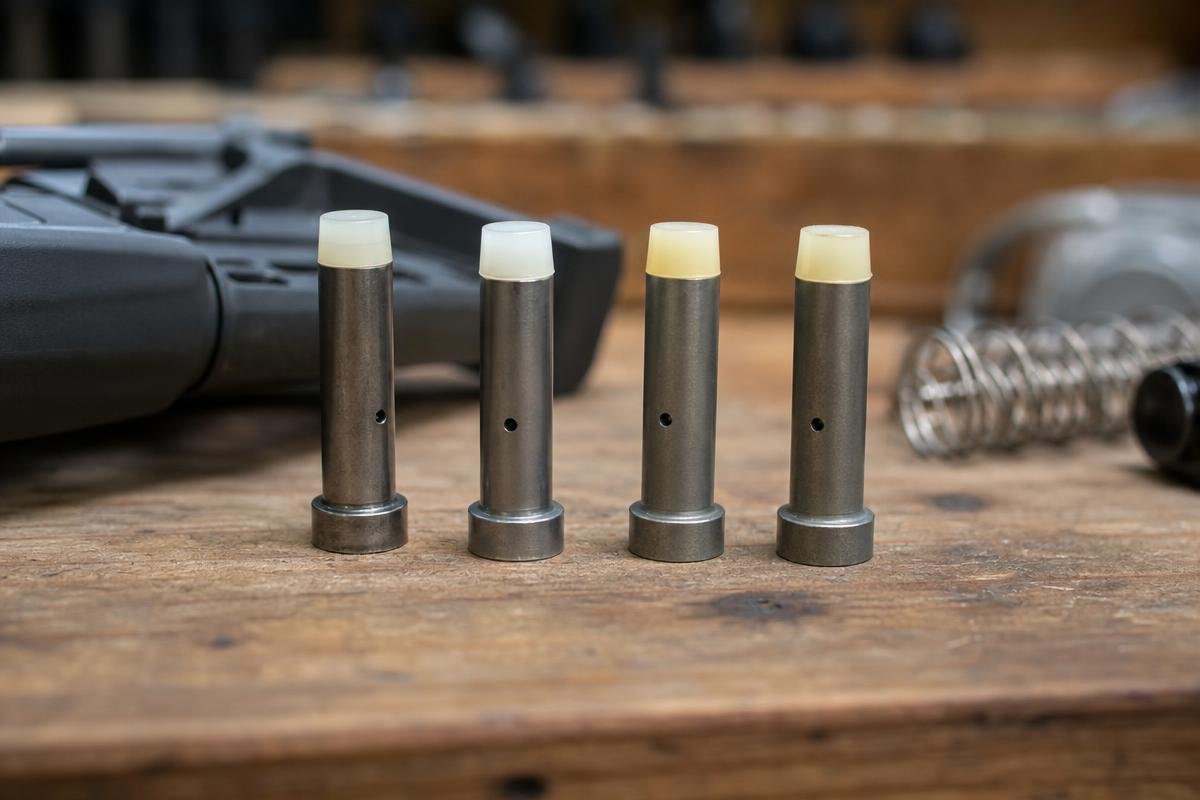
Buffer weight is not one-size-fits-all. Gas system length, barrel length, ammunition, and suppressor use all change how much energy the bolt carrier group sends rearward. Pick the wrong weight and the rifle over-cycles, batters the extension, or fails to strip the next round. The categories below give you a direct starting point for your build.
Carbine Buffer (3 oz)
This is a common commercial carbine-buffer baseline. Most 16-inch 5.56 builds running a carbine-length gas system leave the factory with this weight. It is your baseline starting point. If your rifle runs reliably with standard brass-cased ammo, there is no reason to change it.
H Buffer (3.8 oz)
One tungsten weight replaces one steel weight inside the body. That extra 0.8 oz slows the bolt carrier enough to reduce felt recoil on mid-length gas systems. It also handles builds running hotter-than-standard ammunition while still cycling reliably on standard loads.
H2 Buffer (Approximately 4.7 oz)
Two tungsten weights. An H2 may help in some over-gassed carbine or suppressed configurations after the complete system has been diagnosed. If the rifle shows multiple signs of over-gassing, such as consistently forward ejection and unusually forceful extraction, an H2 may help slow the carrier. Flattened primers can reflect ammunition or chamber-pressure factors and should be evaluated separately. For .300 Blackout, follow the upper or barrel manufacturer's recoil-system specifications and confirm function with the intended ammunition.
H3 Buffer (Approximately 5.4 oz)
Three tungsten weights. An H3 may suit some heavily over-gassed or suppressed configurations, but caliber alone does not determine buffer weight. Follow the upper or barrel manufacturer's specification and diagnose the gas system before increasing buffer mass.
A5 Buffer System
The VLTOR A5 uses a dedicated A5 buffer, an A5 receiver extension that is 3/4 inch longer than a standard carbine extension, and a rifle-length action spring. It changes the recoil-system geometry and can alter the feel and timing of the action in a compatible setup. Treat it as a complete system rather than a drop-in buffer for a standard carbine extension.
Specialty and Hydraulic Buffers
The JP Silent Captured Spring is a captured recoil-spring system, while hydraulic buffers are a separate product type. Each has its own compatibility and tuning requirements, so follow the relevant manufacturer's instructions rather than treating them as self-regulating across configurations.
Use brass ejection angle as one diagnostic, not the only one. Consistent ejection around 3 to 4:30 is a common baseline, but ammunition, extractor behavior, gas settings, and lockback also matter. Forward ejection can indicate excessive carrier speed, while failures to lock back can indicate insufficient gas or excessive buffer mass.
Matching Your Buffer Spring to Your Buffer Weight
The buffer and the AR-15 buffer spring work as a system. Swapping one without considering the other is how malfunctions start. Yes, you can swap the spring without changing the buffer, but you need to understand what you are changing. Spring rate affects how fast the bolt carrier group returns to battery. Get it wrong and the rifle will tell you immediately.
Spring specifications vary by type and manufacturer, so use the specified free length, coil count, and load data for the selected product. A heavier buffer and stiffer spring both increase resistance to rearward cycling and can cause short-stroking when combined without testing. Buffer and spring compatibility follows the lower's receiver extension, not the upper; account for the upper's gas setup and follow component manufacturer specifications.
One upgrade worth knowing is the Geissele Super42 braided spring-and-buffer system, which is designed to reduce spring harmonics. Use the compatible Geissele buffer and confirm the current manufacturer instructions before installation.
Rifle and carbine receiver extensions, buffers, and springs must be matched as a system. A standard rifle receiver extension has about 9.875 inches of internal depth and is about 10.25 inches overall; a typical carbine extension has about 7.1 to 7.3 inches of internal depth. Standard rifle springs are about 12.5 to 13 inches in free length, versus about 10 to 10.5 inches for carbine springs, but confirm the selected component manufacturers' specifications. Buffer and spring pairing follows the lower's receiver extension; the upper's gas setup affects cycling but does not determine receiver-extension type.
Signs Your Spring Rate Is Wrong
The rifle will show you the problem. Watch for these:
- Short-stroking (failure to pick up the next round): inspect ammunition, magazines, lubrication, gas delivery, spring, and buffer compatibility
- Double-feeds or hard bolt close: inspect the magazine, feed lips, chamber, ammunition, and complete cycling system
- Bolt does not lock back on an empty magazine: inspect gas delivery, ammunition, the magazine follower, bolt catch, spring, and buffer mass
- Excessive felt recoil or bolt bounce: inspect carrier velocity, gas settings, ammunition, spring condition, and buffer compatibility
Diagnose the malfunction first, including ammunition, magazines, gas delivery, extraction, and component condition. Follow manufacturer specifications, then change only one compatible variable at a time if an adjustment is needed.
Buffer Selection by Barrel Length and Gas System
Gas-system length and barrel configuration affect gas delivery, but buffer selection also depends on the lower's receiver extension, ammunition, and manufacturer specifications. A 16-inch mid-gas build and a 10.5-inch pistol-gas build behave completely differently under pressure, and running the wrong weight in either one causes real problems: bolt bounce, failure to feed, or accelerated wear on your carrier and extension.
Pistol and SBR Builds Under 10.5 Inches
Short builds vary substantially in gas-port size, gas-system length, ammunition, suppressor use, carrier mass, spring, and receiver extension. Start with the firearm, barrel, or upper manufacturer's specified recoil system and evaluate actual cycling and lockback behavior. If tuning is needed, diagnose gas delivery first and change one compatible variable at a time.
If you are building a .300 Blackout pistol, the subsonic and supersonic pressure curve adds another layer of complexity. See our .300 Blackout upper page for configuration notes specific to that caliber.
Mid-Length Builds: 14.5 to 16 Inches
Mid-length systems can use different buffer weights depending on gas-port size, ammunition, suppressor use, carrier mass, and spring. Start with the upper or firearm manufacturer's specified buffer and confirm reliable cycling before changing weight.
Rifle-Length Builds: 18 to 20 Inches
Rifle-length gas systems run at lower pressure. Receiver-extension selection depends on the lower and buffer system you use, not the gas-system length alone. Rifle buffers weigh approximately 5.0 oz and pair with rifle-length springs. Confirm that the buffer, spring, and receiver extension are designed to work together before changing your setup. If you are switching upper configurations and need to sort out complete AR-15 uppers alongside the right tube setup, we can help you match the components before you order.
Note: AR-10 and .308 platforms use an entirely different buffer system. Check the selected platform's manufacturer specifications.
Not sure which buffer weight fits your barrel length and gas system? Call us at (888) 706-0633 and we will walk you through it before you order.
Buffer Spring and Buffer Compatibility Chart: Match Your Build at a Glance
Use this table as a compatibility checklist, not a universal tuning prescription. Confirm the receiver extension, spring, buffer, upper, ammunition, and suppressor state with the relevant manufacturer before testing one change at a time.
| Build Configuration | Recommended Buffer Weight | Recommended Spring Type |
|---|---|---|
| 16-inch carbine gas, 5.56 | Manufacturer-specified compatible carbine buffer | Mil-spec carbine spring |
| 16-inch mid-gas, 5.56 | Manufacturer-specified carbine or H buffer | Compatible mil-spec carbine spring |
| 14.5-inch mid-gas | Manufacturer-specified compatible carbine-system buffer | Compatible mil-spec carbine spring |
| 10.5-inch pistol-length | Upper-manufacturer specification | Spring matched to the specified recoil system |
| SBR under 10 inches | Manufacturer-specified compatible recoil system | Spring matched to the selected recoil system |
| Suppressed carbine | Manufacturer-specified buffer after gas diagnosis | Spring matched to the specified recoil system |
| .300 Blackout upper, supersonic | Upper-manufacturer specification | Spring matched to the specified recoil system |
| .300 Blackout, subsonic | Upper-manufacturer specification | Spring matched to the specified recoil system |
| .458 SOCOM | Upper-manufacturer specification | Spring matched to the specified recoil system |
| 20-inch rifle-length gas | Rifle buffer matched to the receiver extension | Rifle-length spring |
These configurations offer a compatibility starting point. Final tuning depends on your gas block setting, ammunition, and suppressor use. If the rifle malfunctions, diagnose ammunition, magazines, gas delivery, extraction, lockback, spring, and buffer compatibility before changing weight. For build-specific questions, browse our complete AR-15 uppers or contact us directly. Know what you need? Shop carbine, H, H2, H3, and A5 buffer systems plus mil-spec and Geissele springs now.
Building and Shooting in North Texas: What Denison-Area Shooters Should Know
Heat, Humidity, and Fouling
Local summers regularly push past 100 degrees Fahrenheit. High temperatures and heavy firing can change lubrication behavior and fouling, but weather alone is not enough to diagnose an over-gassed rifle. Evaluate cycling with your actual ammunition, gas setup, ejection pattern, and lockback behavior before changing buffer weight.
The Red River adds humidity on top of the heat. Moisture accelerates corrosion on bare mil-spec springs. A spring with a manufacturer-documented corrosion-resistant finish or stainless alloy may be appropriate for humid storage conditions; chrome-silicon is a spring-steel alloy, not stainless steel. This matters most if your rifle sits in a case between range trips rather than getting cleaned and lubed after every session.
Local Ranges and Real-World Testing
Shooters in the Denison and Sherman area have access to outdoor ranges where real-world recoil buffer testing under actual field conditions is practical. Temperature can affect ammunition and lubrication, so test under the conditions in which the rifle will be used. Function-test any buffer or spring change with your standard ammunition according to the firearm and component manufacturers' guidance before relying on the configuration. Testing should reflect the intended ammunition and configuration, and diagnosis should precede any recoil-system changes.
We ship lower and receiver-extension components and complete AR-15 uppers nationwide, and customers are welcome to call us at (888) 706-0633 for product-specific guidance. We ship from our facility at 4000 Texoma Pkwy, Denison, TX 75020.
Frequently Asked Questions
What is the difference between a carbine buffer and an H buffer?
A carbine buffer weighs 3 ounces. An H buffer weighs 3.8 ounces because it replaces one steel weight with a tungsten weight. That extra mass slows the bolt carrier group slightly on the rearward stroke. For most standard 16-inch carbine-gas builds, both will run reliably. An H buffer may provide additional carrier-mass margin in a compatible configuration, and current pricing varies by product.
Can I use a rifle-length spring in a carbine buffer tube?
Generally, no. Rifle and carbine springs are designed for different receiver-extension and buffer systems. Match the spring, buffer, and receiver extension according to the component manufacturers' specifications; a nonstandard matched system may have different requirements.
How often should I replace my AR-15 buffer spring?
Replacement intervals and service-life ratings vary by spring manufacturer. Watch for these signs before you hit that number: failure to return to battery, sluggish cycling, a change in trigger reset feel, or visible kinking and corrosion on the coils. Shooters in humid environments should inspect springs more frequently, since moisture accelerates corrosion. Compare current specifications and pricing when corrosion resistance matters for the intended storage conditions.
Will a heavier buffer reduce felt recoil?
A heavier buffer does reduce bolt carrier velocity, which softens the rearward impulse. But heavier is not always better. If your buffer is too heavy for your gas system, the carrier will not travel far enough rearward to strip the next round. That is short-stroking, and it causes malfunctions. Recoil buffer selection is a balance between felt recoil and reliable cycling, not a race to the heaviest option available.
What buffer should I use for a suppressed AR-15?
Suppressor backpressure varies by model, and some setups may not need a buffer change. Start with the firearm, upper, or barrel manufacturer's specified recoil system, then evaluate gas delivery, lockback, ejection, ammunition, and suppressor behavior before changing one compatible variable at a time. If a suppressor overgasses the rifle, a heavier compatible buffer is a common starting point, or an adjustable gas block may help where the manufacturer supports it; confirm function through testing.
What buffer weight works best for .300 Blackout and other calibers?
Buffer selection for .300 Blackout depends on the upper's gas system, ammunition, suppressor state, carrier mass, spring, and receiver extension. Follow the upper or barrel manufacturer's specification and diagnose actual cycling before changing the buffer. Apply the same manufacturer-first approach to large-bore calibers rather than prescribing an H3 solely by chambering.
Ready to Get Started with AR15Parts.com?
Our team can help you compare lower and receiver-extension components shipping from our Denison, TX facility. Call us at (888) 706-0633 for product-specific guidance before you order.