
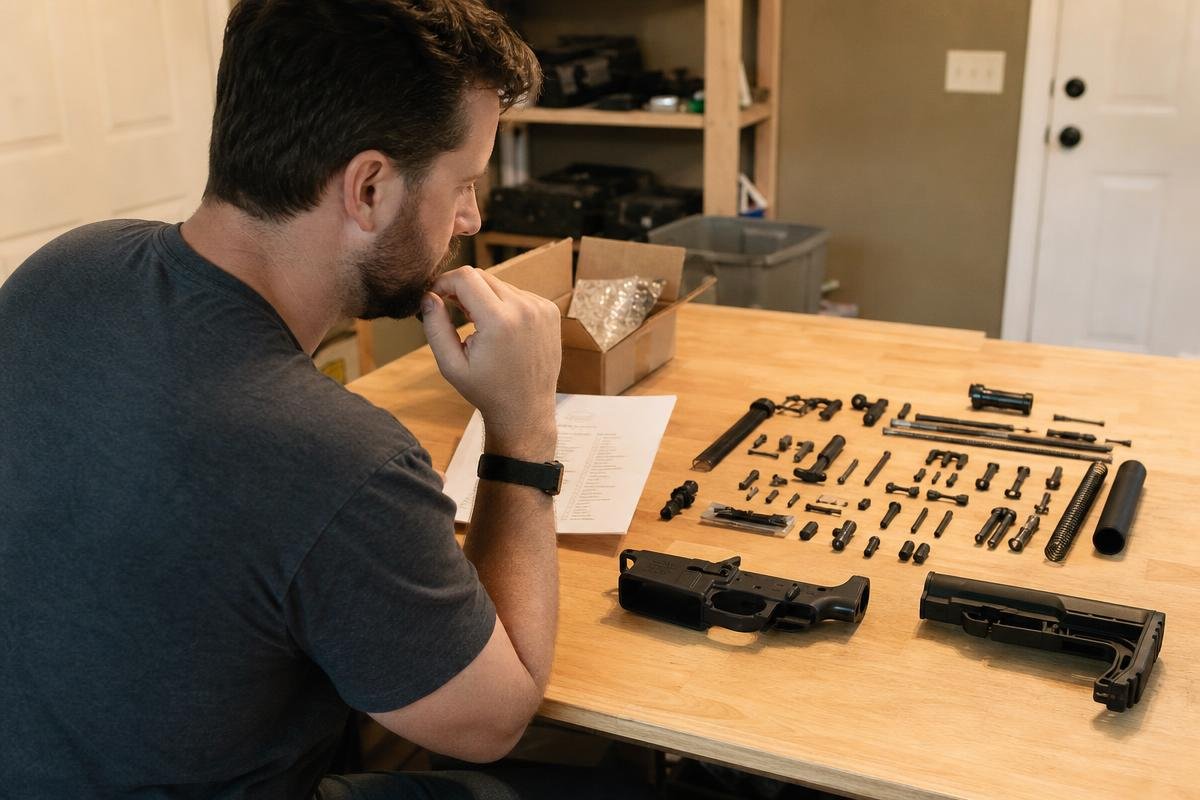
AR15Parts.com helps first-time builders plan the right .308-pattern rifle before parts reach the bench. If you are researching how to plan your first AR-10 build, start by documenting the receiver pattern, caliber, upper fit, and handguard profile before ordering. Call (888) 706-0633 with your receiver model and parts list for a product-fit discussion based on manufacturer specifications. Have a receiver set or parts list already? Get a compatibility check before you order.
Key Takeaways
- Choose your caliber and intended use before selecting receivers, barrels, magazines, or bolt carrier components.
- AR-10 and LR-308 parts do not follow one universal specification, so receiver pattern matters first.
- Confirm upper, lower, handguard, barrel nut, charging handle, buffer system, and magazine compatibility before placing your order.
- Use a written compatibility map with manufacturer part numbers and specifications, not product names alone.
Why AR-10 Build Planning Matters
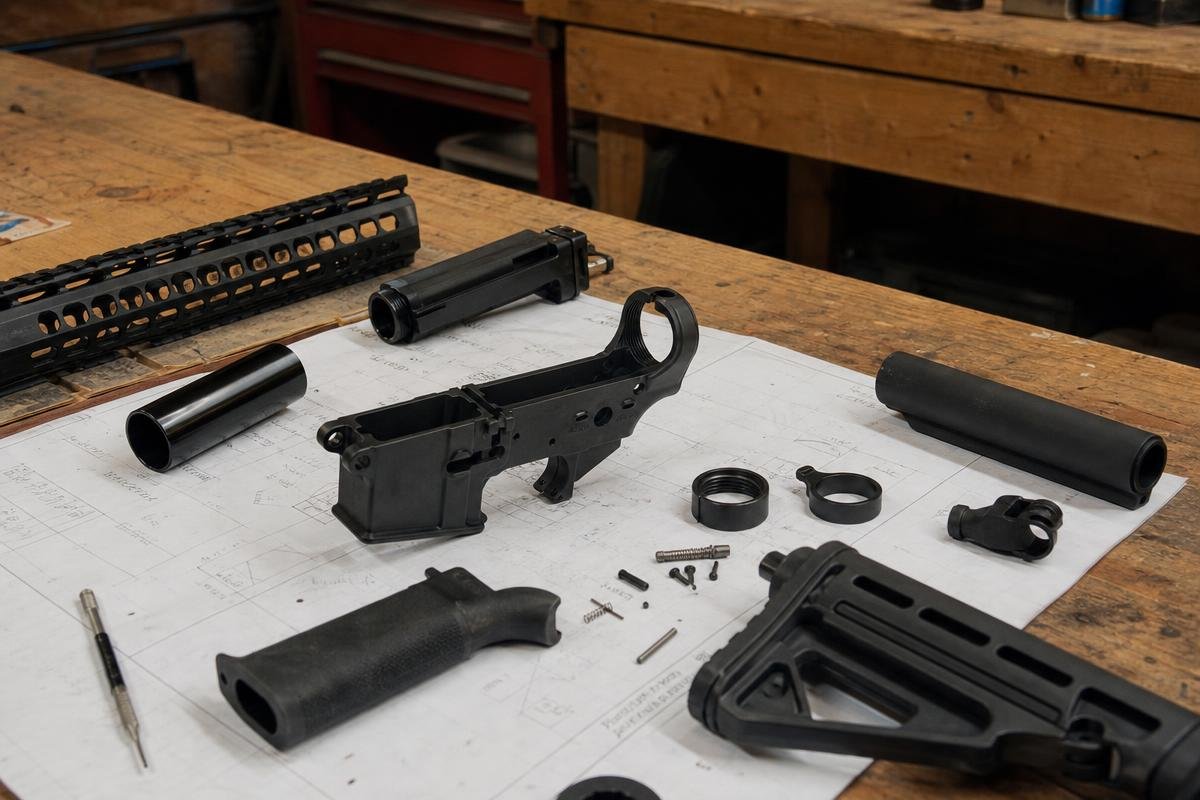
Large-frame .308-pattern rifles do not share one universal mil-spec standard. Planning a first AR-10 before ordering matters because the receiver pattern, chambering, barrel extension, bolt carrier group, gas system, and handguard interface must align. Define the rifle's role, choose a documented platform family, and check the interfaces that most often create expensive mismatches.
An AR-10 build differs from an AR-15 build because large-frame receiver dimensions, rail heights, takedown-pin locations, charging-handle channels, and buffer systems can vary by platform family. Start with intended use and caliber, then select a matched platform and map every related part before checkout. For a ready-made starting point, review our .308 Winchester complete uppers.
Follow all applicable laws, safe-handling practices, and manufacturer instructions. Confirm headspace, assembly, and function before live fire.
What Caliber Should You Choose for a First AR-10 Build?
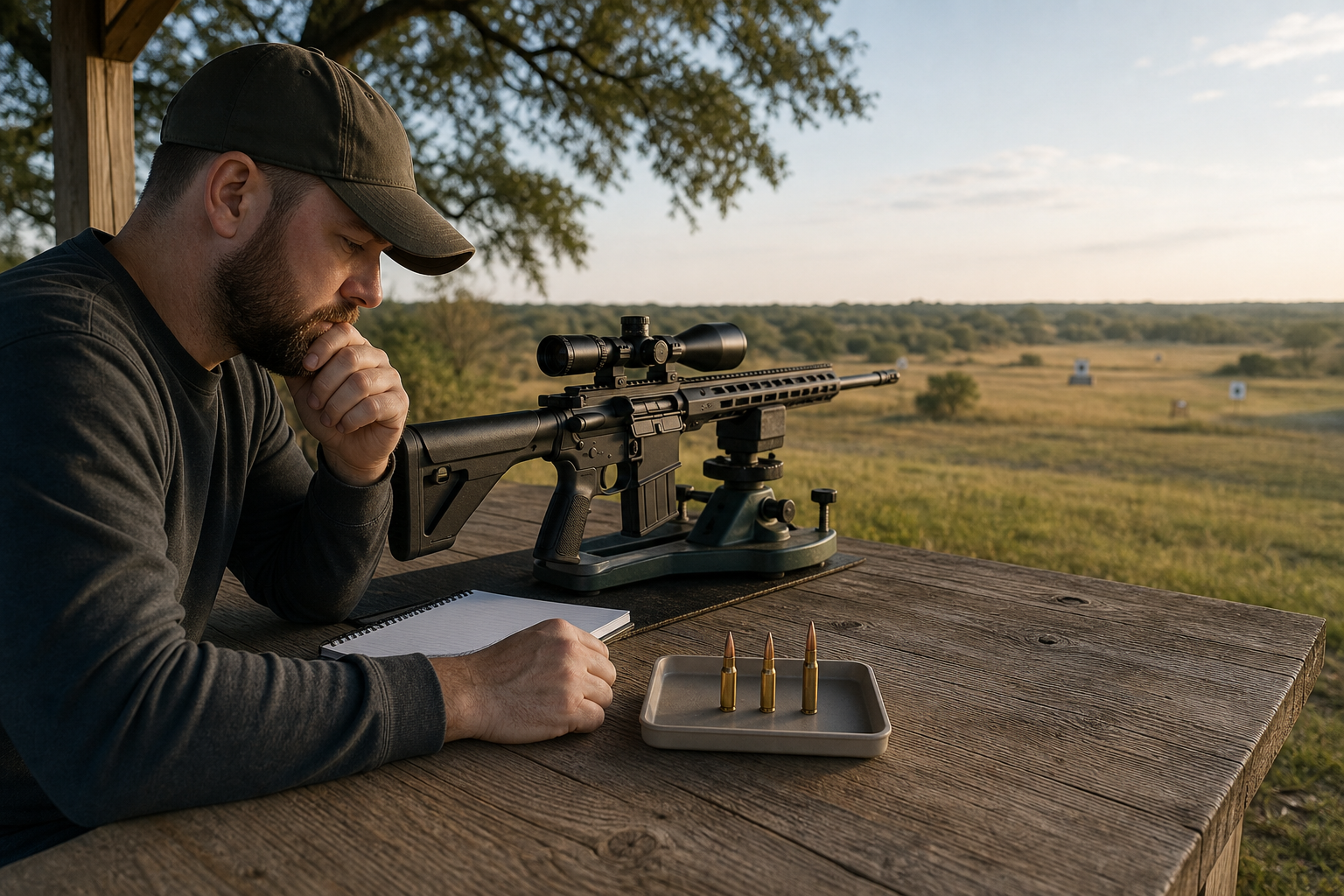
Choose the caliber based on the rifle's actual job, expected distance, ammunition availability, recoil tolerance, and the barrel length and overall weight you are willing to carry. For many first builds, .308 Winchester is a flexible starting point, while 6.5 Creedmoor and .243 Winchester call for more specific planning around distance or game.
Your intended use should drive AR-10 caliber selection before you buy parts. It determines barrel length, optic range, magazine planning, acceptable rifle weight, and the upper components you need to document for compatibility.
| Primary use | Common planning direction | Tradeoffs to record | Compatibility checks |
|---|---|---|---|
| General range use or mixed hunting use | .308 Winchester, often with a 16- to 20-inch barrel | Shorter barrels improve handling, while longer barrels add length and weight | Chamber, barrel extension, bolt or BCG specification, receiver pattern, magazine type |
| Distance-focused shooting | 6.5 Creedmoor, often with a longer barrel selected for the intended distance | Longer barrels and optics can increase overall rifle weight | Chamber, barrel and bolt pairing, gas-system specification, rail height, magazine pattern |
| Lower-recoil hunting application | .243 Winchester with an appropriate barrel and ammunition plan | Bullet choice must suit the intended game and lawful use | Chamber marking, barrel extension, matching bolt or BCG, receiver and magazine compatibility |
.308 Winchester for Broad First-Build Use
.308 Winchester makes sense for many first large-frame rifles because ammunition is widely available and it covers common range and hunting roles. A 16- to 20-inch barrel can fit different handling and velocity priorities, but choose the length around your actual use, not simply what looks right on a parts list.
It is not the universal best choice, but it is a practical place to start. Confirm the chamber, bolt, barrel extension, receiver pattern, and magazine type are documented as compatible.
6.5 Creedmoor for Distance-Focused Builds
6.5 Creedmoor fits a distance-focused build when your barrel, ammunition, and optic support that purpose. It can provide a flatter trajectory than .308 Winchester with appropriate loads, but the rifle may be longer and heavier if you choose a barrel intended for extended-range work. Confirm the barrel and bolt pairing and magazine compatibility for your chosen receiver pattern; do not assume every .308-labeled part fits.
For a .308-based upper option, review our .308 Winchester complete uppers before settling on a cartridge. Decide your realistic shooting distance first, then select the barrel length and optic capability to match.
.243 Winchester for Appropriate Hunting Applications
.243 Winchester can fit suitable hunting applications where lower recoil is a priority. Projectile selection matters, so match bullet construction and weight to the intended game. For current seasons, species rules, and lawful methods of take, consult the Texas Parks and Wildlife Department and verify rules before each hunt.
Our .243 Winchester complete uppers give you a starting point for planning the upper assembly. When contacting our team, have your documented receiver pattern and compatibility list ready.
Are AR-10 and LR-308 Parts Compatible?
Not always. AR-10 and LR-308 are broad labels, not a single shared technical standard, so critical parts must be matched to the receiver manufacturer's documented platform. Confirm receiver geometry, rail height, barrel-nut system, charging handle, bolt carrier group, buffer system, and magazine arrangement before purchase.
Start your build by choosing a receiver pattern, not by collecting parts marked “AR-10.” AR-15 parts compatibility cannot be assumed on a .308-size rifle.
Why AR-10 and LR-308 Names Do Not Guarantee Fit
AR-10 and LR-308 parts are not automatically interchangeable. The names describe related large-frame rifle types, but they do not establish shared dimensions or a common technical standard.
Compatibility can change at the takedown pins, upper rail height, barrel-nut interface, charging-handle channel, bolt-catch geometry, and magazine-related details. A handguard that appears correct may not align with the upper rail or accept its barrel nut.
Use a Matched Receiver Set for a First Build
A matched upper and lower receiver set reduces uncertainty at the main receiver interface. It gives you a known pin fit, receiver contour, and rail relationship before you select the rest of the assembly.
A matched set does not solve every fit issue. You still need to confirm the handguard, barrel nut, bolt carrier group, charging handle, bolt catch, and small parts against the manufacturer's specifications. For a first build, keep these parts within one documented platform family.
Confirm These Interfaces Before Ordering
Write down the receiver manufacturer, model, pattern, rail height, pin dimensions, and specified barrel-nut system. Add the required charging handle, bolt-catch type, magazine pattern, buffer-system specification, and bolt carrier group to the same list.
- Upper and lower receiver pattern
- High or low upper rail profile
- Handguard and barrel-nut interface
- Charging-handle and bolt carrier group fit
- Magazine and bolt-catch arrangement
- Receiver extension, buffer, and spring specification
Have that written list ready when you contact our team. It makes large-frame upper and lower compatibility questions easier to review before parts are ordered. If you need help confirming a pattern, use the AR15Parts.com contact page or call (888) 706-0633.
How Do You Build a Compatibility Map for the Upper Assembly?
Before ordering upper components, record the receiver platform, chamber, barrel maker and extension, bolt or BCG specification, gas-system measurements, barrel-nut type, rail height, and handguard clearance. This one-page map turns vague “AR-10 compatible” claims into specific checks you can compare against manufacturer documentation.
Match the Chamber, Barrel Extension, and Bolt Carrier Group
Your barrel chamber must match the cartridge you plan to fire, such as .308 Winchester, 6.5 Creedmoor, or .243 Winchester. Where possible, buy a bolt or bolt carrier group that the barrel manufacturer specifies for that barrel and chamber, rather than combining parts based on appearance or a generic caliber label.
Confirm the barrel, extension, bolt or BCG, and receiver platform are compatible with the manufacturers involved. Before firing, headspace should be checked with the appropriate gauges by a qualified person, particularly when a bolt and barrel were not supplied or specified as a matched pairing. Do not fire the rifle if headspace or lockup cannot be confirmed.
Treat the Gas System as a Connected Set of Parts
Barrel length, gas-system length, gas-port sizing, gas-block journal diameter, and gas tube length must work as one set. The buffer system and ammunition pressure curve also affect bolt speed, extraction, and lockback.
The chosen large-frame barrel manufacturer's specifications govern the build. Review .308 Winchester complete uppers before selecting a gas block, tube, and buffer setup. Do not assume an AR-15 gas tube or buffer part will transfer to your large-frame build.
How Do You Confirm Handguard Fit and Clearance?
Match the handguard to the upper receiver's rail height and required barrel-nut system, then verify its inside diameter clears the selected gas block, gas tube, and any adjustable gas hardware. A secure handguard can still leave a mismatched top rail or insufficient internal clearance if its specifications do not match the upper.
Check the handguard's inside diameter against the gas block you selected. It must clear the block, gas tube, and any adjustable gas hardware through the full length of the rail. Review .243 Winchester complete uppers while comparing manufacturer drawings.
Contact our team with your receiver model, rail-height information, and handguard mounting details. A written plan makes compatibility easier to review before parts are purchased.
How Should You Plan the Lower Receiver for Reliable Function and Fit?
Select lower components only after confirming the receiver pattern and intended role. Large-frame rifles can use different receiver extensions, buffers, springs, magazines, and bolt-catch arrangements, so AR-15 parts should never be assumed to fit or function the same way.
Choose Trigger Feel Based on Intended Use
A single-stage trigger has one continuous pull to the break. A two-stage trigger has initial take-up, then a defined break point. Compare trigger options against your selected large-frame lower's specifications before choosing a pull style for field use, target work, or general range use.
Confirm the trigger is made for your selected large-frame lower. Pin size, receiver geometry, and manufacturer instructions still control fit.
Follow the Documented Buffer-System Specification
Large-frame rifles may use different receiver extensions, buffer lengths, buffer weights, and spring systems. Follow the specification documented for your receiver set or complete upper, rather than copying an AR-15 buffer setup.
Stock fit starts with the extension type. Read about mil-spec versus commercial buffer tubes, but remember that tube diameter alone does not establish AR-10 buffer-system compatibility.
Confirm Magazine Pattern, Stock Fit, and Grip Fit
Confirm the magazine pattern required by your lower before ordering magazines. Check the manufacturer's stated magazine type, then verify the stock fits the chosen extension and the grip fits the lower's grip screw and receiver profile.
Have your receiver pattern and buffer-system specifications ready when you call our team for product-fit guidance. We can help review listed dimensions, manufacturer notes, and the information you provide, but final assembly, inspection, and safe function remain your responsibility.
Need help checking lower receiver, buffer, and magazine fit? Call (888) 706-0633.
Use This First AR-10 Build Checklist Before Ordering
A written first AR-10 build checklist prevents expensive pattern and fit mistakes before parts arrive. Have this list ready when asking product-fit questions, and confirm every interface from the receiver set through the magazine.
1. Record the Role, Cartridge, Distance, Barrel Preference, and Optic Plan
Write down the rifle's job, cartridge, expected shooting distance, preferred barrel length, and optic plan. A .308 Win. rifle for 100 to 300 yards needs different weight and barrel choices than a longer-range 6.5 Creedmoor setup.
2. Document the Receiver Pattern and Manufacturer Reference
Record the exact receiver pattern and manufacturer reference before ordering any large-frame part. “AR-10” is not a universal specification, so product naming alone does not confirm fit between upper, lower, rail, and magazine system.
3. Verify Every Upper Assembly Interface
Confirm the chamber, barrel extension, bolt carrier group, gas system, gas-block journal, barrel nut, rail height, and handguard clearance. Review AR-15 BCG types, coatings, and selection factors. Then verify that the selected large-frame carrier and bolt match the barrel extension and chamber.
4. Confirm Every Lower Assembly Interface
Confirm the lower matches the selected upper pattern, magazine pattern, takedown-pin geometry, buffer system, and stock setup. Check trigger-pin size and safety-selector fit against the lower manufacturer's specifications before ordering.
5. Decide Between Individual Parts and a Complete Upper
A complete upper reduces the number of interfaces you must validate on a first build. Our .308 Winchester complete uppers still need confirmation against your chosen lower and magazine pattern before you buy.
6. Plan Tools, Safety Checks, and Professional Inspection
Plan for the correct torque tools, vise support, punches, and manufacturer specifications before any work begins. Before firing, verify headspace with proper gauges, inspect fasteners and gas-system alignment, and have a qualified firearms professional inspect any part fit or function you cannot confirm.
How to Get Product-Fit Guidance Before Ordering AR-10 Parts
We ship from our Denison, TX facility. Have your written compatibility list, including manufacturer model numbers and parts already on hand, ready when you call us about a large-frame rifle.
Prepare a Written Compatibility List
Record the manufacturer and model of your upper and lower, plus the receiver pattern you selected. Include barrel caliber, barrel extension type, gas-system length, bolt carrier group brand, handguard mounting system, and buffer parts.
Your checklist should also show the parts you already own and the parts still needed. If you need help reviewing a list, use the AR15Parts.com contact page.
Confirm Current Legal and Range Requirements
Firearm ownership, transport, storage, and use remain subject to applicable federal, state, and local laws, as well as the rules of the individual range or property where you shoot. For hunting regulations, consult the current Texas Parks and Wildlife Department materials. Our planning information is general, not legal advice.
Check the rules for ammunition, magazine capacity, firing positions, target types, and required safety equipment at the range you plan to use. Range rules are separate from hunting regulations and can differ by location or change over time.
Frequently Asked Questions
Are AR-10 and LR-308 Parts Compatible?
Not always. AR-10 vs LR-308 compatibility depends on the manufacturer and receiver pattern, because the names are used inconsistently. Confirm the upper, lower, rail height, barrel extension, bolt carrier group, and magazine pattern before ordering.
Which Caliber Should I Choose for a First AR-10 Build?
Choose a caliber that fits your intended use and has parts available for your selected receiver pattern. .308 Winchester is a practical starting point for many builders, while .243 Winchester changes barrel, ammunition, and hunting-load planning. Verify the selected platform’s bolt and magazine specifications before ordering. Your AR-10 caliber selection should be settled before you buy the barrel or bolt carrier group.
Can I Use AR-15 Parts on a Large-Frame Rifle?
Some small accessories may cross over, but critical large-frame parts must never be assumed compatible. Triggers, grips, and some stocks may fit, while receivers, barrels, bolt carrier groups, buffers, buffer tubes, charging handles, magazines, and handguards require pattern-specific checks.
Why Start With Matched Upper and Lower Receivers?
Matched receivers simplify AR-10 upper and lower compatibility at the receiver interface. You still need to verify the barrel, bolt carrier group, handguard, buffer system, and magazine pattern. A matched set reduces one major variable, not every variable in the build.
How Do I Confirm a Handguard Will Fit?
Match the handguard to the upper receiver’s rail height and barrel nut system. Check the manufacturer’s stated pattern, mounting hardware, inside diameter, and gas block clearance. Do not assume a DPMS-style rail fits every DPMS-pattern upper.
Should I Buy a Complete Upper for My First Build?
A complete upper can reduce upper-assembly variables on a first build. It is a sensible option if you select a configuration that includes a barrel and matched bolt carrier group. If you prefer a factory-configured rifle, confirm its chambering and platform specifications before ordering.
What Should I Verify Before Firing?
Follow each manufacturer’s instructions, confirm safe assembly and function, and verify headspace where applicable. Check fasteners, gas-system installation, magazine fit, and safe trigger operation. Consult a qualified gunsmith if any fit, function, or headspace question remains.
Before you place an order, write down your receiver pattern, caliber, barrel specifications, bolt carrier group requirements, rail height, and magazine pattern. For product-fit questions, contact AR15Parts.com at (888) 706-0633 or use the AR15Parts.com contact page with those specifications in hand.
Ready to Get Started with AR15Parts.com?
Call (888) 706-0633 or contact our team with your receiver model and parts list. We can help you compare product specifications and manufacturer-listed compatibility before you order.