
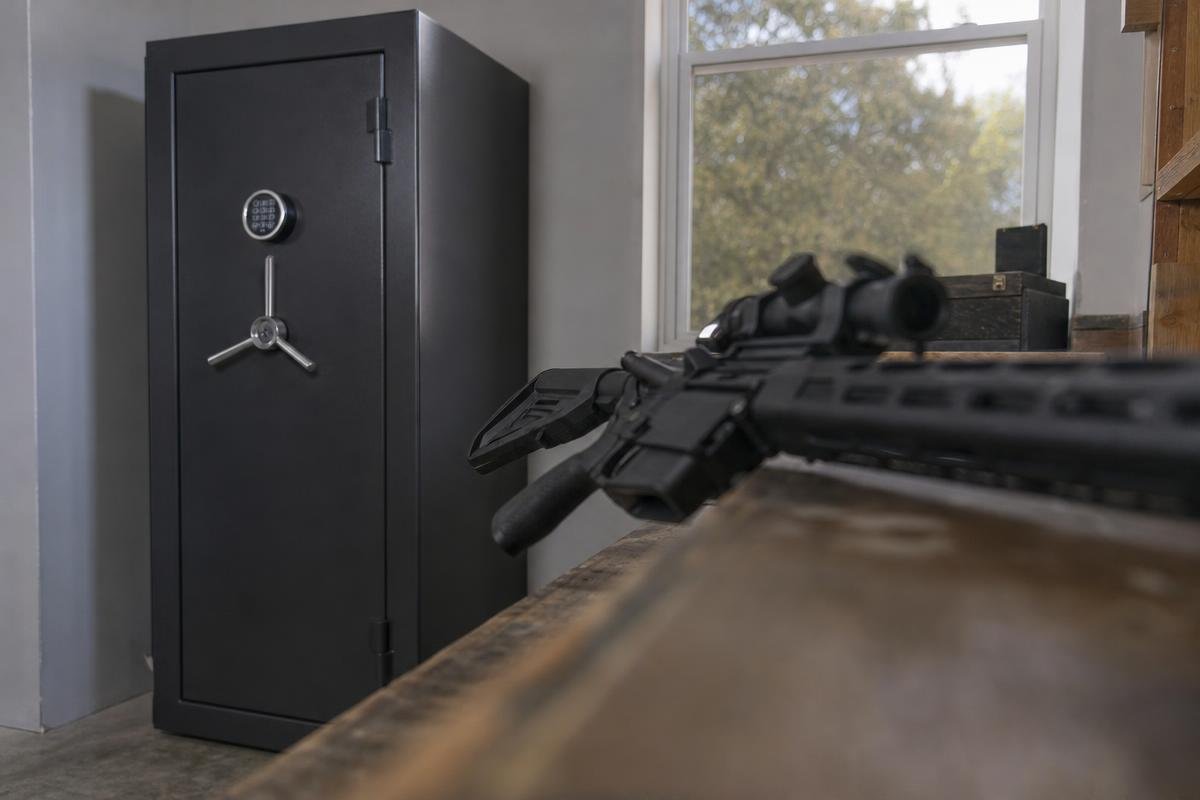
Safe firearm storage means keeping firearms inaccessible to unauthorized people through a consistent home setup, controlled access, and equipment that fits the firearm. Start by storing firearms unloaded, securing them in a locked device or container, and adding separate secured ammunition storage as an additional access-control layer. Need help confirming the dimensions of your firearm configuration?
Key Takeaways
- Keep firearms unloaded and inaccessible to anyone you have not authorized to handle them.
- Use a locked case, cabinet, strongbox, or safe appropriate for the firearm, location, and household access risk.
- Separately securing ammunition is a recommended additional barrier, particularly when children, visitors, or service workers may enter the home.
- Plan for anchoring, key control, battery maintenance, humidity, and the true dimensions of configured rifles.
What Is the Safest Way to Store Firearms at Home?
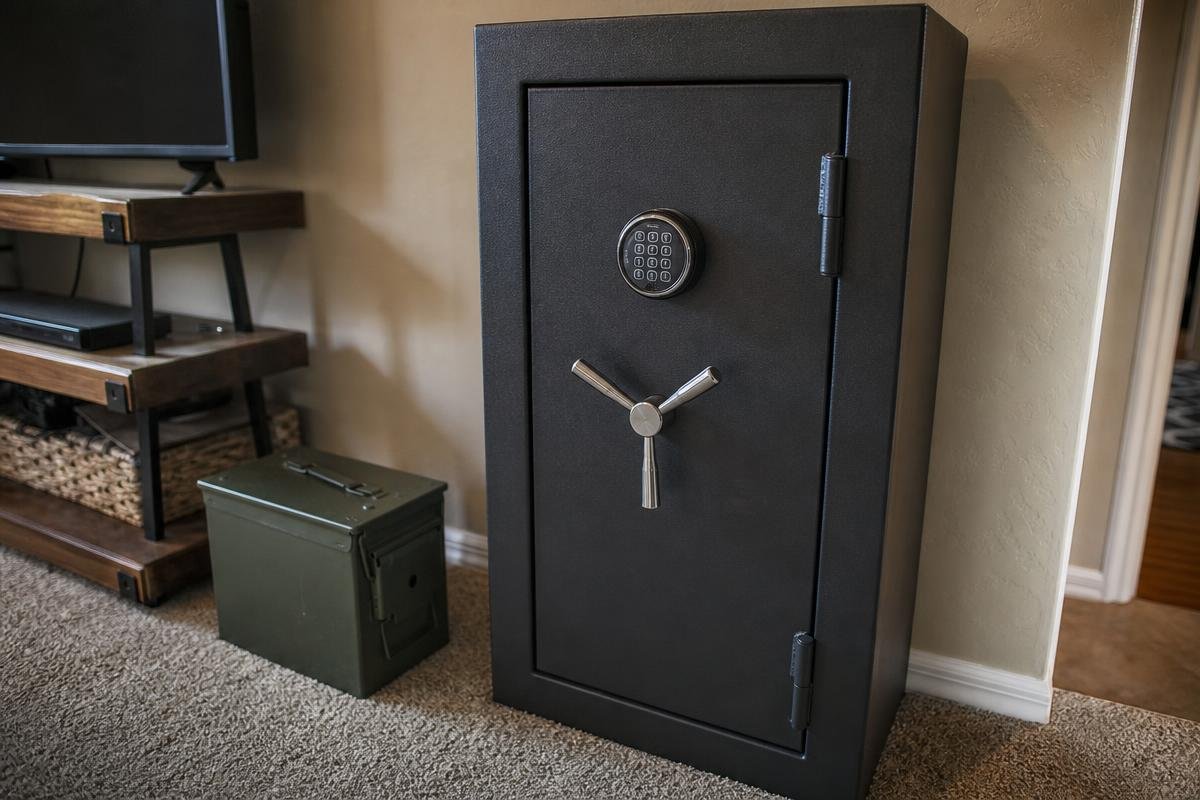
The safest home approach is to keep firearms unloaded, locked against unauthorized access, and managed with a routine that accounts for children, visitors, roommates, contractors, and changing household circumstances. Security should remain in place at all times, not only when guests are expected.
We cover practical home-storage decisions for firearm owners in the Denison area, including locks, locking cases, cabinets, strongboxes, safes, ammunition storage, and household access control. It does not interpret Texas firearm laws, transport requirements, or range procedures. For legal questions, review current official state and local sources or consult qualified legal counsel.
At AR15Parts.com, we ship from our facility at 4000 Texoma Pkwy, Denison, TX 75020. If you are securing complete AR-15 rifles or another firearm, choose storage around its actual dimensions, installed accessories, and your access plan. For an additional local safety resource, the Denison Police Department has publicly referenced firearm safety locks. Contact the department directly to confirm current availability and pickup instructions.
What Are the Core Rules for Safe Firearm Storage?
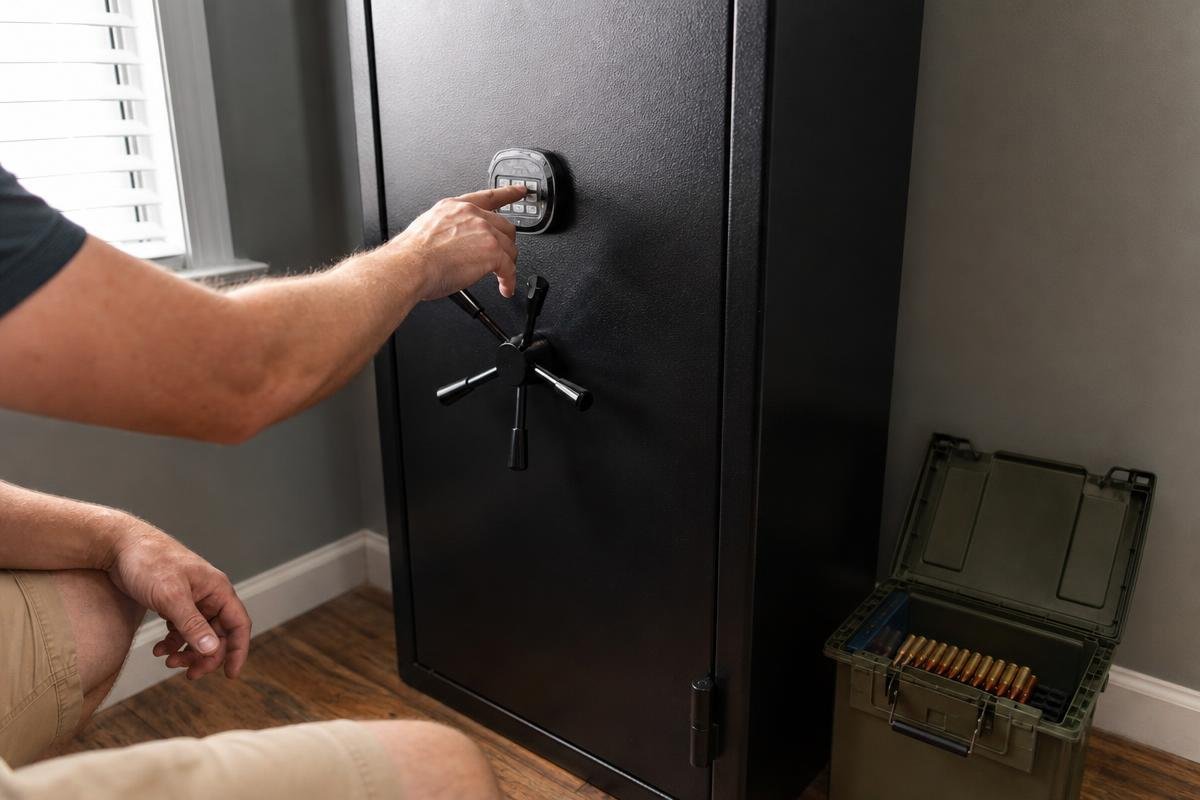
Three baseline practices work together: verify the firearm is unloaded before storage, use a lock or locked container that limits access, and consider separately secured ammunition as another safety layer. These are practical safety recommendations, not a substitute for legal advice or manufacturer instructions.
1. Verify Every Firearm Is Unloaded Before Storage
Remove the magazine, clear the chamber, then visually and physically verify the chamber is empty before placing a firearm in storage. Follow the firearm manufacturer’s handling instructions and use the same deliberate process every time.
Do not rely on memory or assume a firearm is clear because it was stored previously. This applies to rifles, handguns, and stored components, including configured firearms with optics or other accessories installed.
2. Use a Lock and a Physical Access Barrier
A trigger lock or cable lock can help block operation, but it does not offer the same access control or theft resistance as a locked container. A locking case, cabinet, strongbox, or safe creates a physical barrier between the firearm and an unauthorized person.
Two layers can be useful when practical, such as an unloaded firearm secured with a compatible cable lock inside an anchored safe. The right combination depends on the firearm, storage room, household members, and how quickly authorized access may be needed.
3. Add Separate Secured Ammunition Storage
Keeping ammunition in a separate locked container or location is a recommended way to add another barrier if someone reaches a firearm. It is particularly helpful in homes where children, guests, or unauthorized household members could gain access.
A lockable ammunition can, cabinet, or separate safe compartment can work when used according to its instructions. Keep keys, combinations, electronic credentials, and backup access controlled by responsible adults only.
- Verify the firearm is unloaded before it enters storage.
- Secure it with an appropriate lock, locked container, or both.
- Use a separate secured location for ammunition when it supports your household safety plan.
How Do You Choose the Right Storage Device for Your Home?
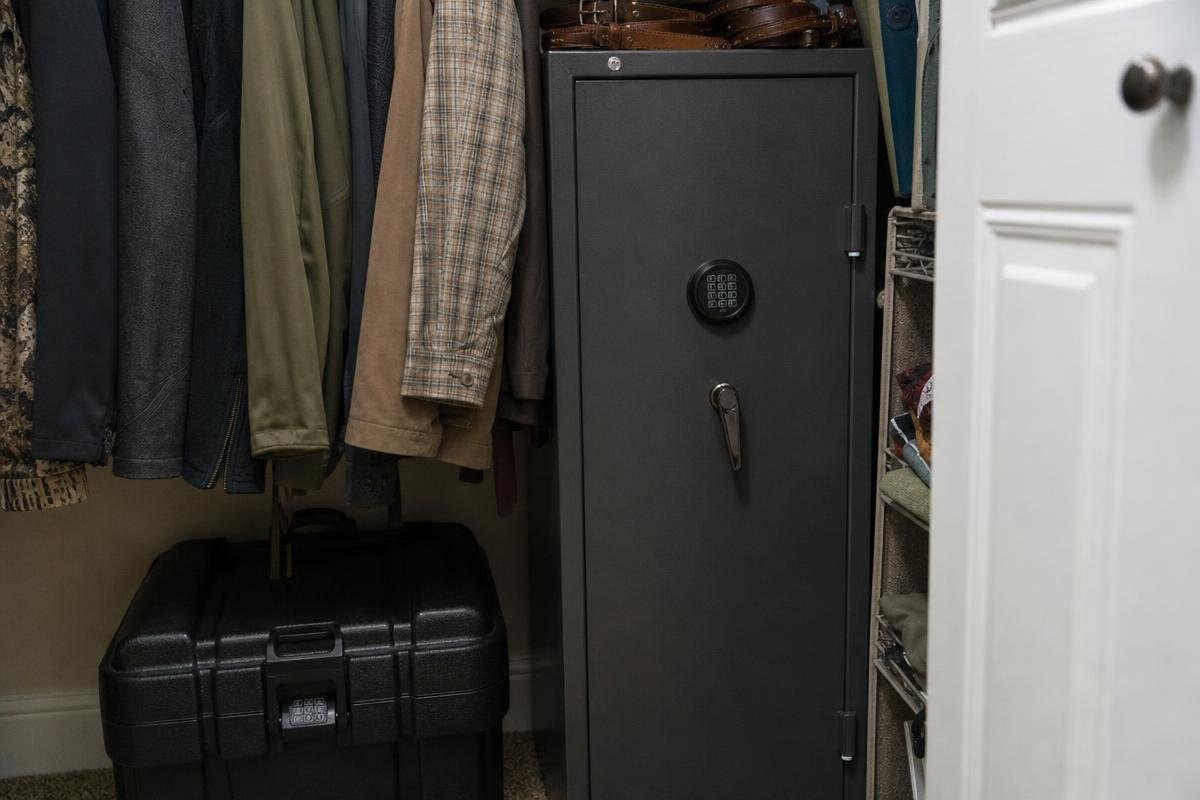
Choose storage by evaluating access control, mounting options, location, capacity, and theft risk, not by appearance alone. A device should fit the firearm as configured and should not be easy for an unauthorized person to carry away or open casually.
What Each Storage Device Does
Firearm safety locks include trigger locks and cable locks. They can help prevent operation of an unloaded firearm, but they are not a replacement for a locked container with theft resistance. Confirm that any lock is compatible with the firearm and installed without damaging it.
A locking hard case can control access to one rifle in an interior storage area. A strongbox is often better sized for a handgun or compact firearm. Portable products can be useful, but their portability can also mean they need an approved tether, mounting point, or placement inside a larger secured area.
Gun cabinets and safes serve different roles. A cabinet provides locked access control, while a safe may offer heavier construction and better resistance to forced entry. Compare the manufacturer’s current lock specifications, steel construction, mounting provisions, interior clearance, and backup-access method before choosing gun safe and cabinet options.
Storage Device Comparison Table
| Storage device | Best use case | Access speed | Theft resistance | Portability | Key limitation |
|---|---|---|---|---|---|
| Trigger lock | Additional operation block for an unloaded firearm | Slow | Low | High | Does not provide a secure container |
| Cable lock | Securing an unloaded firearm during storage | Slow | Low | High | Must be used with compatible routing and does not replace a safe |
| Biometric lock | Quick authorized access for a handgun | Fast | Varies by construction and mounting | Medium | Requires battery, fingerprint, and backup-key testing |
| Locking hard case | One rifle in controlled interior storage | Medium | Low to medium | High | May be carried away unless secured or placed within another barrier |
| Strongbox | Handgun or compact firearm | Medium to fast | Medium when properly mounted | Medium | Limited capacity and mounting options vary |
| Gun cabinet | Several long guns with controlled household access | Medium | Medium, depending on construction and anchoring | Low | Usually provides less forced-entry resistance than a safe |
| Gun safe | Rifles, handguns, accessories, and long-term home storage | Medium | Higher when properly installed and anchored | Low | Needs sufficient floor support, space, and a secure installation plan |
Match the Device to the Access and Theft Risk
A bedroom strongbox may suit a secured handgun, while an anchored cabinet or closet safe may better suit a rifle. Avoid casual visibility from entry doors, windows, or common guest spaces. Garages and outbuildings typically need extra consideration because access may be less controlled and temperature changes can be greater.
Before buying, identify where the unit will sit, whether the floor or wall can accept the manufacturer-approved anchors, and whether the door can open fully. For help matching storage to your firearm configuration, contact AR15Parts.com at (888) 706-0633.
Want help comparing fit, storage capacity, and practical access options for your firearm setup?
How Do You Match Storage Capacity to Your Firearm Configuration?
Plan storage around the rifle you actually own, not the barrel length or capacity listed on a product page. Measure overall length, height, and width with the stock extended, optic installed, sling attached, and muzzle device in place. A configured rifle can require more clearance than a safe or locking hard case appears to offer on paper.
Measure the Firearm as It Is Configured
An AR-pattern rifle can fit differently after adding an adjustable stock, fixed stock, folding-stock system, scope, red dot, mounted light, or vertical grip. Check clearance above the optic and around the handguard. Confirm the door closes without pressing on the charging handle, optic turret, sling hardware, or controls.
Measure each rifle before buying a safe, cabinet, or hard case. Leave enough room to remove it without dragging accessories against other stored firearms or the interior door panel.
Secure Separated Upper and Lower Assemblies
Separating an upper and lower can reduce assembled length, but it does not replace a lock or locked container. Both components still need storage that limits unauthorized access.
Complete upper assemblies are designed to attach to a lower quickly. Store a separated upper in a locked safe, cabinet, or case, and secure the lower the same way. Review the dimensions of your complete AR-15 upper receivers with optics, lights, and muzzle devices installed.
Keep Magazines and Accessories Controlled
Keep magazines, bolts, and accessories organized so handling a stored firearm does not become rushed or cluttered. Depending on your household plan, magazines may be kept in a separate locked compartment rather than beside the firearm.
Control access to ammunition, keys, combinations, biometric enrollment, and backup keys. Treat those access methods as part of the storage system, not as an afterthought.
How Can You Control Access Beyond Children and Guests?
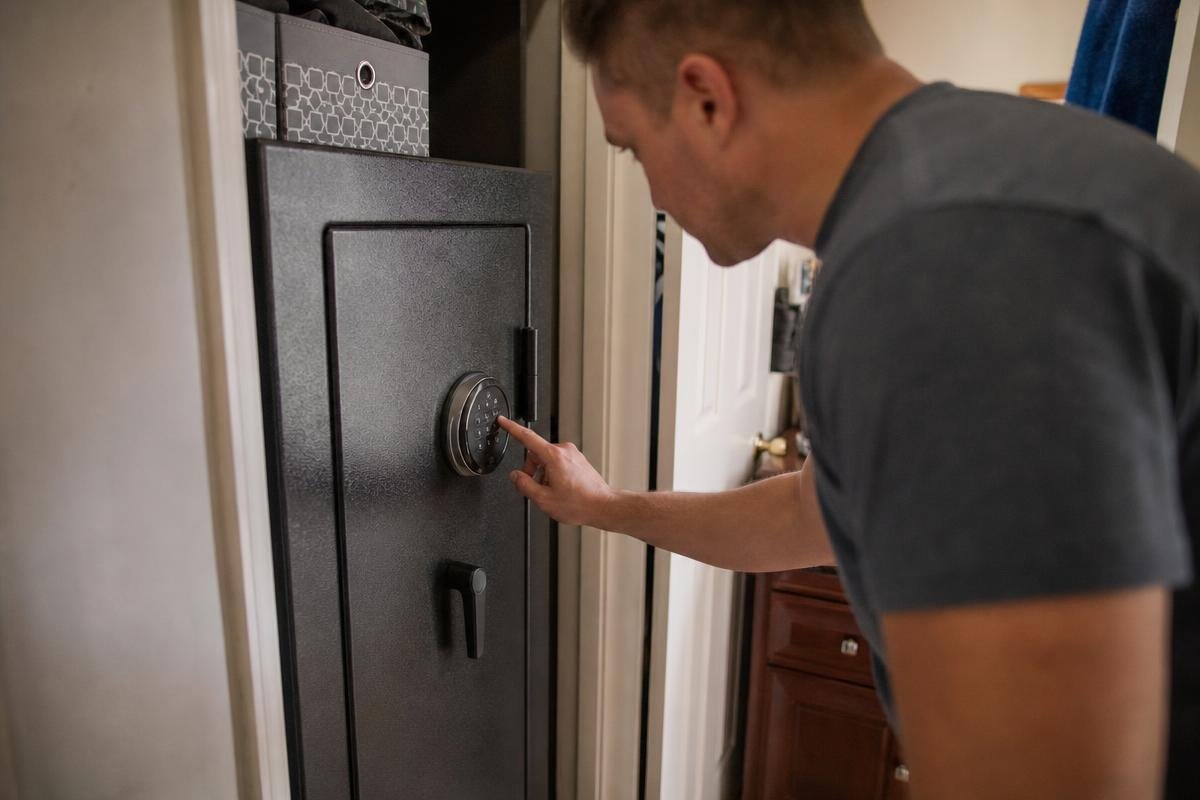
Secure home firearm storage limits access by children, guests, unauthorized household members, and potential thieves. A locked safe is only effective when the key, code, biometric enrollment, and backup entry method are also controlled.
Control Keys, Codes, and Authorized Users
Keep physical keys on your person or in a separate locked location. Do not leave them in a desk drawer, vehicle console, or near the storage unit. Avoid casually sharing codes with family members, friends, or overnight guests.
Know who is authorized to access each storage device and why. Change electronic codes after a move, relationship change, or any time a key may have been copied. Review biometric enrollment periodically and remove prints that no longer belong in the access plan.
Reduce Theft Risk at Home
Place a safe where it is not visible from doors, windows, or common guest areas. Anchor it to the floor or wall exactly as the manufacturer instructs, using the mounting hardware and substrate requirements specified for that model. A heavy unit that is not anchored may still be removable during a burglary.
Break down boxes and packaging before putting them out for collection. Avoid posting photos that reveal firearms, safe locations, serial numbers, or your home layout. When evaluating storage for a rifle, include the stored configuration, mounting plan, and room placement in the decision.
Plan for Temporary Household Changes
Reassess your setup before family visits, rental moves, a new roommate, home repair work, or a change in household risk. Visiting children and contractors should not be able to locate keys, observe a code being entered, or access an unsecured firearm.
If you cannot reliably control access during a temporary disruption, arrange a lawful, secure alternative before leaving firearms at home. These recommendations address home-storage practices only, not transport, range use, or legal interpretation.
Questions about secure home storage for your firearm setup? Call us at (888) 706-0633.
How Do You Keep Firearm Storage Secure Over Time?
A home safe setup remains effective only when locks, batteries, hinges, bolts, anchors, and access controls continue to work. Build short inspections into your routine after household changes, a move, moisture concerns, battery warnings, or any sign that equipment is not closing correctly.
Check Locks, Batteries, and Access Controls
Verify each firearm is unloaded before handling it for an inspection. Test mechanical locks, cable locks, trigger locks, and electronic locks according to their instructions rather than relying on memory or a quick visual check.
- Inspect safety locks for cut strands, cracked housings, bent keys, or damaged lock bodies.
- Replace weak electronic-safe batteries before access becomes unreliable, and keep the manufacturer-approved backup method controlled.
- Confirm authorized household members still have appropriate access, and account for every key, code, and backup key.
- Test biometric recognition with approved users only, then confirm unauthorized fingerprints do not open the unit.
Battery-powered storage units need routine attention. Test them before an emergency, not after a low-battery warning or failed entry attempt.
Inspect the Safe or Cabinet
Check that your safe or cabinet closes fully, latches cleanly, and remains anchored as intended. Look at hinges, locking bolts, mounting hardware, door gaps, and interior surfaces for wear or moisture.
North Texas temperature swings and humidity changes make moisture checks worthwhile, especially for units near exterior walls, garages, or less climate-controlled areas. Look for corrosion on metal surfaces, moisture inside cases, and damage around door seals. Follow the safe and firearm manufacturers’ recommendations for desiccants, dehumidifiers, lubrication, and cleaning.
Separate Storage Security From Firearm Maintenance
Firearm cleaning keeps the firearm in serviceable condition. Storage security controls who can access it. Bolt carrier group inspection, chamber cleaning, and lubrication are maintenance tasks, while lock function, anchoring, and key control are storage tasks.
For long-term storage, keep firearms clean and dry and follow the firearm manufacturer’s corrosion-prevention guidance. If you need help sorting out fit concerns for AR-pattern rifles or complete uppers, contact AR15Parts.com at (888) 706-0633.
Safe Firearm Storage Resources for Denison Households
Useful storage decisions combine current public-safety information with equipment that fits the household and the firearm. Focus on unauthorized-access prevention, reliable locking methods, and a setup you can maintain over time.
Ask About Firearm Safety Locks
Residents can contact the Denison Police Department about its publicly referenced firearm safety lock resource. The department administers that resource, not AR15Parts.com.
Availability, pickup details, and department instructions can change, so contact the department directly before making a trip. A cable lock can help secure an unloaded firearm, but it does not replace a locked case, cabinet, strongbox, or safe when broader access control is needed.
Find Support for Home Storage Decisions
Use public-safety resources or national firearm-storage information when you need general safety guidance outside your household. Read each resource carefully and match its recommendations to your firearm type, household access needs, and storage location.
Effective storage works best when the device, lock method, placement, and access plan are considered together. Reassess the arrangement after a move, a new firearm purchase, or a significant household change.
Questions About Firearm Fit and Configuration
Our team can answer firearm configuration questions, including overall length, optic height, folded-stock dimensions, and upper receiver configuration. We can help you identify dimensions for complete AR-15 upper receivers or assembled rifles, but we do not provide legal interpretations.
We ship from our Denison, TX facility. For configuration questions, contact our team at (888) 706-0633 before choosing a storage device.
Frequently Asked Questions
What Is the Safest Way to Store Firearms at Home?
Safe firearm storage means firearms are unloaded, locked, and inaccessible to unauthorized people. Use a locked safe, cabinet, or strongbox sized for your rifle, handgun, optic, and magazines. Keep keys, codes, and backup access under your control.
Should Firearms Be Stored Unloaded?
Yes. Store firearms unloaded as the baseline for a home storage plan. Remove the magazine, clear the chamber, and verify the firearm’s condition before it goes into storage. This applies to complete rifles and stored upper assemblies alike.
Does a Lock Do the Same Job as a Safe?
No. A trigger lock or cable lock can prevent operation, but it does not provide the same access control as a locked container. Gun safe and cabinet options add a physical barrier, help deter theft, and keep the firearm out of casual reach.
Should Ammunition Be Stored Separately?
Yes. Separate ammunition storage adds another layer between a firearm and unauthorized access. Store ammunition in its own locked container or secured location, especially in homes with children, visitors, or other household members.
Are Biometric Safes Reliable?
Biometric safes can be dependable for authorized access if you buy a quality unit and test it regularly. Fingerprint readers need clean sensors, fresh batteries, and enrolled backup prints. Keep mechanical backup access controlled, not taped inside a drawer or left beside the safe.
How Often Should I Inspect My Storage Setup?
Check your storage setup regularly, and inspect it after a move, household change, battery warning, or new firearm purchase. Test locks, hinges, bolts, keypad functions, and biometric readers. Confirm your rifle configuration still fits without pressing on the stock, optic, or charging handle.
Need help checking how your rifle configuration, stock, optic, or upper assembly will fit in a case or safe? Contact AR15Parts.com for parts and fit-related questions at (888) 706-0633. For home-storage safety questions, start with the unloaded, locked, and access-controlled basics outlined here.
Ready to Get Started with AR15Parts.com?
Call (888) 706-0633 to speak with our team directly. We're ready to answer your questions, walk you through your options, and help you find the right solution for your needs. Whether you're just starting to plan or ready to move forward, we'll make the process simple and stress-free. Reach out today and let's talk about how we can help.