
Wondering how to zero backup iron sights on an optic-equipped AR-15? Sight compatibility, mounting height, and co-witness all affect your setup. We sell fixed and folding BUIS online and ship eligible orders from our Denison, TX facility. Call us at (888) 706-0633 or contact our team for help choosing compatible parts.
Key Takeaways
- AR-15 backup sights fall into three main types: fixed, flip-up, and low-profile, each suited to different optic setups.
- A confirmed 100-yard zero on your BUIS is more reliable than a 25-yard shortcut, especially in variable wind conditions.
- Polymer BUIS are lighter; steel BUIS handle hard use better. Your role determines which trade-off makes sense.
- Co-witnessing your backup sights to your primary optic requires deliberate height selection before you mount anything.
- Folding BUIS must be function-checked after installation to confirm they lock open and stay locked under recoil.
Optics fail. Batteries can die in high heat. A red dot that goes dark mid-range session leaves you with a rifle you cannot aim. AR-15 backup sights solve that problem by giving you a mechanical aiming system that works regardless of battery life, lens condition, or impact damage.
When learning how to zero backup iron sights, consider BUIS form factor, optic co-witness, and manufacturer specifications. Range conditions can also affect visibility and maintenance. We ship eligible sights and AR-15 complete uppers from our Denison, TX facility, subject to applicable restrictions. Contact our team for help matching parts to your build.
Why Every AR-15 Build Needs Backup Iron Sights
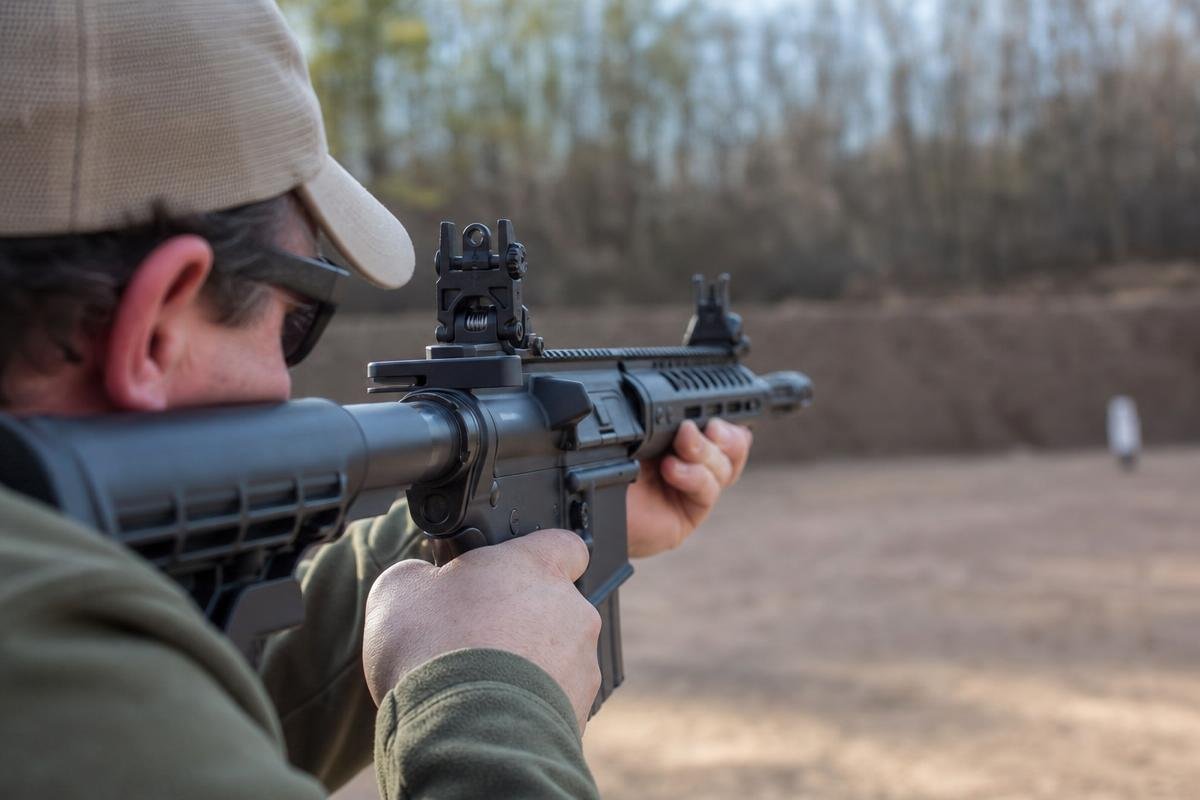
A red dot or magnified optic improves your shooting. It does not replace iron sights. The value of a BUIS set is not just redundancy. It is confidence. Knowing your rifle stays usable no matter what happens to the glass on top changes how you train and how you carry the rifle. That peace of mind is why serious shooters treat irons as standard equipment, not an afterthought.
When Do AR-15 Optics Fail in the Field?
Optics go offline in several ways, and backup sights give you a usable aiming system when a failure occurs. First, battery death. Battery life varies widely by model and brightness setting. Higher brightness settings can shorten runtime. Second, reticle damage from impact. A hard drop or rail strike can shift zero or black out the reticle entirely. Third, lens fogging or cracking from extreme temperature swings.
Humidity and rapid temperature changes can fog an optic lens. For example, moving a rifle from an air-conditioned vehicle to a hot firing line may temporarily obscure the view through the optic. Mechanical sights provide an alternative aiming system when the lens is fogged.
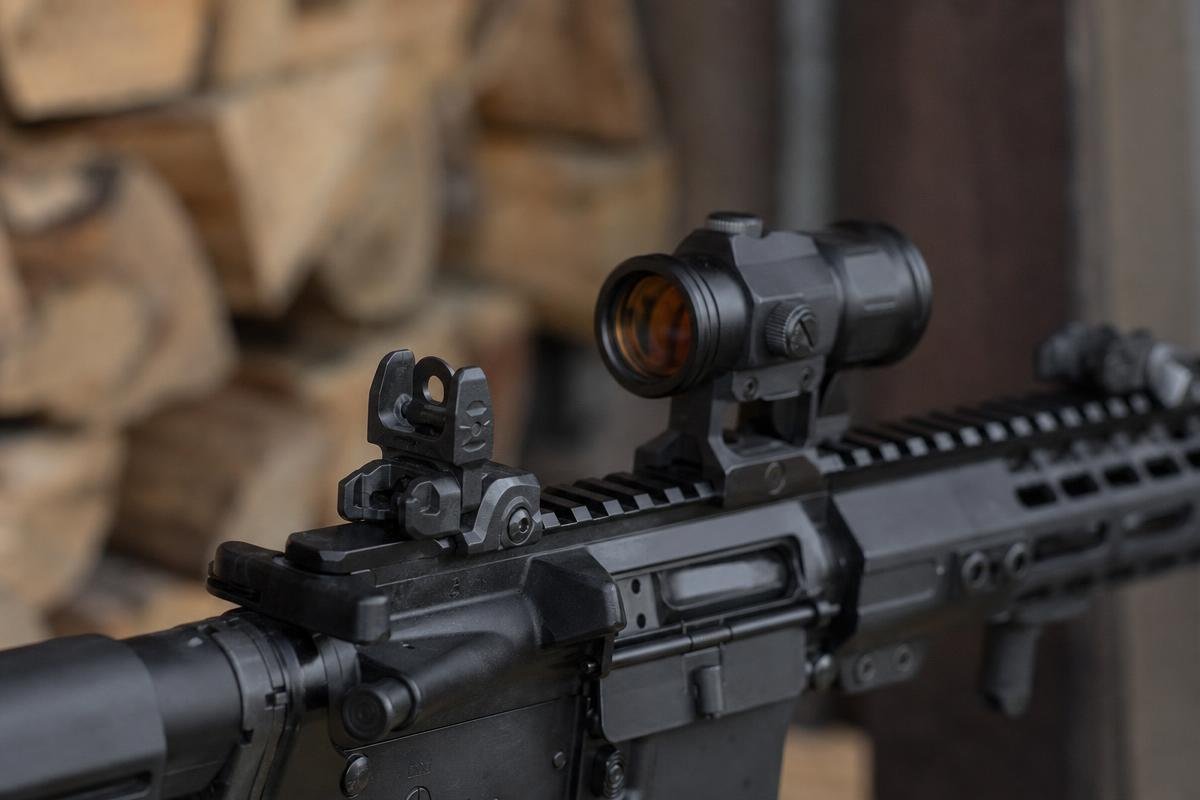
Flip-up BUIS fold flat against the rail; weight and folded dimensions vary by model. A flat-top upper receiver with a full Picatinny rail gives you the mounting space to run both an optic and a folded BUIS set without crowding either.
Are Backup Sights Legally or Practically Required?
Some competition stages may favor or require an iron-sight option, depending on the current match rules. If your optic goes down mid-match and you have no flip-up backup iron sights, you are done. For home defense, a magnified optic at 4x or higher creates a real problem at close range. BUIS let you acquire a target fast without dialing power down under stress.
For duty or defensive use, a confirmed 100-yard iron-sight zero is worth more than a quick 25-yard shortcut. Mechanical sights do not need batteries, firmware, or a clear lens. They work.
Choosing Fixed, Flip-Up, and Low-Profile BUIS
Not all AR-15 backup sights are built the same, and the form factor you choose changes how your rifle handles, how your optic mounts, and how fast you can get on target if your primary optic goes down. Here is what separates the three main types.
What Are Fixed Iron Sights?
Fixed sights stay up permanently, with no deployment step, no spring to wear out, and no button to press under stress. That simplicity is the point. A steel A2-style front sight base adds weight compared with lighter alternatives but offers a durable fixed option. Steel fixed sights can also be a more heat-resistant choice for builds exposed to prolonged high temperatures.
The trade-off is field of view. Fixed sights must match the sight-plane height required by the upper, handguard, and optic setup. If your optic mounts low, the front post intrudes into the sight picture. Fixed sights work best on dedicated iron-sight builds or on rifles running optics at absolute co-witness height.
When Should You Use Flip-Up Backup Sights?
Flip-up sights are the right call for any optic-equipped rifle, because they fold flat against the Picatinny rail and deploy only when you need them. Spring-loaded designs, including the Magpul MBUS, deploy with a button press and fold manually. Follow the manufacturer's instructions for deployment and storage.
The Magpul MBUS is the most widely recognized polymer flip-up on the market. The standard version is lightweight and affordable. The MBUS Pro uses a steel construction. Confirm height and compatibility with your optic, rail, and suppressor setup before ordering. Rear flip-ups typically offer a large ghost-ring aperture (0.200 inch or larger) for fast close-range acquisition and a smaller precision aperture (0.070 to 0.090 inch) for distance work. For most optic-equipped builds, flip-ups are the practical default.
What Are Low-Profile and Micro BUIS For?
Low-profile BUIS exist to clear the objective bell of a magnified optic, and they are not a niche product if you run an LPVO or ACOG. Standard-height sights placed behind those objectives create a parallax problem or block the sight picture entirely. Low-profile sights must be selected as a compatible front-and-rear set with a consistent sight plane and adequate optic clearance. Without that front-to-rear height match, your zero is meaningless.
If you are building an optic-heavy rifle and want to pair it with a complete upper, factor in your optic height before you order BUIS. Getting the height wrong costs you a second set of sights.
| Form Factor | Always Ready | Rail Space Used | Weight Range | Best Use Case |
|---|---|---|---|---|
| Fixed | Yes | Minimal | Varies by model | Dedicated iron-sight builds, absolute co-witness setups |
| Flip-Up | No (deploy on demand) | Minimal when folded | Varies by model | Optic-equipped builds, general-purpose AR-15s |
| Low-Profile / Micro | Varies | Minimal | Varies by model | Magnified optic builds (LPVO, ACOG) |
Not sure which form factor fits your setup? We ship eligible parts nationwide from our Denison, TX facility. Call our team for parts and compatibility advice before ordering.
Co-Witnessing Your BUIS: Absolute vs. Lower Third
What Does Co-Witness Height Mean?
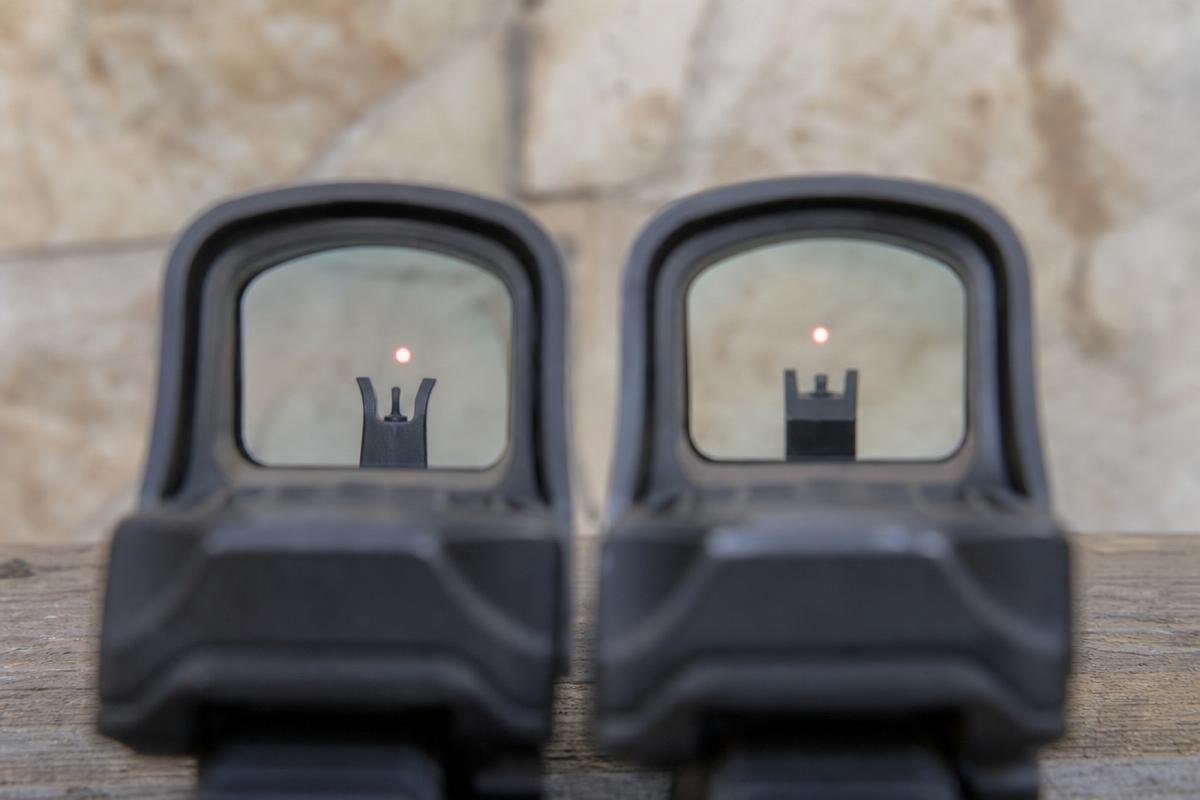
Co-witness means your BUIS and your primary optic's reticle share the same line of sight when you look through the optic. Co-witness depends on the sight-plane height of the BUIS and the centerline height of the optic mount. Confirm both manufacturers' specifications before choosing an absolute or lower-third setup. Get this wrong and your BUIS are either buried in the optic's field of view or completely out of frame.
Absolute Co-Witness Setup
Absolute co-witness puts the front sight post and rear aperture directly in the center of the optic's field of view. This requires an optic mount designed for absolute co-witness with your specific sights. The advantage is immediate: if the optic fails, your BUIS are already in your line of sight with no cheek-weld adjustment needed.
The tradeoff is clutter. The front post sits in the lower portion of the optic at all times, which some shooters find distracting during precision work. For a home-defense or duty rifle where speed matters more than a clean sight picture, absolute co-witness is a defensible choice.
Lower-Third Co-Witness Setup
Lower-third co-witness uses a mount designed to place the irons in the lower portion of the optic window. The BUIS drop to the bottom third of the field of view, leaving the center of the optic clear. The sight picture is cleaner for most shooting. To transition to irons, you drop your cheek weld slightly. This is the more common setup on duty and competition rifles.
Transitioning from optic to irons in bright sunlight requires a deliberate cheek-weld adjustment, so knowing which setup you are running before your first range session matters. If you are running a suppressor, standard BUIS may fall below your line of sight entirely. A suppressor or tall optic mount can change sight-clearance requirements, so confirm component dimensions before ordering. Check your upper receiver configuration before you buy. Our 300 Blackout complete uppers are a common pairing with suppressors where this issue comes up directly.
BUIS Mounting and Co-Witness Considerations
A clean installation starts before you touch the sight. At dusty outdoor ranges, fine grit can settle into Picatinny rail slots. Wipe the rail with a dry cloth or a CLP-dampened patch before mounting. Debris under the base throws off seating and can cause the sight to shift under recoil.
Tools and Torque Specs
You need an inch-pound torque wrench, not a foot-pound wrench. The difference matters. Use the torque value specified by the sight manufacturer. Polymer and metal sight bodies can have different limits, and over-tightening can damage the mounting hardware or sight body. You will also want a front sight adjustment tool if you are running an A2-style post.
Front Sight Mounting
Mount the front sight as close to the muzzle end of the handguard as possible. This maximizes sight radius. On a 16-inch carbine with a standard flip-up set, you can expect a sight radius of 14 to 15 inches. That extra distance between front and rear aperture directly improves your precision at 100 yards and beyond.
If your handguard is M-LOK without a top rail section, you need a 1 to 3 slot M-LOK rail adapter at the 12 o'clock position before the sight can mount. Confirm the adapter type and rail height required by your handguard before mounting the front sight.
Rear Sight Mounting and Alignment
Mount the rear sight as far rearward on the flat-top upper's Picatinny rail as possible without blocking the charging handle. Before you go to the range, deploy both sights and look through the rear aperture. The front sight post should center cleanly in the aperture with no canting. If it does not, check that both bases are fully seated and the locking levers are engaged. A misaligned pair at home means a wasted trip to the range.
Have questions about mounting flip-up backup iron sights on your build? Call us at (888) 706-0633 or contact our team online. We ship parts from our Denison, TX facility and can help you check compatibility before ordering.
How to Zero Backup Iron Sights
Zeroing your AR-15 backup sights correctly means the difference between a reliable fallback and a liability. The process is straightforward, but each step matters. Skip one and your point of impact will be off when you need it most.
What Is the Best Zero Distance for BUIS?
For 5.56 NATO, a 50/200 zero is an approximate reference, not a guaranteed trajectory. Results vary with ammunition, barrel length, sight height, and conditions. For duty or serious use, seek qualified instruction and verify your chosen zero under safe range conditions.
Caliber matters here. Shooters running 300 Blackout uppers or 7.62x39 are working with a different trajectory curve entirely. Pull the ballistic data for your specific load before you set a zero distance. Do not assume 5.56 data applies.
Wind can affect results at outdoor ranges. A confirmed 100-yard zero gives you a real-world reference point that a 25-yard shortcut simply cannot replicate in those conditions. Looking for compatible parts? We ship eligible orders from our Denison, TX facility, and our team can answer questions by phone.
The Zeroing Process Step by Step
- Bore-sight at home to get your point of aim close before you drive to the range.
- Fire a 3-shot group at 25 yards from a supported position, sandbags or a solid rest. Not freehand.
- Measure the group center's offset from your point of aim in inches.
- Adjust rear sight windage for left and right corrections. Adjust the front sight post for elevation. Rotating the front post clockwise raises the point of impact on A2-style front sights. Adjustment values vary by sight model, so use the manufacturer's instructions.
- Fire a confirming 3-shot group before moving to your final zero distance.
Confirming Your Zero After Initial Adjustment
Move to 50 or 100 yards and fire a 5-shot group from a supported position. A confirmed zero should remain consistent across repeated supported groups with the same rifle and ammunition. If the group is clean and centered, your AR-15 iron sights zeroing is done.
After major temperature changes or hard impacts, re-confirm zero before relying on the sights. It takes one 5-shot group and five minutes.
BUIS Selection Checklist: What to Look for Before You Buy
Before you order a set of AR-15 backup sights, run through this checklist. These are the questions we see buyers skip, then regret later. This checklist puts the key fit and setup questions in one place.
- Material: Steel bodies hold up to hard use, UV exposure, and prolonged heat. Polymer sets like the Magpul MBUS are fine for range and recreational builds but can degrade faster under years of outdoor heat.
- Aperture options: Does the rear sight offer both a large ghost-ring aperture and a small precision aperture? You want both for fixed and flip-up AR sight setups.
- Co-witness height: Match the sight height to your optic mount. Standard, lower-third, and suppressor-height mounts all require different BUIS heights.
- Deployment mechanism: Spring-loaded button deploy is faster. Manual fold has fewer potential failure points. Pick based on your use case.
- Rail compatibility: Standard Picatinny (MIL-STD-1913) mounts directly. M-LOK and KeyMod handguards need an adapter section or a rail segment.
- Windage adjustment: Tool-free adjustment is faster in the field. Coin or punch adjustment is more common on budget sets.
- Front sight post thread pitch: Confirm the front sight post's thread pattern and adjustment value before buying replacement parts.
- Weight: Steel sets are generally heavier than polymer sets; compare manufacturer-listed weights. Factor this into your overall build weight.
- Suppressor compatibility: If you plan to run a can, confirm the front sight clears your suppressor's diameter before you buy. Suppressor-height BUIS for AR-15 use are a separate product category.
- Budget: Pricing varies by material, design, and manufacturer. Compare current options and request help choosing a configuration that fits your needs.
If you are building out your upper at the same time, other upper-receiver accessories may also be worth considering alongside your BUIS setup. Questions about what we have in stock? Contact our team for parts and compatibility advice before ordering.
Shooting with AR-15 Backup Sights in Dust and Heat
How Do Heat, Dust, and UV Affect Your BUIS?
Grit and heat wear on backup sights faster than most shooters expect, so a little maintenance goes a long way. Fine dust at outdoor ranges can collect in AR-15 backup sights. After a full day session, pivot points and aperture housings collect grit that accelerates wear if you ignore it. A light wipe-down and a drop of CLP on each pivot point after every dusty range trip is all it takes.
Inspect polymer BUIS periodically for looseness, damage, and changes in pivot tension. It is not an immediate functional failure, but check the pivot tension annually. Steel BUIS handle the heat without deforming, but surface rust can appear after humid range sessions. CLP on the aperture housing prevents that.
Zero your BUIS at distance before you need them, especially if you shoot in gusty open country. A confirmed 100-yard zero with your AR-15 iron sights is more useful than a quick 25-yard shortcut.
Transitioning from Optic to Irons Under Stress
Direct sunlight creates glare that makes a rushed optic-to-iron transition harder than it looks on the range. Your cheek weld changes depending on whether you run absolute or lower-third co-witness. Practice the transition deliberately before you rely on it. If your stock position affects your sight picture during that shift, reviewing your upper and stock fit together is a reasonable starting point for a build adjustment.
Dry-fire drills take less than five minutes per session. Deploy the BUIS, acquire the sight picture, confirm alignment. Do it every range trip. For product availability, contact our team before ordering.
Frequently Asked Questions
What is the difference between BUIS and standard iron sights?
BUIS fold flat against the rail when not in use, so a primary optic can occupy the same space without obstruction. Standard fixed iron sights stay deployed at all times. On an optic-equipped build, a fixed front sight post will block the objective lens of most scopes, which is why flip-up or low-profile BUIS for AR-15 builds are the practical choice.
Do I really need BUIS if my red dot has a long battery life?
Yes. Battery performance can vary in high temperatures. Impact damage and lens fogging are real failure modes too. A BUIS set adds weight, with the amount varying by model, and offers a mechanical fallback.
What is the best zero distance for backup iron sights?
There is no universal best distance. A 50/200 zero is an approximation for some 5.56 NATO setups, not a guaranteed second intersection. For duty or serious use, a verified 100-yard reference is more dependable; consult a qualified instructor and follow safe range practices.
Is the Magpul MBUS reliable enough for serious use?
The standard MBUS uses a polymer body, while the MBUS Pro uses steel construction. Follow the manufacturer's specifications and confirm zero on your rifle before relying on either sight system.
Will BUIS fit any AR-15 upper receiver?
Any flat-top upper with a standard MIL-STD-1913 Picatinny rail accepts BUIS without modification. M-LOK and KeyMod handguards need a rail adapter at the 12 o'clock position for the front sight. Shooters looking for a compatible platform can browse our flat-top upper options to find one in stock and ready to ship.
How do I confirm my co-witness is set up correctly?
Deploy the BUIS and look through your optic. In absolute co-witness, the front post and rear aperture center in the optic's field of view. In lower-third co-witness, they sit in the bottom third. If the irons appear off-center left or right, adjust rear sight windage before you zero.
For more on building out your upper, review bolt carrier group compatibility, coatings, and maintenance before choosing components.
Ready to add a BUIS set to your build? We ship eligible backup iron sights and upper parts from our Denison, TX facility, subject to applicable restrictions. Browse our flat-top upper receivers, call us at (888) 706-0633, or contact our team for help choosing compatible parts.
Ready to Get Started with AR15Parts.com?
Call (888) 706-0633 or contact our team online for parts and compatibility advice. We can help you compare BUIS options for your optic, rail, and upper before you order. We ship eligible parts nationwide from our Denison, TX facility.