
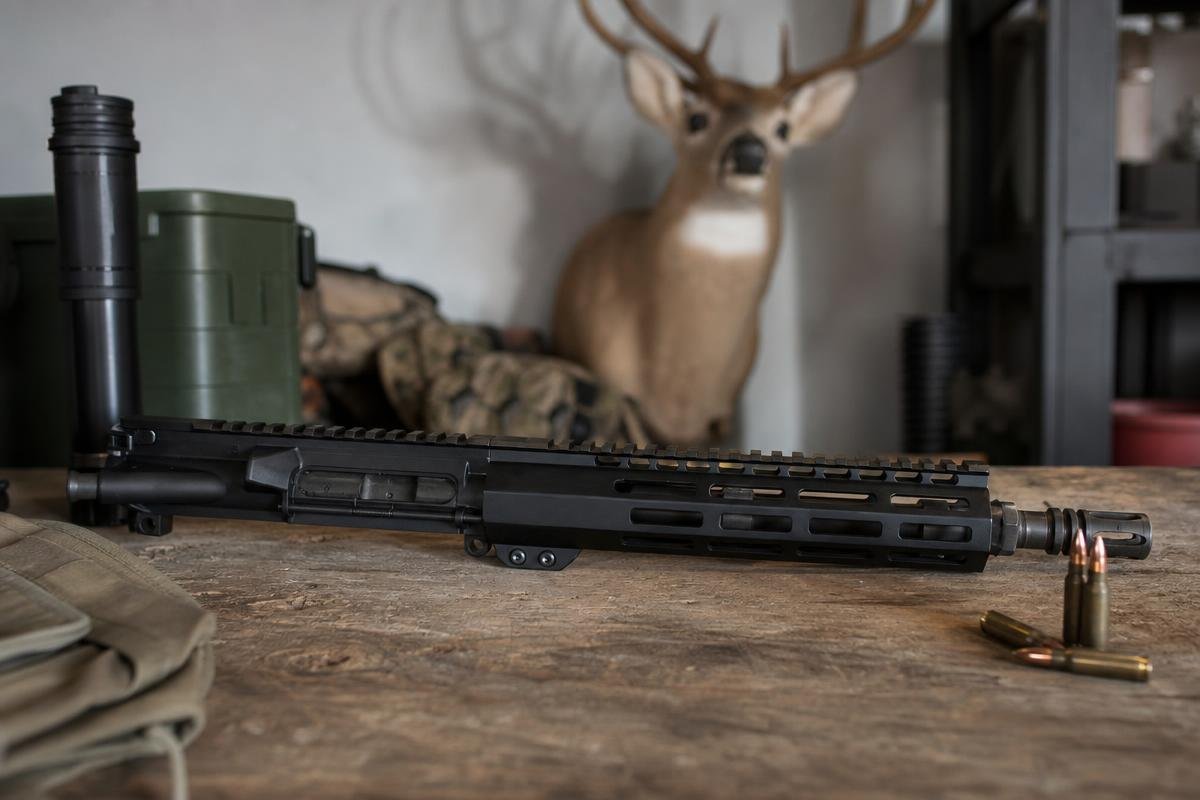
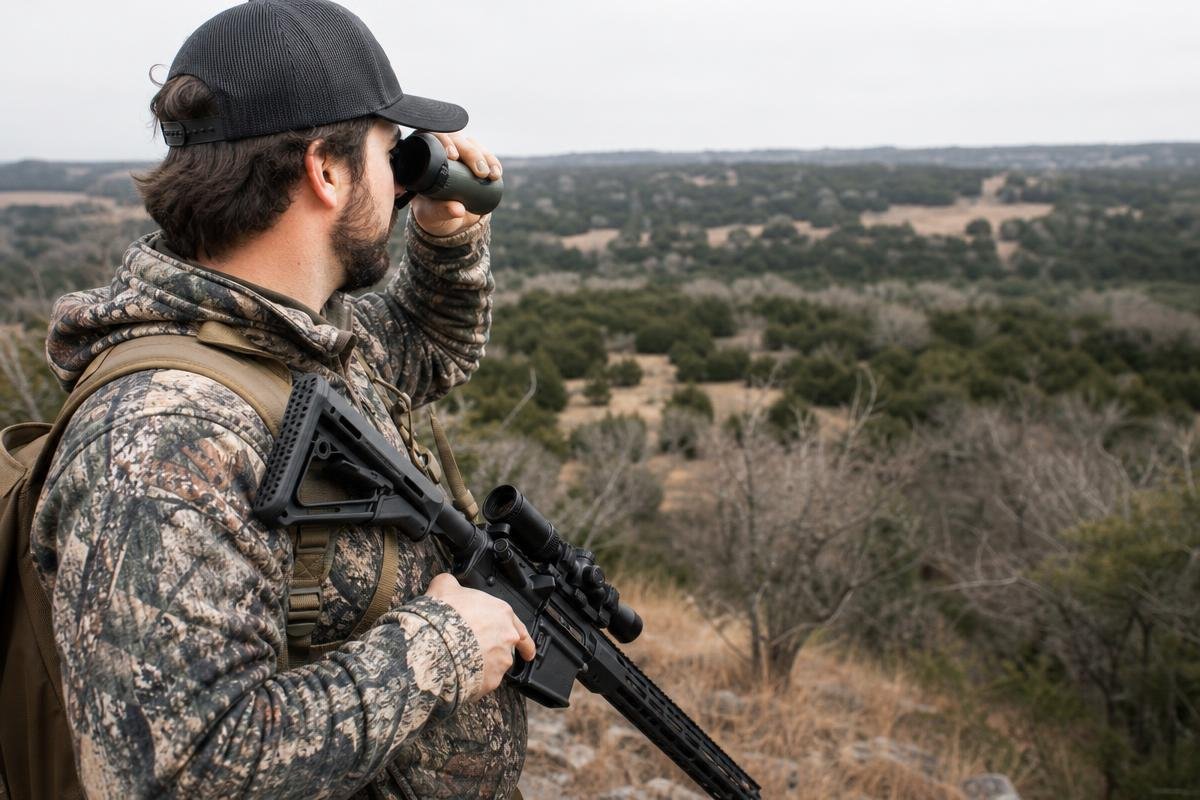
If you're asking whether 300 Blackout is good for hunting, the short answer is yes, and it's a particularly strong fit for the kind of hunting most North Texas shooters actually do. Dense cedar breaks, creek bottoms, and thick mesquite across Grayson County keep most shots under 150 yards, which sits squarely inside 300 Blackout's effective range window.
Our team can answer general questions by phone. We ship from our Denison, TX facility. Browse our 300 Blackout uppers and build the hunting setup you need.
Key Takeaways
- 300 Blackout is good for hunting deer and hogs at typical North Texas shot distances under 150 yards.
- With appropriate 110- to 125-grain hunting ammunition, 300 Blackout can be suitable for whitetail and feral hogs at appropriate distances, subject to load performance and shot placement.
- A suppressor can reduce muzzle report, but subsonic ammunition should be used on hogs only when the specific load manufacturer documents suitable terminal performance for that use.
- Current TPWD rules permit legal firearms for deer and prohibit rimfire ammunition, but hunters should verify current season, location, WMA, and property-specific requirements before use.
- A 300 Blackout upper drops onto any mil-spec AR-15 lower with no additional modifications required.
Hunters across this region ask the same question every fall: can a .300 BLK cartridge ethically take whitetail and feral hogs, or is it just a suppressor and SBR round? The short answer is yes, it is a capable hunting cartridge. The key is understanding where it performs well and where it runs out of room.
In the dense post oak and cedar breaks of North Texas, and along the Red River bottom drainages, most shots at whitetail and hogs fall inside 150 yards. That range window is exactly where the .300 BLK earns its keep. Current TPWD statewide rules do not list a minimum centerfire caliber, but current season, location, WMA, property, and federal suppressor requirements still apply.
Learn how subsonic and supersonic ammunition compare for hunting, how effective range varies by game animal, and how to assemble a field-ready upper for the coming season. AR15Parts.com stocks 300 Blackout uppers built to run on any standard AR-15 lower, and we ship nationwide.
What Makes 300 Blackout a Viable Hunting Cartridge?
The .300 BLK cartridge fires a .308-inch diameter projectile from a standard AR-15 lower with zero modification to the lower receiver or bolt carrier group. Swap the upper, feed it the right hunting load, and you have a legal, capable hunting setup. That simplicity is a big part of why hunters keep coming back to it.
Ballistics That Matter in the Field
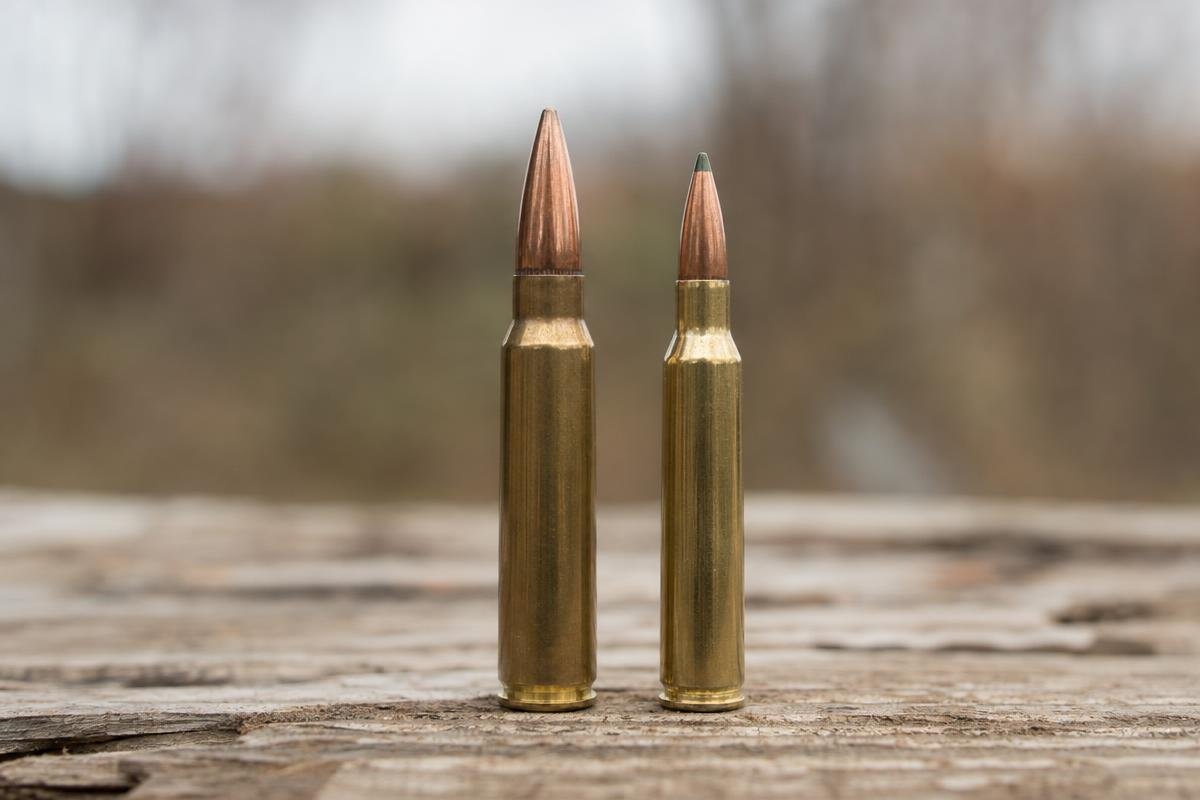
Supersonic hunting loads in the 110 to 150 grain range produce roughly 1,200 to 1,400 ft-lbs of muzzle energy depending on barrel length and specific load. Actual terminal performance depends on the specific load, barrel length, distance, and shot placement. The .308-inch bullet diameter creates a wider wound channel than a .224-inch projectile, and that difference matters on whitetail and hogs. Expansion is more consistent on heavy-boned animals at typical hunting distances.
The practical distance limit for supersonic loads varies by load, barrel length, impact velocity, and manufacturer guidance. As distance increases, retained energy and expansion can become less predictable, so stay within the tested limits for the specific ammunition.
If you are looking at 300 Blackout uppers for a hunting build, a 16-inch barrel is the most practical configuration for field use. It keeps the rifle maneuverable in thick cover while preserving enough velocity for reliable expansion on supersonic loads.
How 300 Blackout Compares to 5.56 for Hunting
5.56 NATO is legal for deer in the state, but it may be a marginal choice for medium game depending on the load, distance, and shot placement. Many hunters and wildlife biologists consider 5.56 marginal on deer because the thinner .224-inch projectile and limited expansion on heavy bone can lead to poor terminal performance, not just as a theoretical concern but as a practical one in the field. The .300 BLK's heavier bullet expands more reliably on deer and hogs at close to mid range.
The tradeoff is range. 5.56 retains energy farther downrange, so if your shots are consistently beyond 200 yards, 5.56 has the edge. Put simply, a hunter tucked into a Cross Timbers box blind watching a cedar-lined sendero at 80 yards is better served by 300 BLK, while a hunter glassing an open sendero out to 250 yards on a South Texas ranch is not. In the tight post oak and cedar breaks common across this region, most shots stay inside 100 to 150 yards, which is exactly the terrain where 300 Blackout earns a clear yes as a hunting cartridge. Selecting an appropriate barrel and hunting load can improve performance within the cartridge’s intended range.
Subsonic vs. Supersonic 300 Blackout: Which One Do You Hunt With?
This is the question that trips up most hunters new to the cartridge. The answer is straightforward: for deer and feral hogs, you run supersonic. Subsonic loads have a specific role in the field, but it is a narrow one.
Supersonic Loads for Deer and Hogs
Supersonic 300 BLK loads typically run 110 to 130 grains at 2,100 to 2,350 fps from a 16-inch barrel. Purpose-built expanding loads may perform effectively on whitetail within their manufacturer-tested velocity and distance limits. For deer, the Hornady 110gr V-MAX and 110gr FTX are frequently cited loads. Performance varies by load, barrel length, distance, and shot placement.
For 300 blackout hog hunting, step up to 125 to 130gr soft-point loads. Hogs have dense shoulder shields and thick hide. Heavier bullets at supersonic velocity give you the penetration to reach vitals through that structure. Barrel length matters here. Dropping below 10.5 inches costs you meaningful velocity on hunting loads. A 16-inch barrel is the practical floor for field use, and it is worth understanding how your 300 Blackout barrels affect that velocity before you head out.
When Subsonic Makes Sense in the Field
Subsonic 300 BLK loads run 200 to 220 grains at roughly 1,000 to 1,050 fps. Muzzle energy drops to around 450 to 500 ft-lbs. At that energy level, suitability should be evaluated against the ammunition manufacturer’s intended-use and expansion data rather than a universal energy threshold. Do not use subsonic for whitetail. The energy simply is not there for a clean, humane kill.
Subsonic ammunition requires load-specific terminal-performance review before any hunting use. A suppressor can reduce muzzle report, but reduced sound does not establish adequate terminal performance. Do not use subsonic ammunition on hogs unless the specific load manufacturer documents suitable expansion, penetration, and intended use. It is not a deer load. It is not a general hunting load. It is a specific tactic for a specific situation.
For 300 blackout subsonic vs supersonic decisions, the short version is this: supersonic for any game animal, subsonic only where a specific manufacturer documents suitability for the intended target and distance. Our complete uppers are available in configurations that support both roles.
Get your hunting upper ready before season opens. We stock 300 Blackout uppers in supersonic and suppressor-ready configurations, assembled and function-checked in-house.
Is 300 Blackout Good for Deer Hunting in North Texas?
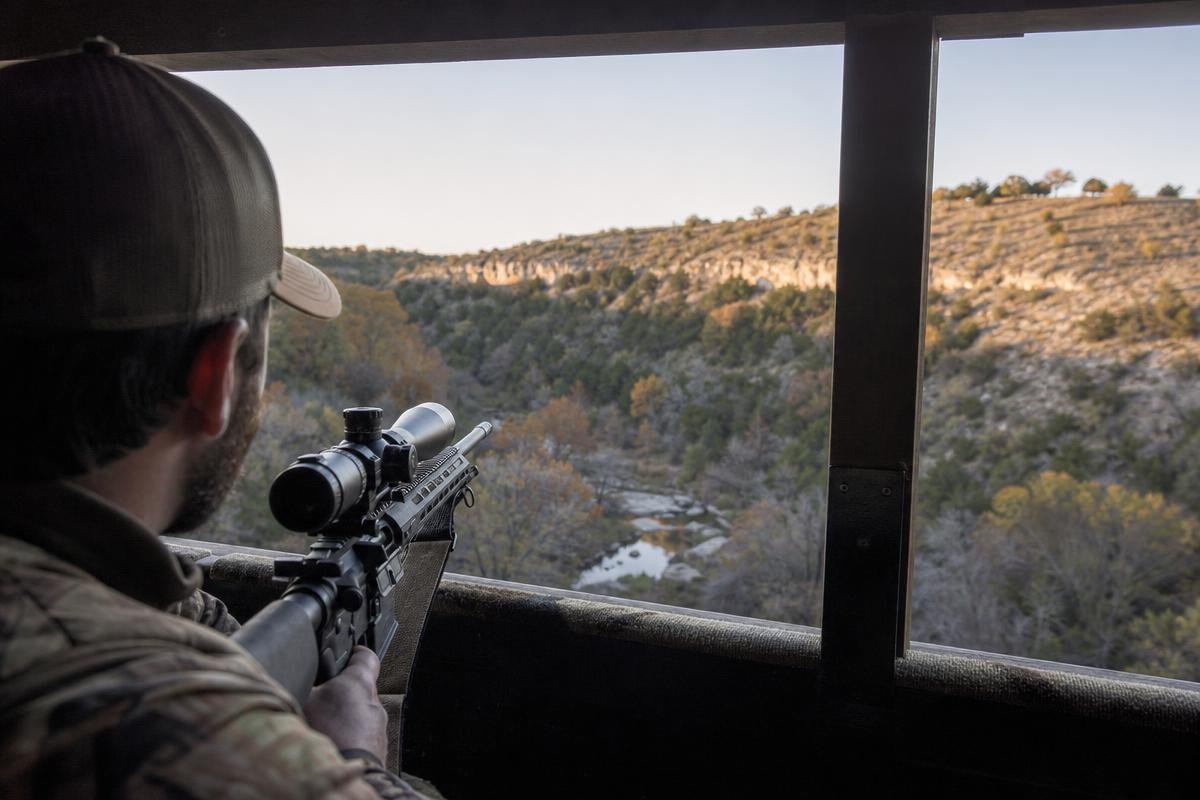
For hunters working this region, the answer is yes. The terrain here does most of the work. Post oak flats, cedar breaks, and Red River bottom drainages naturally compress shot distances. Most whitetail encounters in this country happen inside 100 yards. A few push to 150. That range window is exactly where 300 BLK supersonic loads perform cleanly on deer-sized game.
Box blinds and river-bottom stands are the standard setup around Denison and the surrounding leases. You are rarely shooting across open pasture. Dense cedar and creek timber keep ranges tight. That is not a limitation for this cartridge. It is a match. For a full read on what the cartridge does at those distances, the ballistics section above covers terminal performance in detail.
Whitetail Near Lake Texoma: Terrain and Shot Distance
The Cross Timbers region that runs through this part of the state is broken country. Visibility is short. Shots that feel long here would be considered close-range in open West Texas terrain. A purpose-built supersonic expanding load may be suitable for whitetail within the ammunition manufacturer’s tested impact-velocity and distance limits. We keep uppers in stock and ready to run on any mil-spec lower, so you are not waiting on a long build when season opens.
Feral hog pressure in this area is high. A suppressed 300 BLK AR can reduce muzzle report, but deer and hog ammunition should be selected separately according to the load manufacturer’s intended use.
Legal Considerations for Deer Hunting in Texas
Texas Parks and Wildlife sets no minimum caliber for deer hunting. Current TPWD rules permit legal firearms for whitetail and prohibit rimfire ammunition, but hunters should confirm current season, location, WMA, and property-specific requirements. Suppressed hunting is also legal in the state with proper NFA paperwork in place. Since January 1, 2026, the NFA tax on suppressors and SBRs is $0, but ATF Form 4 (or Form 1) registration and approval are still required.
Private leases and Wildlife Management Areas sometimes carry restrictions beyond state minimums. Confirm rules with your lease manager or the specific WMA before the season. State law is permissive, but managed land rules vary.
Hogs, Varmints, and Other Game: Where 300 Blackout Performs
Feral Hog Hunting with 300 Blackout
Feral hog pressure across the Red River counties is real, and 300 BLK hog hunting is a practical setup for it. Larger boars can be thick-skinned and harder to anchor. A 125- to 130-grain bonded soft-point may provide suitable penetration on a broadside shot when used within the ammunition manufacturer’s tested limits. Bullet selection matters here. Stick with a bonded or controlled-expansion projectile, not a thin-jacketed varmint round.
Feeder setups and stand hunting are common throughout the area. The compact AR platform in this chambering handles sounder situations well. Recoil is light enough for fast follow-up shots when multiple hogs are in range. For nighttime hog control, a suppressor can reduce report, but ammunition still needs documented terminal performance for the target and distance. The subsonic vs. supersonic section above covers that tradeoff in detail.
Varmints and Predators at Close Range
Coyote calling in thick cedar brush is a realistic scenario on both sides of the Red River. Most shots happen under 100 yards. A purpose-built supersonic varmint load may be suitable for coyotes within the ammunition manufacturer’s tested distance and impact-velocity limits.
This is not a long-range varmint cartridge. If you are consistently calling coyotes across open pasture at 200 yards or beyond, a different chambering makes more sense. 6.5 Grendel uppers give you a meaningful range advantage on the same AR platform. For thick-cover predator work where shots stay inside 150 yards, the 300 BLK holds its own without issue.
Building a hog or predator setup? We stock 300 Blackout complete uppers assembled, headspaced, and function-checked in-house, ready to run on your lower. Call us at (888) 706-0633 with questions.
Building a 300 Blackout Hunting Upper: What You Need
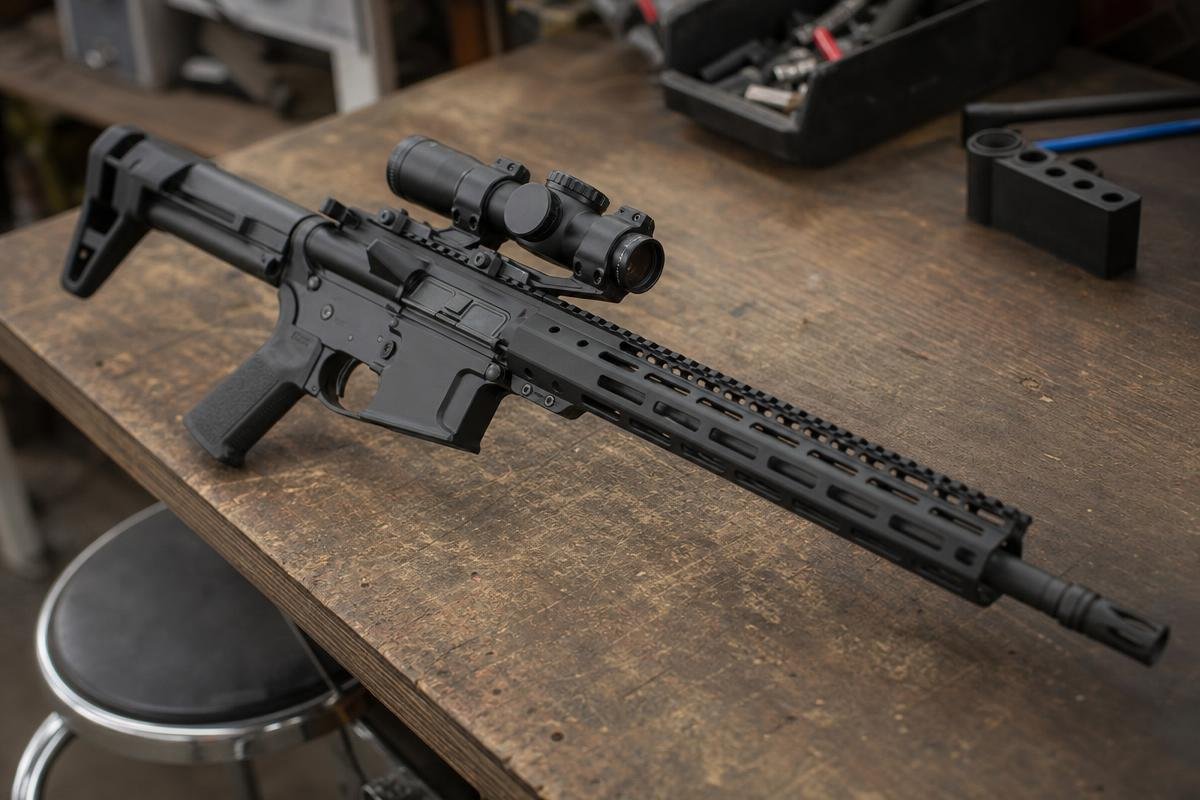
Putting together a 300 blackout upper for hunting does not require a complicated build. You need the right barrel length, a practical optic, and a handguard that keeps the platform light and field-ready. Our complete uppers are assembled, headspaced, and function-checked in-house, so they ship as turnkey units that install on any mil-spec lower receiver.
Barrel Length and Gas System for Hunting Use
A 16-inch barrel is the standard choice for a non-NFA hunting build. It keeps the rifle in Title I territory and pushes 110 to 130 grain supersonic loads above 2,100 fps, which is where terminal performance stays reliable on deer and hogs inside 200 yards. That covers the 300 Blackout effective range hunting window comfortably.
Gas-system length varies by barrel and configuration; verify the barrel’s specified gas-system length and match the remaining components accordingly. For material, stainless steel is the better call in humid creek-bottom environments where brush contact and moisture are constant. Chrome-moly works, but stainless holds up better over time in those conditions. Browse our 300 Blackout barrels to see current stock in both materials.
Optics, Handguards, and Muzzle Devices for the Field
For shots inside 200 yards, a 1-6x or 1-8x LPVO is the right optic. It handles close shots from a box blind at 1x and gives you a clear, precise sight picture at distance when you need it. A red dot works at short range, but the LPVO covers more situations without adding much weight.
A free-float M-LOK handguard keeps the build light and leaves the barrel untouched, which matters for accuracy and for running a suppressor later without the can contacting the handguard. The common muzzle thread pitch on 300 BLK barrels is 5/8x24, but verify the individual barrel specifications before ordering a muzzle device. A thread protector covers the unsuppressed setup; a suppressor-ready muzzle device gives you both options. If you want to compare calibers before committing, our complete AR-15 uppers page covers 19-plus chamberings side by side.
300 Blackout vs. Other Hunting Calibers on the AR Platform
Hunters switching to an AR platform often compare several calibers before committing. Two come up most often against 300 BLK: the 350 Legend for deer and the 450 Bushmaster for hogs. Neither comparison has a clean winner. Both come down to your specific hunting scenario.
300 Blackout vs. 350 Legend for Deer
The 350 Legend was built for states with straight-wall cartridge restrictions, primarily Ohio, Michigan, and Indiana. That regulatory advantage means nothing here. Hunters in this part of the country face no such restriction, so 350 Legend competes on ballistics alone.
Supersonic 350 Legend loads in the 150 to 180 grain range run 2,100 to 2,300 fps and produce slightly more muzzle energy than supersonic 300 BLK at the same distance. That gap matters most at 150 to 200 yards. Inside 150 yards, which covers most shots in dense cedar breaks and creek bottom drainages, 300 BLK deer hunting performance is comparable. If your shots are consistently pushing past 175 yards, 350 Legend uppers are worth a look. If your shots stay inside that window, 300 BLK holds its own.
300 Blackout vs. 450 Bushmaster for Hogs
The 450 Bushmaster is a different class of cartridge. A 250 to 300 grain projectile at 2,100 fps produces 2,400 to 2,700 ft-lbs of muzzle energy. That is roughly double what a supersonic 300 BLK generates. For boars pushing 200 pounds or more, that extra energy produces a faster, more reliable anchor.
300 BLK hog hunting is effective inside 100 yards with a well-placed shot. On mature boars in thick cover where a quick follow-up matters, the 450 Bushmaster removes doubt. If you are running a suppressed setup on mixed-size hogs, 300 BLK is practical and capable. If you are consistently targeting large animals and want more margin, 450 Bushmaster uppers give you that margin without changing your lower receiver.
Frequently Asked Questions
Is 300 Blackout legal for deer hunting?
Current TPWD rules prohibit rimfire ammunition for deer and do not list a minimum centerfire caliber on the reviewed statewide means-and-methods page. Verify the current rules before hunting. Check your specific lease or WMA rules before the season opens, as private land managers sometimes set their own requirements.
What is the effective range for 300 Blackout deer hunting?
The practical range of supersonic 110- to 130-grain loads varies by ammunition, barrel length, impact velocity, and manufacturer guidance. At longer distances, retained energy and expansion can become less predictable. Most shots in post oak and cedar break country fall inside 100 yards anyway, which puts this cartridge squarely in its effective window.
Can you hunt hogs with subsonic 300 Blackout loads?
Not recommended for hunting-sized animals. Subsonic loads lack the energy to drive reliable expansion through a hog's shoulder. For 300 Blackout hog hunting, run supersonic 125 to 130 grain bonded or soft-point loads. Subsonic suppressed setups work for pest control on smaller animals at under 50 yards, nothing more.
What barrel length works best for a hunting build?
A 16-inch barrel keeps the rifle out of NFA territory and maximizes supersonic velocity. A rifle with a barrel under 16 inches generally requires approved NFA registration as an SBR, while an AR pistol without a shoulder stock is not classified as an SBR under federal law solely because of its barrel length; verify current federal and state requirements. Browse our 300 Blackout barrels if you are sourcing components for a custom build.
How does 300 Blackout compare on hogs versus deer?
Hogs are tougher. Use a heavier bonded bullet and keep shots inside 100 yards. Use a purpose-built load within its manufacturer-tested limits and account for shot placement, angle, and animal size. For large boars at range, a heavier-hitting platform is more reliable.
Where can I get a 300 Blackout upper near the Texoma area?
We carry complete 300 Blackout uppers assembled, headspaced, and function-checked, ready to run on your mil-spec lower. We ship nationwide from 4000 Texoma Parkway, Denison, TX 75020. Call (888) 706-0633 with questions or to confirm availability before your season starts.
Ready to Get Started with AR15Parts.com?
Call (888) 706-0633 to speak with our team directly. We're ready to answer your questions, walk you through your options, and help you find the right solution for your needs. Whether you're just starting to plan or ready to move forward, we’ll help explain the available options and next steps. Reach out today and let's talk about how we can help.