
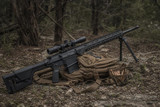
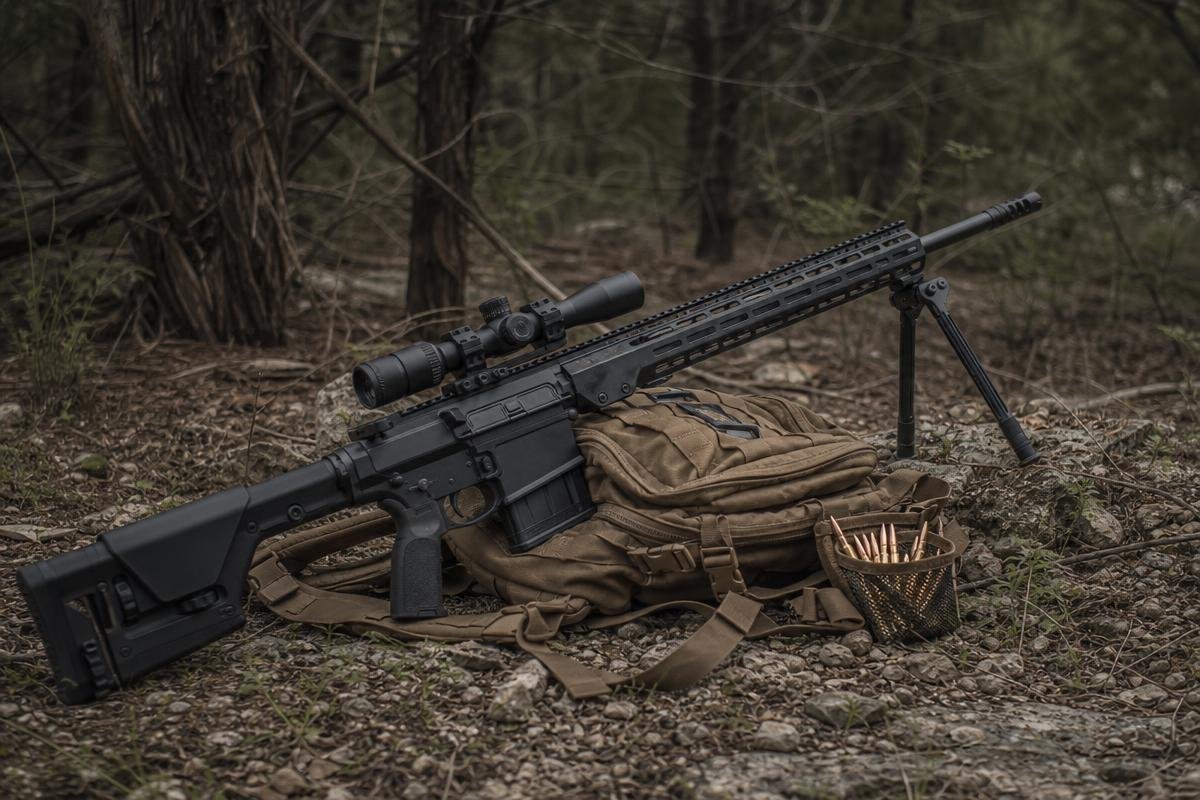
Is .308 good for hunting? The short answer is yes, and it has been for decades. The .308 Winchester handles whitetail, hog, and exotics cleanly at practical field ranges, making it one of the most proven deer cartridges in North America. Our .308 Winchester uppers and complete rifles ship from our Denison, TX facility where permitted. Whether you are hunting the cedar breaks along Lake Texoma or chasing whitetail across the Hill Country, we can help you compare compatible options.
We ship .308 uppers and rifles from our Denison, TX facility where permitted and can help you compare options. Need help choosing the right .308 build for your hunt? We can point you in the right direction.
Key Takeaways
- The .308 Winchester can be effective for whitetail, hog, and exotic game when the load is appropriate and current Texas regulations are followed.
- Hunters evaluating the .308 Winchester should verify load-specific trajectory, impact velocity, and bullet performance at any intended distance.
- The AR-10 platform chambers .308 Winchester and gives hunters a semi-automatic option with fast follow-up shots.
- The .308 Winchester produces more recoil than 6.5 Creedmoor but delivers heavier bullets with proven field results.
- Suppressor possession and use require compliance with current federal and state law; verify current ATF and Texas requirements before configuring a suppressed .308 build.
What Is .308 Winchester and Where Did It Come From?
Winchester introduced the .308 Winchester commercially in 1952. The goal was straightforward: match .30-06 Springfield ballistics in a shorter, more efficient case. That shorter case fit short-action receivers, which meant lighter rifles and faster cycling. Two years later, in 1954, the U.S. military adopted the nearly identical 7.62x51mm NATO round. The cartridge was already in hunters' hands before the military ever standardized it.
From Military Cartridge to Hunting Standard
The .308 Win spread fast across North America because it hit the right balance. Short-action receivers kept rifle weight down. Recoil stayed manageable. Muzzle energy was enough for deer-class and elk-class game at practical hunting distances. Those three factors together made it one of the most widely chambered hunting rounds on the continent, and that reputation has held for over 70 years. If you want a complete platform built around this cartridge, we carry complete AR-15- and AR-10-style rifles ready to go.
How .308 Win and 7.62x51mm NATO Differ
These cartridges share similar external dimensions, but chamber and ammunition standards differ. Published SAAMI and NATO pressure figures are not directly comparable because the test methods differ. Follow the firearm manufacturer’s chamber marking and ammunition guidance rather than relying on a general interchangeability rule.
Before using either cartridge, verify the firearm’s chamber designation and follow the manufacturer’s instructions. Our .308 Win complete uppers are assembled, headspaced, and function-checked in-house, so you know exactly what chamber you are working with.
.308 Winchester Ballistics: Velocity, Energy, and Drop at Distance
The .308 Winchester cartridge is not complicated, but the numbers matter when you are deciding whether it fits your hunting situation. Velocity, energy, and bullet drop all shift depending on barrel length and range. Here is what the data actually shows.
Muzzle Velocity and Energy by Barrel Length
A 20-inch barrel running a 168-grain load produces roughly 2,600 to 2,650 fps at the muzzle. That translates to approximately 2,520 ft-lbs of energy. That is enough to cleanly take deer, hog, and most North American game at practical field distances.
Drop to a 16-inch barrel and you give up around 150 to 200 fps. Muzzle velocity falls to approximately 2,400 to 2,450 fps, with muzzle energy in the 2,160 to 2,200 ft-lbs range. That is a real reduction. A 16-inch AR-10 upper may still fit a use case inside 300 yards, but verify the exact load’s velocity, energy, trajectory, and manufacturer guidance rather than treating the loss as insignificant.
Bullet Drop and Effective Range for Hunting
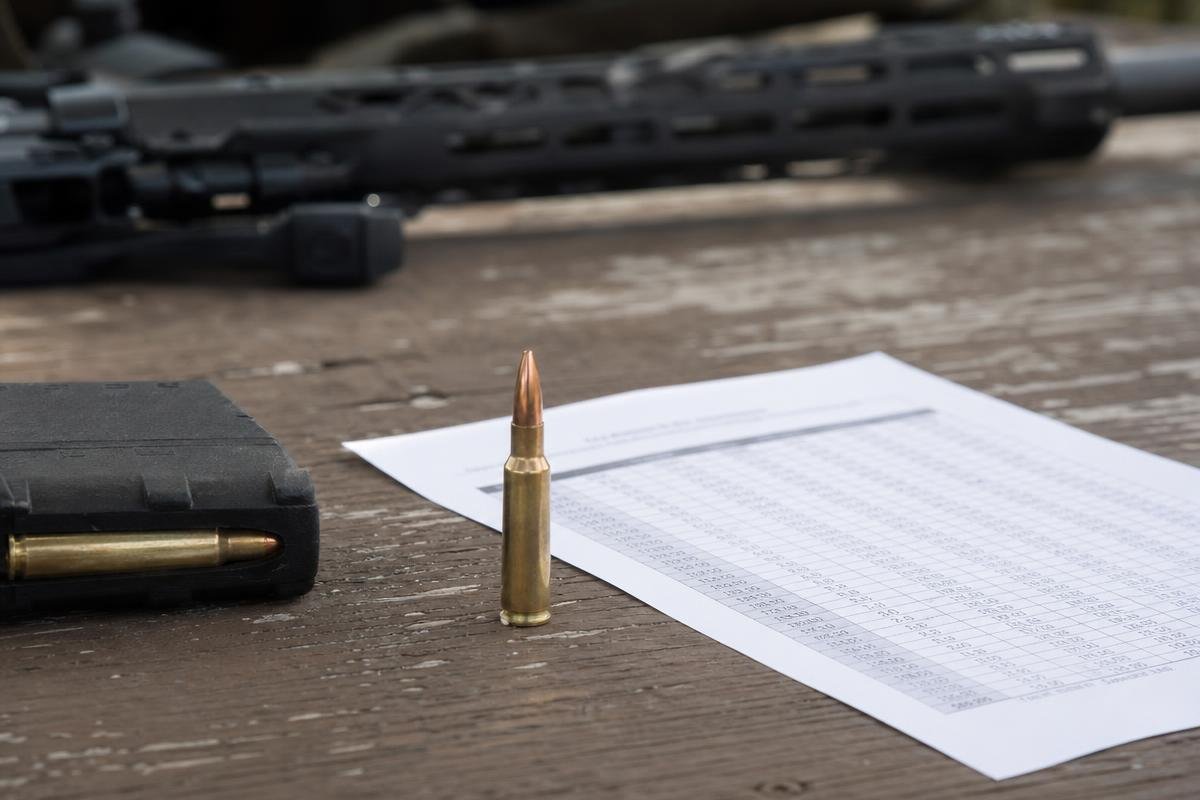
The following illustrative table assumes a 168-grain .308 Winchester load and a 100-yard zero. Because the bullet BC, muzzle velocity, sight height, barrel length, and atmospheric inputs are not fully specified, verify the figures with the exact load before use:
| Range | Bullet Drop | Approx. Retained Energy |
|---|---|---|
| 100 yards | 0 inches | ~2,150 ft-lbs |
| 200 yards | -3.5 inches | ~1,850 ft-lbs |
| 300 yards | -13 inches | ~1,580 ft-lbs |
| 400 yards | -30 inches | ~1,340 ft-lbs |
| 500 yards | -57 inches | ~1,120 ft-lbs |
A 400-yard shot requires a verified ballistic solution, known wind conditions, a stable position, and demonstrated shooter proficiency. At 500 yards, those requirements become even more demanding.
If you are comparing cartridges and want to read about the 6.5 Grendel and its long-range ballistics on a smaller frame, that comparison is worth reading before you commit to a platform. The .308 Winchester ballistics are well-proven for deer hunting inside 400 yards. Beyond that, the cartridge demands more from the shooter.
Is .308 Good for Hunting? Game-By-Game Breakdown
Yes, the .308 Winchester is a capable hunting cartridge for a wide range of North American game, provided you match the bullet to the animal and stay within ethical range limits. It is not the right tool for every situation, but for most hunters in the Cross Timbers and Red River bottom country, it covers the majority of what they will encounter in a season.
Deer and Whitetail
Deer hunting with the .308 Winchester is straightforward. Choose a hunting load whose bullet construction and impact-velocity range suit your intended distance; shot placement also matters. Bullets like the Federal Trophy Bonded Tip and Nosler Partition retain weight and expand reliably through shoulder bone. In post oak thickets around Grayson County, shorter sight lines can make the .308 Win a practical choice for whitetail. Texas prohibits rimfire ammunition for white-tailed and mule deer.
Hogs, Black Bear, and Elk
Feral hogs have thick shoulder shields that defeat lighter cartridges. The penetration advantage of the .308 Win is real here. A heavy 180-grain Federal Fusion or Barnes TSX punches through that plate and reaches the vitals. For black bear or elk, confirm the exact bullet’s intended use, impact-velocity window, and current regulations before relying on a generalized weight recommendation.
A specific 180-grain load may retain substantial energy at distance, but a safe hunting limit must be based on verified drop, wind, impact velocity, bullet construction, current regulations, and shooter proficiency.
Varmints and Small Game
The .308 Win is overkill for coyotes and prairie dogs. It can damage pelts and meat more than a lighter varmint load, depending on bullet construction and shot placement. For varmint work, a 6.5 Grendel upper or a .223 Wylde upper is a far better fit. Save the .308 for animals that need it.
Ready to put this cartridge to work in the field? Shop our .308 Winchester uppers or choose a compatible upper or component that may be shipped directly where permitted. Complete firearms require all applicable FFL-transfer procedures.
How Does .308 Compare to 6.5 Creedmoor and .30-06 for Hunting?
Two cartridges come up every time someone asks whether the .308 Winchester is the right call: 6.5 Creedmoor and .30-06 Springfield. Both are legitimate. Neither automatically beats the .308 Win. The answer depends on your terrain, your platform, and how far you expect to shoot.
.308 vs 6.5 Creedmoor
The 6.5 Creedmoor fires a higher ballistic-coefficient bullet. A 140-grain 6.5 CM load typically runs a G1 BC of 0.530 or better. A 168-grain .308 Win bullet may have a G1 BC around 0.447, depending on the specific bullet. At 500 yards, the higher-BC 6.5 Creedmoor load may drift less and follow a flatter arc under matched conditions, but the exact difference depends on the specific loads and atmosphere.
That edge is real. It is also largely academic for most whitetail hunting in wooded North Texas terrain. Inside 300 yards in post oak thickets, trajectory differences between the two cartridges are measured in inches, not feet. If you are hunting open pasture or chasing pronghorn out west, the 6.5 CM long-range advantage becomes meaningful. For most hunters in this region, it does not. If you want to dig further into the numbers, see our 6.5 Creedmoor complete uppers page for a closer look at that platform.
.308 vs .30-06
The .30-06 fires the same bullet diameter as the .308 Win, typically 100 to 150 fps faster with equivalent bullet weights. That is a real performance difference. The trade-off is a long-action receiver, more overall length, and more weight in the rifle.
The .308 Win can approach .30-06 performance with some comparable loads while fitting a short-action package. That is why it dominates AR-10-pattern rifles. More importantly, the .30-06 is not available in standard AR-10 configurations. If you are building on the AR-10 platform, the .308 Win is the practical choice by default. Our 6.5 Grendel uppers are worth a look if you want a short-action option with strong long-range ballistics on a smaller frame.
Have questions about which caliber fits your hunting setup? Call us at (888) 706-0633 and we will help you sort it out.
Building a .308 Hunting Rifle on the AR-10 Platform
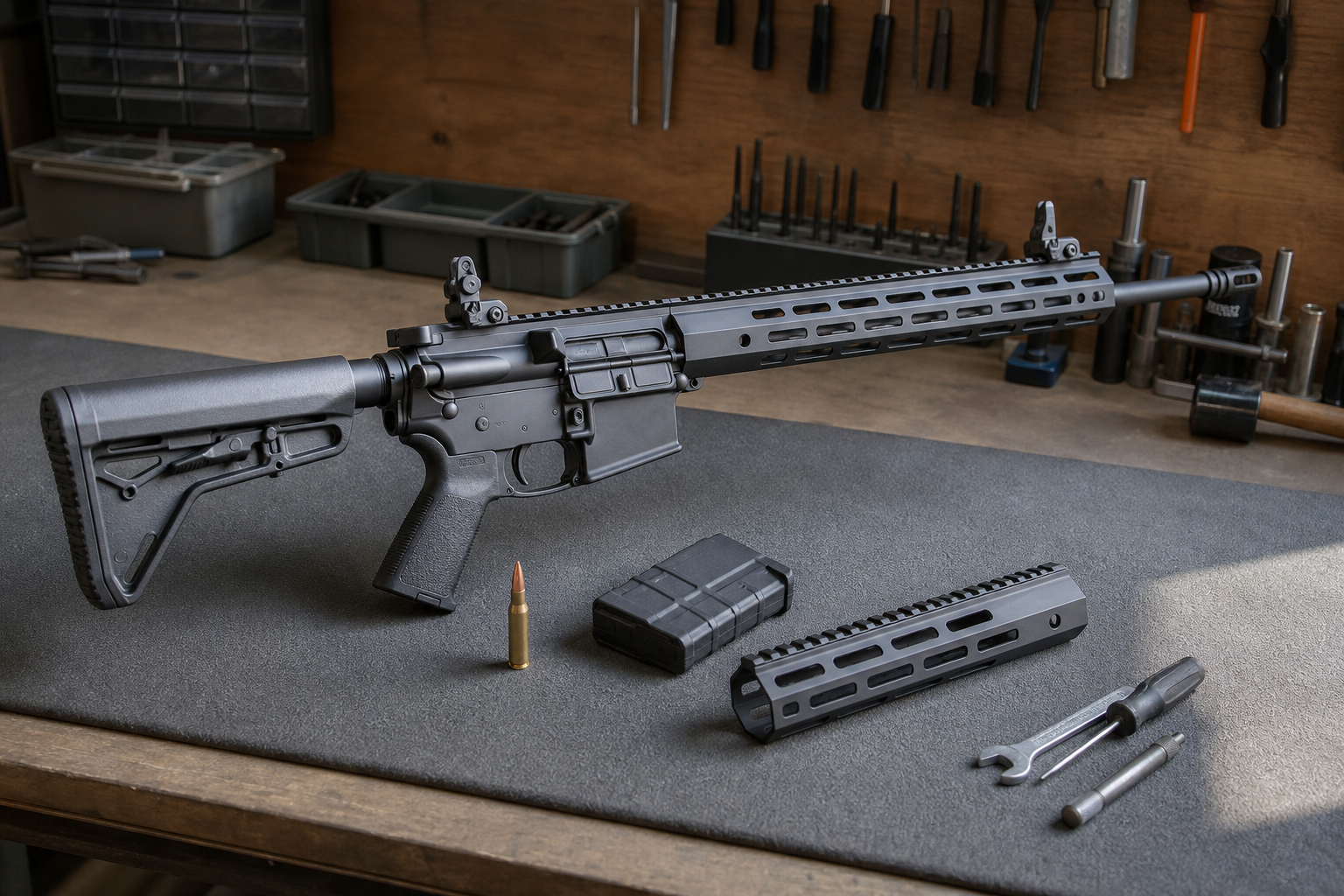
The AR-10 platform gives you a semi-automatic .308 Winchester hunting rifle with fast follow-up shots and a familiar manual of arms. Building one right starts with understanding what parts actually work together, because the most common mistake in a .308 AR-10 build is assuming AR-15 components will carry over.
AR-10 vs AR-15: Platform Compatibility Basics
No, you cannot put a .308 upper on your existing AR-15 lower. The AR-10 uses a larger receiver set, a longer bolt carrier group, and a heavier buffer system. The receiver set and bolt carrier group do not interchange with standard AR-15 components. Some small components may overlap by design, so follow the large-frame manufacturer’s compatibility specifications rather than assuming interchangeability.
The AR-10 also comes in competing patterns. DPMS-pattern and SR-25-pattern lowers are not always cross-compatible at the upper receiver. Confirm your upper and lower are the same pattern before ordering any components.
Choosing the Right Barrel Length for Hunting
Barrel length directly affects velocity and field handling. An 18-inch or 20-inch barrel can balance velocity and handling for .308 Winchester hunting loads and may suit open-pasture use past 200 yards. A 16-inch barrel is lighter to carry through thick cover and stays effective on deer and hogs inside 300 yards.
Twist rate matters, but bullet length, velocity, and construction affect stability along with weight. Consult the barrel and bullet manufacturers’ stability guidance for the exact load.
Parts Compatibility Checklist for .308 AR-10 Builds
Before ordering, confirm you have each of these components matched to the .308 AR-10 pattern:
- AR-10-pattern lower receiver (not AR-15)
- .308 Win headspaced upper assembly, assembled, headspaced, and function-checked in-house
- .308 Win bolt carrier group (BCG)
- Large-frame-compatible buffer, spring, and receiver extension selected as a complete system
- Carbine- or rifle-length receiver extension matched to the buffer, spring, stock, and required carrier travel
- .308 Win magazines, 20-round DPMS-pattern or proprietary depending on your lower
Headspace verification is essential on a .308 AR-10. Confirm the product’s headspace and compatibility documentation with the manufacturer before use.
Hunting with .308 in Texas: What Denison-Area Hunters Should Know
North Texas is solid whitetail country for the .308 Winchester. The terrain around Grayson County runs from tight cedar breaks and post oak thickets down to open river-bottom pasture along the Red River. That mix of cover and open ground is exactly where this cartridge earns its reputation. You get enough bullet weight for heavy-bodied whitetail and hogs, and enough flat trajectory for any shot the terrain actually gives you.
Texas Regulations and Legal Considerations
Texas prohibits rimfire ammunition for white-tailed and mule deer. Verify current TPWD weapon, ammunition, species, location, and season rules before hunting.
Suppressor possession and use require compliance with current federal and state law. Verify current ATF and Texas requirements before configuring or using a suppressed AR-10. Reduced report matters in dense cover where a second shot opportunity is often close range and fast.
Terrain and Range Conditions Around Denison
Shots in Cross Timbers cover may be limited to shorter distances. Cedar and post oak limit sight lines. The trajectory of the .308 Win is a non-issue at those distances. Hunters working open pasture north toward the Oklahoma line may stretch shots to 300 yards, where a verified hold or optic adjustment is required for the chosen zero and load.
We assemble, headspace, and function-check our .308 Win complete uppers in-house before they ship from our Denison, TX facility. Product, shipping, and transfer availability depends on the item, destination, and applicable law.
Eligible products ship where permitted, so customers can review compatible upper options without relying only on local inventory. If you have questions about a build before season, reach out to our team directly.
Frequently Asked Questions
Is .308 Winchester overkill for whitetail deer?
No. The .308 Win is one of the most commonly used deer cartridges in North America, not an overbuilt one. Overkill is a real concern when you're shooting varmints with a heavy centerfire round. On deer-class game, a well-placed .308 Win bullet does exactly what it's supposed to do.
What is the maximum effective hunting range for .308 Win?
With a quality optic and a 20-inch barrel, 400 yards remains a demanding distance that requires verified data and demonstrated shooter proficiency. Pushing to 500 yards requires a dialed scope, confirmed wind data, and consistent fundamentals. Worth noting: timber and river-bottom cover can limit sight lines, so the long-range ceiling rarely comes into play.
Can I shoot 7.62x51mm NATO ammo in my .308 Win rifle?
Do not rely on a general interchangeability rule. Follow the firearm manufacturer’s chamber marking and ammunition guidance, and have a qualified gunsmith inspect any uncertain chamber or headspace condition.
What bullet weight is best for .308 Win deer hunting?
For deer and hogs inside 300 yards, a 150-grain or 165-grain bonded soft-point is the standard choice. Step up to a 180-grain bonded bullet for elk or black bear. Use only bullets the manufacturer identifies for hunting. Bullet weight and HPBT construction alone do not establish terminal suitability.
Does .308 Win work in a standard AR-15?
No. The .308 Win requires an AR-10 or LR-308-pattern lower, a longer bolt carrier group, and a heavier buffer system. Standard AR-15 receivers are dimensionally incompatible with .308 Win components. Forcing the fit is not a workaround; the receivers simply will not assemble correctly.
How does .308 Win compare to 6.5 Creedmoor for hunting?
Inside 300 yards on deer-class game, the two cartridges are functionally equivalent in terminal performance. Beyond 400 yards, the 6.5 Creedmoor's higher ballistic coefficient produces less wind drift and a flatter trajectory. For hunters working wooded terrain where shots stay short, the .308 Win's wider ammo availability and lower cost per round make it the more practical option. If you want a side-by-side breakdown, see our 6.5 Creedmoor complete uppers page for specs and configuration options.
Ready to build your .308 AR-10 hunting rifle? Our .308 Win upper listings identify included components, compatibility details, and assembly information. Browse our complete lineup or call us at (888) 706-0633 to talk through your build.
Ready to Get Started with AR15Parts.com?
Call (888) 706-0633 to speak with our team directly. We're ready to answer your questions, walk you through your options, and help you find the right solution for your needs. Whether you're just starting to plan or ready to move forward, we'll make the process simple and stress-free. Reach out today and let's talk about how we can help.