
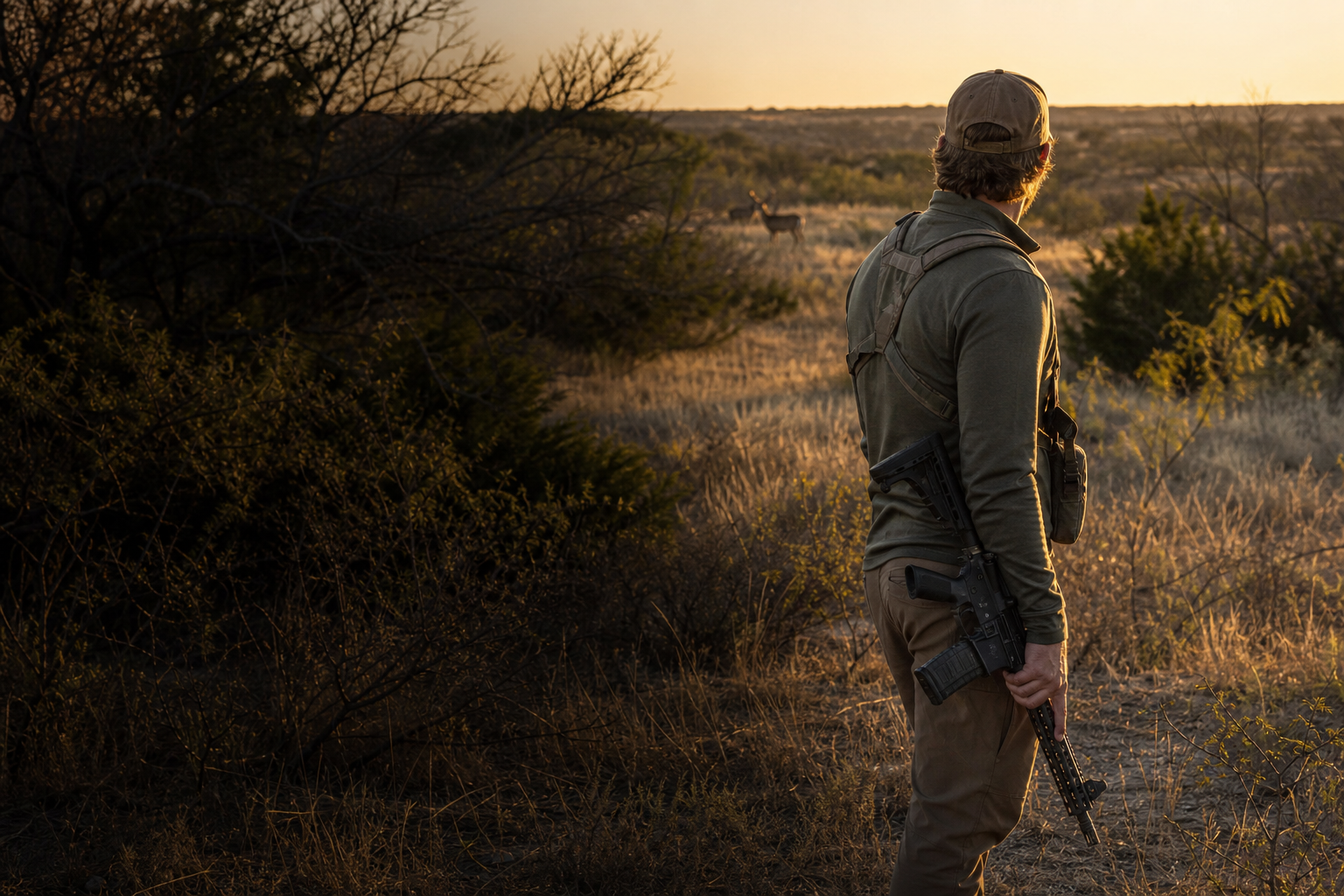
If you hunt whitetail, feral hogs, or coyotes in North Texas, you have probably asked whether 5.56 is good for hunting before you build or buy a rifle. The short answer is yes, with the right barrel, chamber, and bullet selection. The longer answer depends on your target species, shot distance, and how your upper is configured. We sell 5.56 NATO complete uppers online. Our complete uppers are built to order, assembled in-house, headspaced, and function-checked before shipping from our Denison, TX facility. Need help choosing a 5.56 upper for your next hunt? Call us at (888) 706-0633.
Key Takeaways
- 5.56 NATO can be suitable for some varmints, predators, and game when the load, range, and shot placement fit the application. For deer, check current Texas rules and choose a purpose-built expanding hunting bullet.
- Bullet selection matters more than caliber: use a quality expanding or bonded projectile for ethical kills on medium game.
- Barrel length and twist rate directly affect terminal performance at hunting distances, especially past 200 yards.
- A .223 Wylde chamber gives you the most flexibility, safely handling both .223 Remington and 5.56 NATO ammunition.
- If 5.56 feels marginal for your target species, calibers like 6.5 Grendel or 350 Legend offer more energy on the same AR platform.
What 5.56 NATO Actually Does to Game at the Terminal Level
5.56 NATO is a velocity-dependent cartridge. Its terminal performance is not fixed. It changes based on how fast the bullet is moving when it hits the target, and that number drops with every yard of distance.
Velocity Thresholds
As an illustration, a 55-grain bullet at 3,050 fps has roughly 1,135 ft-lbs of muzzle energy. Actual velocity and energy vary by load and barrel. Expansion thresholds vary by bullet design and manufacturer. Use the ammunition maker's published minimum impact-velocity data and a ballistic calculator for the exact barrel, load, and conditions before setting a hunting distance. For deer, set your maximum distance using the specific hunting bullet's impact-velocity guidance and your verified trajectory, not a universal yardage cutoff.
Heavier bullets behave differently. Heavier bonded or polymer-tipped bullets may retain velocity differently, but performance depends on the exact load. Use manufacturer data for the bullet and barrel length you plan to use. For medium game, choose a manufacturer-rated expanding load that performs at the expected impact velocity.
This velocity math is not academic here. In the open agricultural fields around Denison and Sherman, shots can extend past 200 yards, which is exactly why bullet selection matters more here than it does in tighter timber country.
Wound Channel Reality
Two terminal mechanisms define 5.56 performance on game. First, fragmenting bullets like 55-grain FMJs yaw and break apart at high velocity. On varmints, prairie dogs, coyotes, and feral hogs, that fragmentation creates a wide, destructive wound channel. It works. On whitetail, it is marginal at best. A fragmenting FMJ that does not penetrate to the vitals does not kill cleanly. FMJ is not designed for predictable expansion on deer-size game; check the applicable hunting-ammunition rules before you go.
Second, controlled-expansion bullets, including bonded soft points and polymer-tipped designs, are intended to retain weight and penetrate more consistently than FMJ loads. On a double-lung hit inside 150 yards, a quality expanding bullet in 5.56 is lethal on whitetail. A marginal hit with the wrong bullet is not. Shot placement carries more weight with 5.56 than it does with larger hunting calibers. There is no margin for error on off-angle shots.
Along the Red River corridor near Denison, coyote and predator hunting is where 5.56 hunting ammo earns its reputation without reservation. On thin-skinned varmints at moderate ranges, the terminal performance is well-matched to the task.
Is 5.56 Good for Hunting Deer, Hogs, and Varmints?
Legality and ethics are two different standards, and 5.56 clears one more easily than the other. As covered in the previous section, terminal performance depends heavily on bullet construction and impact velocity. Those same factors determine where 5.56 fits in your hunting plan.
Varmints and Predators
This is where 5.56 genuinely excels. 5.56 can be suitable for coyotes, prairie dogs, and groundhogs with an appropriate load. For feral hogs, choose a hunting bullet rated for the animal and expected range rather than assuming a varmint bullet will penetrate adequately. Predator and varmint rules vary by state and species, so confirm current regulations before hunting.
The AR platform gives you a real advantage here. Fast follow-up shots matter on coyotes working in pairs or hog groups moving through agricultural fields. In the Lake Texoma region, match your load and sighting setup to the terrain and your expected shot distance.
Deer and Medium Game
Texas does not set a minimum centerfire caliber for white-tailed deer, but rimfire ammunition is prohibited for deer. Use a purpose-built expanding hunting bullet and confirm current TPWD rules before the season. That matters for hunters on private agricultural land across the region.
The ethical line is stricter. Set a maximum distance from the specific bullet manufacturer's impact-velocity guidance, your verified trajectory, and your ability to place the shot. Other states may impose caliber, energy, cartridge, zone, or season restrictions, so confirm the applicable wildlife-agency rules before hunting deer with 5.56 outside Texas.
Ready to set up a whitetail-capable 5.56 build? Our team can help you compare barrel, chamber, and load options by phone.
What 5.56 Is Not Suited For
5.56 is not a reliable default choice for elk, moose, black bear, or large feral hogs. Its penetration and terminal performance depend on the bullet and impact velocity, so choose a cartridge and hunting load appropriate for larger animals rather than relying on the illustrative 55-grain energy figure above.
If your target list includes larger game, a caliber change is the right call. A 6.5 Grendel upper requires compatible bolt and magazine components and must be matched to the lower and buffer setup. For the biggest animals, step up to a larger platform entirely rather than asking 5.56 to do a job it was not built for.
Best 5.56 Hunting Loads: Bullet Weights and Constructions That Work
55-Grain and 62-Grain for Varmints
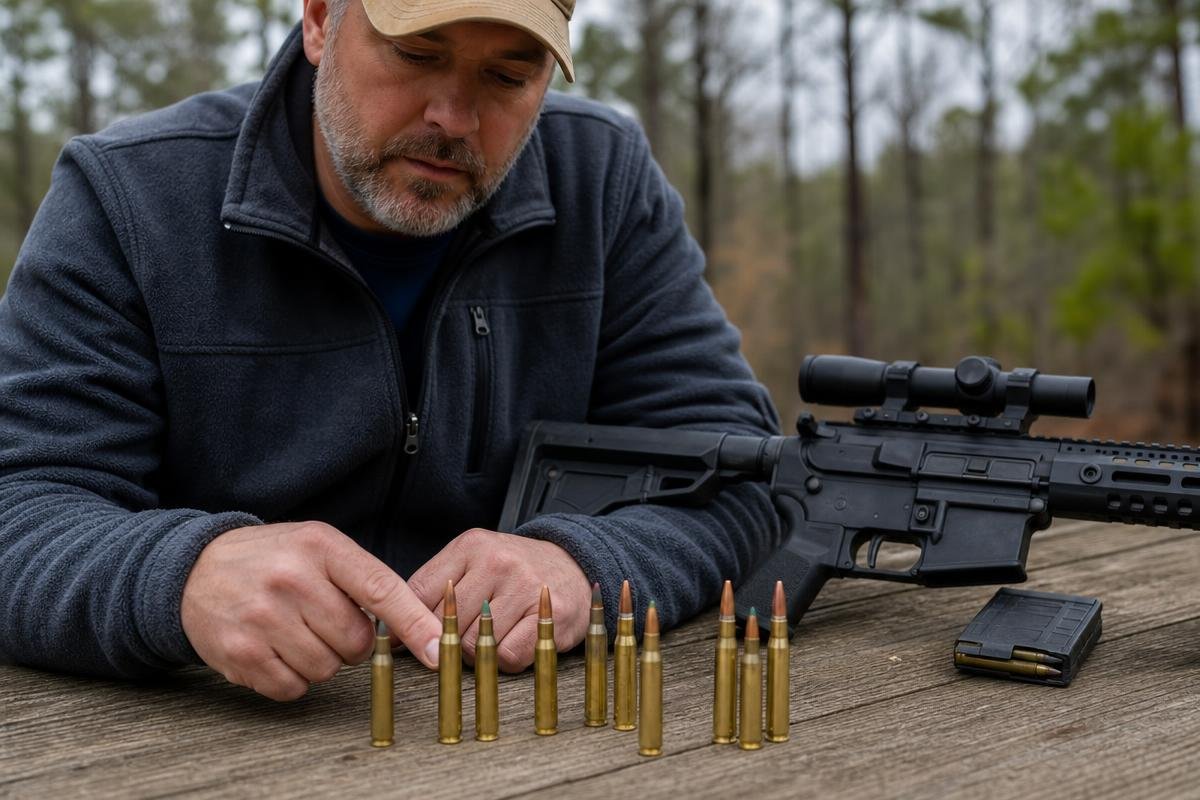
For coyotes and prairie dogs, a 55-grain polymer-tipped varmint bullet is the right call. Hornady V-MAX style projectiles fragment aggressively on impact, which is exactly what you want on thin-skinned animals. Check the load manufacturer's intended-use and impact-velocity guidance for your expected shots.
One common mistake: grabbing M855 because it is a 62-grain 5.56 round. Do not do it. M855 contains a steel penetrator component and is not designed as an expanding hunting bullet. Confirm state rules and use a purpose-built hunting load that the manufacturer identifies for the intended game and range.
Bonded and Polymer-Tipped for Deer
For whitetail deer and mid-size hogs on agricultural land in Grayson and Cooke counties, you need controlled expansion and weight retention. Federal Fusion, Federal Trophy Bonded, Hornady SST, Hornady InterLock, and Winchester Power-Point are all proven options. A 62- to 64-grain bonded soft point is designed to retain weight and penetrate more consistently than FMJ ammunition. Confirm the manufacturer's intended game and minimum impact velocity.
These are the best 5.56 hunting loads for anything larger than a coyote. Frangible varmint bullets are the wrong tool on deer-size game. Choose a manufacturer-rated expanding bullet with adequate penetration for the intended animal.
Barrel Twist Rate
Twist rate is the most overlooked variable in the 5.56 vs 223 for hunting conversation. Twist-rate needs depend on projectile length, construction, velocity, and environmental conditions. Confirm the bullet maker's recommendation and the barrel manufacturer's specifications before selecting a 1:9, 1:8, or 1:7 twist.
We stock a full range of AR-15 barrels in multiple twist rates. Match the twist to your intended load before you buy.
How Does 5.56 Compare to Other AR-15 Hunting Calibers?
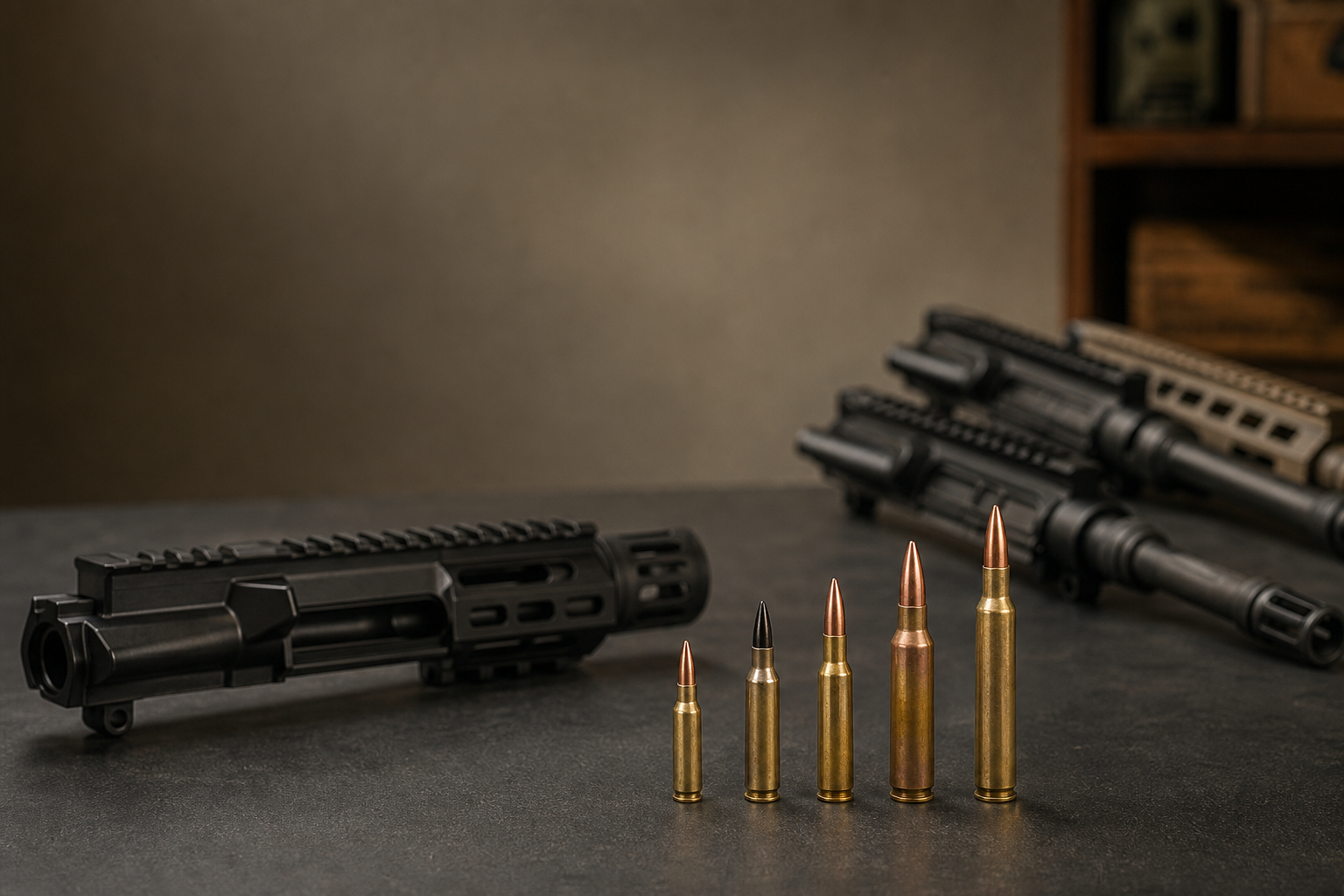
The easiest thing about the AR-15 platform is how simple it is to change calibers. A compatible complete upper can make caliber changes straightforward, but the bolt, magazine, buffer, gas system, and legal configuration still need to match the cartridge. That makes caliber comparisons practical rather than theoretical. Here is how 5.56 stacks up against the most common AR hunting calibers.
5.56 vs. 6.5 Grendel
At longer distances, suitable 6.5 Grendel hunting loads can retain more energy than typical 5.56 loads; compare manufacturer data for the specific loads and barrel lengths. The Grendel's high-BC bullets hold velocity better and drift less in wind, which matters on open-country shots across the Southern Plains. Check the current deer-cartridge rules for the state and season you plan to hunt. The trade-off is lower magazine capacity and higher ammo cost. For deer past 250 yards, 6.5 Grendel uppers are the stronger AR-platform choice. The 5.56 holds its own on coyotes and hogs at moderate range.
5.56 vs. 300 Blackout
The 300 Blackout is built around short barrels and suppressors. Supersonic 300 BLK loads in the 110 to 125 grain range hit harder than 5.56 inside 150 yards. Beyond that, compare the specific loads' ballistic data rather than assuming one cartridge always retains more energy. Many standard subsonic 300 BLK loads are not designed for hunting. Use only a load whose manufacturer identifies it for the intended game and range. If you are running a suppressed short-barrel setup for hogs in thick brush, 300 Blackout uppers have a clear edge. For general-purpose hunting at mixed distances, 5.56 is more versatile.
5.56 vs. 350 Legend and 450 Bushmaster
This comparison is largely a legal question. Some states and hunting zones impose straight-wall, caliber, or cartridge restrictions during certain deer seasons. Confirm the current wildlife-agency rules for the exact state, zone, and season before choosing a cartridge. The 350 Legend and 450 Bushmaster were built specifically for that restriction. If you hunt north across the Red River into Oklahoma, verify your zone rules before the season. Texas has no straight-wall requirement, so this comparison does not affect most local hunters. For anyone who needs a straight-wall option, 350 Legend uppers are the more practical choice over the heavier-recoiling 450 Bushmaster uppers.
Not sure which AR-15 hunting caliber fits your setup? Call us at (888) 706-0633 and we will point you to the right complete upper for your game and your range.
Building or Buying a 5.56 Hunting Upper: What to Look For
A hunting-specific 5.56 upper is not the same as a general-purpose carbine build. Barrel length, chamber spec, and muzzle configuration all affect whether your 5.56 hunting ammo performs the way you need it to in the field.
Barrel Length and Gas System
A 16-inch barrel can produce useful velocity with many 55-grain loads, while a carbine- or mid-length gas system affects cycling behavior rather than establishing muzzle velocity. This configuration keeps the rifle short enough to move through wooded creek bottoms in Grayson or Fannin County. That is a practical choice for hog hunters who need to maneuver in tight cover.
Open-country varmint shooters working the Southern Plains or north into southern Oklahoma benefit from more barrel. Longer barrels can add velocity, but the amount varies by load, chamber, and barrel. Select gas-system length for reliable cycling and use chronograph or manufacturer data for the expected velocity. Shorter barrels can reduce velocity and effective range; check the exact load's performance before hunting with one.
Chamber Choice: 5.56 NATO vs. .223 Wylde
A standard 5.56 NATO chamber accepts mil-spec ammunition safely but uses looser tolerances that can reduce accuracy with precision hunting loads. A .223 Wylde chamber is designed to accept both .223 Remington and 5.56 NATO ammunition, but always confirm the barrel marking and manufacturer's specifications. For a hunting build, compare accuracy with your chosen ammunition rather than assuming either chamber will produce better groups.
Check each .223 Wylde upper listing for included components, chamber specifications, and compatibility with your lower before ordering.
Muzzle Devices and Handguard Considerations
A muzzle brake reduces felt recoil and muzzle rise, which helps with faster follow-up shots on coyotes. Where brake blast is a problem, a thread protector or bare muzzle keeps the profile clean. Free-float handguards eliminate barrel contact and improve accuracy, which matters most for precision varmint work at distance.
If you want a turnkey build, our complete AR-15 uppers are built to order, assembled in-house, headspaced, and function-checked before shipping.
Hunting with 5.56 in Texas and the Southern Plains: Local Conditions
If you hunt the Texoma corridor, the Cooke County brush country, or the Fannin bottomlands, you already know the terrain shapes your caliber choice as much as anything else. The question of whether 5.56 is good for hunting is answered differently here than it does out west. This is creek-bottom whitetail country, agricultural hog ground, and open-plain varmint range, sometimes all within the same county.
Is 5.56 Legal for Deer Hunting in Texas?
Yes, 5.56 is legal for deer hunting in Texas when used in compliance with current hunting rules. As noted above, Texas does not specify a statewide minimum centerfire caliber for deer. For ethical performance, choose an expanding hunting load intended for deer and set your range from the bullet maker's impact-velocity guidance and your verified trajectory. Check current TPWD rules before the season.
Feral Hog Hunting with 5.56
Texas feral-hog rules depend on land access, authorization, licensing exemptions, and the method used. Confirm current TPWD requirements before hunting. That makes 5.56 a legal and practical option for hog work on agricultural ground throughout the Texoma area. Load suitability for feral hogs depends on bullet construction, shot placement, range, and the animal. Follow the ammunition manufacturer's intended-use guidance and choose a heavier cartridge when the setup does not provide adequate penetration. Depending on your load and setup, compare our 300 Blackout uppers and 6.5 Grendel uppers when you need an alternative to 5.56.
Whitetail in the Creek Bottoms
Creek-bottom cover in Cooke and Fannin counties may offer shorter whitetail shots than open fields. In either setting, confirm that your chosen expanding load performs at the expected impact velocity and keep shots within your verified limits.
Open-Country Varmint Work on the Southern Plains
Coyote and prairie dog hunting on the open plains extending into southern Oklahoma is where 5.56 performs at its best. For longer coyote shots, verify the chosen varmint load's impact-velocity window and trajectory for your barrel length. We ship from our Denison, TX facility.
Frequently Asked Questions
Is 5.56 NATO legal for deer hunting?
In Texas, yes, subject to current hunting rules. See the Texas deer-ammunition requirements above and confirm current TPWD rules before the season. Other states and zones may impose straight-wall, caliber, or cartridge restrictions during certain deer seasons. Check the wildlife-agency rules for your exact location and season.
What is the maximum ethical range for hunting deer with 5.56?
Set a maximum distance from the exact bullet manufacturer's expansion threshold, a verified trajectory, and your ability to place the shot. If your hunting country routinely demands longer shots, 6.5 Grendel uppers hold energy and accuracy well past 300 yards.
Can I use .223 Remington ammo in a 5.56 NATO chamber for hunting?
.223 Rem is safe in a 5.56 NATO chamber. Running 5.56 in a .223 Rem chamber is not always safe due to pressure differences. A .223 Wylde chamber accepts both and typically delivers better accuracy with hunting loads.
What bullet weight is best for deer hunting with 5.56?
62- to 64-grain bonded soft points are the standard recommendation. These bullets are designed for controlled expansion, but penetration and stability depend on the specific load, bullet construction, and barrel twist. Avoid 55-grain FMJ and 62-grain M855 for deer. Neither is designed to expand.
Is 5.56 good for hog hunting?
Suitability for feral hogs depends on bullet construction, shot placement, range, and the animal. Use a manufacturer-rated hunting load and choose a heavier cartridge when the setup does not provide adequate penetration. For large hogs, consider a suitable 300 Blackout load or another hunting cartridge with penetration appropriate for the animal.
Do I need a different upper to hunt with a different caliber on my AR-15?
Yes, and it is straightforward. A compatible complete upper can simplify a caliber change, but the bolt, magazine, buffer, gas system, and legal configuration must match the cartridge and lower. Browse our complete uppers, including 6.5 Grendel, 300 Blackout, 350 Legend, and 450 Bushmaster options, and check current listings for included components and compatibility.
If you are ready to build a hunting-optimized 5.56 setup or step up to a caliber better suited for larger game, AR15Parts.com ships from our Denison, TX facility. Call us at (888) 706-0633 or browse our complete upper lineup to find the right fit for your lower and your hunting country.
Ready to Get Started with AR15Parts.com?
Call (888) 706-0633 to speak with our team directly. We're ready to answer your questions, walk you through your options, and help you find the right solution for your needs. Whether you're just starting to plan or ready to move forward, we'll make the process simple and stress-free. Reach out today and let's talk about the right upper for your next hunt.