
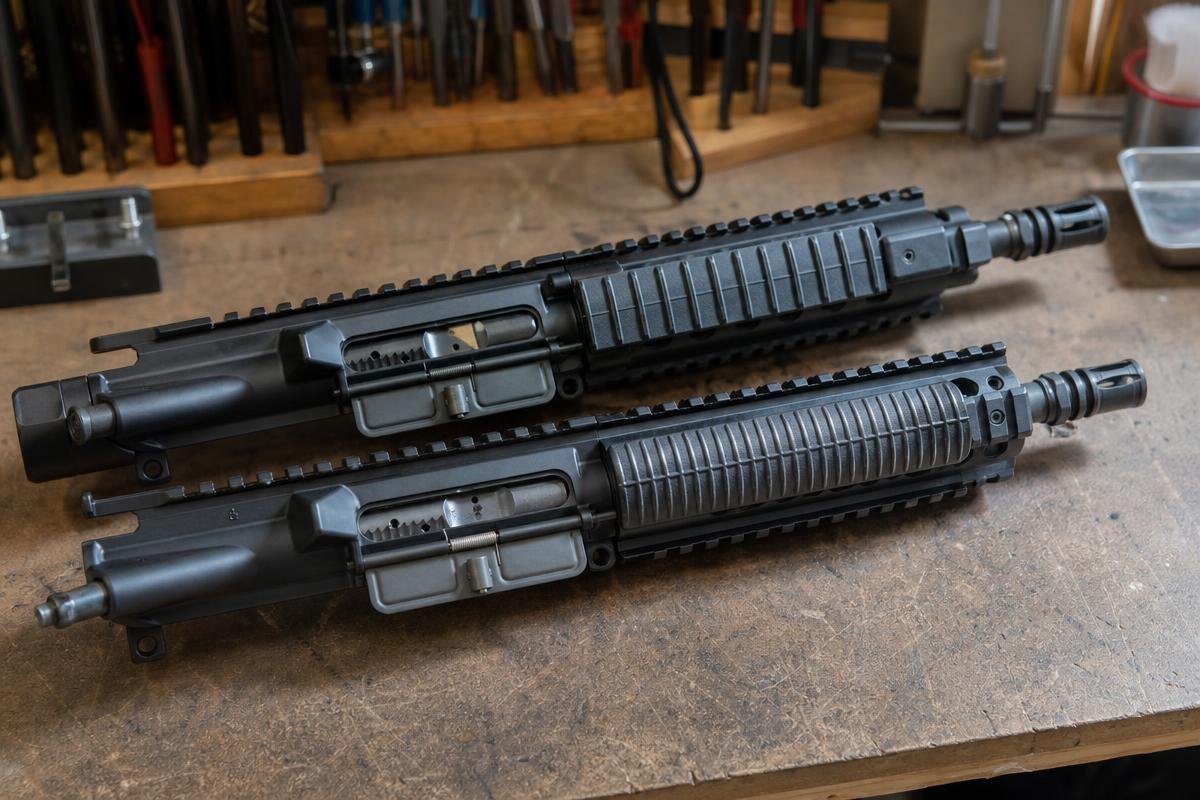
Is a piston AR-15 better for your next build? Usually, DI makes more sense for a lighter, more affordable setup with widely available replacement parts. A piston-driven upper can be a strong choice when you want a matched operating system that keeps more carbon forward of the receiver, particularly when configuring a specialized or suppressed setup. AR15Parts.com can help buyers compare upper, barrel, carrier, and gas-system specifications before ordering.
We ship from our Denison, TX facility. For product or order questions, call us at (888) 706-0633 or contact our team. Compare a complete upper and confirm the parts needed for your build before you order.
Key Takeaways
- Direct impingement routes gas through the gas tube and into the bolt carrier group.
- Gas piston systems keep more fouling forward of the receiver but commonly add weight around the gas block.
- DI rifles are usually lighter, less expensive, and easier to configure with standard-pattern AR components.
- Choosing between a piston-driven and direct-impingement AR-15 depends on intended use, suppressor plans, maintenance preferences, and whether you are comfortable with proprietary replacement parts.
Is a Piston AR-15 Better? Start With How Each System Works
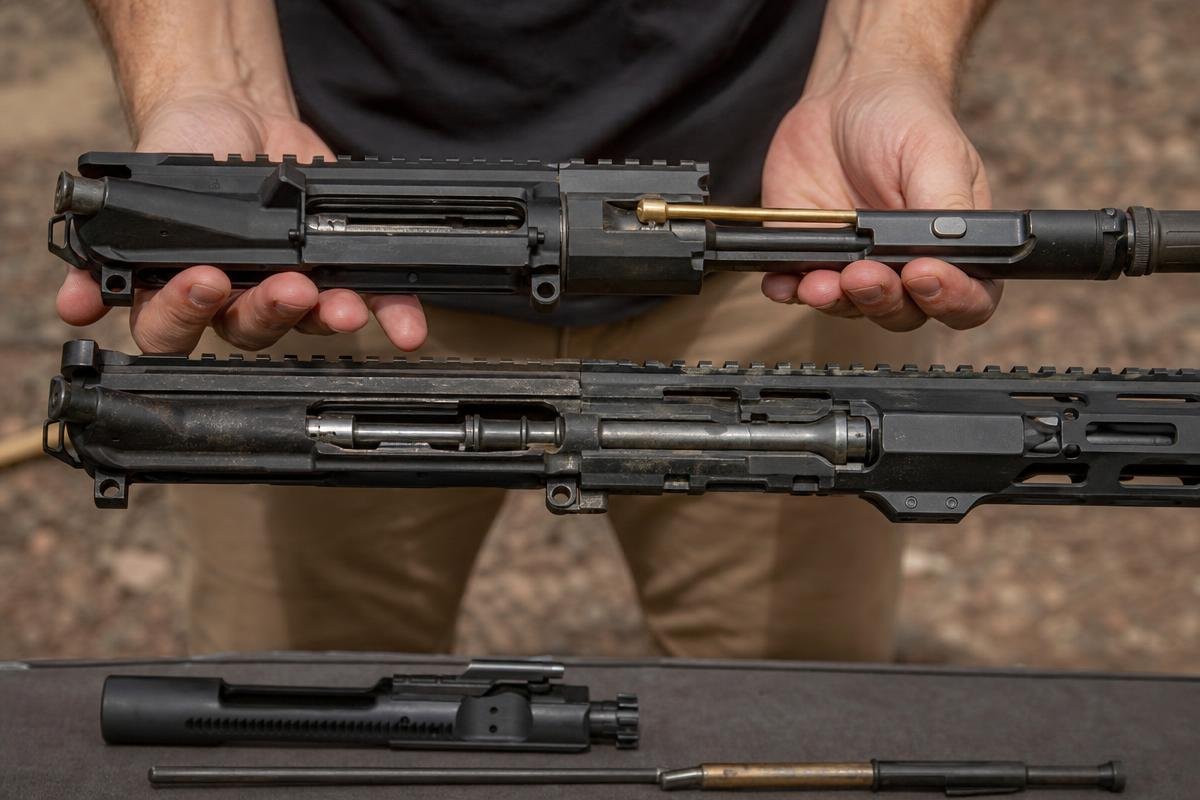
Both systems use gas tapped from the barrel to cycle the action. In a DI setup, gas travels through a tube into the bolt carrier group. In a piston configuration, gas drives a piston near the gas block, and that mechanism transfers force to the carrier. The primary tradeoff is standard parts compatibility and lighter weight versus a cleaner-running receiver area.
| Factor | Direct Impingement | Short-Stroke Piston |
|---|---|---|
| Weight and balance | Usually lighter at the fore-end | Usually adds mass near the gas block |
| Initial cost | Often lower with more standard options | Often higher because parts are system-specific |
| Cleaning focus | More carbon reaches the carrier and receiver | More fouling remains at the piston and gas block |
| Parts compatibility | Broad standard-pattern AR compatibility | Carrier, rod, block, and handguard may be proprietary |
| Recoil feel | Often smoother and more linear | Can feel different because of added moving mass |
| Suppressed use | May benefit from adjustable gas and buffer tuning | May use an adjustable regulator, depending on the design |
| Best fit | First builds, flexible configurations, lighter rifles | Matched-system buyers with specific operating priorities |
How a Direct Impingement AR-15 Cycles
After firing, gas passes through the barrel gas port, gas block, and gas tube. It enters the carrier key and expands inside the bolt carrier group. That pressure drives the carrier rearward, rotates and unlocks the bolt, then extracts and ejects the fired case.
The buffer spring then sends the carrier forward. The bolt strips a new round from the magazine and chambers it. This is the standard layout for a direct impingement AR-15 build, including many complete AR-15 uppers.
Gas, heat, and combustion residue enter the receiver and bolt carrier group. The system stays light at the front of the rifle because the gas tube has no piston or operating rod.
How a Gas Piston AR-15 Cycles
A piston upper keeps most gas at the front of the upper. Barrel gas acts on a piston assembly near the gas block. In many AR-pattern designs, a short-stroke piston moves only a limited distance before transferring energy through an operating rod or manufacturer-specific carrier interface.
The carrier still unlocks, extracts, ejects, and chambers in the normal sequence. Long-stroke systems, where the piston and carrier move together for a longer portion of the cycle, are less typical in AR-pattern rifles. Piston designs vary by manufacturer, so carriers and operating parts are not universal.
Why Gas System Parts Must Match
Do not mix piston parts with standard DI upper components unless the manufacturer specifies that combination. The upper, carrier, gas block, operating rod, handguard clearance, and replacement parts must work as one matched system.
A piston conversion can require a proprietary bolt carrier and a purpose-built handguard. If you are selecting a piston upper or checking component fit, contact our team about product specifications before ordering.
Is a Piston-Driven AR-15 Better Than Direct Impingement?
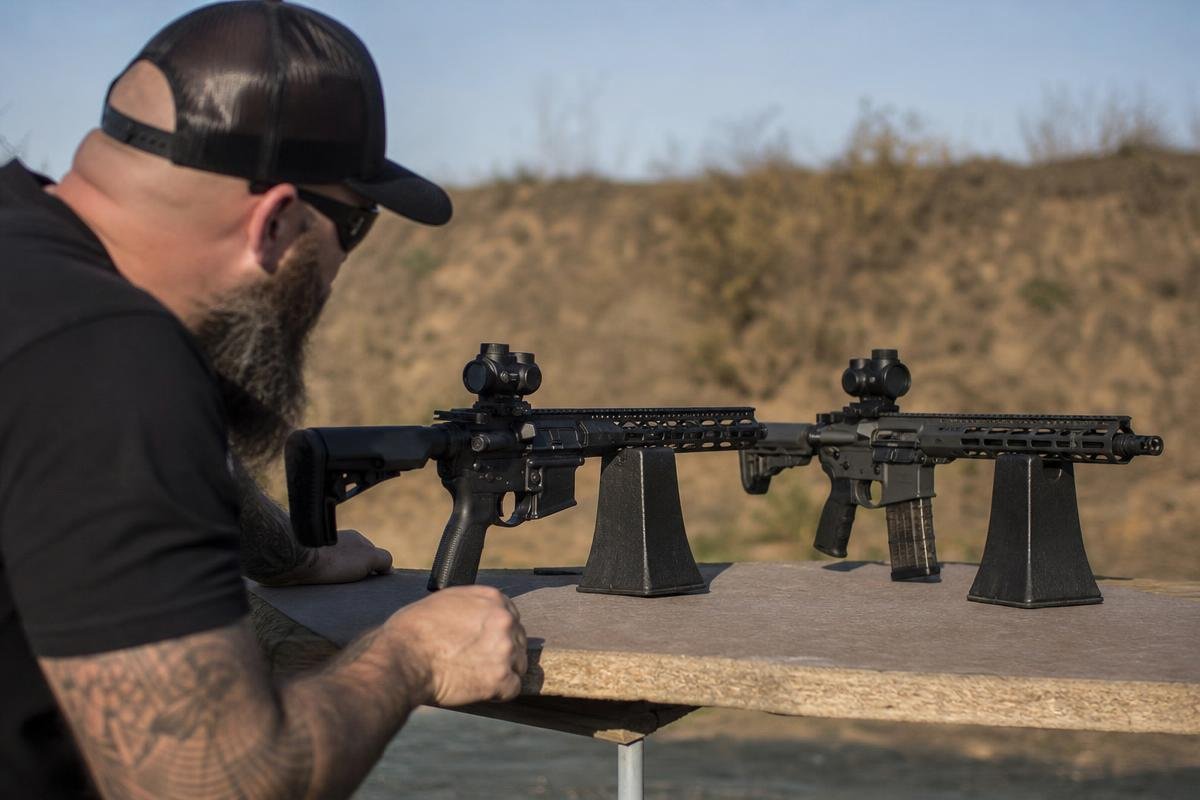
Neither operating system is automatically better. DI is generally the practical choice for buyers who want lower cost, lighter front-end weight, and broad replacement-part availability. A short-stroke piston upper may suit someone who prefers keeping more combustion residue out of the carrier area and is prepared to maintain a matched, often proprietary system.
Recoil Feel and Moving Mass
DI rifles often feel smoother and more linear because less reciprocating mass sits forward of the receiver. Gas enters the carrier through the gas tube, rather than driving an operating rod and piston assembly near the gas block.
A piston rifle may feel sharper or simply different during cycling because of added moving parts at the front end. Neither system guarantees a recoil result. Gas-port size, buffer weight, buffer spring, carrier mass, ammunition, and muzzle device all change the recoil impulse.
Fore-End Weight and Rifle Balance
Piston systems commonly add weight near the gas block and under the handguard. That added front-end weight may be noticeable during extended offhand shooting, transitions, or carrying the rifle for long periods.
Handguard choice also matters. A lighter free-float handguard can reduce carry weight, while its length affects barrel clearance, accessory mounting space, and supported shooting position. Compare component weights before ordering complete AR-15 uppers for your lower.
Accuracy Depends on the Full Setup
Neither operating system is inherently more accurate. Practical accuracy comes from the barrel, chamber dimensions, ammunition consistency, optic and mount, trigger control, and the shooter. A free-float handguard that does not contact the barrel also matters when loading a bipod or support.
For a precision-focused build, select the barrel and ammunition first, then choose the operating system around the finished rifle's intended weight and handling. DI is often attractive for field carry because it avoids added piston hardware at the muzzle end. A piston design can still be accurate when its barrel, upper, and handguard are properly matched.
Does a Suppressor Favor DI or a Piston Upper?
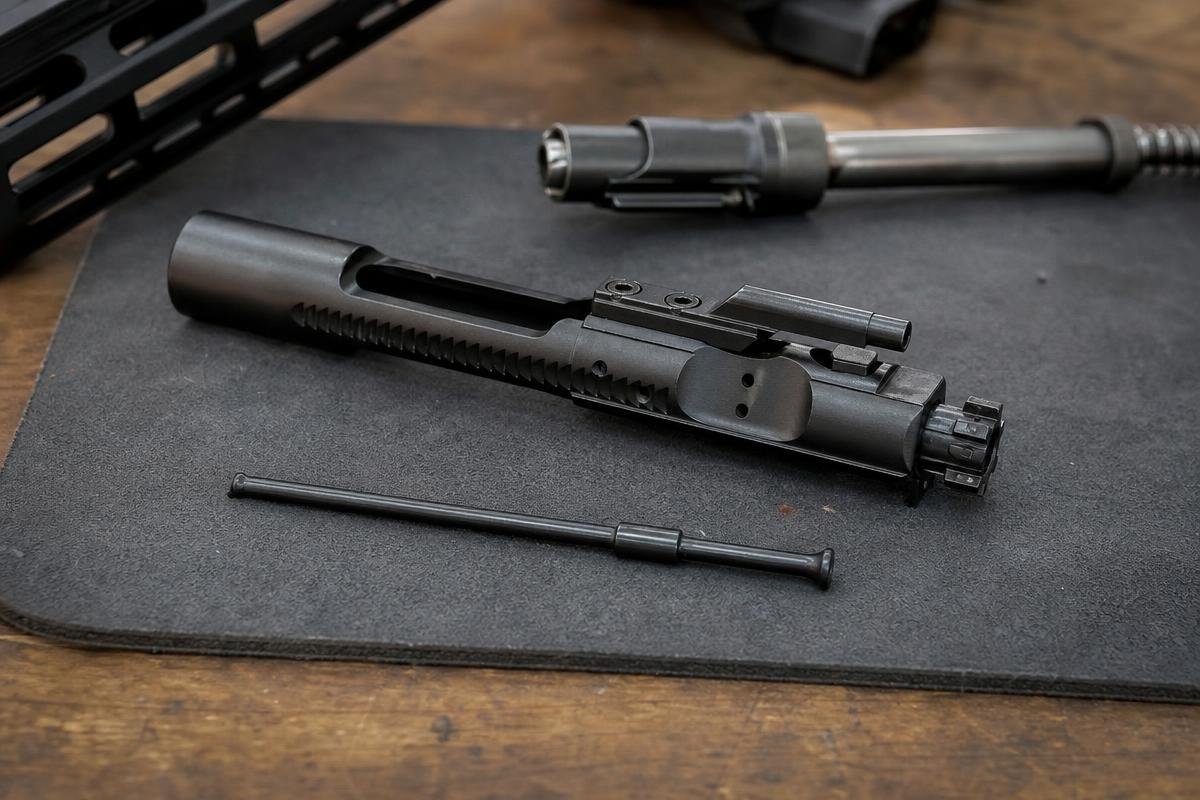
A suppressor raises backpressure and can increase bolt speed, gas at the ejection port, and wear if the system is overgassed. DI builds often benefit from adjustable gas and appropriate buffer tuning. A piston upper with an adjustable regulator may offer settings for suppressed and unsuppressed use, but it still needs testing with the ammunition you plan to shoot.
DI Maintenance and Lubrication
DI guns run well when the bolt carrier group stays lubricated and the chamber is kept clear of carbon and debris. Inspect gas rings, the extractor and spring, bolt lugs, carrier rails, and cam pin during normal cleaning. Apply lubricant to the bolt body, gas rings, cam pin, and carrier contact surfaces.
Quality assembly, compatible magazines, ammunition, and correct gas setup matter as much as cleaning. If you are selecting a ready-to-run upper, compare our complete AR-15 uppers with your lower, buffer, and intended ammunition in mind.
Piston System Maintenance
A piston-driven AR-15 system moves much of its fouling forward. Carbon collects around the gas block, piston, operating rod, regulator, and manufacturer-specific parts instead of primarily inside the carrier.
Clean and inspect those parts on the maker's schedule. Check that the piston moves freely, the regulator setting is correct, and retaining hardware remains secure. Piston parts are not always interchangeable between brands, so replacement components must match the maker and model of the complete system.
What Changes With a Suppressor
A suppressor increases backpressure and can change bolt speed, ejection pattern, and cycling behavior. Evaluate barrel length, gas-system length, gas block or piston setting, buffer system, ammunition, and muzzle-device mounting method as one setup.
Adjustable gas can reduce excess carrier speed on a DI rifle. An adjustable piston regulator can do similar work on a piston gun, but it still requires testing with the ammunition you plan to shoot. To verify upper and component specifications before ordering, contact AR15Parts.com about product specifications.
Which System Has Better Parts Compatibility and Lower Cost?

DI usually costs less to build and maintain because standard-pattern gas tubes, gas blocks, carriers, charging handles, buffers, and handguards are commonly available. A piston upper can cost more upfront and later if its carrier, rod, regulator, or handguard must come from a specific manufacturer. Those replacement-part considerations should be part of the buying decision.
Why DI Parts Are Often Easier to Source
DI parts are generally easier to replace than piston parts. Standard-pattern gas tubes, gas blocks, bolt carrier groups, charging handles, handguards, and upper receivers are common across many direct impingement configurations.
That availability does not make every part interchangeable. Match the barrel’s gas-system length, gas-block journal, chambering, upper receiver pattern, and handguard mounting system. Our complete AR-15 uppers reduce the number of separate fitment decisions for a new build.
Why Piston Components Need a Matched System
A piston-driven AR-15 system often uses manufacturer-specific parts at the gas block, operating rod, carrier, barrel interface, and handguard. Those parts work as a set because rod travel and carrier geometry must stay aligned during cycling.
Do not treat a standard DI upper as a platform for random piston conversion parts. Confirm the kit is made for your barrel profile, gas length, upper receiver, carrier, and handguard clearance before you buy.
- Intended cartridge and chamber
- Barrel length and gas-system type
- Handguard clearance around the gas block or operating rod
- Bolt carrier compatibility
- Buffer and spring setup
- Manufacturer instructions for the complete system
When a Complete Upper Makes Sense
A complete upper makes sense when you want the barrel, gas system, carrier group, and handguard selected as a working assembly. It is especially useful for piston builds, where mixing brands can create clearance or cycling problems.
Check the listed cartridge, barrel length, muzzle device, charging handle, bolt carrier group, and lower receiver requirements. A 5.56 NATO complete upper is a practical starting point if you want a common cartridge and an assembled configuration, provided the caliber, receiver pattern, magazine, buffer system, and manufacturer specifications match your lower.
Need a second set of eyes before you order parts? Call us at (888) 706-0633.
Who Should Choose Direct Impingement or a Piston Setup?
Choose DI if you value low overall weight, broad component availability, straightforward tuning options, and a flexible platform for a first or future build. Choose a piston configuration when you specifically want its forward-fouling design and can commit to the manufacturer’s matched carrier, rod, gas block, and handguard arrangement. The best choice is the one that fits your actual use and maintenance plan.
DI May Fit First Builds and Flexible AR Setups
DI may be the practical starting point for a first AR-15 build. Standard gas tubes, bolt carrier groups, buffers, and handguards give you more options as your setup changes. The lighter fore-end and smoother, more linear recoil feel can also help with range use, carrying the rifle, and precision-oriented configurations.
A common 5.56 setup is easy to plan around DI components. Our 5.56 NATO complete uppers give you a straightforward path if you want an assembled upper for a compatible lower after confirming the caliber, receiver pattern, magazine, buffer system, and manufacturer specifications.
Piston May Fit Matched-System Buyers
A piston system may deserve consideration if you expect a specialized configuration, frequent suppressed use, or prefer that more combustion residue stays forward of the receiver. It also adds operating-rod mass near the front of the rifle and often ties you to that maker's carrier, rod, block, and handguard dimensions.
Buy the complete system, not a collection of assumed-compatible parts. For a turnkey route, review our complete AR-15 rifles before selecting a specialized configuration.
Six Questions to Ask Before You Buy
Answer these six questions before committing to either operating system:
- What is the rifle's main use: range work, hunting, duty, or precision shooting?
- How much front-end weight are you willing to carry?
- Do you prefer cleaning the receiver more often or moving fouling forward?
- Will you run a suppressor, and does the system offer adjustable gas control?
- Can your budget cover proprietary piston replacement parts?
- Can you readily source the correct carrier, rod, gas block, and handguard later?
There is no blanket winner when choosing between piston-driven and direct-impingement systems for a new build. Match the operating system to the rifle you will actually build and shoot. If you need help sorting specifications, contact AR15Parts.com at (888) 706-0633.
Frequently Asked Questions
Are Direct Impingement and Gas Piston AR-15s Both Gas-Operated?
Yes. Both systems use propellant gas to cycle the action. Direct impingement routes gas through a tube to the carrier, while a piston-driven AR-15 system uses a separate operating rod and piston.
Is a Piston AR-15 More Reliable Than a DI AR-15?
No system guarantees reliability. Correct assembly, compatible parts, magazines, ammunition, lubrication, maintenance, and gas setup matter more than the label on the rifle.
Which System Is Better for a First AR-15 Build?
DI is usually simpler for a first build because standard parts are widely available. Follow the barrel, gas tube, gas block, bolt carrier, and buffer specifications, but a matched piston kit can also work if you want that format.
Is a Piston AR-15 More Accurate?
Not automatically. A properly assembled direct-impingement or gas-piston AR-15 can be accurate with a quality barrel, consistent ammunition, and a stable optic mount. Barrel quality and assembly have more effect than the operating system alone.
Can I Convert a DI AR-15 to a Piston System?
Yes, but only with a complete manufacturer-designed compatible system. It is not a mix-and-match parts swap, since the piston, operating rod, carrier, gas block, handguard clearance, and barrel setup must work together.
Does a Suppressor Change the DI vs Piston Decision?
It can. A suppressor changes backpressure and gas behavior, so confirm the upper is designed or adjustable for suppressed use. Compare the specifications on complete AR-15 uppers before choosing a gas piston AR-15 vs DI setup.
Ready to Get Started with AR15Parts.com?
We ship from our facility at 4000 Texoma Pkwy, Denison, TX 75020. For help comparing DI and piston upper specifications before you order, call us at (888) 706-0633 or contact our team.