
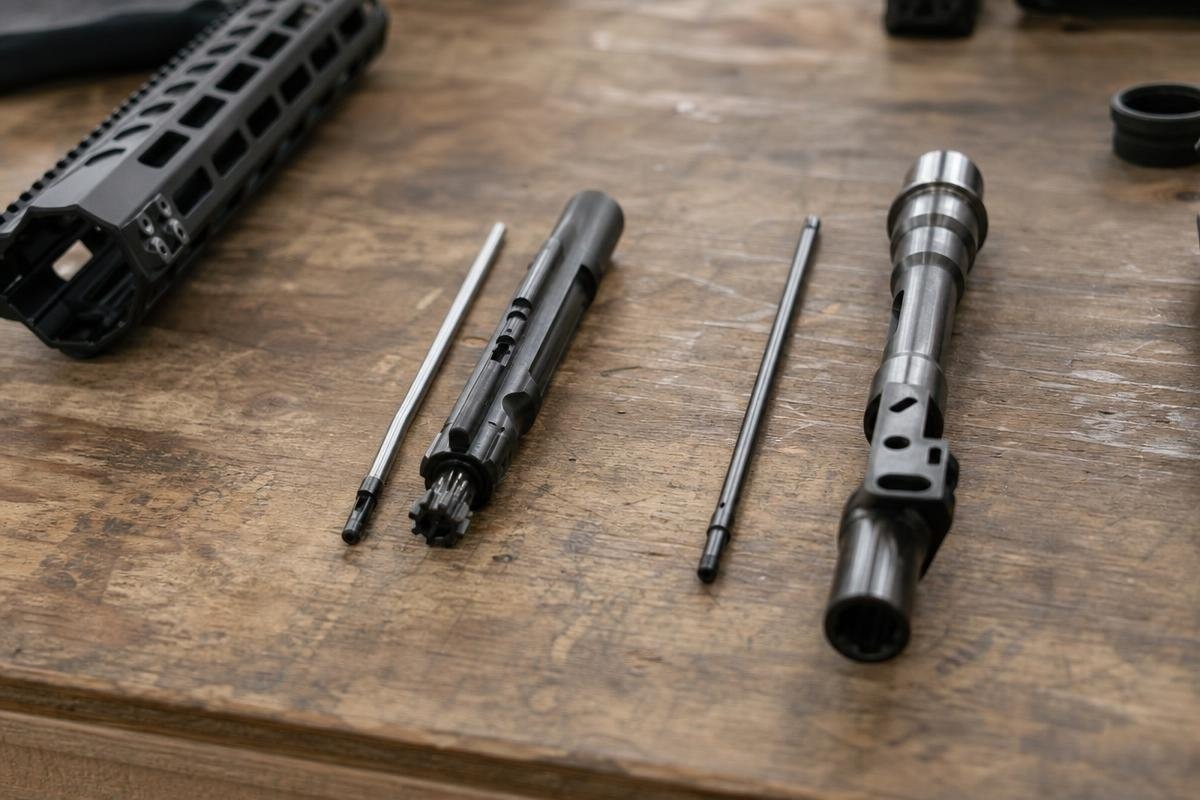
Understanding piston-driven and direct-impingement AR-15 systems starts with where barrel gas does its work. A direct-impingement, or DI, rifle routes gas through the carrier to cycle the bolt, while a piston design uses gas at the front of the rifle to move a piston or operating rod. The best choice depends on the complete setup, including parts compatibility, maintenance habits, suppressor use, ammunition, and budget. Have a gas system or upper build question? Contact our team before you order.
Key Takeaways
- DI systems route gas through a gas tube and into the bolt carrier group.
- Piston-driven systems use a separate piston or operating rod near the gas block to cycle the action.
- DI versus piston AR-15s should be compared as complete operating systems, not by one feature such as cleanliness.
- Gas-port sizing, buffers, springs, ammunition, suppressor use, and component compatibility affect how either system performs.
What Is the Difference Between DI and Piston AR-15s?
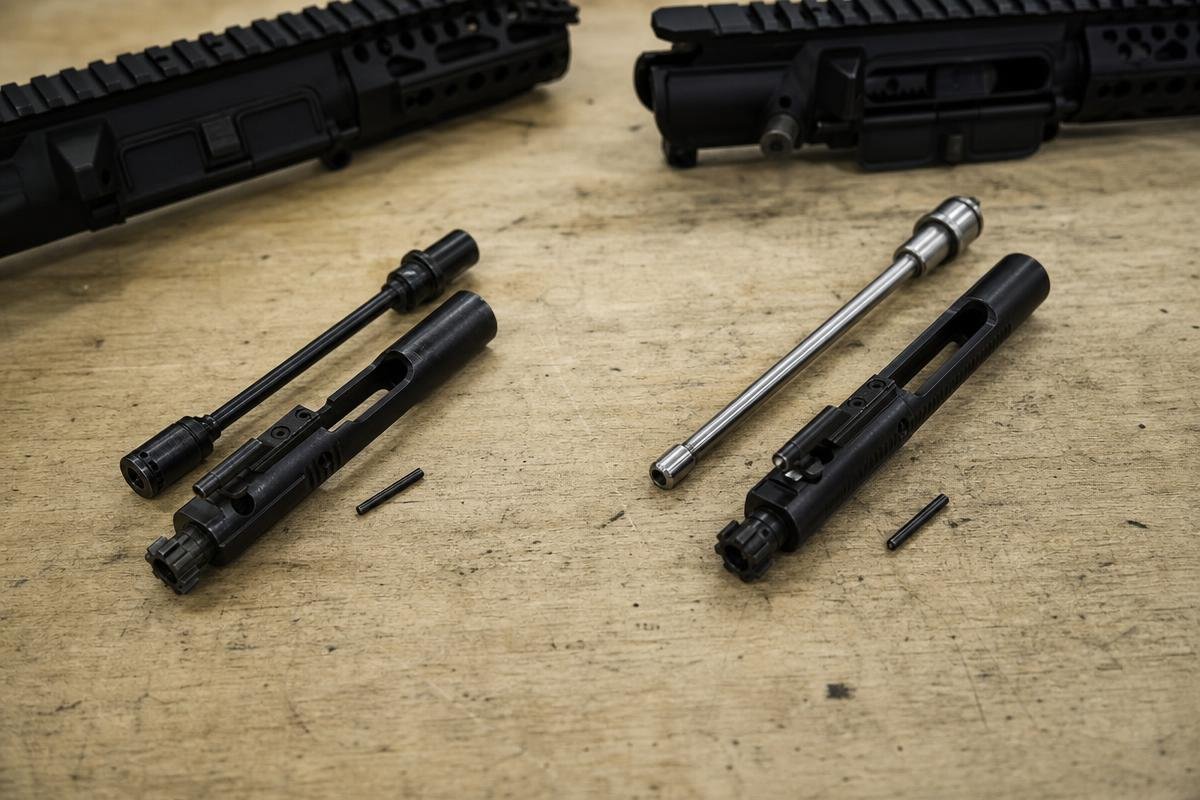
The core difference is gas location. DI sends gas through the gas tube into the bolt carrier’s internal expansion chamber, while a piston system uses gas at the gas block to drive a separate piston or rod that moves a compatible carrier. Both are gas-operated, but their heat, fouling, moving mass, and replacement-part needs differ.
Comparison image showing the gas-path components used in DI and piston-operated AR-15 systems.
The practical difference affects heat and fouling in the carrier, front-end weight, cost, recoil character, accuracy considerations, reliability context, and parts compatibility. Before choosing an upper or planning a build, compare the complete system, not one feature. Our complete AR-15 uppers provide a useful starting point because the barrel, gas system, and upper-side components are configured together.
We ship from our Denison, TX facility at 4000 Texoma Pkwy, Denison, TX 75020. For product-fit and configuration questions, use the site contact options or call before ordering so you can verify the listing specifications against the parts you already own.
How Do Direct Impingement and Piston AR-15 Systems Cycle?
Both designs tap propellant gas from the barrel after a round is fired, but they apply that gas pressure differently. That difference determines which components move, where heat and carbon accumulate, and which replacement parts must remain matched.
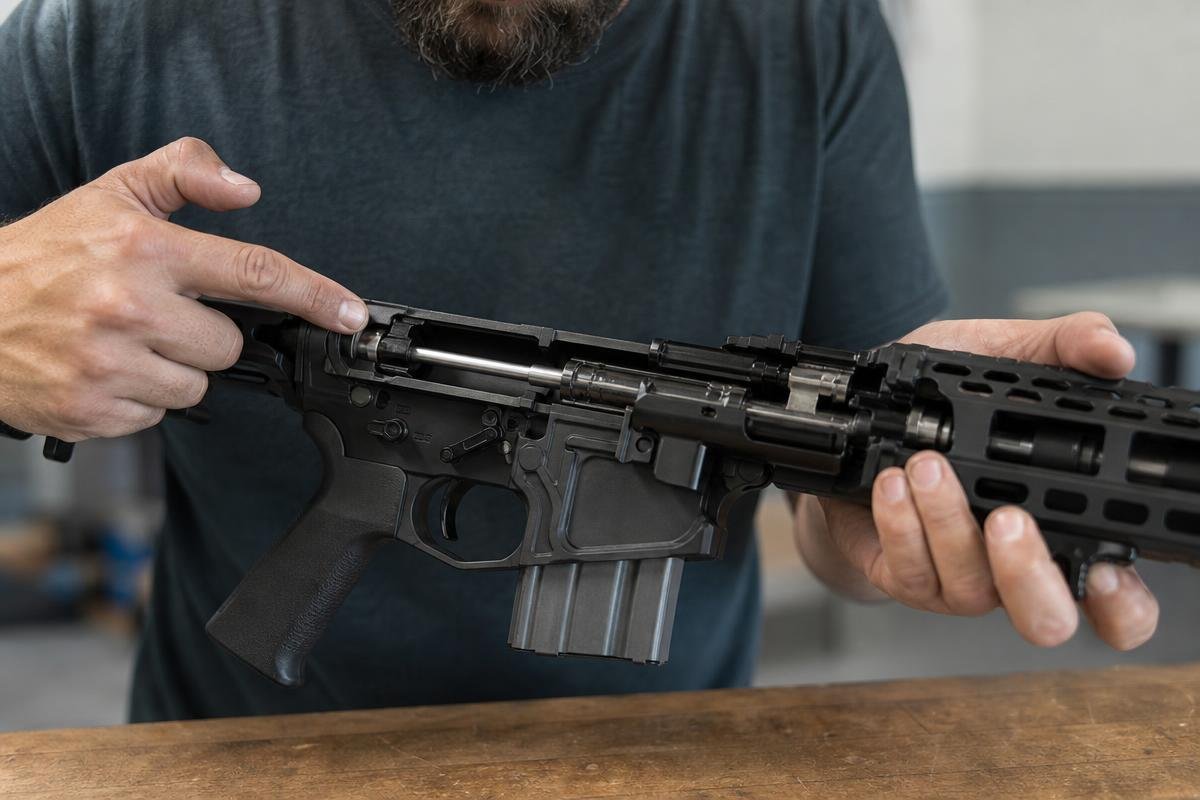
How a Direct Impingement AR-15 Cycles
A direct-impingement AR-15 routes gas from the barrel port through the gas block and gas tube. Gas enters the carrier key and expands inside the bolt carrier group’s expansion chamber. Although commonly called direct impingement, the AR-15 uses gas expansion within the bolt carrier group rather than directing a gas jet onto the bolt face.
Pressure drives the carrier rearward while the bolt unlocks. The extractor pulls the fired case, the ejector sends it clear, and the action spring returns the carrier forward to strip a new round and lock the bolt into battery. This operating layout is widely used because gas tubes, carrier keys, and compatible bolt carrier groups follow familiar AR-pattern dimensions.
How a Piston AR-15 Cycles
A piston AR-15 keeps most operating gas at the gas block. In a short-stroke design, a piston moves briefly and transfers energy to an operating rod or carrier interface. In a long-stroke design, the piston and carrier assembly travel together for more of the cycle. Both differ from DI and must be evaluated according to the specific manufacturer’s design.
The bolt then unlocks as the carrier moves rearward. The action extracts and ejects the fired case, and the bolt carrier group then returns forward and locks into battery. Piston gas blocks, rods, carriers, adjustment settings, and handguard clearances are often system-specific. Do not assume a piston kit will drop into a DI upper. Check the manufacturer’s required parts before selecting a complete AR-15 rifle or planning a conversion.
What Else Affects Cycling?
Two rifles with the same operating system can cycle very differently because the gas system is only one part of the setup. Gas-port size, barrel length, gas-system length, buffer weight, action-spring condition, ammunition pressure, muzzle device, and suppressor use all influence bolt speed and extraction timing.
An oversized gas port can drive the action harder, while underpowered or low-pressure ammunition, worn spring, gas leak, or excessive buffer weight can reduce rearward travel. For any AR-15 gas-system comparison, match the barrel, gas length, carrier system, buffer setup, and intended ammunition before buying parts.
What Are the Main DI and Gas-Piston Tradeoffs?
The DI versus gas-piston choice comes down to where gas, heat, carbon, and moving weight are placed. Neither system wins every category. The better fit depends on your firing schedule, upper configuration, parts availability, and willingness to follow the system maker’s maintenance and setup guidance.
| Factor | Direct Impingement | Gas Piston |
|---|---|---|
| Gas path | Gas tube routes gas into the carrier | Piston and rod operate forward of the receiver |
| Carrier fouling | More carbon reaches the bolt carrier group | More carbon stays near the gas block and piston |
| Receiver heat | More heat enters the carrier area | Less gas and heat enter the receiver |
| Front-end weight | Often lighter, depending on barrel and rail setup | Often heavier because of piston hardware |
| Replacement parts | Common AR-pattern parts are broadly available | Parts are frequently manufacturer-specific |
Heat and Fouling Location
A piston AR-15 generally keeps more combustion residue out of the bolt carrier area because operating gas is handled at the front of the rifle. The tradeoff is that carbon and heat remain around the gas block, piston, operating rod, and related adjustment components.
Cleaner does not mean maintenance-free. Both systems need inspection, lubrication where specified, and cleaning based on ammunition, firing volume, suppressor use, and component condition. Follow the operating manual for a piston system, especially if it has an adjustable regulator, because its cleaning points and service intervals may differ from a DI rifle.
Front-End Weight and Recoil Character
Piston assemblies add hardware and moving mass forward of the receiver. Depending on the specific design, that can change how the rifle balances and make the action feel more mechanical during cycling.
A DI rifle may be lighter at the front end, but it is not automatically softer or smoother. Felt recoil varies with gas-port size, buffer and spring selection, carrier mass, barrel profile, ammunition, suppressor backpressure, muzzle device, and the piston design itself. Accuracy should also be judged by the barrel, ammunition, assembly quality, optic setup, and shooter technique rather than gas-system type alone.
Cost, Maintenance, and Replacement Parts
DI parts are commonly available because gas tubes, carrier keys, bolt carriers, and many gas blocks use widely recognized AR-pattern dimensions. A piston system may require a specific carrier, rod, piston, gas block, regulator, and small replacement parts from its original manufacturer.
Piston uppers can cost more initially and may be harder to repair if proprietary components are unavailable. Before buying, confirm the exact make and model, whether spare parts are offered, and whether the manual identifies service procedures. For a ready-to-run option, compare the specifications on our AR-15 complete rifles and match the system to your expected maintenance and parts needs.
Which AR-15 Gas System Fits Your Intended Use?
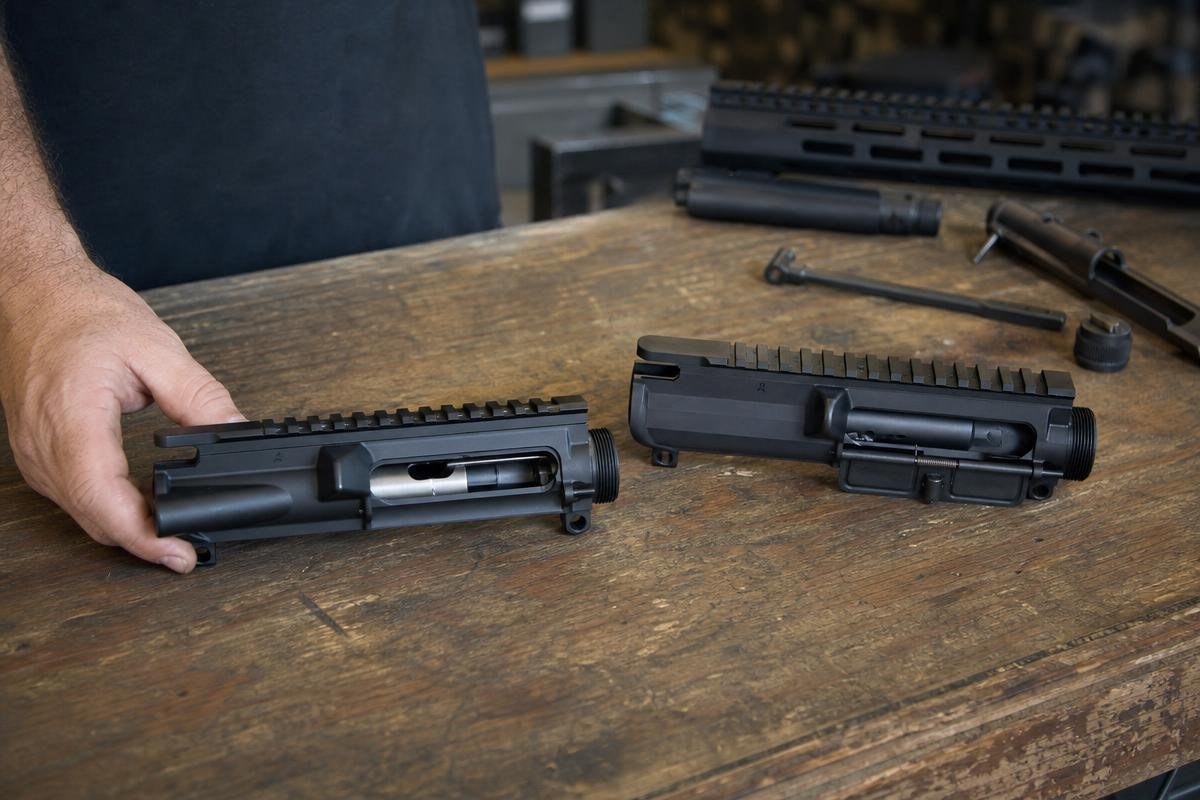
Your intended use should drive the choice. Neither design is automatically more reliable or accurate in every build. A correctly assembled, properly gassed rifle using suitable ammunition and maintained parts matters more than choosing DI or piston by label alone.
Two AR-15 upper receiver configurations are shown side by side for comparison.
Quick decision checklist:
- Choose DI if you prioritize common replacement parts, a potentially lighter front end, and broad upper and handguard options.
- Choose a piston upper if you want a factory-designed piston system and are prepared to follow its maker-specific parts and service requirements.
- For suppressed use, compare the upper’s stated gas configuration, buffer recommendation, and adjustment method rather than assuming one system solves backpressure.
- Choose the platform whose replacement parts you can identify, source, and maintain correctly.
Choose DI If
Choose DI for a first AR-15 build if you want familiar parts, simpler replacement options, and extensive configuration choices. Gas tubes, bolt carrier groups, buffers, and handguards are widely available in common AR-pattern configurations, but compatibility still must be verified.
DI is also practical for buyers comparing upper assemblies because common barrel lengths and gas-system lengths can be found without committing to a proprietary operating rod or carrier. Routine cleaning reaches the carrier and bolt area, but the procedure is familiar to many AR owners.
Choose Piston If
Choose piston if you prefer a system that keeps more gas residue out of the carrier area and you are buying a complete, manufacturer-matched upper or rifle. The separate operating assembly handles gas at the front of the firearm.
Accept the tradeoffs before buying. Piston assemblies add front-end mass, and replacement rods, carriers, regulators, and adjustment parts may be platform-specific. Confirm whether the design is short-stroke or long-stroke, how the regulator is adjusted, and how to obtain critical spares before making a decision.
Suppressed Use Changes the Setup
A suppressor does not automatically make a piston rifle the better choice. Many DI rifles experience increased backpressure and faster cycling with a suppressor. Gas tuning, buffer selection, action-spring condition, and an adjustable gas block may affect cycling, while charging-handle design can affect how much gas reaches the shooter.
Piston systems also need proper setup. Some use adjustable gas settings, but the adjustment sequence, regulator setting for suppressed use, and replacement parts vary by platform. Never use an adjustment position or conversion part unless the manufacturer specifically lists it for that model. For help comparing listed configurations, ask our team at (888) 706-0633 about compatible options, including 5.56 NATO complete uppers.
What Parts Must Match Before You Build or Buy?
A standard DI upper should not be treated as safely convertible to piston operation by swapping one or two parts. Record your existing upper, lower, buffer, barrel, handguard, and carrier details before comparing components. This prevents common mismatches and makes it easier to verify manufacturer-specific requirements.
DI Upper Components That Must Match
A DI upper depends on a matched gas path from the barrel to the carrier key. The barrel gas-port location must match the gas-system length, such as carbine, mid-length, or rifle length. The gas block and gas tube must match that location and length.
- Barrel gas-port location and gas-system length
- Gas block journal diameter and gas tube length
- Carrier key and DI bolt carrier group
- Buffer weight, buffer tube, and action spring
- Handguard clearance around the gas block
The buffer system affects bolt speed and extraction timing. A complete upper that includes a manufacturer-matched BCG may be easier to evaluate because its barrel, gas system, and carrier are configured together. Review our complete AR-15 uppers if you want to compare configured assemblies instead of sourcing each part separately.
Why Piston Platforms Need Matched Parts
Piston systems are usually designed as a matched platform. The piston gas block, operating rod or piston assembly, carrier design, upper receiver interface, and handguard dimensions must work together.
Do not assume a standard DI carrier, gas tube, or handguard fits a piston assembly. Carrier tilt is one issue to consider: some piston designs use carrier geometry, anti-tilt features, or a specific buffer arrangement to manage how the operating rod applies force. Verify the exact manufacturer’s instructions rather than mixing components from unrelated systems.
Handguard Clearance Matters
Free-float handguards need enough internal room for the gas block. Piston systems also need clearance for operating parts moving above or around the barrel during cycling.
Check the handguard manufacturer’s internal diameter, length, mounting hardware, and stated piston compatibility before ordering. A rail that clears a low-profile DI gas block may not clear a piston block, rod, or regulator. For a turnkey option, compare AR-15 complete rifles with the gas system already configured.
Have your component list and part numbers ready, then call our team before you buy.
Have a parts list ready? Call (888) 706-0633 for help checking basic AR-15 component compatibility.
How Should You Evaluate a Complete Upper for Your Gas-System Choice?
A complete upper listing should identify exactly what system you are buying and what it requires below it. Read the specifications before comparing price, especially when comparing a piston platform with a DI upper.
Read the Core Specifications First
Confirm the chambering, barrel length, gas-system length, gas-block style, handguard type, included BCG status, and muzzle-device configuration. Those details determine what parts are present and what components still need to match your build.
Start with our complete AR-15 uppers selection, then compare the listing against your intended caliber and lower-side components. A 5.56 NATO upper, for example, should be identified by its chamber marking and listing specifications, not assumed from its external appearance.
DI Uppers and Piston Uppers Need Different Checks
Direct-impingement parts generally follow familiar AR-pattern compatibility expectations, but the caliber, buffer arrangement, barrel gas configuration, and carrier still matter. A standard DI upper may be compatible with a mil-spec lower receiver when all applicable specifications match.
A piston upper must be evaluated as a matched operating system. Check the carrier design, piston and operating-rod components, gas block, regulator settings, handguard or rail clearance, and manufacturer-specific replacement parts before purchase.
Match the Upper to the Lower-Side Setup
Your stock, buffer tube, buffer weight, and spring condition can affect cycling. Do not assume a heavier buffer, reduced-power spring, or worn spring will work the same across every upper configuration.
Keep a written list of your lower receiver, buffer, spring, stock, and caliber details when comparing products. Our team can help by phone as you read the specifications and compare 5.56 NATO complete uppers with the lower-side setup you already own.
What Should You Check Before Comparing AR-15 Gas Systems?
Before making an AR-15 gas-system comparison, write down the details of your current build and verify product specifications against them. We ship from our Denison, TX facility, and you can call us with product numbers and configuration questions before ordering.
Have the Right Configuration Details Ready
A written parts list prevents mismatched components. Include your upper and lower receiver, buffer and spring, barrel length, chambering, gas-system length, handguard, and current bolt carrier group. Note visible markings or keep photos handy if any part is difficult to identify. This is especially helpful when comparing an upper assembly against an existing lower or handguard setup.
Confirm Specifications Before Purchase
Confirm chambering, BCG inclusion, gas-system type, and handguard clearance before ordering. A piston assembly must match the manufacturer’s operating-rod, gas-block, carrier, and handguard requirements.
Ask whether the component fits your exact upper, not just an AR-15-pattern rifle. Call (888) 706-0633 with product-specification questions before purchase.
Follow Applicable Firearm Laws and Safe Handling Practices
You are responsible for confirming applicable federal, state, and local firearm laws before purchase. Follow safe handling and storage practices for every firearm and component. For a turnkey option, compare the specifications of our AR-15 complete rifles before selecting a configuration.
Frequently Asked Questions
Are Direct Impingement and Piston AR-15s Both Gas-Operated?
Yes. Both systems take gas from the barrel, but direct impingement routes it into the carrier while a piston transfers force through a separate operating assembly. That is the basic difference between piston-driven and direct-impingement systems.
Is a Piston AR-15 Cleaner Than a DI AR-15?
A piston system usually leaves less carbon in the carrier area, but it does not eliminate cleaning. Heat and fouling still collect around the gas block, piston parts, chamber, bolt, and barrel extension.
Which System Has Less Felt Recoil?
Neither system automatically has less felt recoil. Rifle weight, ammunition, buffer weight, action spring condition, gas tuning, and moving carrier mass matter more than the gas system alone.
Can You Convert a DI AR-15 to a Piston System?
Some DI uppers can accept a piston conversion, but the kit must match the barrel, gas-system length, handguard clearance, and upper configuration. Confirm the manufacturer’s requirements before changing parts, especially on a completed upper.
Are Piston AR-15 Parts Interchangeable?
Many piston assemblies are proprietary. The operating rod, gas block, bolt carrier, and handguard clearance may be specific to one maker. A comparison of direct-impingement and gas-piston AR-15s should always include replacement-part availability.
Which System Is Easier for a First Build?
DI is commonly easier for a first build because standardized gas tubes, gas blocks, carriers, buffers, and handguards are widely available. A complete factory-configured piston upper can reduce compatibility uncertainty if you prefer a gas-piston AR-15 setup over a DI setup.
Before choosing either system, write down your chambering, barrel length, gas-system length, buffer setup, and handguard details. Compare those specifications against complete AR-15 uppers or AR-15 complete rifles. For help confirming product specifications, contact AR15Parts.com at (888) 706-0633 or use the site contact page.
Ready to Get Started with AR15Parts.com?
Call (888) 706-0633 to speak with our team directly. We're ready to answer your questions, walk you through your options, and help you find the right solution for your needs. Whether you're just starting to plan or ready to move forward, we'll make the process simple and stress-free. Reach out today and let's talk about how we can help.