
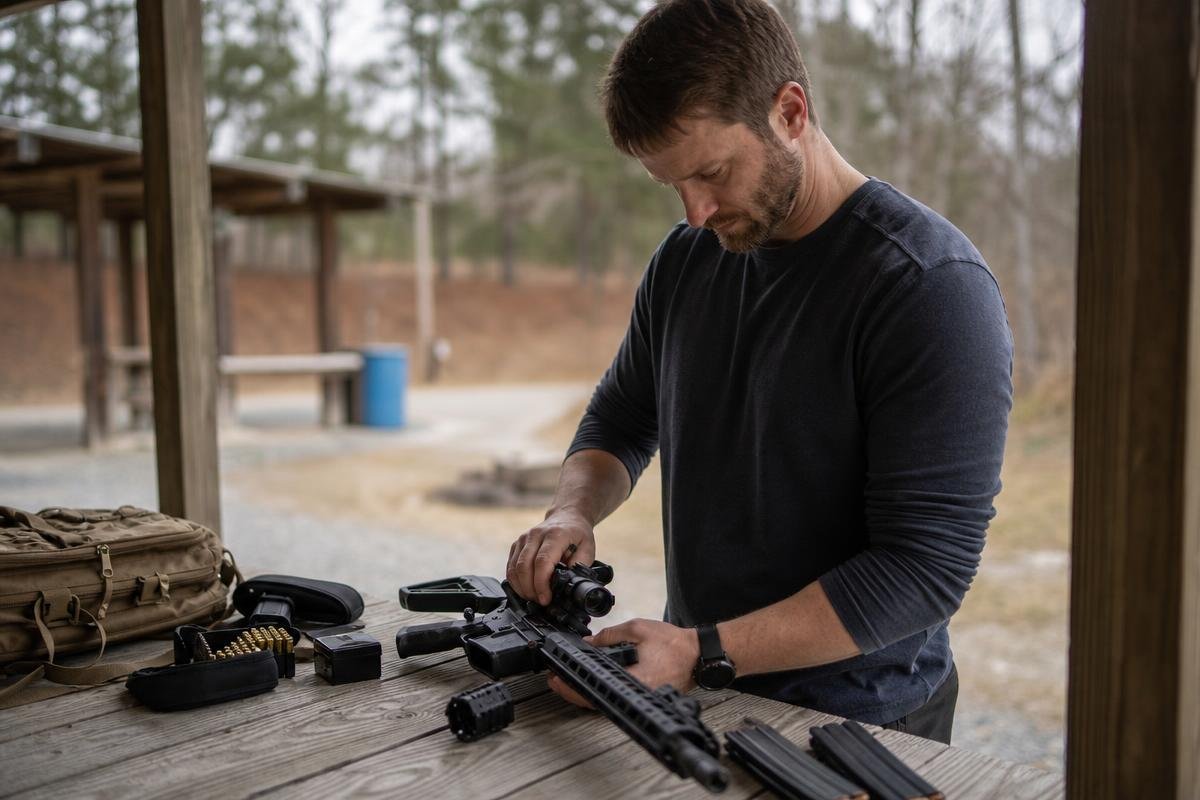
Rifle range etiquette means handling every firearm safely, following the facility’s instructions immediately, and respecting the shooters around you. Before heading to a range, confirm its current hours, rifle-caliber policies, target requirements, ammunition restrictions, and casing procedures directly with that facility.
Key Takeaways
- Call or check the range website before leaving, because facilities can have different rules for rifle calibers, targets, ammunition, and cold-range procedures.
- Keep the muzzle pointed in a safe direction and keep your trigger finger outside the trigger guard until you are ready to fire.
- During a ceasefire, make the rifle safe as directed, then do not touch it while anyone is downrange.
- Pack a cased rifle, eye and ear protection, correct ammunition, targets, water, and an empty-chamber indicator if required.
What Is Rifle Range Etiquette?
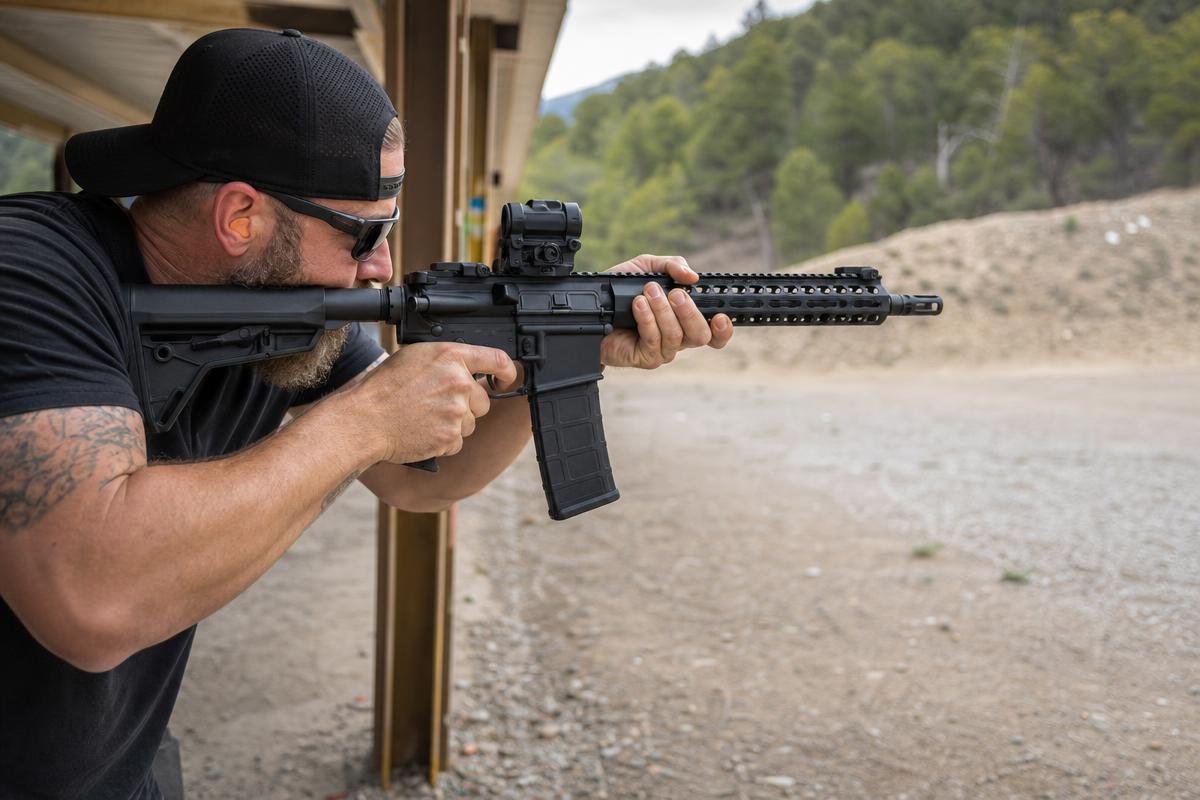
Safe range conduct is a combination of the universal firearm-safety rules and the operating procedures of the specific range you visit. For a new shooter, that means arriving with a cased firearm, listening before handling gear, keeping the muzzle downrange, and treating every command as time-sensitive.
Shooters may use indoor lanes, outdoor bays, or unstaffed public shooting areas, and those environments are not interchangeable. Check whether the facility permits your rifle caliber, requires chamber flags, restricts steel-core or bi-metal ammunition, supplies target materials, or has a particular process for checking in with staff.
Keep the Muzzle Downrange
Keep the muzzle pointed downrange while loading, clearing a malfunction, adjusting a sling, setting the rifle down, or moving it into a case. Do not turn around with a rifle in your hands, point over a side berm, or let the muzzle sweep another shooter while you reposition.
If you need to step away from the bench, make the rifle safe using the procedure staff have explained. At a busy indoor lane, remain within your assigned space. At an outdoor firing line, do not move off the line or toward a target area until the entire line is confirmed safe.
Index Your Trigger Finger Until You Are Ready to Fire
On an AR-style rifle, your trigger finger stays straight and indexed along the receiver, outside the trigger guard. It moves to the trigger only after your sights are on the target and you have decided to fire.
This applies while loading magazines, working the charging handle, correcting a stoppage, and moving the rifle between targets. A rifle can be ready to fire faster than a new shooter expects, so trigger discipline must remain automatic.
Verify the Rifle's Condition Yourself
Personally verify the chamber and magazine condition every time you pick up a rifle. Do not rely on another person's statement that it is unloaded, even if they handed it to you moments earlier.
Remove the magazine, lock the action open, and visually inspect the chamber and magazine well.
Treat every firearm as loaded until you have personally confirmed otherwise. That habit protects you, the people beside you, and everyone waiting behind the firing line.
What Should First-Time Shooters Bring to a Rifle Range?
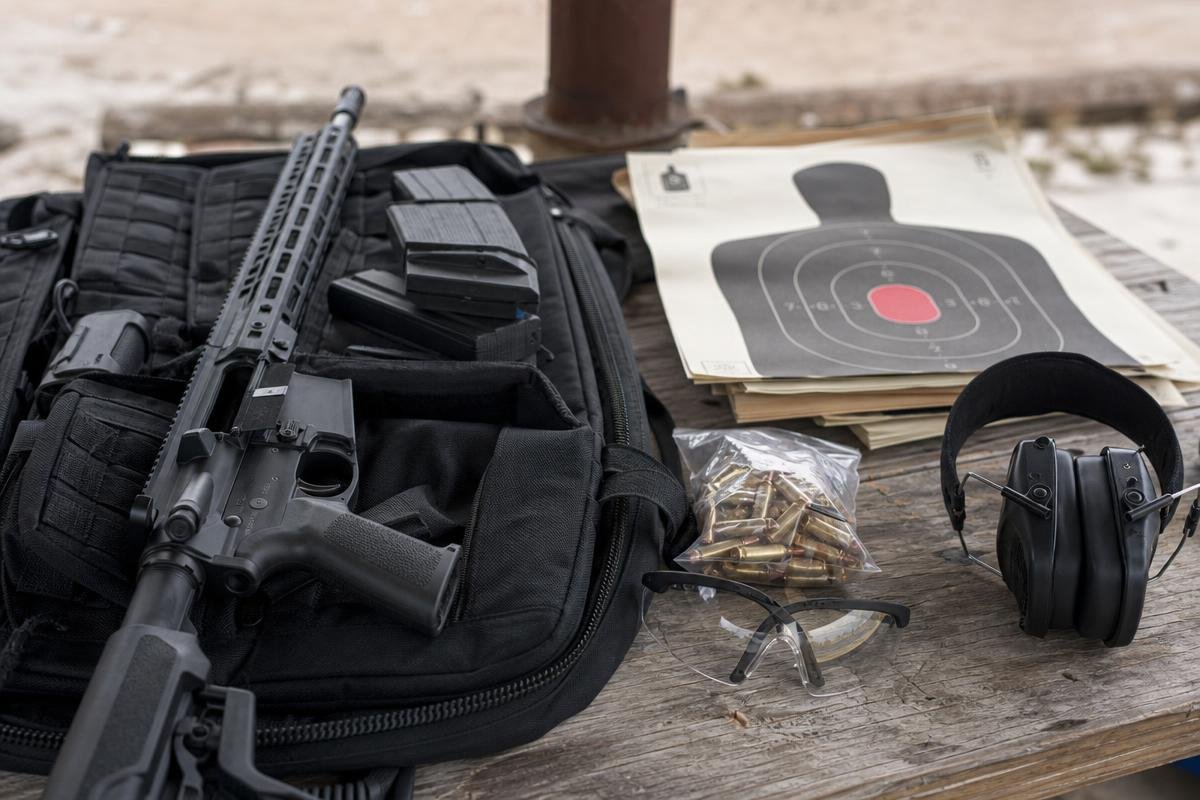
A prepared range bag keeps your visit focused on safe shooting instead of missing equipment. Before leaving home, confirm whether the range provides targets, target backers, staples, spotting equipment, or empty-chamber indicators, and ask what identification or waiver paperwork is required.
First-Trip Rifle Range Checklist
Bring a cased rifle, eye protection, hearing protection, matching ammunition, targets, and any target fasteners the facility requires. Heat can make even a short outdoor session uncomfortable, so add water and consider arriving early when conditions are warmer. For outdoor sessions, also protect optics and ammunition from sudden rain or windblown dust.
- Rifle case that fully covers the firearm
- ANSI-rated eye protection and over-ear or in-ear hearing protection
- Paper targets and approved staples, clips, or tape if allowed
- Correct ammunition, magazines, and a chamber flag if required
- Water, cleaning cloth, and a small bag for trash
Keep the rifle cased until staff direct you to an assigned booth, bench, or firing area. Do not uncase it in the parking area, lobby, or behind the firing line.
Check the Rifle and Ammunition Before You Leave
Confirm the chambering marked on your barrel or receiver before packing ammunition. A rifle marked 5.56 NATO can generally fire 5.56 NATO and .223 Remington, but you should always follow the markings on your specific rifle.
Check for loose optics, sling hardware, handguard fasteners, and magazines that do not seat or release correctly. Verify that a new optic mount is secure, confirm the sling does not interfere with controls, and bring only the ammunition you intend to use instead of mixing loose cartridges in a range bag.
These practical preparation steps prevent common delays at the firing line.
What Do You Do During a Range Ceasefire?
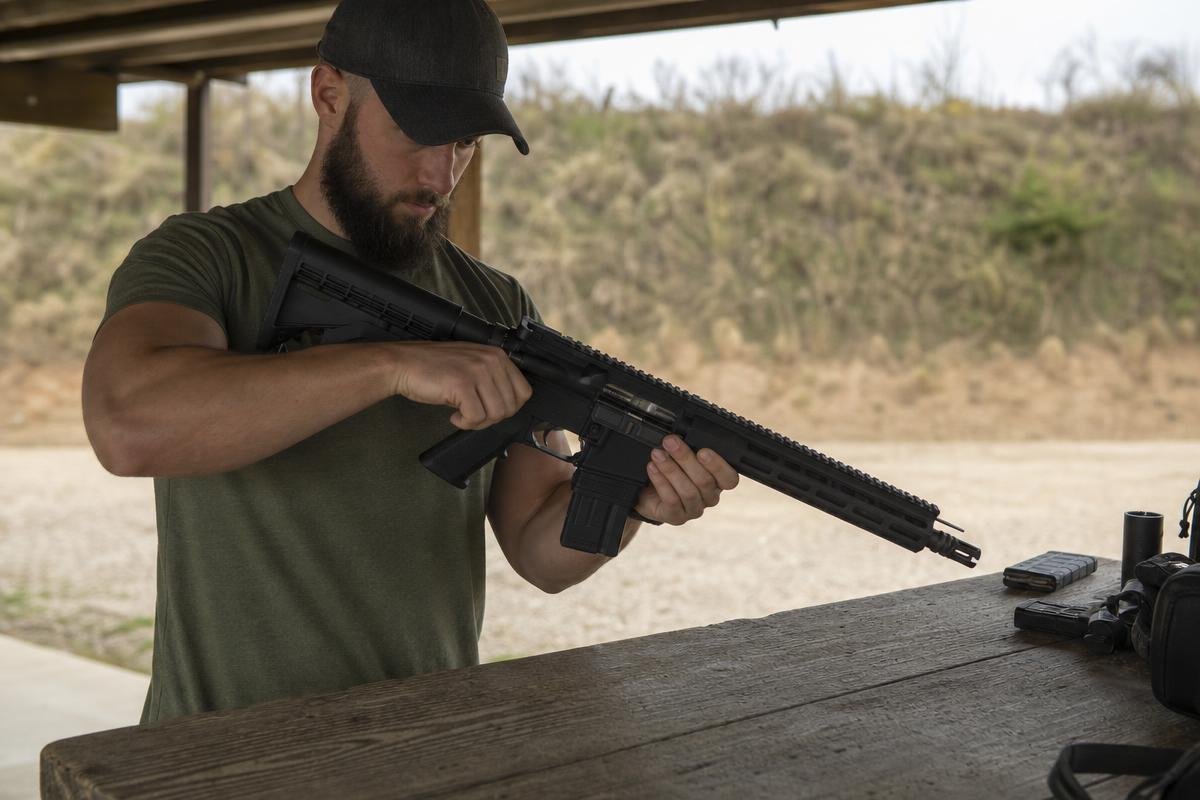
During a ceasefire, stop firing immediately and follow the command sequence given by staff. In many settings, that means removing the magazine, clearing the chamber, locking the action open, placing the rifle muzzle-downrange on the bench, and stepping behind the designated line. The range officer’s instructions always control, because cold-line procedures can differ by facility.
Make the Rifle Safe Before Stepping Back
Keep the muzzle pointed at the backstop while you make the rifle safe. Remove the magazine, rack the action, and visually inspect the chamber. A physical chamber check adds confirmation if the platform allows safe access.
Insert an empty-chamber indicator after verifying the chamber is clear when the range requires or recommends one. The indicator gives staff and other shooters visible confirmation, but it does not replace checking the chamber yourself. Keep a chamber flag in your range bag so you are prepared for ranges that use them.
Keep Hands Off Firearms During a Cold Line
Once the line is cold, do not touch, adjust, case, uncase, load, unload, or move any firearm. This applies even if your rifle is unloaded and the action is open. People may be downrange changing targets, checking impacts, or retrieving equipment.
Do not put your rifle in its case while people are downrange. Leave it on the bench in the condition required by that facility, then wait for the range officer to declare the line hot.
What to Do if a Rifle Malfunctions
A malfunction during a ceasefire stays pointed downrange and untouched until the line is hot again. Do not try to clear a stuck case, remove a magazine, or inspect the action while anyone is forward of the firing line.
Tell the range officer what happened and ask for direction once handling is permitted. If the rifle stops firing during an active line, keep it pointed downrange, remove your finger from the trigger, and wait for guidance if you are unsure how to proceed. A new shooter should never rush a malfunction clearance to avoid holding up others.
The Unwritten Rules That Make You a Better Neighbor on the Range
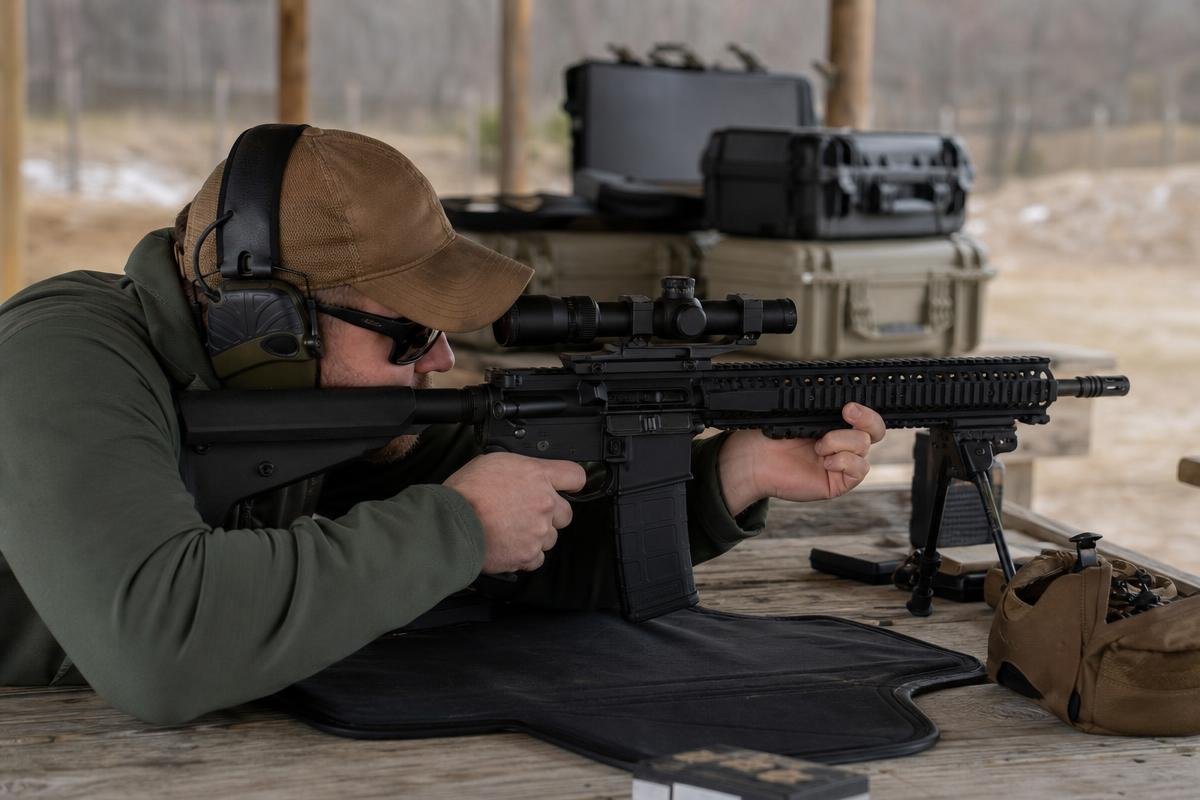
Formal rules keep the firing line safe. Good gun range etiquette keeps shared space usable for everyone. Be especially considerate with rapid fire, steel targets, drills, and specialized ammunition, since these activities often require staff approval or a designated bay.
Keep Benches and Walkways Clear
Put your rifle bag, case, spare gear, and loose ammunition behind your firing position. Keep the bench clear for the rifle, magazine, ammunition you are using, and basic eye and ear protection.
Do not block a walkway or crowd a neighboring bench. A clear path matters when people move during a ceasefire or staff need access to the firing line.
Work With One Rifle at a Time
Bring multiple rifles if the facility allows it, but work with one rifle at the bench. Keep the others cased until you are ready to use them. This reduces clutter and unnecessary handling.
If a rifle repeatedly fails to cycle, stop prolonged troubleshooting at the bench. Case it or move it away from the active firing line when permitted, then inspect it away from other shooters. New shooters often create confusion by changing several variables at once, such as ammunition, magazines, optic settings, and controls. Change one item at a time and ask for help when needed.
Clean Up Your Brass, Targets, and Packaging
Collect your brass when permitted. Remove empty ammunition boxes, damaged paper targets, tape, and other packaging. Do not leave targets hanging after your session.
These small habits are part of responsible rifle range etiquette. They also leave the next shooter with a clean bench and a usable target frame.
Indoor and Outdoor Range Etiquette Require Different Habits
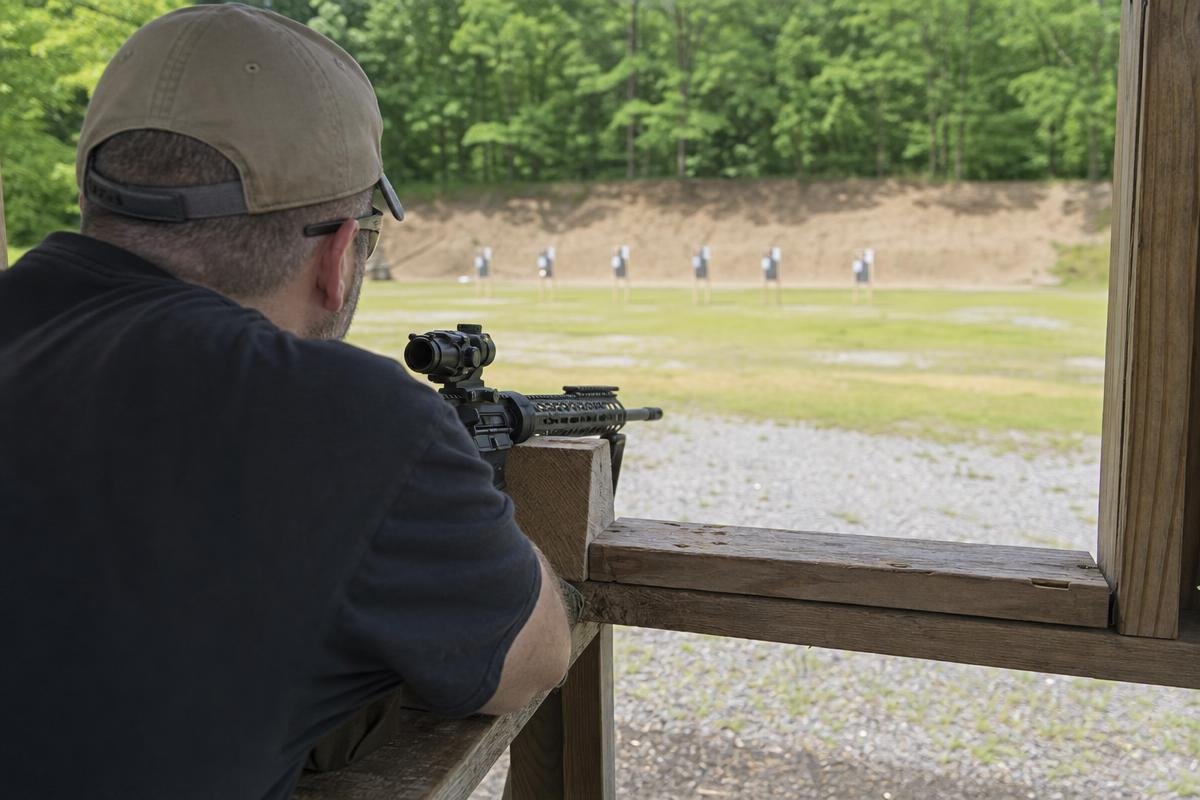
Indoor and outdoor shooting environments demand different preparation. Facility rules still control, but knowing the practical differences helps a first-time shooter arrive ready, avoid delays, and handle equipment appropriately.
Indoor Range Habits
Indoor lanes keep shooters close together, so keep your rifle’s muzzle inside your assigned lane and pointed downrange. Follow the target-carrier instructions, including target size, distance limits, and approved backer materials.
Pay attention to ventilation and staff direction. Some facilities prohibit certain ammunition, muzzle devices, steel-core projectiles, or rapid-fire practices. Ask those questions before uncasing a rifle, especially if it has a muzzle device that produces increased blast in an enclosed lane.
Outdoor Range Habits
Outdoor firing lines can be wider, louder, and harder to monitor. Shoot only from designated firing points, place targets where the facility directs, and listen for commands from the range officer or other shooters.
Wind can move lightweight target stands. Heat and sudden rain can also change your session. Secure your target setup, protect your gear, stay hydrated, and pause if weather makes communication or safe footing difficult.
You can zero a red dot on your first trip if the facility allows it and you understand its target-distance rules. Start at the approved distance, fire controlled groups, and make adjustments only after confirming the rifle is safe and pointed downrange.
Extra Discipline at Unstaffed Ranges
Unstaffed ranges require direct communication because no range officer is managing the line. Before anyone goes forward, every shooter must agree the line is cold, unload, open the action, and confirm the firing line is clear.
Do not assume another shooter heard the plan or understands your hand signal. Speak clearly, wait for acknowledgment, and confirm nobody is handling a firearm before target changes. That extra discipline is essential at any unstaffed firing range.
Preparing for a Range Visit
For a range visit, plan the session before you leave home. Confirm the destination, hours, check-in requirements, lane or bay availability, and the rules that apply to your rifle and ammunition. We recommend starting with one rifle, one ammunition type, and a clear plan for safe practice.
Review the Facility Rules Before Arrival
Use a quick pre-visit call checklist: ask whether rifles are permitted, whether your ammunition type is allowed, whether a chamber flag is required, what targets and target fasteners are acceptable, and whether the range has cold-line or casing rules for arrivals and departures.
Your shooting range checklist should include required protective gear, targets, ammunition, and any chamber flag required by that facility. Verify these details directly, because policies may change and indoor and outdoor facilities may have very different restrictions.
Keep Your First Session Focused
Keep your first session focused on safe loading, sight alignment, controlled firing, and following range commands. Start at a close, manageable target distance. Fire small groups, then check your target and make one adjustment at a time.
Do not turn a first visit into a test day for multiple rifles, optics, slings, magazines, and accessories. A self-built AR-style rifle can be brought if facility rules allow it, but perform methodical function checks without disrupting an active line. If you have a complete upper, check that the facility permits your rifle and ammunition before heading out.
Frequently Asked Questions
Good gun range etiquette starts with following staff instructions and posted rules at your chosen facility. These preparation tips cover common questions before you arrive.
What Should I Do if I Do Not Understand a Range Command?
Stop immediately, keep your muzzle downrange, and ask a range officer or staff member for clarification. Do not guess, move behind the line, or handle your rifle until you understand the command.
Can I Bring More Than One Rifle?
Yes, if the facility permits it. Keep unused rifles cased until it is their turn.
Do I Need an Empty-Chamber Indicator?
Bring one if the facility requires it. An empty-chamber indicator visibly shows an open, clear chamber during a cold range and helps staff confirm rifles are safe.
Can I Practice Rapid Fire or Drills?
Only with staff approval. Indoor vs outdoor shooting range etiquette can differ, and a facility may limit cadence, target type, lane use, ammunition, or movement drills.
What Should I Do if My Rifle Malfunctions?
Keep the muzzle downrange, remove your finger from the trigger, and pause firing. If you do not immediately understand the problem, leave the rifle pointed safely and ask staff for help.
Can a First-Time Shooter Zero a Red Dot?
Yes, if your range allows sighting work and you have a stable rest, proper target, and correct ammunition. Confirm your rifle’s chambering before loading, especially with complete AR-15 rifles or a newly installed upper. Before your next range visit, pack protective gear, confirm your rifle's chambering, and read facility rules.
Ready to Get Started with AR15Parts.com?
AR15Parts.com is an online retailer. Call us at (888) 706-0633 with questions about rifles, uppers, or parts before your next range trip.