
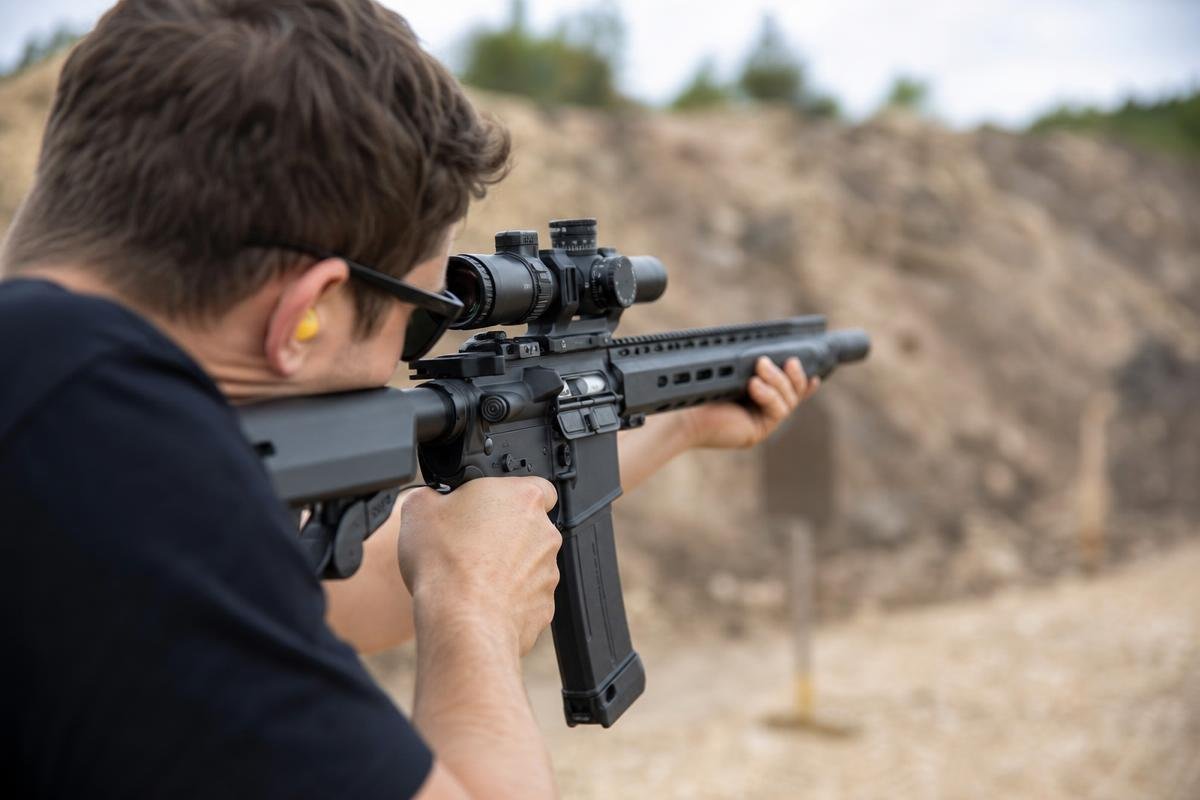
Scope eye relief and eyebox determine how easily you get a full sight picture with a natural cheek weld. When choosing an optic for an AR-15 upper, compare the manufacturer's eye-relief specifications with your stock position and the height and placement of a compatible mount. On harder-recoiling builds, adequate clearance from your brow matters too.
At AR15Parts.com, we build complete uppers to order, assemble them in-house, and headspace and function-check them before shipping from our Denison, TX facility. Compare our complete AR-15 uppers and consider how your stock and mount affect optic fit. Need help comparing upper and optic compatibility before you buy? Contact our team.
Scope Eye Relief and Eyebox: Key Takeaways
- Eye relief is the distance between your eye and the eyepiece lens where you get a full, clear sight picture.
- Choosing the right scope starts with knowing your AR-15 mount height and the shooting position you use most.
- AR-15 optic fit depends on choosing an appropriate mount height and fore-and-aft position for your stock setting and natural head position.
- Eye box width determines how much head movement you can make and still hold a clear sight picture.
- Compare eye relief and eyebox across the magnifications and shooting positions you expect to use.
What Is Scope Eye Relief and How Does the Eyebox Differ?
Eye relief is the measured distance in inches between the ocular lens (the rear eyepiece) and your eye at which a full, clear sight picture appears. Too close or too far and the image collapses. The optic's design sets its specified eye-relief range, which may vary with magnification; mounting position determines whether your eye falls within that range.
The Distance That Creates a Full Sight Picture
Many conventional rifle scopes specify eye relief in the neighborhood of 3 to 4 inches, but designs vary. Outside an optic's usable range, shadows can obscure the image. Check the manufacturer's specifications rather than assuming a universal distance. On an AR-15 build, stock length, mount height, and your cheek weld affect where your eye naturally lands behind the scope.
On a harder-recoiling setup, such as a lightweight .308 AR, check the optic manufacturer's specified eye-relief range and verify adequate brow clearance in each intended shooting position.
Eye Relief vs. Eye Box
Eye relief is the front-to-back distance. Eye box is a different spec entirely. It describes how far your eye can shift left, right, up, or down from the ideal centerline and still hold a clear image. A scope with a generous eye box forgives slight head movement. A scope with a tight eye box collapses the image the moment your cheek weld shifts even slightly.
A scope can offer 3.5 inches of ocular distance and still punish you with a narrow relief window that requires your head to be in exactly one position. For an LPVO on an AR-15, you want both specs working in your favor. Eye relief gets your head in the right zone front to back. Eye box determines how much you can move once you are there. Both numbers belong on your checklist before you buy. Browse our AR-15 complete uppers for sale to see which builds pair well with low-power variable optics.
Why Eye Relief Matters: Safety, Accuracy, and Field of View
Eye relief is not just a comfort spec. Set it wrong and you have a real injury risk, a narrowed view, or both. Every time the rifle fires, it moves rearward. If your eye is too close to the ocular lens, that lens travels into your brow. That cut is called scope bite, and it bleeds.
Scope Bite and Recoil Safety
On a 5.56 AR-15, scope bite is less common than on harder-recoiling platforms, but it still happens during rapid-fire strings when your head drifts forward. On an AR-10-pattern build chambered in .308 or 6.5 Creedmoor, the risk is not optional to think about. Use the eye-relief range specified by the optic manufacturer, and verify safe clearance from your brow in every shooting position. Heavier-recoiling platforms generally require more clearance than mild-recoiling rifles.
Shooters running longer-range calibers at higher magnification should follow the optic manufacturer's stated eye-relief range and verify clearance in every shooting position.
Field of View Trade-Offs
Eye relief and field of view can trade off in some optical designs, but compare the specifications of the actual scopes you are considering. That trade-off is acceptable for precision work at distance, where you are already dialed in on a single target. For CQB or close-range shooting, a wider field of view matters more. You need to track movement and acquire targets fast. Sacrificing field of view for extra relief window at 50 yards costs you more than it gives you.
If your build is intended for close-range hunting or varied distances, compare a low-magnification LPVO's eye relief and field of view with those of a fixed high-power scope. Ocular distance and field of view work together, and choosing one means accepting the other's limits. We cover how to match those specs to your specific build in the selection checklist below.
How AR-15 Flat-Top Uppers Change the Eye Relief Equation
The AR-15's straight-line stock and elevated receiver rail influence your natural sight line. Choose a one-piece optic mount or appropriate ring height that places the scope centerline at a comfortable height for your cheek weld; many standard AR mounts place it around 1.5 inches above the rail, but fit varies by shooter and setup. A separate riser is not automatically needed. Consider mount height and fore-and-aft adjustment when comparing our AR-15 complete uppers with an optic.
Mount Height and Fore-and-Aft Position
Fore-and-aft placement determines where your eye falls within the optic's specified eye-relief range. Set your preferred stock position first, then shoulder the unloaded rifle naturally in your primary shooting position. Move the optic forward or rearward until you get a full sight picture without craning your neck or crawling the stock. A cantilever mount often provides the forward placement an LPVO needs on an AR-15; confirm your setup across other intended positions too.
Adjustable carbine stocks complicate this further. Changing the length of pull shifts where your eye lands relative to the rail. A scope mounted for a fully extended stock will push you outside the eye box when you shorten the stock for prone. Set your stock at the position you shoot most, then dial in scope placement from there.
Choosing the Right Mount Height
Mount height is measured from the rail surface to the optic centerline. Common heights vary by optic and mount, so use manufacturer dimensions and confirm clearance, cheek weld, and backup-sight compatibility for the exact setup.
- Around 1.41-inch center height: Common absolute co-witness height for many AR-15 red-dot setups.
- Around 1.57-inch center height: Common lower-one-third co-witness height for many AR-15 red-dot setups.
- Around 1.54 inches and taller: A common LPVO mount range, with taller options used for a more upright, heads-up position.
Quick matrix: match the optic and mount as a system, use the manufacturer's centerline measurement, and confirm clearance and cheek weld before final torque. Mount height affects head position and cannot be corrected through scope adjustments alone.
Eye Relief by Scope Type: Fixed Power, Variable, and LPVO
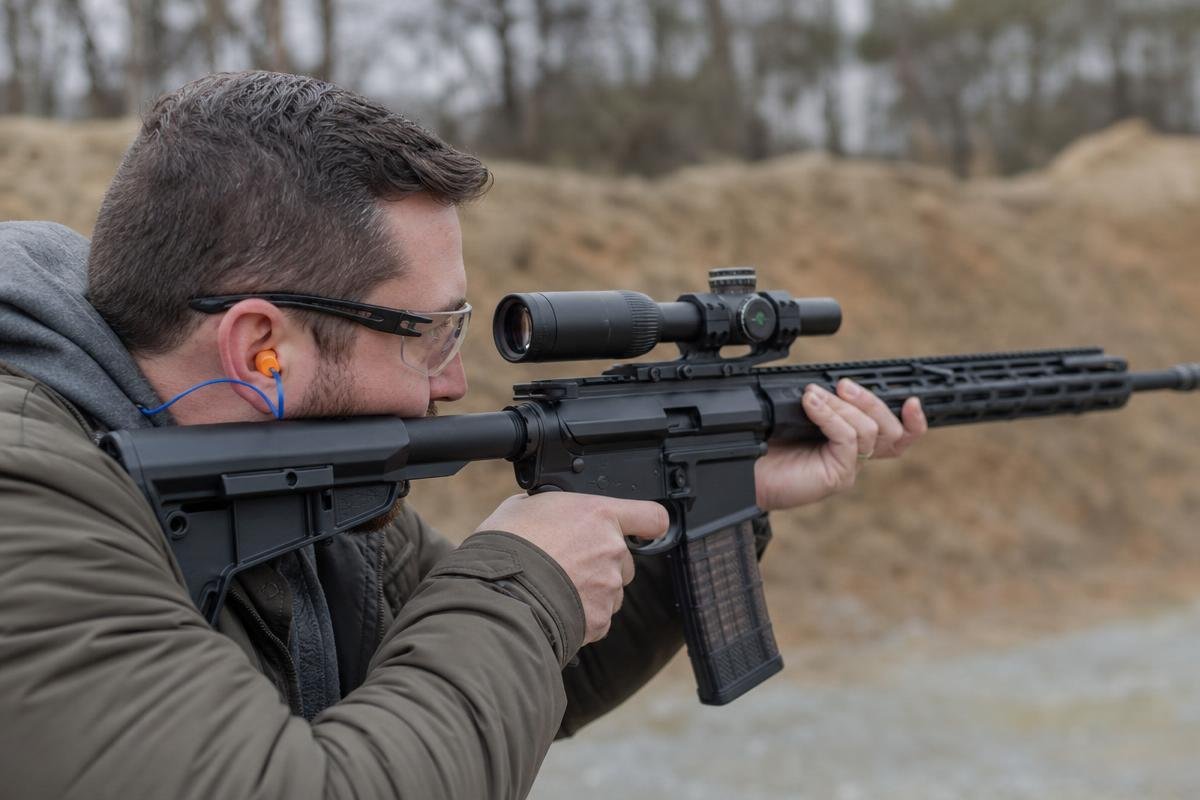
Not all scopes handle eye relief the same way. The type of optic you choose determines how much margin you have for head position, how that margin shifts with magnification, and whether the scope is practical for your AR-15 build at all.
Fixed-Power Scopes
A fixed-power scope, whether a 4x, 6x, or 10x, gives you one eye relief spec that never changes. Check the specific optic's published eye-relief range rather than assuming one range fits all fixed-power scopes. Once you set your mount position correctly, you are done. There is no magnification ring to adjust, so there is nothing to shift the eye relief on you mid-session. The trade-off is inflexibility. If you run a dedicated long-range AR build, like a 6.5 Grendel complete upper optimized for distance work, a fixed 10x can make sense. For anything requiring quick target transitions at varied ranges, it is limiting.
Variable-Power Scopes
On a variable-power scope, both eye relief and eyebox tolerance can change as you adjust magnification. Eye relief may shorten, lengthen, or stay nearly constant, depending on the optic. Check the manufacturer's values at minimum and maximum power, and test for a full sight picture and adequate brow clearance across the entire magnification range before finalizing mount placement.
LPVOs (Low Power Variable Optics)
An LPVO can suit an AR-15 build that needs both low magnification and a higher-power option. Eye relief and eyebox differ among 1-6x and 1-8x models and may change across the zoom range. Before buying, compare the manufacturer's eye-relief values at both ends, test eyebox tolerance at maximum power, and check that the optic's tube and chosen mount fit your upper and shooting position.
For a build used across different shooting conditions, compare 1-6x and 1-8x LPVOs by their specified eye relief at both ends of the magnification range, eyebox, and mount compatibility.
| Scope Type | Typical Eye Relief | Eye Box | Best AR-15 Use Case |
|---|---|---|---|
| Fixed Power (4x, 6x, 10x) | Varies by model | Narrow, consistent | Dedicated long-range or precision builds |
| Variable Power (3-9x, 4-16x) | Varies by model and power setting | Narrows at high power | Mid-range target shooting, hunting |
| LPVO (1-6x, 1-8x, 1-10x) | Varies by model and power setting | Wide at 1x, tightens at max | General-purpose use; effective distance varies by setup |
Not sure which mount height and optic pair with your caliber? Browse our AR-15 complete uppers, or call us at (888) 706-0633 and we will point you toward the right optic and the upper to go with it.
Eye Relief Selection Checklist: Matching the Spec to Your Build
No two AR-15 builds land a scope in exactly the same position. Caliber, stock length, and ring height all shift where your eye needs to be relative to the ocular lens. Work through these three steps before you torque anything down.
Step 1: Identify Your Caliber and Recoil Level
Follow the optic manufacturer's specified eye-relief range and verify adequate brow clearance with the unloaded rifle in every intended shooting position. Allow extra clearance on harder-recoiling setups; cartridge alone does not establish a universal safe minimum.
Step 2: Confirm Your Stock and Cheek Weld Height
Set your stock to your preferred length of pull before you touch the scope. On an adjustable carbine stock, every position change moves your eye forward or back relative to the ocular lens. Lock the stock where you actually shoot, not where the rifle looks good on the bench.
Cheek weld height matters just as much. A riser mount or tall rings raise the scope tube, which raises the ocular lens, which changes where your eye sits naturally. Get your cheek weld consistent first. Scope mounting position on an AR-15 flat-top is already more forward than on most bolt guns, so small stock changes have a bigger effect than shooters expect.
Step 3: Set and Lock Eye Relief Before Final Torque
Mount the scope in rings without final torque. With the rifle unloaded, shoulder it naturally with your eyes closed in your primary shooting position. Open them. You should see a full, clear image with no black ring around the edge. If there is a black ring, slide the scope forward or back until it disappears. Mark that position with a paint pen or tape.
One important note: set eye relief from the position you shoot most, not from the bench. Many shooters zero from a bench but hunt or compete from standing or kneeling. Those positions can change your natural eye position, so confirm the full sight picture in each one.
Once the position is marked, torque your rings to manufacturer spec, using the specified torque for your exact rings and mount. Do not adjust eye relief after final torque without planning a full re-zero at the range. The eye relief for AR-15 scope setups is locked in at this step, and moving the scope breaks your zero.
Local Considerations for Denison, TX Shooters

Match Optics to Your Shooting Conditions
Shooting distances depend on the specific range or property and your intended use, not a countywide norm. For a close-range setup, compare a low-magnification optic's field of view and eyebox. For a build intended for longer distances, compare higher-magnification options and check eye relief at every power setting you plan to use.
A 1-6x LPVO may suit a versatile build, while a higher-magnification variable may better suit a precision-oriented setup. In either case, use the optic manufacturer's eye-relief specifications and confirm a comfortable sight picture and brow clearance. Compare our 6.5 Grendel complete uppers if that cartridge fits your build plans.
Caliber and Optic Pairing for North Texas Conditions
Summer heat is a real factor at outdoor ranges in this region. Heat and humidity cause cheek pad sweat that shifts your head position slightly during a session. That shift tightens your usable eye box in practice, even if the spec looks fine on paper. A wider eye box LPVO is a genuine advantage from June through September.
For a hunting build, consider the expected terrain and your available, lawful shooting distance before choosing magnification. Compare the eyebox and specified eye relief of candidate LPVOs in your intended positions, then check mount and stock fit on the upper you select. Call us at (888) 706-0633 or contact our team with your build details for help comparing compatibility.
Frequently Asked Questions
What is the standard eye relief for an AR-15 scope?
Most rifle scopes designed for AR-15 builds run 3.0 to 4.0 inches of eye relief. LPVOs typically fall in the 3.5 to 4.0 inch range. Long eye relief scopes start at 4.5 inches and go higher, and those are better suited to scout-style mounts or pistol-caliber carbines than a standard flat-top upper.
What happens if eye relief is too short?
You get scope bite. The ocular lens contacts your brow under recoil. Even on a 5.56 build, rapid-fire strings generate enough rearward movement to cut the shooter above the eye. Follow the optic manufacturer's stated eye-relief range and verify safe clearance in every shooting position. Do not use one universal minimum across every optic and platform.
Is eye relief different on an LPVO compared to a fixed-power scope?
Both LPVOs and fixed-power scopes vary by optical design, so compare specific models rather than assuming one type always offers more eye relief. An LPVO's eye relief and eyebox may change between minimum and maximum magnification. Check the manufacturer's values at both ends and test the sight picture across the full range.
What is the difference between eye box vs eye relief?
Eye relief is the front-to-back distance in inches between your eye and the ocular lens where you get a full, clear image. Eye box is the lateral and vertical tolerance around that point. A scope can have adequate eye relief but a tight eye box that collapses the moment your head moves slightly off center. Both specs matter when you are evaluating an LPVO eye relief rating for a fast-acquisition build.
How do I adjust eye relief after mounting a scope?
With the rifle unloaded, loosen the rings and shoulder it naturally at your chosen stock setting. Move the optic fore or aft until you see a full sight picture without straining, then confirm the view across magnifications and shooting positions. Re-torque to the manufacturer's specification and re-zero before relying on the rifle. If you use backup iron sights, confirm folded sights clear the optic and mount, or that offset sights remain aligned and usable; standard sights do not co-witness through an LPVO. Browse our AR-15 complete uppers for sale when planning your build.
Does magnification affect eye relief on a variable-power scope?
It can. Depending on the optic, eye relief may increase, decrease, or stay nearly constant as magnification changes; eyebox tolerance can change too. Check the manufacturer's values at both minimum and maximum power, and test the sight picture across the full range.
Ready to Get Started with AR15Parts.com?
Choosing an upper and checking optic compatibility? Browse our AR-15 complete uppers, then call us at (888) 706-0633 or contact our team with your stock, mount, and optic details. We can help you compare options before you order; complete uppers are built to order, assembled in-house, headspaced, and function-checked before shipping from our Denison, TX facility.