
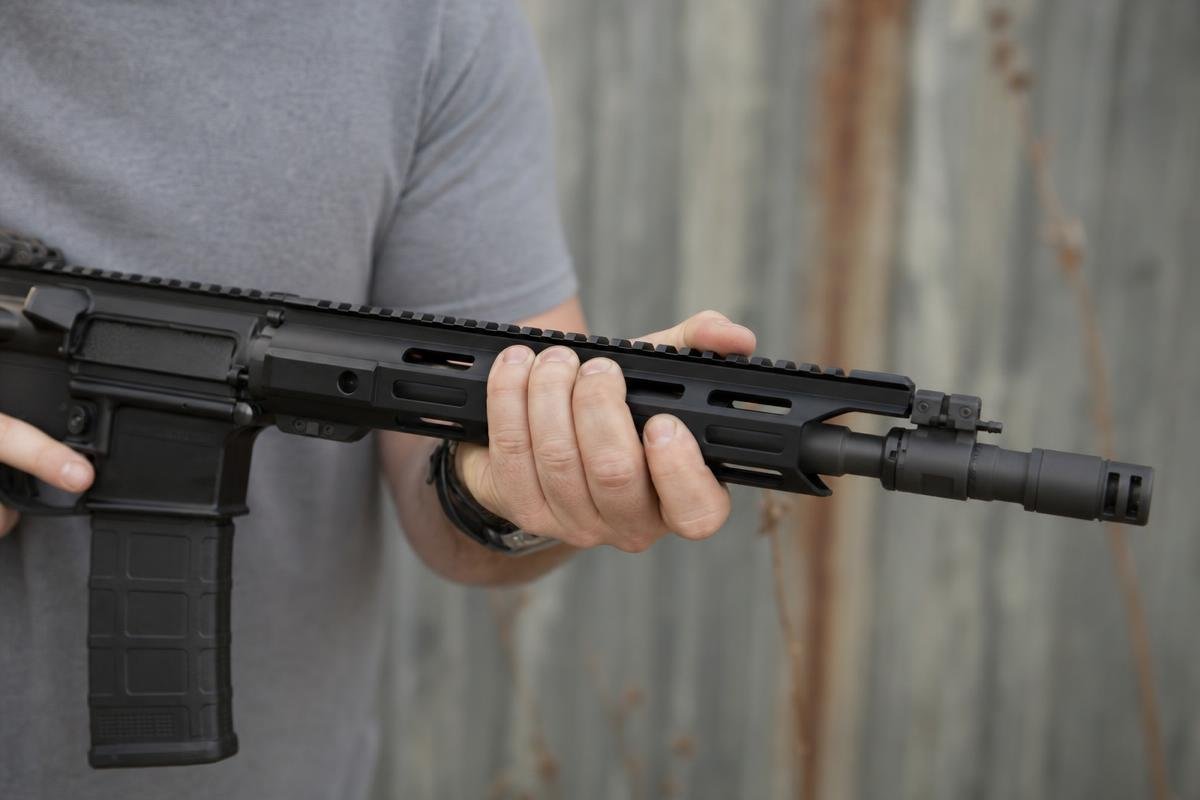
A suppressed piston AR-15 calls for careful attention to compatibility and manufacturer guidance before making build decisions. A piston conversion is not a mix-and-match project, especially when a suppressor will be part of the configuration. Follow the piston-kit, firearm, and suppressor manufacturers’ instructions, verify safe function before use, and comply with all applicable federal, state, and local laws. Need help comparing piston-kit specifications with your planned upper?
Key Takeaways
- Choose a matched piston system before buying individual barrel, carrier, and handguard components.
- Compare the kit’s listed gas-system length, barrel-journal diameter, carrier interface, and handguard-clearance requirements.
- Keep a written record of ammunition, magazine, suppressor configuration, and regulator position during testing.
- Stop and seek qualified inspection if the operating rod binds, the gas block cannot be aligned, or the upper does not cycle smoothly by hand.
Why a Suppressed Piston AR-15 Needs Careful Planning
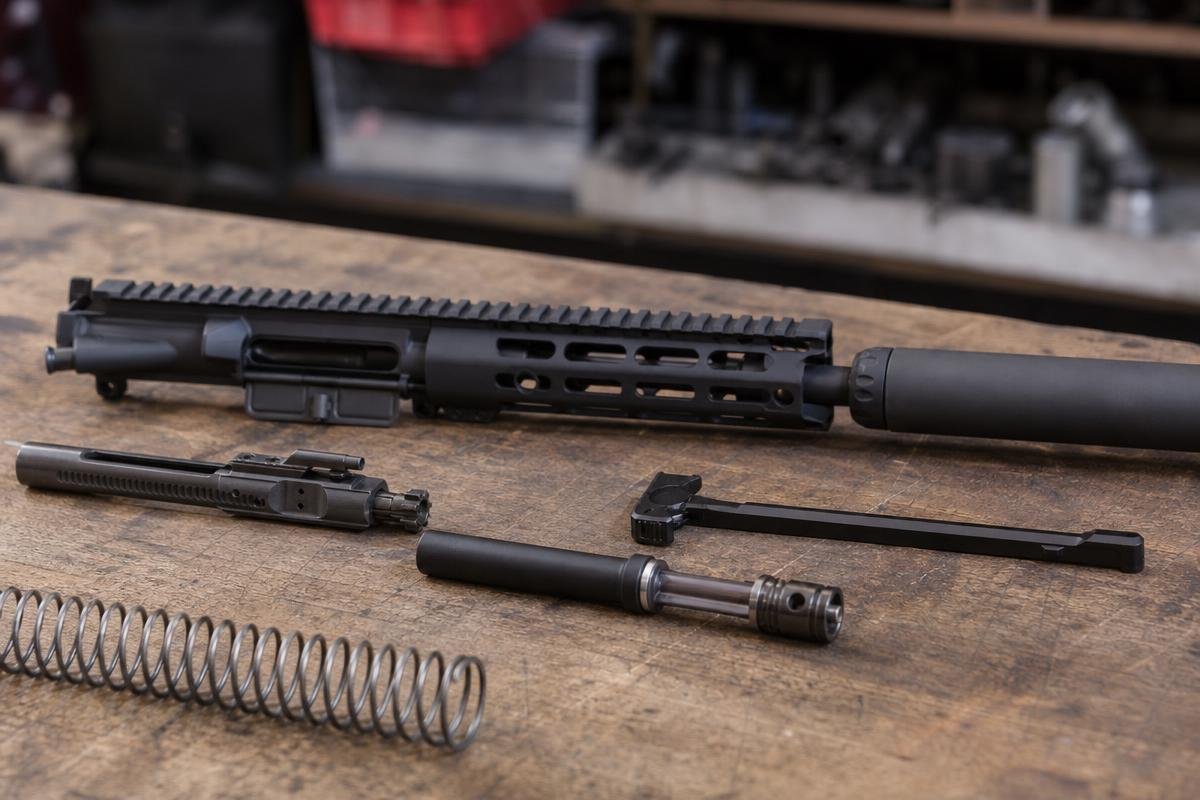
A suppressor can change backpressure and cycling behavior, which may affect bolt speed, ejection, and regulator settings. A piston-operated upper moves gas through a block, piston, and operating rod rather than through a conventional gas tube, but reliable operation still depends on the complete system working together.
A piston setup is not automatically better than direct impingement for every shooter. It can keep more combustion byproducts near the gas block rather than the carrier area, while adding system-specific parts and weight forward of the receiver. The right choice depends on your intended cartridge, barrel configuration, ammunition, suppressor, and the manufacturer’s operating guidance.
AR15Parts.com supplies firearms, parts, and accessories from Denison, Texas. For buyers who prefer to begin with a matched assembly rather than combine individual interfaces, review our complete AR-15 uppers.
How Do You Choose the Right AR-15 Piston Kit?
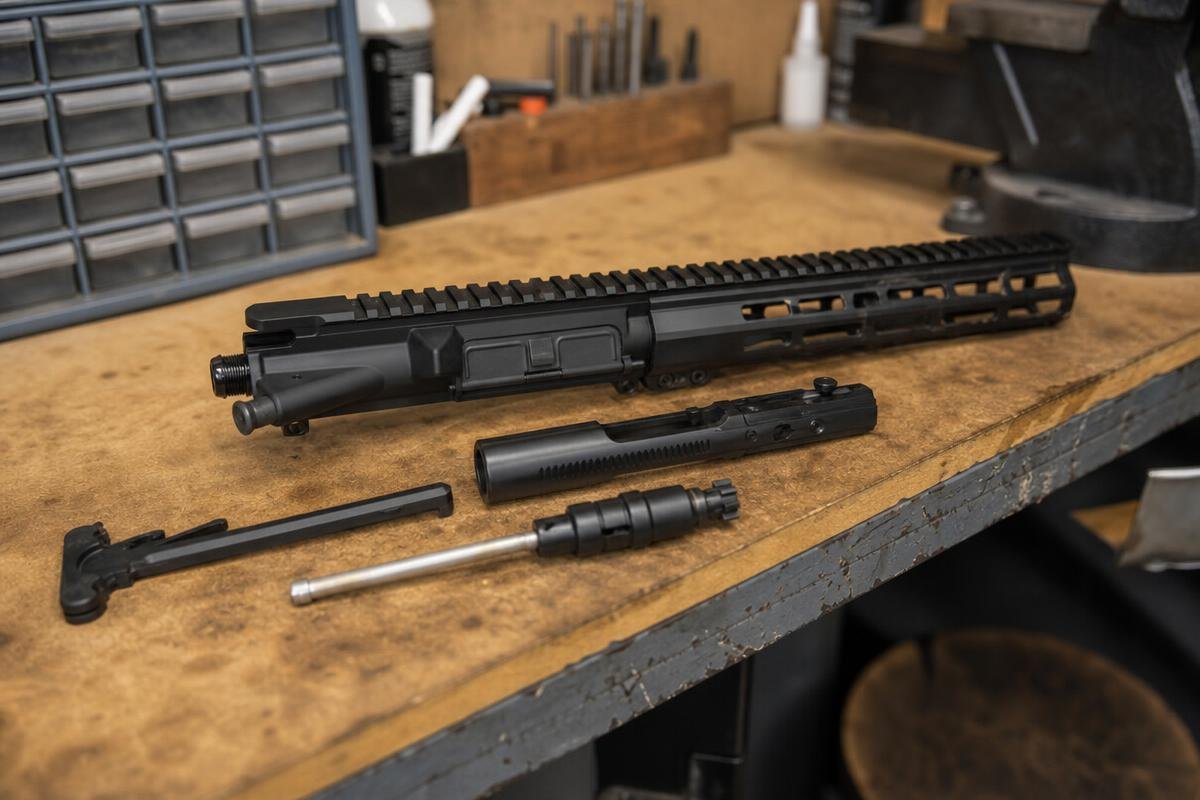
Choose a kit only after comparing its published specifications to the exact barrel and upper you plan to use. Confirm gas-system location, barrel-journal diameter, operating-rod length, required carrier interface, gas-block attachment method, and the handguard dimensions the manufacturer lists. Do not assume parts from different piston brands are interchangeable.
Purpose-Built Piston Upper or Conversion Kit?
A purpose-built piston upper can reduce the number of fitment variables because its barrel, gas block, operating rod, carrier interface, and rail clearance are selected as one arrangement. Such uppers are typically compatible with a standard AR-15-pattern lower when the manufacturer specifies that compatibility, but buyers should still review caliber, magazine, buffer, trigger, and product-specific requirements.
A piston conversion kit can be appropriate for an existing upper, but it requires more measurement and documentation. Before ordering, compare the kit’s requirements against the barrel journal, gas-port location, receiver geometry, handguard inside diameter, and carrier arrangement. A 300 AAC setup also needs a kit rated for that barrel length and gas-system location.
Compatibility Worksheet Before You Order
| Item to Verify | What to Compare | Why It Matters |
|---|---|---|
| Barrel gas location | Pistol, carbine, mid-length, or rifle specification | Determines the required rod and gas-block position |
| Barrel journal | Kit bore versus the barrel’s listed journal diameter | Ensures the block can mount correctly |
| Carrier interface | Dedicated carrier, modified key, or proprietary contact surface | Transfers operating-rod movement correctly |
| Handguard dimensions | Internal diameter, length, mounting hardware, and gas-block clearance | Prevents contact with the regulator or moving rod |
| Muzzle setup | Thread pattern and suppressor maker’s mount requirements | Helps confirm a proper mounting arrangement |
How a Short-Stroke Piston Transfers Energy
A short-stroke system places a piston in the gas block. Gas pressure moves that piston and operating rod rearward, and the rod transfers energy to the carrier. Because dimensions, spring rates, rod diameters, and carrier contact shapes vary by manufacturer, do not combine gas blocks, rods, springs, carriers, or regulator parts from unrelated systems.
Keep the kit documentation with the build. It should be the primary reference for part orientation, fastener treatment, torque guidance, regulator positions, cleaning, and replacement components.
Is a Suppressed Piston AR-15 Right for You?
Not necessarily. A piston system may reduce the amount of gas and fouling reaching the carrier area, but it still requires correct regulator adjustment and a matched upper. It can also add front-end weight and use proprietary components. Choose the system that the manufacturer supports for your barrel, ammunition, and lawful suppressor configuration.
| Factor | Piston System | Direct Impingement |
|---|---|---|
| Heat and fouling | More remains near the gas block | More enters the carrier area |
| Front-end weight | Higher from the rod and block assembly | Lower with a conventional gas tube |
| Replacement parts | Often system-specific | Common AR-pattern components |
| Recoil feel | Can feel sharper depending on setup | Often described as smoother |
| Suppressor tuning | Regulator adjustment may be available | Gas-control changes may be needed |
Confirm Barrel, Gas-System, and Handguard Compatibility
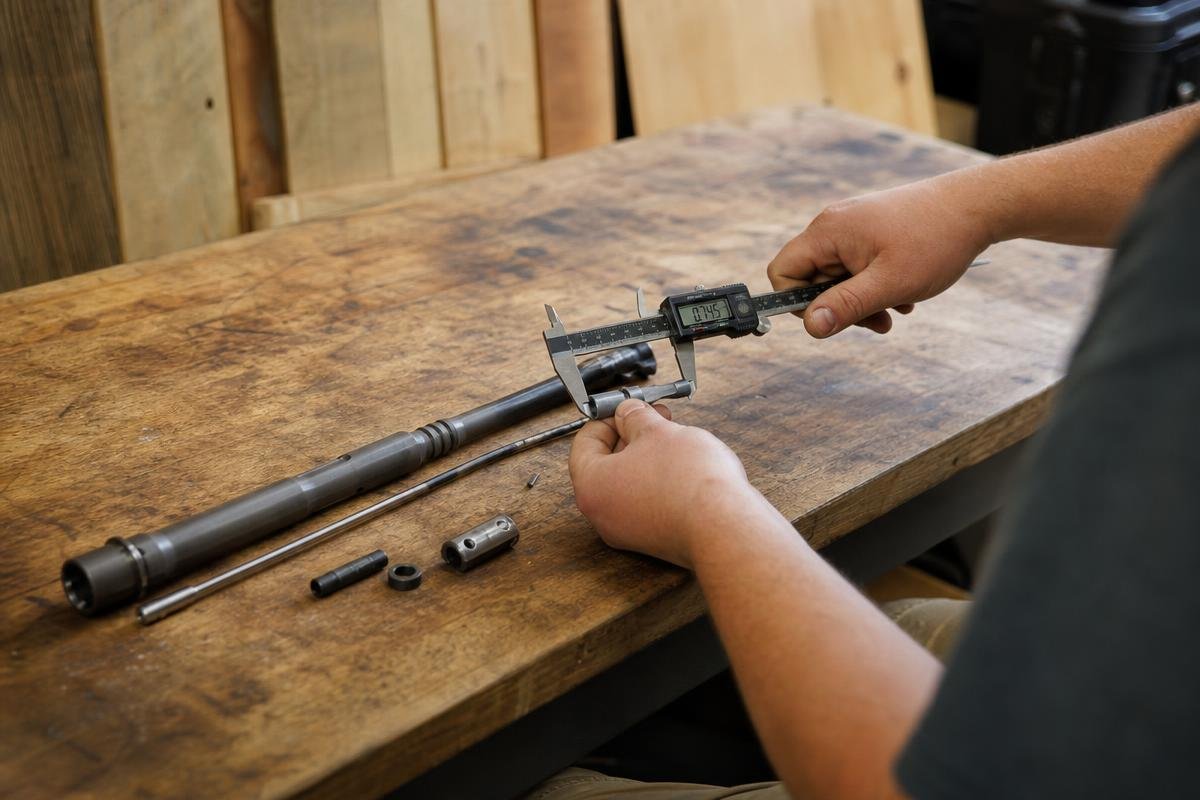
Use the compatibility worksheet before installation, then verify the physical fit of every component on the bench. Misaligned gas blocks, incorrect rod lengths, and rails that touch the regulator can cause short-stroking, inconsistent cycling, or binding.
Match the Kit to the Barrel's Gas-Port Location
Pistol-length, carbine-length, mid-length, and rifle-length gas locations are not interchangeable. Use the barrel maker’s specifications and the piston manufacturer’s listed dimensions. If you are measuring an unmarked barrel, measure from the upper receiver face to the center of the barrel gas port, then confirm that measurement against the kit documentation.
Align the block port directly over the barrel port before securing the block. A port that is partly covered can cause weak cycling even when the regulator is opened. If the manufacturer’s alignment method cannot be followed or the port location is uncertain, have a qualified gunsmith inspect the upper.
300 Blackout needs additional planning. Subsonic and supersonic loads can create very different cycling demands, and there is no universal regulator setting. Tune only with the ammunition and lawful suppressor configuration you actually plan to use. We carry 300 Blackout complete uppers for builders who want the barrel, gas system, and receiver assembly matched before final tuning.
Measure the Barrel Journal and Receiver Requirements
Confirm the barrel journal diameter before ordering the gas block. Many AR-15 barrels use a .750-inch journal, while .625-inch and .936-inch journals are also common. Check the barrel manufacturer’s specifications rather than relying on appearance.
Also verify the block’s attachment method. Set-screw, clamp-on, and pinned designs require different barrel surfaces and installation practices. Confirm that the upper receiver and bolt carrier meet the piston kit manufacturer’s requirements before beginning assembly.
Check Operating-Rod and Handguard Clearance
A free-float handguard must provide sufficient internal space for the gas block, regulator, piston cup, and operating rod throughout travel. Clearance is not confirmed until the rail is fully installed and tightened according to its own instructions.
- Confirm the handguard does not touch the gas block, regulator, or adjustment control.
- Cycle the carrier by hand after final rail installation and watch for rod binding or drag.
- Inspect the barrel nut and rail mounting hardware for contact with the rod path.
Binding may feel like a sudden hard spot while cycling the charging handle, inconsistent resistance, or visible rub marks on the rod, block, rail, or barrel nut. Do not fire an upper that shows these symptoms. Narrow free-float rails and many drop-in handguards may not accommodate an adjustable piston arrangement.
Suppressed Piston AR-15: Component Considerations
Plan the upper around the ammunition you expect to use most often. Cartridge choice affects chambering, twist rate, barrel length, gas-system location, muzzle threads, magazines, and the regulator range the system may need.
Start With Cartridge and Ammunition Plans
5.56 NATO and 300 Blackout place different demands on a piston-operated build. A 5.56 configuration may use full-power ball ammunition across several barrel lengths, while 300 Blackout builders often need to account for both subsonic and supersonic loads.
Select a barrel with the correct chamber, twist, and gas-system position for the loads you plan to run. Review 300 Blackout complete uppers if you prefer a matched upper configuration rather than selecting every part separately.
Match the Muzzle Device to the Suppressor Mount
A suppressor mount must be used with the muzzle device and mounting interface specified by that suppressor manufacturer. Confirm barrel threads, device compatibility, torque instructions, bore alignment requirements, and maintenance guidance before installation.
Do not assume two flash hiders or brakes interchange because they share a thread size. The mount interface, taper, locking method, and suppressor model must match. Suppressor ownership, transfer, possession, and use are regulated, so follow all applicable laws and the manufacturer’s instructions.
Use the Correct Carrier, Buffer, and Charging Handle
Many piston kits require a dedicated carrier or a carrier with a matching piston interface. The carrier must match the selected system, including the operating-rod contact point and manufacturer-specific components.
Buffer selection and charging-handle features may affect recoil feel, charging comfort, and gas reaching the shooter, but they do not correct an improperly aligned or improperly adjusted piston assembly. Establish correct regulator function first, then evaluate any secondary changes during documented live-fire testing.
Install the Piston Assembly with a Controlled Bench Setup
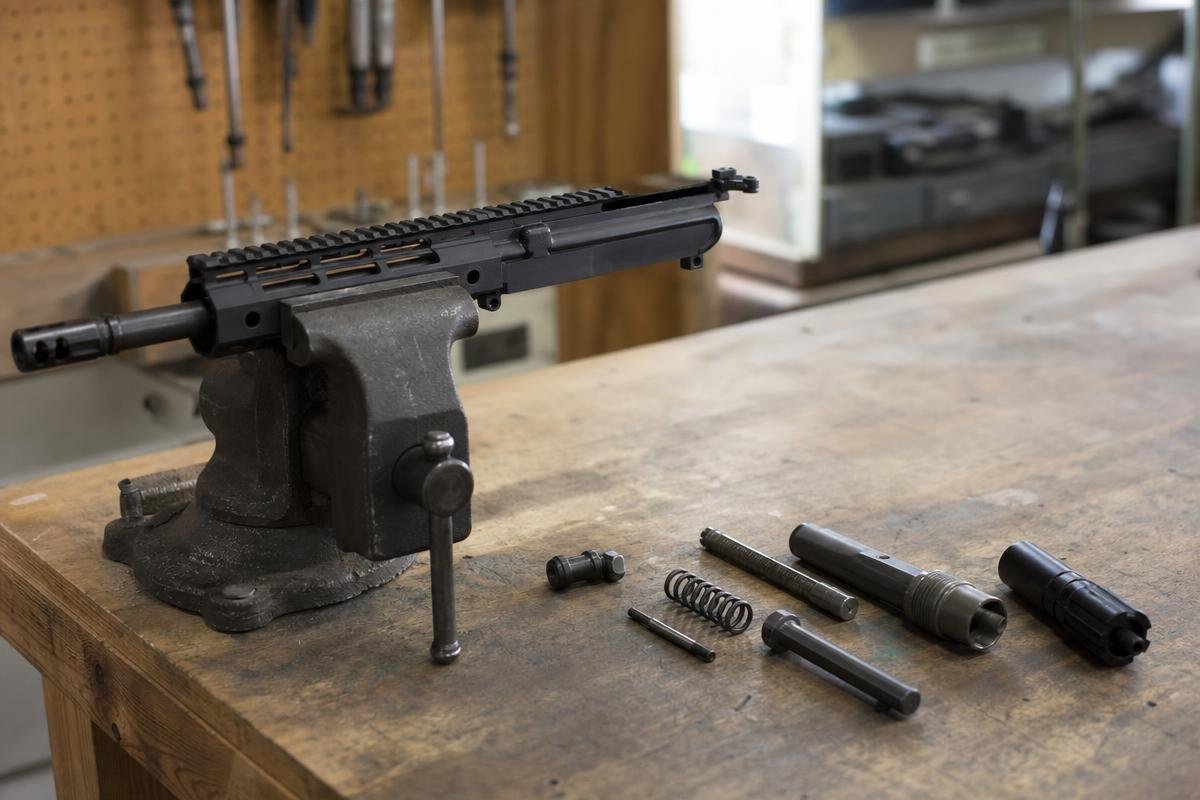
Safe installation starts with an unloaded upper and a clear work area. Remove ammunition from the bench, follow the kit maker’s instructions, and stop if any part requires force to fit. Proper alignment matters more than speed, and uncertain fitment should be inspected by a qualified gunsmith.
Prepare the Unloaded Upper and Inspect the Kit
Inspect the piston conversion kit before removing components from the upper. Confirm the gas block, operating rod, springs, bushing or collar, fasteners, and carrier interface match the barrel length and gas-system position specified by the manufacturer.
- Remove the existing gas system if converting a direct-impingement upper.
- Clean the barrel journal and gas-port area.
- Check the gas-block bore and barrel journal for burrs, carbon buildup, or visible damage.
Align and Secure the Piston Gas Block
The piston gas block must center over the barrel gas port. Use the alignment method specified by the manufacturer, then confirm the block sits square to the barrel and clears the handguard.
Secure the block only according to the manufacturer’s directions. Do not guess at torque values or modify set screws, pins, or clamp hardware to force a fit. If you cannot verify port alignment, if the block rocks, or if its fasteners will not seat correctly, have a qualified professional inspect the upper before moving forward.
Install the Rod, Spring Components, and Matching Carrier
Install the operating rod and spring components in the exact order shown in the kit documentation. The rod must move through full travel without rubbing the handguard, barrel nut, or gas block.
Install the matching carrier or carrier interface next. A piston system is not automatically compatible with every bolt carrier group, so verify the required carrier style before assembly. Our AR-15 parts selection can help you compare compatible build components.
Complete Manual Checks Before Live Fire
Before taking the upper to the range, complete a slow manual function check. Cycle the charging handle several times and look for binding, unusual resistance, or contact between moving parts.
- Confirm bolt movement and carrier travel are smooth.
- Verify operating-rod movement with the handguard fully installed.
- Check muzzle-device fit for your suppressor mounting system.
- Inspect fasteners and adjustment controls for interference with moving parts.
If the upper does not cycle smoothly by hand, do not fire it. A matched upper assembly may be the better route if you want fewer interfaces to evaluate, and you can review our complete AR-15 uppers before choosing your build path.
Need help sorting piston components before assembly? Call us at (888) 706-0633.
Adjust the Gas Regulator and Test the Rifle Safely
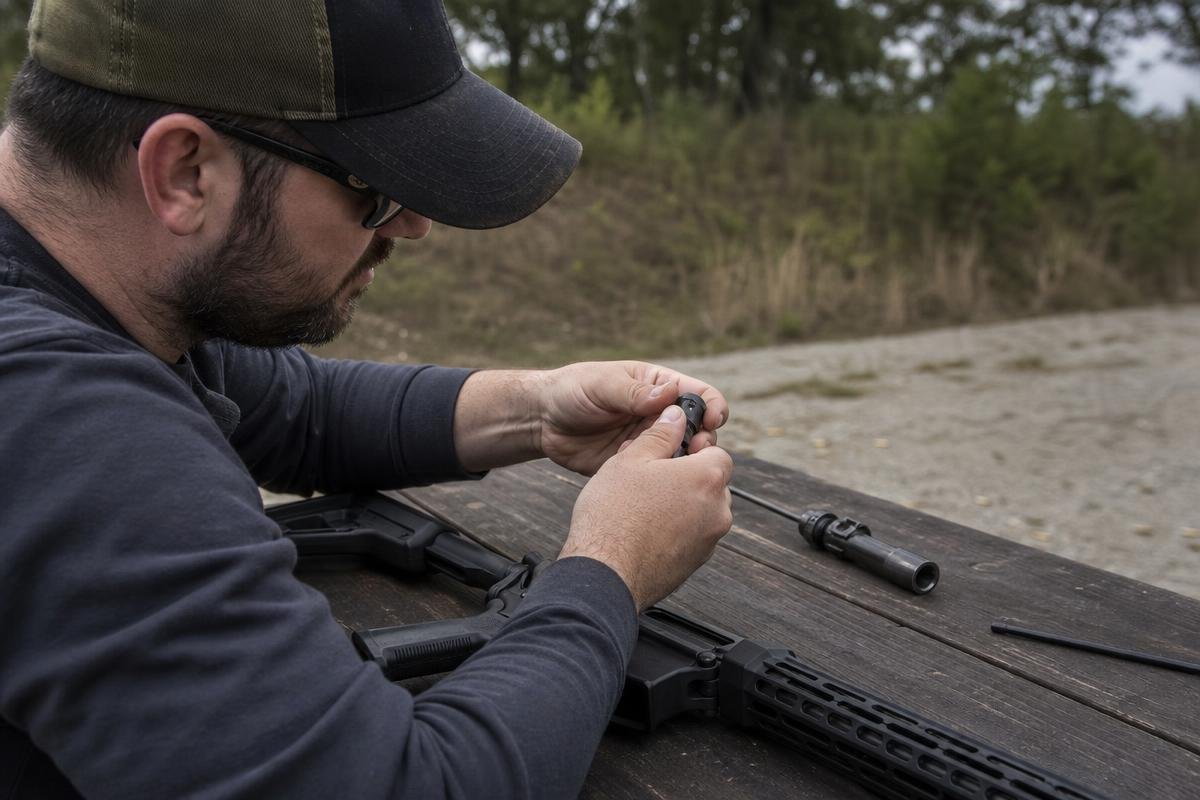
Test an adjustable piston system from the kit maker’s baseline setting, not from a setting copied online. Use one known ammunition load, one known-good magazine type, and one consistent suppressor configuration during initial testing. A suppressed configuration may require a different setting than unsuppressed use.
Begin With the Manufacturer's Baseline Setting
Set the regulator exactly as the kit maker instructs before firing. Confirm it is properly seated, the operating rod moves freely, and the handguard does not contact the rod or piston assembly.
Document the baseline in a simple range log, including kit model, barrel length, ammunition, magazine, suppressor status, regulator position, lockback result, ejection observations, and any malfunction. This helps identify whether a change improved or worsened function.
Use a Controlled Single-Round Test
Load one round into a known-good magazine and fire only at an approved range while following all firearm-safety rules. Check whether the bolt locks back on the empty magazine before changing a regulator setting.
Failure to lock back can indicate insufficient operating energy, while unusually forceful cycling may indicate excess energy. Follow the kit manufacturer’s adjustment procedure and change only one setting at a time. Do not modify the barrel gas port to chase a setting.
Troubleshoot Without Guessing
Change one variable at a time. Record the ammunition, suppressor condition, regulator position, magazine, and result. A repeatable log is more useful than relying on ejection pattern alone, which can be affected by several parts and conditions.
| Symptom | Safe checks |
|---|---|
| Failure to feed | Check ammunition consistency, magazine condition, and carrier movement. |
| Failure to eject | Confirm regulator position and follow the kit maker’s procedure. |
| Failure to lock back | Check magazine function, ammunition, and available operating energy. |
| Inconsistent cycling | Use one load, one magazine type, and verify gas-block alignment. |
| Rod binding | Inspect handguard clearance, rod alignment, and piston movement. |
If a new build continues to malfunction, stop testing and inspect the assembly against the kit maker’s instructions. Seek qualified gunsmith inspection when alignment, carrier fit, barrel condition, or safe operation cannot be confirmed. For shooters who prefer a matched firearm configuration, our complete AR-15 rifles provide another option.
Denison Buyers Can Plan a Piston Build with Parts Support from AR15Parts.com
AR15Parts.com is located at 4000 Texoma Parkway, Denison, TX 75020. We supply firearms, parts, and accessories for buyers planning a piston-operated AR-15 with suppressor use in mind. Product availability, specifications, and compatibility should be confirmed on the applicable product listing or with our team before purchase.
Compare Specifications Before Ordering
Match your caliber, barrel length, gas-system length, muzzle thread pattern, and upper receiver type before ordering. The piston kit must meet the intended barrel-journal, gas-location, handguard-clearance, and carrier-interface requirements.
Check manufacturer specifications for suppressor settings and regulator positions. A 300 AAC configuration, short barrel, or pistol-format receiver can have different pressure behavior than a 16-inch 5.56 setup. For fitment questions, call (888) 706-0633 or use the Contact Us page before placing an order.
Choose Between a Complete Upper and a Component Build
A complete upper reduces compatibility decisions because its barrel, piston assembly, receiver, and carrier are selected as one system. Review our complete AR-15 uppers if you want fewer individual interfaces to confirm.
A component build gives you more control, but you must verify every interface yourself. Confirm that a complete upper is designed to mount to your AR-15-pattern lower receiver before purchase. If your plan calls for a finished firearm instead, compare our complete AR-15 rifles.
Frequently Asked Questions
Can Any AR-15 Be Converted to a Piston System?
No. A conversion kit must match your gas-system location, barrel journal diameter, upper receiver geometry, carrier interface, and handguard clearance. A successful piston conversion starts with matching those dimensions, not forcing a kit onto an existing rifle.
Can a Suppressor Work With a Piston System?
Yes. A suppressor can work with a piston-operated AR-15, but you must test regulator settings and ammunition under the system manufacturer’s instructions. Start with the recommended setting, then confirm reliable cycling and lockback with your intended load.
Do Piston Kits Require a Dedicated Carrier?
Some do. Many kits need a dedicated carrier, modified carrier key, or proprietary interface that transfers rod movement into the bolt carrier group. Do not mix carriers, rods, gas blocks, or regulators from unrelated piston systems.
Can a Free-Float Handguard Work With a Piston Kit?
Yes, if it provides enough internal clearance. Check that the operating rod and regulator move freely through full travel without touching the handguard, barrel nut, or mounting hardware. Some complete AR-15 uppers avoid retrofit fitment issues by using matched components.
What Changes With 300 Blackout?
300 Blackout subsonic and supersonic loads can require different regulator settings. Your suppressed AR-15 piston build must be matched to the barrel length, gas-system position, and ammunition you plan to shoot. Review fitment details before choosing 300 Blackout complete uppers.
What Should I Inspect Before the First Range Test?
Inspect the unloaded rifle before live fire. Manually cycle the action, confirm gas-block alignment, check rod clearance, verify fasteners are secure, and confirm correct muzzle-device installation. Begin with a controlled first range test using one round at a time.
Before ordering parts for your build, compare piston kit specifications against your barrel, upper, handguard, carrier, and muzzle-device requirements. For product questions, contact our team at (888) 706-0633 and review listed specifications carefully before purchase.
Ready to Get Started with AR15Parts.com?
Call (888) 706-0633 to speak with our team directly. We're ready to answer your questions, walk you through your options, and help you find the right solution for your needs. Whether you're just starting to plan or ready to move forward, we'll make the process simple and stress-free. Reach out today and let's talk about how we can help.