
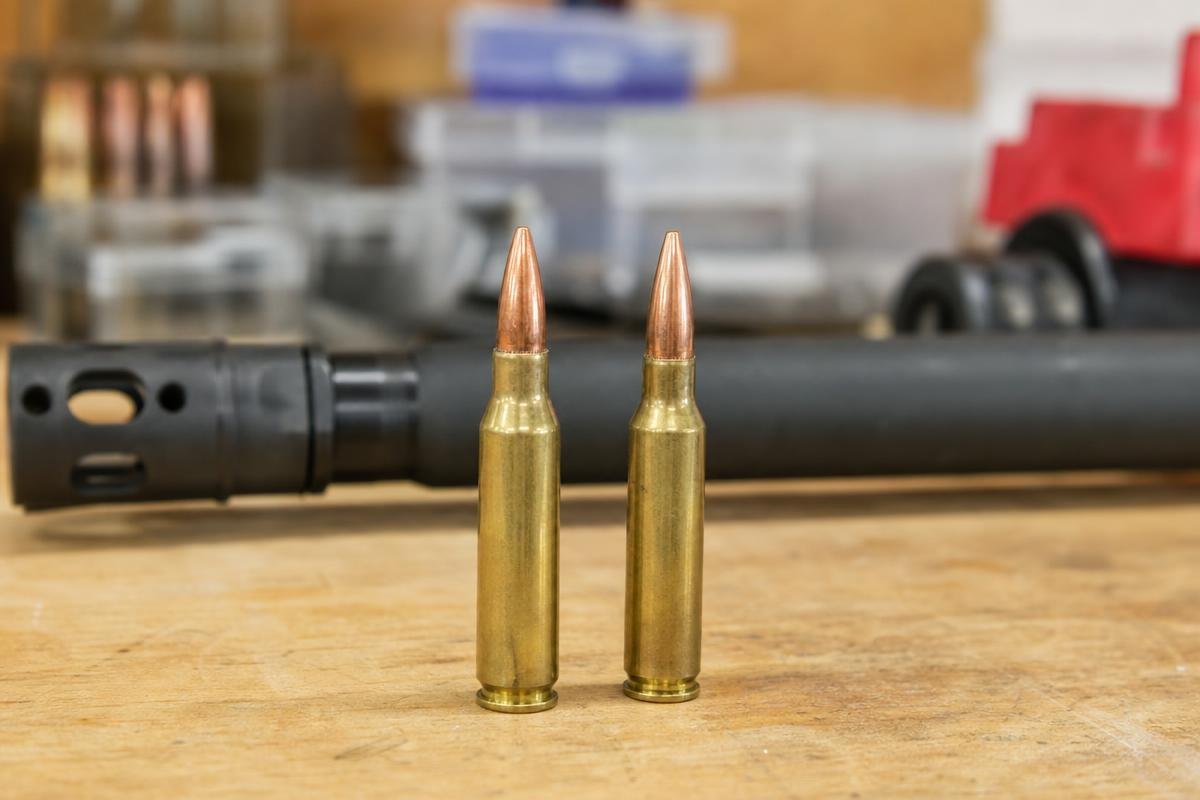
The question comes up constantly: are .308 Winchester and 7.62x51 NATO the same cartridge? The short answer is no, and the difference matters more than most shooters realize. Chamber dimensions, pressure specs, and headspace tolerances all diverge between the two, and running the wrong combination can cause real problems.
We stock AR-10 and LR-308 platform components and ship from our Denison, TX facility. We break down the specs and what they mean for your rifle. Need help selecting the right upper or barrel for your build? Call us at (888) 706-0633 or contact our team.
Key Takeaways
- .308 Winchester and 7.62x51 NATO share the same external case dimensions but differ in chamber specs and pressure standards.
- Compatibility between .308 Winchester and 7.62x51 NATO depends on the firearm, chamber dimensions, ammunition, and manufacturer guidance.
- A .308 Win chamber is the safer and more accurate choice for handloaders who reload brass multiple times.
- Eastern Bloc and some older NATO surplus ammo sold at gun shows is commonly Berdan-primed and not reloadable, so always check before buying for reloading.
- Understanding the 308 vs 7.62x51 NATO distinction before you buy a barrel or upper prevents costly compatibility mistakes.
What Are .308 Winchester and 7.62x51 NATO, and Where Did They Come From?
Here is where the story splits. Both cartridges share the same external case dimensions and the same .308-inch bullet diameter, so they look identical in your hand. But they were developed by different organizations, governed by different standards bodies, and cut to different chamber tolerances. Two cartridges, one silhouette, two rulebooks.
.308 Winchester: The Commercial Cartridge
Winchester introduced the .308 Win commercially in 1952. It was designed as a short-action replacement for the .30-06, aimed at bolt-action hunting and target shooting. SAAMI, the Sporting Arms and Ammunition Manufacturers' Institute, governs its specifications. Winchester brought it to market for civilian hunters and competition shooters first. The military adoption came later.
If you are building or buying an AR-pattern rifle for hunting or precision work, understanding which standard your chamber is cut to matters. We stock AR-pattern barrels chambered in .308 Win and other calibers if you want to compare options before committing to a build.
7.62x51 NATO: The Military Specification
The U.S. military formally adopted 7.62x51 NATO in 1954, roughly two years after Winchester's commercial release. It was standardized under STANAG 4172, not SAAMI. The cartridge was developed around the M14 and later chambered in the FN FAL and M60 machine gun. NATO needed a standardized round across allied forces. The result shared the same external dimensions as .308 Win but was built to different pressure measurement methods and chamber tolerances.
That shared case geometry is the root of the confusion. The governing bodies, the pressure specs, and the headspace tolerances all differ. Those differences affect ammunition compatibility and chamber choice.
SAAMI vs NATO: The Spec Table That Actually Explains the Difference
| Specification | .308 Winchester (SAAMI) | 7.62x51 NATO (STANAG 4172) |
|---|---|---|
| Published pressure figure (not directly comparable) | 62,000 psi (piezoelectric) | 60,191 psi (EPVAT piezoelectric proof)* |
| Case Length (nominal) | 51.18 mm / 2.015 in | 51.18 mm / 2.015 in |
| Headspace Go Gauge | 1.630 in | 1.6355 in |
| Freebore / Leade | Shorter | Longer (primary functional difference) |
*The 60,191 psi NATO EPVAT figure is a proof figure, not a maximum average pressure limit. Older NATO copper crusher specifications are expressed in CUP (about 50,000 CUP), not psi. These figures are not directly comparable.
Headspace: Why the NATO Chamber Is Intentionally Longer
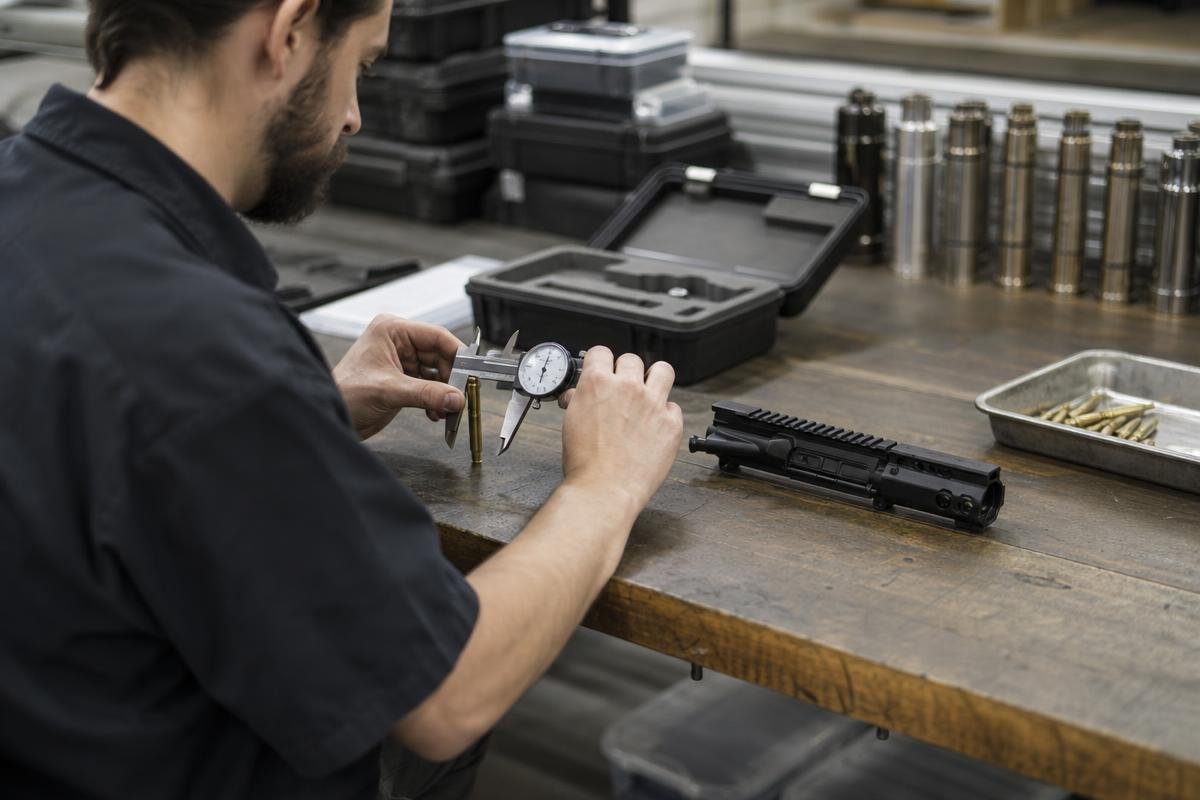
The NATO chamber carries approximately 0.005 inch more headspace than the SAAMI .308 Win chamber. That gap is not a manufacturing tolerance. It was designed in deliberately so automatic weapons would feed reliably with dirty, corroded, or slightly out-of-spec brass in field conditions.
For a civilian semi-auto or bolt gun, that extra headspace has a real cost. Your brass stretches further on each firing, which shortens reloading life. If you reload and shoot outdoors around Denison, the summer heat and humidity typical of North Texas already accelerate brass fatigue. A NATO-spec chamber makes that problem worse over time, and it is worth knowing before you commit to a barrel.
Pressure: Why the Numbers Are Not Apples-to-Apples
SAAMI lists .308 Winchester at 62,000 psi using piezoelectric testing. NATO's 60,191 psi figure is an EPVAT (piezoelectric) proof figure, not a copper crusher reading or a maximum average pressure limit. Older NATO copper crusher specifications are expressed in CUP (about 50,000 CUP), not psi. Because these figures reflect different tests and limits, do not read them as a direct pressure comparison.
If you are building a precision rifle and want a barrel cut to true SAAMI spec, our selection of .308 Win and multi-caliber barrels lists the chamber marking on each product so you can confirm the dimensioning before you order.
Case Wall Thickness: Separating Fact from Forum Myth
Military 7.62 NATO brass can have thicker webs and primer pockets than commercial .308 Win brass. That thicker construction reduces internal case capacity slightly, which affects handload data. But this is not a universal rule. Brass construction varies by manufacturer and lot. Some military headstamp brass is no heavier than commercial brass from the same era.
Do not treat "military brass equals thick walls" as a hard fact. Check the specific lot you are working with. If you are buying surplus 7.62 NATO ammo at a regional gun show, also confirm whether it is Berdan-primed, because Berdan brass is not reloadable regardless of wall thickness. For a complete upper already assembled in multiple caliber configurations, the chamber is marked on the barrel, which removes the guesswork entirely.
Can You Shoot .308 Winchester in a 7.62x51 NATO Chamber, and Vice Versa?
Compatibility between .308 Winchester and 7.62x51 NATO depends on the firearm, chamber dimensions, ammunition, and manufacturer guidance. Do not assume interchangeability from cartridge appearance alone.
Shooting .308 Win in a NATO Chamber
Running .308 Winchester ammunition in a 7.62x51 NATO chamber may be acceptable when the firearm manufacturer permits it. The NATO chamber typically has a longer leade and more generous headspace, but the firearm manufacturer’s guidance controls.
There are two practical trade-offs worth knowing. Brass stretches more per firing because it has to expand further to fill the chamber. That shortens reloading life. Heavy match bullets may also lose a small amount of precision because of the longer jump to the rifling. For factory ammunition in a semi-auto, follow the firearm manufacturer’s guidance before use.
Shooting 7.62 NATO in a .308 Win Chamber
Firing 7.62 NATO in a .308 Winchester chamber also requires manufacturer guidance. Chamber dimensions and ammunition specifications can vary, especially with surplus ammunition. If compatibility is uncertain, do not fire the ammunition until the manufacturer or a qualified gunsmith confirms it is appropriate for the rifle.
This matters locally. Gun shows across the Texoma region regularly carry military surplus 7.62 ammo sold in bulk, much of it Eastern Bloc or older NATO stock. If you pick up surplus at a show and your rifle is marked only .308 Win, verify headspace with a field gauge before running it. Case head separation is not a common catastrophic event, but it is avoidable with a five-minute check.
What Dual-Marked Chambers Actually Mean
Many modern AR-pattern rifles are marked ".308 / 7.62 NATO" on the barrel or upper. That marking generally indicates the manufacturer intends the firearm to accept both cartridges, but buyers should still follow the firearm documentation.
If your rifle carries only a .308 Win marking, stick to SAAMI-spec commercial ammo or confirm headspace before running surplus military rounds. If you are building from scratch and want that flexibility built in, our .308 Win complete uppers are assembled, headspaced, and function-checked in-house so you know exactly what chamber you are working with before the upper ever drops onto your lower.
Know the chamber spec you need? Skip the guesswork and browse built-to-order, headspaced, function-checked uppers.
How Chamber Choice Affects Ballistics and Shooting Performance
Velocity and Energy: Are the Numbers Actually Different?
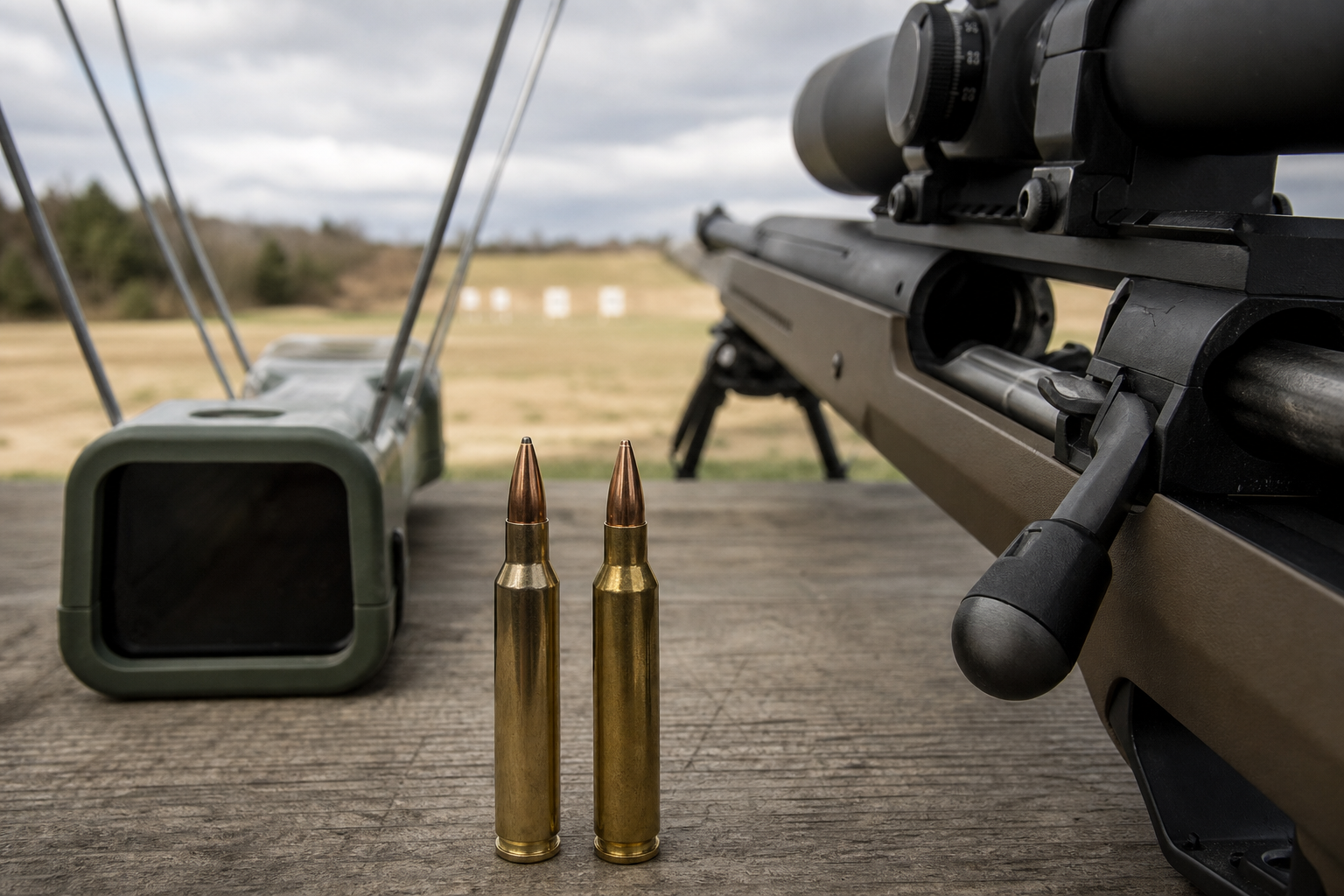
For most shooters comparing 308 vs 7.62x51 NATO factory loads, chamber marking alone does not establish a velocity difference. Velocity and energy vary with the specific load, barrel length, and firearm. Check the ammunition maker's published ballistics and your firearm manufacturer's compatibility guidance rather than assuming equivalent performance.
Accuracy: Where the Leade Length Matters Most
The NATO chamber's longer leade is where accuracy differences actually show up. A longer leade means the bullet travels farther before engaging the rifling, which reduces the precision advantage of match-grade .308 Winchester ammunition, especially with heavier bullets in the 175-grain range and above. Benchrest shooters and handloaders running tight SAAMI-spec chambers will notice this. Hunters working the Red River bottom country north of town at typical whitetail distances will not. Under 500 yards in field conditions, the leade length difference is not measurable for most shooters.
Gas System Behavior in Semi-Auto Builds
Chamber spec affects gas system behavior in AR-10 and DPMS-pattern semi-auto builds. A NATO-spec chamber with a longer leade can slightly reduce gas port pressure compared to a tight SAAMI chamber on the same barrel length and gas port diameter. That difference rarely causes problems with factory ammunition. It becomes relevant when running a suppressor or handloading for a specific gas curve. If you are tuning a semi-auto .308 build, bolt carrier group selection matters alongside chamber spec, since carrier weight directly affects how the rifle cycles under varying gas conditions. Our AR-pattern barrels chambered in .308 Win and other calibers list chamber and gas system details so you can spec the whole build to match.
Have questions about chamber specs for your .308 or 7.62 NATO build? Call us at (888) 706-0633 or reach out directly.
Choosing the Right Chamber for Your Build: .308 Win, 7.62 NATO, or Both?
You have read the spec differences and the pressure numbers. Now the practical question: which chamber do you actually want in your build? The answer depends on what you are feeding the rifle and what you expect it to do.
Precision and Hunting Builds: Go with SAAMI .308 Win
If you handload match ammo or hunt bottom-country whitetail with carefully selected factory loads, a SAAMI .308 Win chamber is the right call. The tighter headspace and shorter leade are optimized for consistent bullet seating and better brass life across multiple reloading cycles. North Texas heat and humidity already accelerate brass fatigue, so getting the most out of each case matters for local reloaders. We carry .308 Win barrels for precision-oriented builds.
Duty, Defense, and High-Round-Count Builds: Go with NATO or Dual-Marked
If you plan to run military surplus 7.62 ammo, gun show finds, or mixed factory loads through a semi-auto at high volume, go with a NATO-spec or dual-marked chamber. The longer leade and more generous headspace handle a wider range of brass dimensions without pressure spikes. You get reliable feeding across the full spectrum of commercial and surplus ammunition. Our .308 Win complete uppers are built to order, assembled, headspaced, and function-checked in-house before shipping.
Reading the Barrel Marking Before You Buy
Check the barrel marking, not just the rifle's rollmark. A 7.62 NATO barrel marking should be evaluated with the firearm manufacturer’s ammunition guidance before using both cartridges. A barrel marked .308 Win alone is a SAAMI chamber; verify before running NATO surplus through it. A barrel marked .308 / 7.62 is generally intended by the manufacturer to accept both, but follow the firearm documentation. The receiver rollmark often reflects the caliber the manufacturer intended, but the barrel is where the chamber actually lives. If you are still weighing caliber options at this stage, explore 6.5 Creedmoor uppers and .308 Win uppers before choosing a build.
What Denison-Area Shooters Should Know Before Buying .308 or 7.62 Components
Local Range Conditions and Brass Life in North Texas
Summer heat at the outdoor ranges around Lake Texoma is not just uncomfortable. It accelerates brass fatigue, especially if you are running hot loads near pressure ceilings. For reloaders, that makes headspace knowledge practical, not theoretical. A loose NATO chamber will work your brass harder on every firing cycle.
Surplus 7.62 ammo shows up regularly at shows across the region, and much of it is Eastern Bloc or older NATO stock that is Berdan-primed and non-reloadable, so the chamber-marking question matters less if you are not saving brass. Just confirm your chamber spec and run it. For hunters working the Red River bottoms, a SAAMI-spec chamber paired with a match-grade barrel is the better long-term investment for .308 vs 7.62x51 NATO accuracy at whitetail distances.
Ordering .308 Win Components from AR15Parts.com
We stock .308 Win complete uppers built to order, assembled, headspaced, and function-checked in-house. Each one is ready to drop onto a compatible AR-10 or LR-308-pattern lower. Barrels are available separately if you are building from scratch. We ship from our Denison, TX facility.
If you have questions about chamber selection for your specific build, call us at (888) 706-0633. You can also read more about AR15Parts.com before you order.
Frequently Asked Questions
Are .308 Winchester and 7.62x51 NATO the same cartridge?
No. They share the same bullet diameter and nearly identical external case dimensions, but they are governed by different standards. SAAMI controls .308 Winchester specs. STANAG 4172 controls 7.62x51 NATO. Chamber dimensions, headspace tolerances, and pressure measurement methods differ between the two, and those differences matter when you are selecting components for a build.
Can you shoot .308 Winchester in a 7.62x51 NATO chamber?
It may be acceptable when the firearm manufacturer permits it. The NATO chamber typically has a longer leade and more generous headspace, but buyers should follow the firearm documentation before using .308 Win ammunition.
Can you shoot 7.62x51 NATO in a .308 Winchester chamber?
This also requires manufacturer guidance. Chamber dimensions and ammunition specifications can vary, especially with surplus ammunition. If compatibility is uncertain, have the manufacturer or a qualified gunsmith confirm the ammunition is appropriate before use.
Is the pressure difference between .308 Win and 7.62 NATO significant?
SAAMI lists .308 Win at 62,000 psi using piezoelectric testing. NATO's 60,191 psi is an EPVAT (piezoelectric) proof figure, not a directly comparable operating limit. Older NATO copper crusher figures are reported around 50,000 CUP, not psi. Follow your firearm manufacturer's ammunition guidance.
Does chamber spec affect accuracy at hunting distances?
For hunting and general-purpose shooting under 500 yards, the chamber difference has no meaningful effect on accuracy with factory ammo. Precision shooters running handloaded match ammo in tight SAAMI chambers may see a measurable difference with heavy-for-caliber bullets. If you are still evaluating caliber options at longer ranges, explore 6.5 Creedmoor uppers and .308 Win uppers before choosing a build.
How do I know which chamber spec my rifle has?
Check the barrel rollmark or upper receiver markings. "7.62 NATO" or ".308 / 7.62" indicates a NATO-spec or dual-rated chamber. ".308 Win" alone indicates a SAAMI-spec chamber. If the markings are unclear, contact the manufacturer or have a gunsmith verify headspace with Go and Field gauges before running mixed ammo.
Where can I buy .308 Win uppers and barrels that are already headspaced?
We stock .308 Win complete uppers assembled, headspaced, and function-checked in-house, ready to drop onto a compatible AR-10 or LR-308-pattern lower. Barrels are available separately in multiple lengths and configurations. Call us at (888) 706-0633 if you have questions about which chamber spec fits your build. We ship nationwide, and our team is glad to talk through the technical details before you order.
Ready to Get Started with AR15Parts.com?
Call (888) 706-0633 to speak with our team directly. We're ready to answer your questions, walk you through your options, and help you find the right solution for your needs. Whether you're just starting to plan or ready to move forward, we'll make the process simple and stress-free. Reach out today and let's talk about how we can help.