
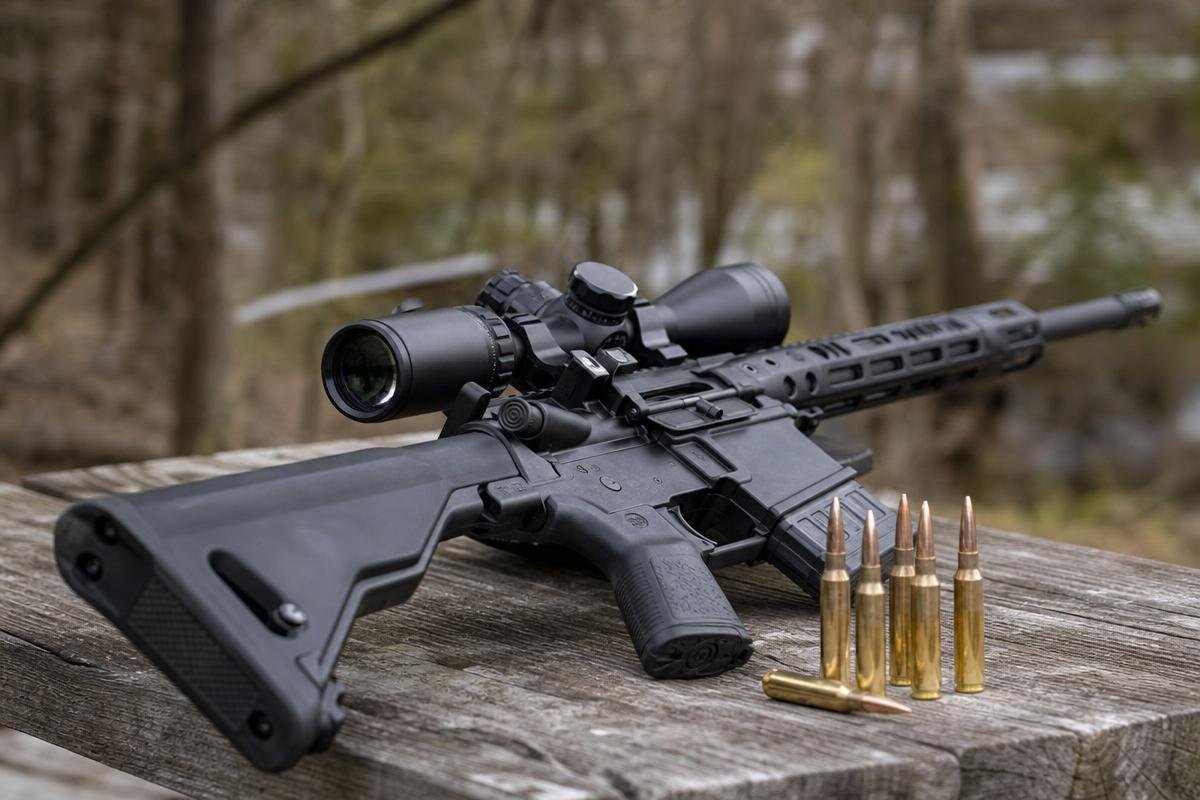
AR15Parts.com in Denison, Texas, offers AR platform components for shooters planning a fast, low-recoil varmint rifle. Understanding .204 Ruger ballistics begins with matching the exact bullet, velocity, zero, and weather conditions to your rifle. The cartridge is known for light .20-caliber bullets, quick muzzle speeds, and a trajectory that can be easy to manage on small targets when the shooter has confirmed real-world data. Need help comparing a .204 Ruger upper, barrel twist, and compatible AR components for the loads you plan to use?
Key Takeaways
- .204 Ruger ballistics center on high velocity, light bullets, and a flat varmint-hunting trajectory.
- Factory load data must be read with its listed bullet, barrel length, zero, sight height, and environmental assumptions.
- Forty-grain projectiles may offer a better wind-drift balance than lighter bullets when their BC and your barrel twist support them.
- Low recoil can help a shooter remain in the optic, but wind calls and confirmed distance still determine practical field results.
What Makes .204 Ruger Ballistics So Flat?
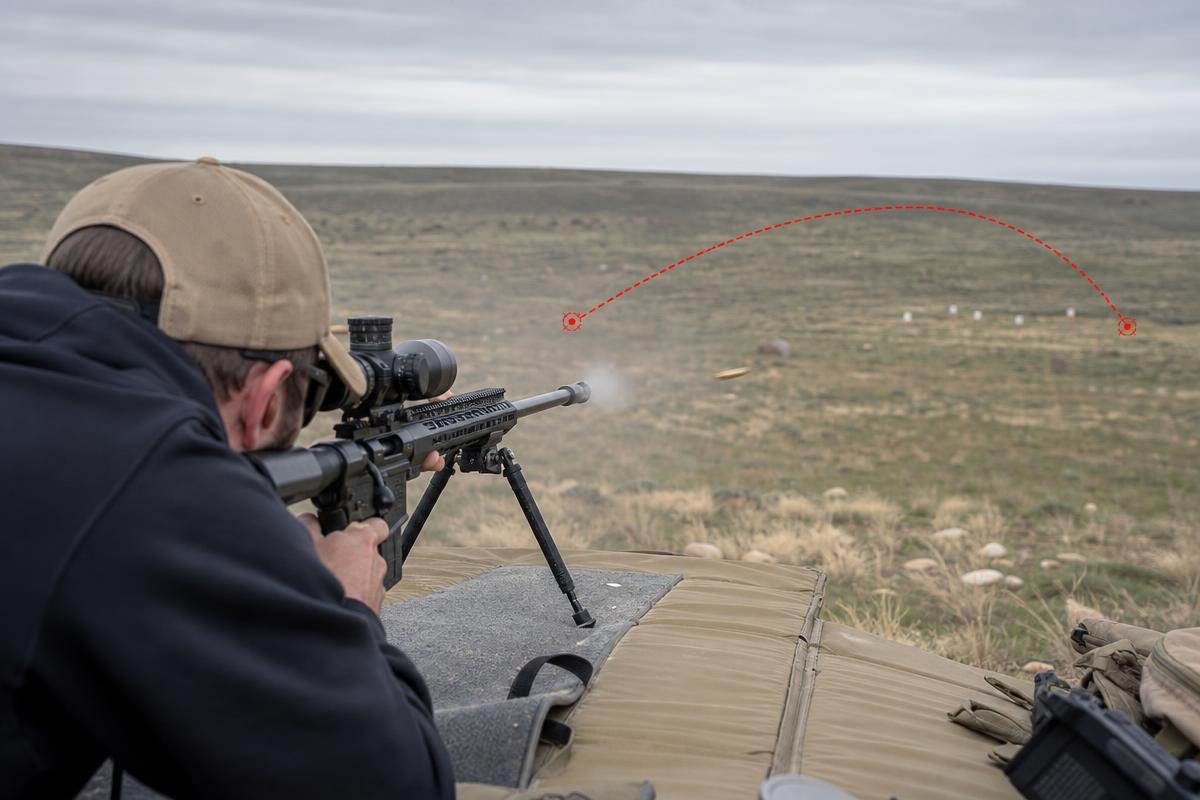
Fast, light bullets spend less time in the air, so gravity has less time to pull them below your sight line. That is why .204 Ruger trajectory can appear flatter than slower varmint cartridges at typical field distances. Trajectory is the bullet’s path relative to your rifle’s sight line and selected zero distance.
Time of Flight and Muzzle Velocity
Muzzle velocity is bullet speed measured near the barrel muzzle. Time of flight is the time required for that bullet to reach the target. Higher velocity generally reduces time of flight, which reduces the amount of drop between your zero and the target.
Hornady lists its 32-grain V-MAX .204 Ruger Superformance Varmint load at 4,225 fps at the muzzle. Hornady identifies the projectile as a 32-grain V-MAX with a G1 ballistic coefficient of .210. Hornady reports that figure from a 26-inch test barrel; shorter AR-15 pattern barrels will typically produce lower velocities. Barrel length, chamber dimensions, ammunition lot, temperature, and individual barrel condition all affect chronograph results. Shooters comparing current configurations can shop available .204 Ruger upper receivers, then verify product specifications and availability before ordering.
Flat does not mean the bullet travels in a straight line. Your .204 Ruger trajectory still rises above the sight line after the muzzle, reaches its arc, and drops back through the zero distance. Your range card must match your actual load and zero.
Ballistic Coefficient and Wind Drift
Ballistic coefficient, or BC, describes how well a bullet resists air drag. A higher BC bullet generally holds velocity better downrange, which can reduce drop and wind drift compared with a lower BC bullet at the same starting speed.
Wind still matters with the .204 Ruger. A 32-grain V-MAX with Hornady's published G1 BC of .210 and a 40-grain projectile with a higher listed BC can produce noticeably different wind holds, even when both are suitable for varmint work. Read wind at the firing point and near the target, then verify drift at known distances before taking a longer shot.
Bullet weight and velocity change field results. That is also why a lighter, faster .204 Ruger load behaves differently than heavier-cartridge options, including the .223 Wylde complete uppers many shooters use for general-purpose rifles.
How Should You Read a .204 Ruger Ballistics Table?
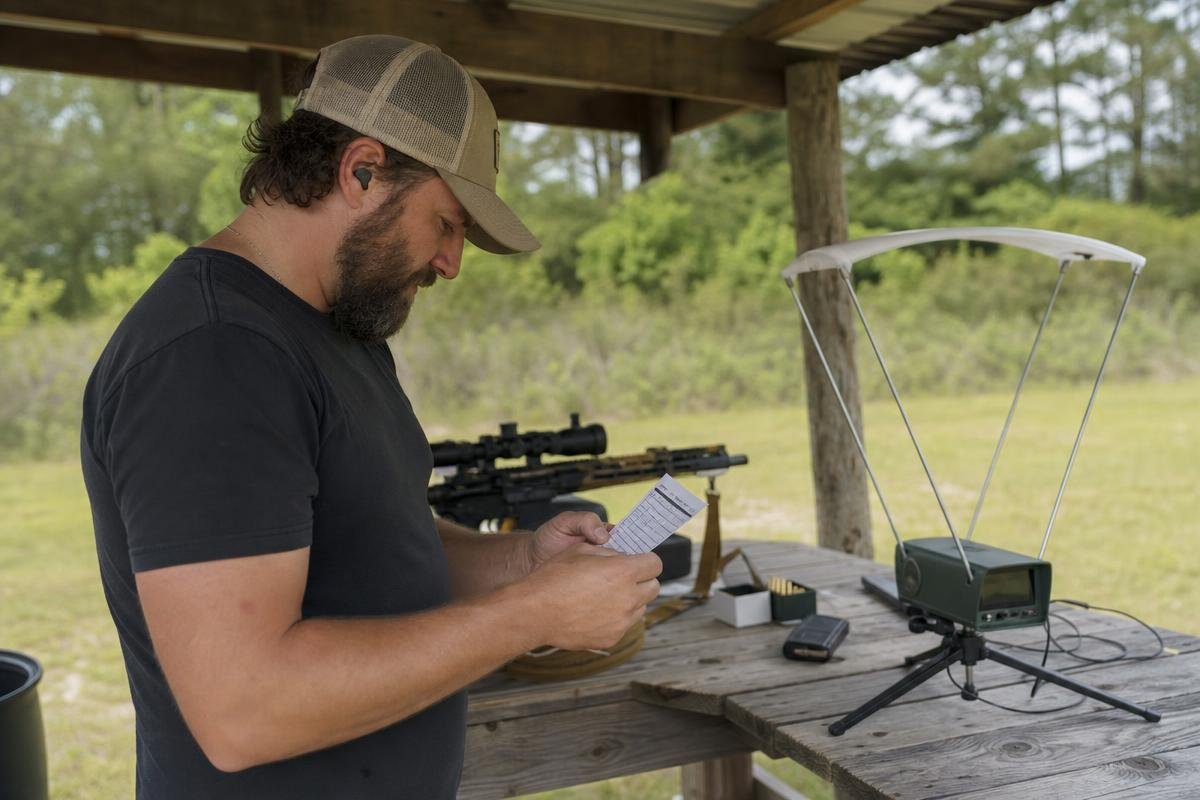
Read a .204 Ruger ballistics table by matching its bullet, muzzle velocity, zero, sight height, and weather conditions to your rifle before using its drop and wind-drift values. A table is a range-card framework, not a universal answer for every barrel, optic, ammunition lot, or weather condition.
The Inputs Behind Every Ballistics Table
Use the worksheet below to record results for your rifle rather than relying on unverified trajectory figures. Hornady lists a 32-grain V-MAX bullet, a G1 BC of .210, and a 4,225 fps muzzle velocity from a 26-inch test barrel for its .204 Ruger Superformance Varmint load. For a calculated starting point, enter your measured muzzle velocity and that bullet's BC into a ballistic calculator, along with your actual sight height, zero, and atmospheric conditions. A 1.5-inch sight height, 200-yard zero, 59°F at sea level, and 10 mph full-value crosswind are example inputs only. Confirm the resulting drop and drift at the range.
| Range | Velocity | Energy | Drop | 10 mph Wind Drift |
|---|---|---|---|---|
| 100 yards | Enter calculated or measured fps | Enter calculated energy | Enter confirmed drop | Enter confirmed drift |
| 200 yards | Enter calculated or measured fps | Enter calculated energy | 0 in. | Enter confirmed drift |
| 300 yards | Enter calculated or measured fps | Enter calculated energy | Enter confirmed drop | Enter confirmed drift |
| 400 yards | Enter calculated or measured fps | Enter calculated energy | Enter confirmed drop | Enter confirmed drift |
Source for bullet specifications and stated muzzle velocity: Hornady .204 Ruger 32 gr V-MAX Superformance Varmint product data. The worksheet does not contain a calculated trajectory. Use a ballistic calculator with the conditions stated above or your measured inputs, then confirm velocity, zero, drop, and wind holds in your own rifle before hunting or relying on the results.
With a 200-yard zero, use your confirmed 300-yard impact to determine the elevation correction. Compare it with the drift you observe under measured wind conditions. A small varmint target may be more limited by an uncertain wind call than by known elevation.
How to Read Velocity, Energy, Drop, and Wind Drift
A practical .204 Ruger trajectory table should show these fields at each distance:
- Distance, in yards.
- Velocity, in feet per second.
- Energy, in foot-pounds.
- Drop, based on the listed zero.
- 10 mph full-value wind drift, in inches.
Velocity shows how quickly the bullet slows. Energy gives impact context, but it does not replace bullet construction or shot placement. Drop tells you the elevation correction required from your stated zero.
Wind drift often becomes the first major limit on practical varmint shooting. Drop may stay manageable with a known zero, but a changing crosswind can move a light .20-caliber bullet enough to miss a small target. Confirm wind value and direction before trusting any table.
For a build that matches your intended load, compare chambering, twist rate, and barrel specifications among available .204 Ruger barrel options. Product details should always be confirmed before purchase or installation.
32-Grain Vs. 40-Grain .204 Ruger Bullets for Varmint Use

Wind calls can matter more than a small drop difference as range increases. Among .204 Ruger bullet weights, 32-grain loads are commonly chosen for high velocity and a flat near-to-midrange trajectory. Forty-grain loads can give you a different balance, especially when the projectile has a higher ballistic coefficient and is stable in your barrel.
Why Wind Is the Real Tradeoff
Velocity alone does not decide wind drift. The Hornady 32-grain V-MAX example carries a published G1 BC of .210, while some 40-grain .20-caliber designs are listed with higher BC values by their manufacturers. A higher-BC bullet can retain speed more efficiently, but it may start slower and may need a twist rate suited to its length and design.
For .204 Ruger varmint hunting, compare the wind-drift column for the exact load you plan to shoot. Confirm it at the range with your rifle, not just the ammunition box. Use measured distances, stable targets, and repeatable conditions to establish realistic holds before a field trip.
Bullet Construction Matters as Much as Weight
Weight does not tell the full story on small game. Polymer-tip varmint bullets are built for rapid expansion. Hollow points can also expand quickly, though jacket thickness, cavity shape, and impact velocity affect the result.
Choose a bullet designed for the game and distance you expect. Follow all hunting regulations that apply at your destination and for your intended game.
Factory Data and Handload Data Are Not Interchangeable
Factory velocity figures are useful reference points, but they do not predict a handload. Barrel length, chamber dimensions, powder lot, primer, brass capacity, and seating depth can all change velocity and pressure.
Handloaders should follow published .204 Ruger load data, use safe component practices, and work up carefully. If you need help selecting an upper for your load testing, contact our team in Denison.
.204 Ruger Vs. .223 Remington for Varmint Shooting
Both cartridges can work for varmint shooting. Your better fit depends on shooting distance, bullet construction, wind, and the rifle setup you plan to run. The .204 Ruger vs .223 choice is not about a universal winner.
Light, Fast .20-Caliber Bullets
.204 Ruger varmint hunting centers on light, fast .20-caliber bullets and a flat trajectory. Common .204 Ruger bullet weights include 32-grain and 40-grain loads, with the lighter option generally emphasizing speed and the heavier option offering a different balance of wind behavior and retained energy.
Bullet design still matters. A polymer-tip varmint bullet, hollow point, and match bullet can behave differently on target even at similar weights. Check the manufacturer data for the exact load, barrel length, and conditions before building a range card.
The Broader Bullet-Weight Range of .223 Remington
.223 Remington offers more common bullet-weight choices because it has a larger ammunition and component market. You can find light varmint bullets, midweight general-purpose loads, and heavier projectiles for different twist rates and shooting needs.
A .223 setup may make sense if you want broad ammunition availability or one rifle for several tasks. Our .223 Wylde complete uppers are built around a chamber that accepts both .223 Remington and 5.56 NATO ammunition.
What an AR Cartridge Change Requires
You cannot switch from .223 Remington to .204 Ruger by changing ammunition alone. You need a correctly chambered .204 Ruger barrel and compatible upper components, then you need to confirm function and zero with your chosen load.
A complete upper keeps the caliber-specific barrel and receiver assembly together. Confirm the product page for bolt, barrel extension, magazine, and lower-receiver compatibility rather than assuming every AR component is interchangeable. This lets you maintain a dedicated .204 Ruger setup without rebuilding your .223 rifle.
Need help comparing barrel twist, upper configuration, and compatible parts for your varmint setup? Call us at (888) 706-0633.
Choosing a .204 Ruger Upper and Barrel for Consistent Results
A flat-shooting cartridge still needs a correctly matched upper, barrel, and load. Available .204 Ruger upper assemblies may be designed to mount to a compatible mil-spec lower receiver, but review current product-page specifications before installation or purchase.
Check the chamber marking, bolt carrier group requirements, gas system, muzzle device thread, and handguard length. The upper, bolt, barrel extension, and chamber must be correctly matched. Headspace should be verified before firing any new assembly.
Barrel Length, Twist Rate, and Chambering
Barrel length affects observed .204 Ruger velocity because the powder charge has more or less bore length to accelerate the bullet. A longer barrel may produce higher velocity with the same load, but results vary by ammunition, chamber dimensions, and the individual barrel.
Twist rate must fit the .204 Ruger bullet weights and projectile designs you plan to shoot. Lighter 32-grain varmint bullets and longer 40-grain bullets can have different stability needs. Check the barrel maker’s stated twist recommendation rather than assuming one twist rate covers every bullet shape.
A true .204 Ruger chamber is required. Do not treat a .223 Remington or .223 Wylde barrel as interchangeable. If you are comparing configurations, our complete AR-15 upper receivers page shows the caliber-specific upper categories we carry.
Confirming Your Rifle's Real-World Data
Published .204 Ruger ballistics are a starting point, not your rifle’s final answer. Establish a practical zero, then confirm point of impact at several distances with the exact load you intend to carry or hunt with.
- Chronograph several shots and record average velocity.
- Record the bullet weight, ammunition lot, temperature, and zero distance.
- Enter your actual .204 Ruger velocity into your ballistic app.
- Confirm drop and wind holds on paper or steel before relying on them.
North Texas and Texoma conditions can change quickly from a cool morning to a warmer, windier afternoon. Recording temperature, wind direction, and approximate wind speed with each range session helps prevent an old range card from being treated as universal data.
A Denison Range-Day Checklist for Verifying Your Ballistics
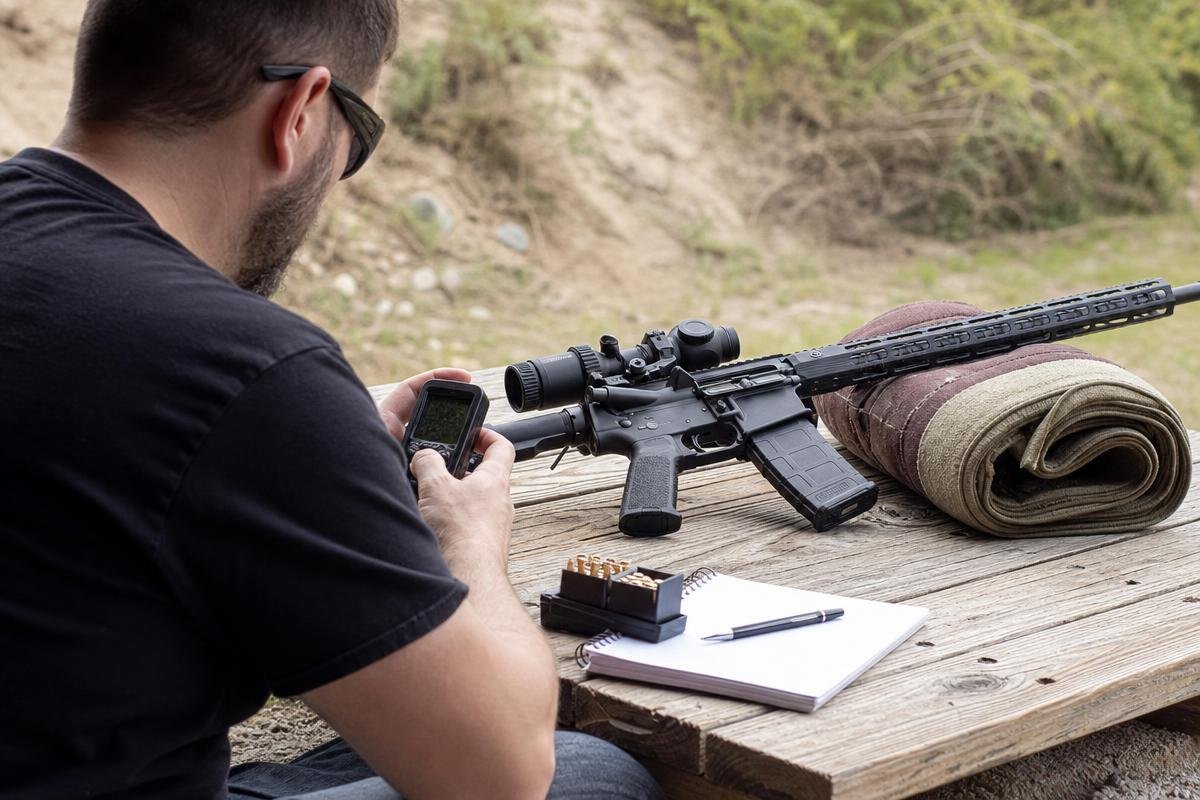
Safe handling comes first. Use a suitable backstop, wear eye and ear protection, and follow all applicable laws and range rules. We ship from our facility at 4000 Texoma Pkwy, Denison, TX 75020.
Record the Inputs Before You Shoot
Start with a known zero and measured target distances. A ballistic app only works as well as its inputs. Record your barrel length, bullet weight, ammunition lot, sight height, zero distance, temperature, and wind direction with approximate speed.
- Chronograph your load where lawful and safe.
- Record several shots, then use an average velocity.
- Note group size and any point-of-impact shift.
- Keep each load separate in your notes.
These details build a usable .204 Ruger ballistic profile for your rifle. A factory load fired through one barrel can produce different results through another barrel, even when the ammunition label is the same.
Confirm the Data Before You Hunt
Confirm your .204 Ruger trajectory at additional measured distances after setting your zero. Shoot from a stable position, then compare actual impact to your app’s predicted drop and wind drift.
Observed impacts should override assumptions entered into a ballistic app. Update muzzle velocity, zero, and environmental inputs until your range results match your profile. If you need a ready-to-drop assembly, review our available .204 Ruger upper receivers.
Clean the bore and action after shooting as needed. Cleaning supports reliable function, but it does not change external ballistics. For help reviewing upper and barrel specifications before a build, call (888) 706-0633 or use our contact page.
Frequently Asked Questions
.204 Ruger answers depend on your load, barrel, optic zero, and field conditions. Use published load data as a starting point, then confirm results with your own rifle.
How Fast Is a .204 Ruger?
.204 Ruger velocity can approach roughly 4,000 fps with some light-bullet loads and suitable barrel lengths. That number is not universal. Bullet weight, powder charge, chamber, barrel length, and temperature all change muzzle speed.
Is .204 Ruger Suitable for Varmint Hunting?
Yes, .204 Ruger varmint hunting works well for small targets when you select an appropriate bullet and place shots accurately. Check local hunting rules, identify your target, and match bullet construction to expected distance and game size.
How Does .204 Ruger Recoil Feel?
Recoil is light compared with larger centerfire cartridges, which helps you stay in your optic and watch impacts. Rifle weight, muzzle device, stock fit, and shooting position still affect felt recoil.
How Far Can a .204 Ruger Shoot Responsibly?
Responsible range depends on wind judgment, a confirmed zero, measured distance, and your ability to place a precise shot. Do not set a fixed distance limit from a chart alone. Wind drift and target size matter more as range increases.
Will a .204 Ruger Upper Fit My AR-15 Lower?
Most .204 Ruger uppers are built for a standard mil-spec AR-15 lower, but you should confirm each product specification before purchase. Review our .204 Ruger complete upper receivers for stated compatibility and component details.
Should I Choose a 32-Grain or 40-Grain .204 Ruger Bullet?
A 32-grain load generally emphasizes velocity, while a 40-grain bullet may offer a better wind-drift balance when its ballistic coefficient and your barrel twist support it. Confirm both loads in your rifle.
Ready to Get Started with AR15Parts.com?
Call (888) 706-0633 to speak with our team directly. We're ready to answer your questions, walk you through your options, and help you find the right solution for your needs. Whether you're just starting to plan or ready to move forward, we'll make the process simple and stress-free. Reach out today and let's talk about how we can help.