
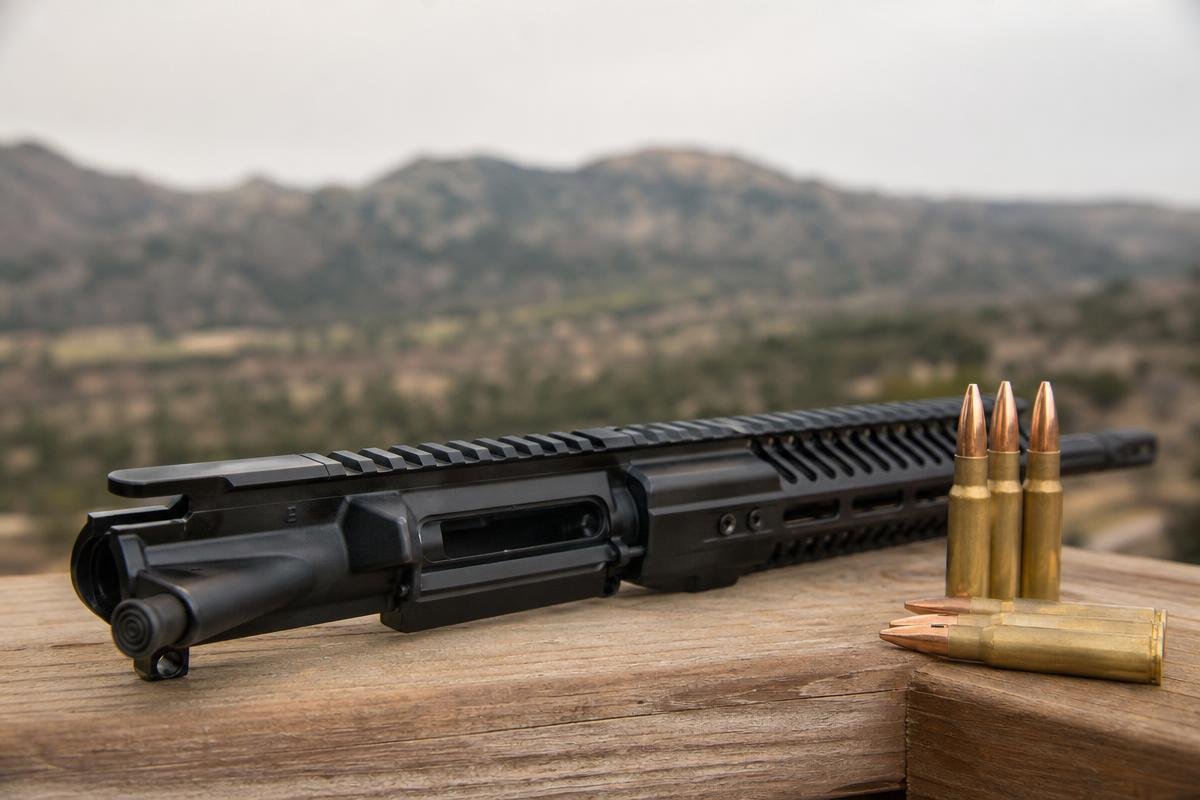
The .458 SOCOM was built to deliver maximum terminal energy through an AR-15 platform, and understanding 458 SOCOM ballistics is the first step to knowing whether this round fits your build. Out here near Denison, feral hogs along the Lake Texoma corridor and Red River bottoms push a lot of shooters toward heavy, hard-hitting calibers that work at close to mid-range. We build complete uppers to order, assembling, headspacing, and function-checking them in-house before shipping from our Denison, TX facility.
Below, we cover velocity, energy, and practical performance across the full bullet weight spectrum, from 250-grain supersonic loads down to 600-grain subsonics. We build 458 SOCOM uppers to order and ship them from our Denison, TX facility. Need a 458 SOCOM upper ready to run? We can help you find the right build.
Key Takeaways
- 458 SOCOM ballistics vary significantly by bullet weight, with supersonic loads producing over 2,000 ft-lbs of muzzle energy.
- Subsonic 458 SOCOM loads in the 500 to 600-grain range pair well with suppressors and still deliver devastating terminal performance inside 100 yards.
- The cartridge runs on a standard AR-15 lower receiver, requiring only a caliber-specific upper, barrel, and magazine.
- Shot distances of 50 to 150 yards, common in North Texas brush country, fall well within the round's effective range envelope.
What Makes .458 SOCOM Ballistics Different from Standard AR Calibers
The .458 SOCOM is not a refinement of the standard AR-15 cartridge. It is a fundamentally different class of projectile running through a familiar platform. Understanding 458 SOCOM ballistics starts with one number: .458 inches. That is the bore diameter, identical to the .45-70 Government, and it changes everything about what this round does at the target.
Bore Diameter and Projectile Weight Range
Standard AR calibers run light. The 5.56 NATO tops out around 77 grains. The 300 Blackout stretches from 110 to 220 grains, which already feels like a step up. The .458 SOCOM runs from 140-grain frangible loads all the way to 600-grain subsonic projectiles. Common hunting and defensive loads cluster between 250 and 400 grains. That weight range is what drives energy figures no standard AR caliber can match. At 300 grains, you are pushing well over 1,800 ft-lbs at the muzzle. That is a different conversation entirely.
How the .458 SOCOM Fits a Standard AR-15 Lower
Marty ter Weeme of Teppo Jutsu designed this cartridge in 2000 with one specific goal: maximum projectile mass through a mil-spec AR-15 lower receiver. No lower modifications required. The buffer system stays the same. The trigger group stays the same. What changes is the upper side: a .458-specific barrel, a matched upper receiver, and a bolt with a modified face sized for the larger case head.
Standard STANAG magazines feed the round single-stack, typically holding five to seven rounds. If you already run an AR-15 lower for hog hunting in North Texas, you can drop a 458 SOCOM complete upper onto that same lower and be running a completely different ballistic profile without buying a new platform. That is the design win. Larger projectile, same lower, no gunsmith required.
How Much Energy Does a .458 SOCOM Produce?
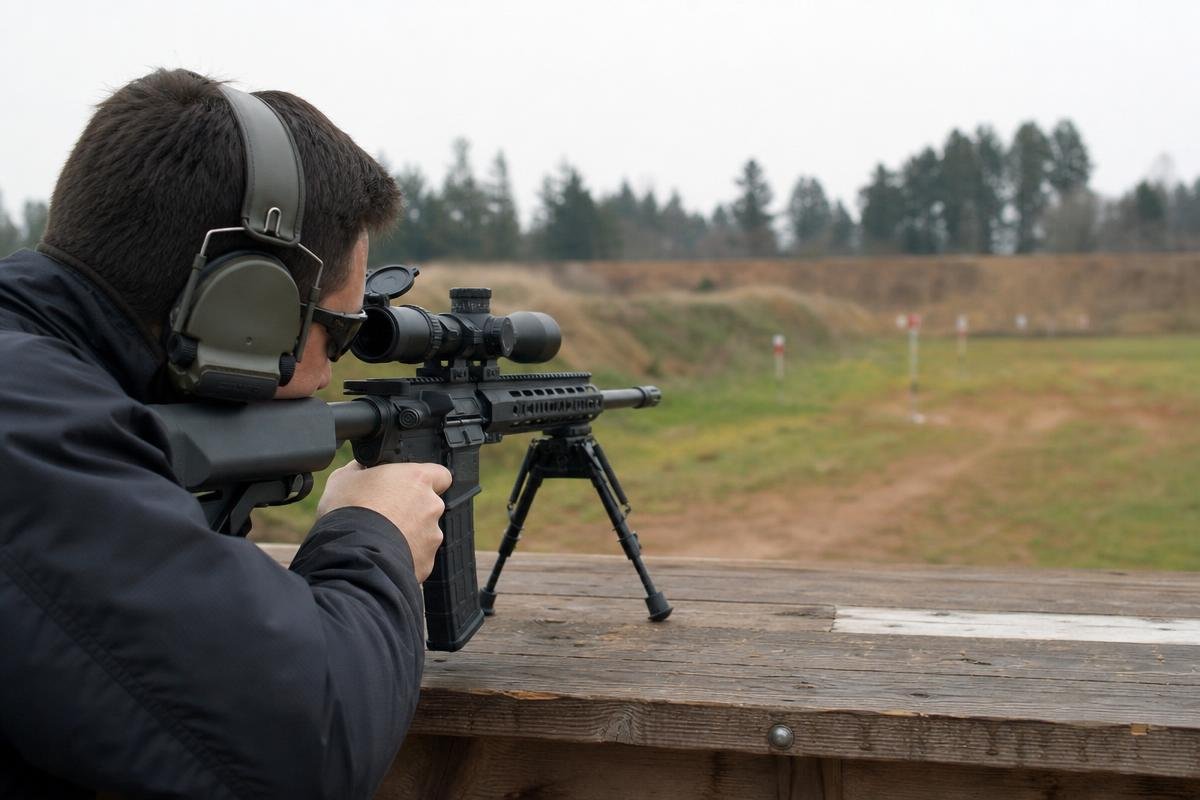
A supersonic .458 SOCOM produces well over 2,000 ft-lbs of muzzle energy, with common hunting loads landing from 2,405 to 2,519 ft-lbs depending on bullet weight. Those numbers are what matter here. Load selection becomes straightforward rather than guesswork once you know the actual fps and ft-lbs figures at distance.
Supersonic Load Performance (250 to 350 Grain)
A 300-grain load produces approximately 1,900 fps and 2,405 ft-lbs at the muzzle. At 100 yards that drops to roughly 1,600 fps and 1,706 ft-lbs. At 200 yards you are looking at near 1,340 fps and 1,196 ft-lbs. The table's 250-grain example starts at 2,100 fps and 2,449 ft-lbs, then reaches 1,775 fps and 1,749 ft-lbs at 100 yards. Its 350-grain example starts at 1,800 fps and 2,519 ft-lbs, then reaches 1,510 fps and 1,773 ft-lbs at 100 yards. Actual trajectories depend on the load.
Barrel length is a real variable here, not a footnote. A 9-inch barrel loses approximately 150 to 200 fps compared to a 16-inch barrel on supersonic loads. For North Texas hunters taking brush-country shots in the 50 to 150-yard range near the Red River corridor, the 100-yard energy column in the table below is the most relevant number to read.
Heavy and Subsonic Load Performance (400 to 600 Grain)
The 500-grain subsonic example at 1,035 fps produces 1,190 ft-lbs at the muzzle. A 600-grain load at 950 fps produces 1,202 ft-lbs. Both example muzzle velocities are subsonic, but bullet stability and suppressor performance depend on the full setup.
For comparison, a 300 Blackout subsonic running a 220-grain bullet at roughly 1,010 fps produces only about 499 ft-lbs at the muzzle. The .458 SOCOM subsonic advantage is more than double that figure. Landowners near Pottsboro running suppressed builds for year-round hog control will find that gap meaningful in the field.
Ballistic Data Table: FPS and Ft-Lbs at 0, 100, and 200 Yards
| Load Weight (gr) | Muzzle Velocity (fps) | Muzzle Energy (ft-lbs) | 100 yd Velocity (fps) | 100 yd Energy (ft-lbs) | 200 yd Velocity (fps) | 200 yd Energy (ft-lbs) |
|---|---|---|---|---|---|---|
| 250 gr (supersonic) | 2,100 | 2,449 | 1,775 | 1,749 | 1,490 | 1,233 |
| 300 gr (supersonic) | 1,900 | 2,405 | 1,600 | 1,706 | 1,340 | 1,196 |
| 350 gr (supersonic) | 1,800 | 2,519 | 1,510 | 1,773 | 1,265 | 1,243 |
| 500 gr (subsonic) | 1,035 | 1,190 | 985 | 1,078 | 940 | 981 |
| 600 gr (subsonic) | 950 | 1,202 | 905 | 1,091 | 862 | 990 |
The table uses illustrative velocity estimates for a 16-inch barrel, with energy calculated from the listed velocity and bullet weight in each row. These are not verified ammunition-specific test results; check published data for your chosen load. Actual results vary by barrel length and conditions. Compare our built-to-order 458 SOCOM uppers, assembled, headspaced, and function-checked in-house before shipping from Denison.
Subsonic vs. Supersonic .458 SOCOM: Which Load Fits Your Build
The 458 SOCOM ballistics picture splits cleanly into two lanes: supersonic loads for range and terminal energy, subsonic loads for suppressed use and close-quarters work. Which lane fits your build depends on your gas system, barrel length, and what you're actually hunting or defending against. Running both load types in the same build can require gas-system tuning for reliable cycling.
When to Run Supersonic Loads
Supersonic loads in the 250 to 350 grain range range from about 1,800 to 2,100 fps at the muzzle in the examples above; their velocity at 200 yards varies by load. That matters for deer, feral hogs, and black bear where shots can stretch to 150 or 200 yards. These loads deliver enough energy at distance to anchor large game cleanly, and they cycle reliably in a standard gas system without adjustment.
For most hunters working open pasture or senderos in North Texas, a supersonic 300 grain load is the practical choice. It gives you a usable range envelope that matches the terrain.
When Subsonic Loads Make Sense
Subsonic loads run from 400 to 600 grains and stay below 1,125 fps. That keeps them under the transonic threshold, which helps avoid a supersonic crack and supports quieter operation when paired with a suitable suppressor. Terminal performance at these velocities comes from projectile diameter and construction, not speed. A 500 grain wide-meplat cast bullet at 1,035 fps creates a large wound channel at close range, making it a serious option for home defense or brush-country hog hunting inside 75 yards.
Suppressed night hunts on private land near the Lake Texoma corridor are exactly what this load was built for. Dense brush, short shot distances, and an interest in reducing noise all point to a subsonic 458 SOCOM build. If you want a dedicated suppressed platform in a smaller caliber, 300 Blackout uppers for suppressed builds are worth comparing before you commit.
Gas System and Barrel Length Considerations for Each Load Type
Supersonic loads run best in a 16-inch barrel with a carbine or mid-length gas system. Subsonic loads are typically paired with a 9-inch or 12-inch barrel and a pistol-length gas system for a compact suppressor host. The problem is that subsonic loads generate less gas pressure than supersonic loads, so a system tuned for one may not cycle reliably with the other.
If you plan to run both load types, an adjustable gas block may help, but the correct setup depends on the barrel, gas port, suppressor, and ammunition. Our 458 SOCOM complete uppers are assembled, headspaced, and function-checked in-house, and we can walk you through gas system configuration for your specific use case.
Terminal Performance: What .458 SOCOM Actually Does Downrange
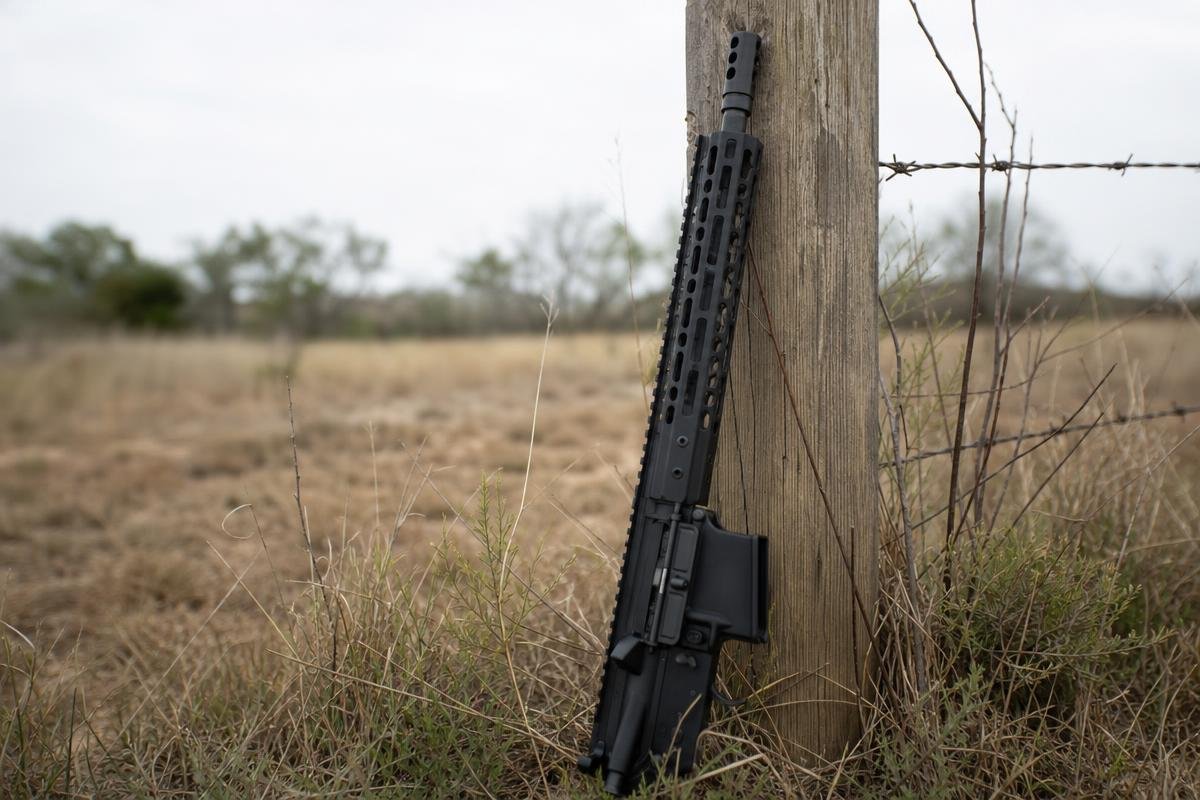
Numbers on a ballistics table only tell part of the story. What matters is what the bullet actually does when it reaches the target. 458 SOCOM terminal performance is where this cartridge earns its reputation, and the gel data backs it up.
Wound Channel and Gel Test Data
Published gelatin results vary by load and barrel length, so penetration and cavity-size claims should be tied to the specific ammunition tested. Results above 18 inches also exceed the FBI's commonly cited 12 to 18-inch penetration benchmark.
Bonded and monolithic hunting bullets are designed to retain weight and expand, but actual results depend on the specific load and impact velocity. These are the correct choices for hunting applications where controlled expansion and deep penetration both matter.
Heavy cast lead subsonic loads in the 500 to 600-grain range work differently and often emphasize penetration rather than expansion. The terminal mechanism at subsonic velocities is the wide meplat crushing tissue, not hydraulic expansion. Penetration depth does the work. Muzzle energy at subsonic velocities is lower, but the crush cavity from a wide, heavy projectile is still significant.
Is .458 SOCOM Good for Hog Hunting in Texas?
Yes, the .458 SOCOM is one of the best AR-platform choices for Texas hog hunting. It delivers enough energy to anchor large boars over 200 pounds at the 50 to 150-yard distances typical of North Texas brush country. The Red River bottomlands north of Denison carry dense feral hog populations, and the AR platform's follow-up shot speed is a real advantage over bolt-action alternatives in tight cover. Texas has no closed season or bag limit for feral hogs on private land. Get the landowner's permission before hunting. A hunting license is not required to take feral hogs on private land with landowner authorization; public-land rules differ, so check current Texas Parks and Wildlife requirements.
For whitetail deer, any supersonic load from 250 grains up is more than adequate. For elk or black bear, 300 to 350-grain supersonic loads inside 150 yards are within the cartridge's effective envelope. Hunters running suppressed setups often pair a short-barreled 458 SOCOM upper with subsonic loads for night hunts, where quiet and penetration matter more than velocity.
Have questions about which .458 SOCOM upper fits your hunting setup? Call us at (888) 706-0633 and our team will walk you through the options.
.458 SOCOM vs. .450 Bushmaster and .50 Beowulf: How the Numbers Compare
Ballistic Comparison at the Muzzle
These three calibers are often grouped together because they all run on a standard AR-15 lower and share a similar purpose: heavy, wide bullets at moderate velocity for short-to-medium range work. The numbers at the muzzle are close enough to cause confusion, so here is what each one actually produces.
- .458 SOCOM 300 gr: approximately 1,900 fps and 2,405 ft-lbs of energy
- .450 Bushmaster 250 gr: approximately 2,200 fps and 2,686 ft-lbs of energy
- .50 Beowulf 335 gr: approximately 1,870 fps and 2,601 ft-lbs of energy
The .450 Bushmaster leads at the muzzle in raw energy. The .50 Beowulf carries the most mass. But at 100 yards, the picture shifts. The .458 SOCOM 300-grain load retains more energy than the .450 Bushmaster 250-grain load because the heavier bullet has a higher ballistic coefficient and sheds velocity more slowly. The .50 Beowulf drops faster due to its lower BC, despite the muzzle advantage. All three calibers top out at roughly 200 to 250 yards of effective range on game. None of these is a long-range cartridge.
Which Caliber Fits Your Build Goals
Each caliber has a clear lane. The .450 Bushmaster wins on ammo availability and price at most retailers. You can find it at local gun stores without much effort. The .50 Beowulf is the heaviest hitter at close range and the right call if raw diameter is the priority. Browse 50 Beowulf complete uppers if that is the direction your build is going.
For suppressed builds, .458 SOCOM ballistics pull ahead with no real competition. Neither the .450 Bushmaster nor the .50 Beowulf has a comparable subsonic load ecosystem. The .458 SOCOM runs projectiles from 140 to 600 grains, giving you a subsonic option that cycles reliably and hits hard at close range. Landowners running suppressed hog setups in thick brush have a clear reason to choose .458 SOCOM over either alternative. If that build is on your list, our assembled uppers are headspaced and function-checked in-house, ready to drop onto your lower.
Building a .458 SOCOM Upper: What the Ballistics Tell You About Component Selection
The velocity and energy figures from the data table earlier are not just numbers. They are a direct guide to which components belong in your build. Barrel length, twist rate, and bolt face are not interchangeable decisions. Each one either supports or undermines the 458 SOCOM ballistics you are trying to produce.
Barrel Length and Its Effect on Velocity
A 16-inch barrel is the standard for supersonic builds. It produces the muzzle velocities referenced in the ballistics data above, typically 1,900 fps or better on 300-grain loads. Drop to a 12-inch barrel and you lose roughly 100 to 150 fps. Still supersonic, but energy at distance falls off noticeably. A 9-inch barrel is optimized for subsonic loads and suppressor use. Supersonic rounds through a 9-inch tube still reach 1,600 to 1,700 fps on 300-grain projectiles, which is adequate inside 100 yards but not what you want for hunting at distance. Match your barrel length to your primary load type before you order anything else.
Twist Rate and Bullet Weight Matching
The .458 SOCOM runs a 1:14 twist as standard. That rate stabilizes projectiles from 250 to 600 grains reliably. If you plan to run 500-grain or heavier cast bullets, a 1:12 twist adds margin for stability at the heavy end. Do not go slower than 1:14. A 1:16 twist will not stabilize heavy subsonic loads consistently, and you will see keyholing before you see groups.
BCG and Bolt Face Requirements
This is a hard stop. A standard 5.56 BCG will not work in a .458 SOCOM upper. The cartridge requires a dedicated bolt face sized for the .458 SOCOM case head. Swapping a standard 5.56 bolt into this upper is not a workaround; it is a malfunction waiting to happen. For a full breakdown of bolt carrier group differences, see our AR-15 BCG types and coatings guide.
Our complete uppers ship with the bolt already headspaced and function-checked to the barrel. You do not need to source a separate bolt or verify headspace independently. Drop it onto any mil-spec lower and you are ready to run.
.458 SOCOM in Denison, TX: Local Use Cases and Where to Get Your Upper
Why North Texas Shooters Run .458 SOCOM
Feral hog pressure in the corridor stretching from Sherman down through the Pottsboro area is year-round and serious. Landowners in that stretch deal with rooting damage constantly, and most shots happen inside 150 yards in heavy cedar and mesquite cover. That terrain fits .458 SOCOM supersonic loads well. A 300-grain load still carries more than 1,500 ft-lbs at 100 yards, which is more than enough energy for large boars in thick brush.
Suppressed subsonic builds are popular on private land in this area for night hunting. The .458 SOCOM subsonic load ecosystem is deeper than what you get with .450 Bushmaster, making it a more practical suppressor host for that specific application. If you want to compare options, our 300 Blackout uppers for suppressed builds are another route worth reading before you decide.
Shipped from Denison, TX: What to Expect from Your Order
We build complete uppers to order, then ship them from our facility at 4000 Texoma Pkwy, Denison, TX 75020. Each upper is assembled, headspaced, and function-checked in-house before shipping. Call us at (888) 706-0633 with questions before you order.
Frequently Asked Questions
What is the muzzle velocity of a .458 SOCOM?
It depends on the load weight. A 250-grain supersonic load produces roughly 2,100 fps from a 16-inch barrel. A 500-grain subsonic load drops to around 1,035 fps. Barrel length matters too. Going from a 16-inch to a 9-inch barrel costs you approximately 150-200 fps, which is worth knowing if you are planning a suppressed build.
What is the effective hunting range for .458 SOCOM?
For deer and hog-sized game using supersonic loads, plan on 150-200 yards as your practical ceiling. The table above lists a 300-grain load at approximately 1,706 ft-lbs at 100 yards. Confirm the specific load and local hunting requirements before use. Subsonic loads are a different story. Keep those under 75 yards.
How does .458 SOCOM subsonic vs supersonic performance compare for suppressed builds?
The .458 SOCOM has one of the most developed subsonic load ecosystems of any AR-15 caliber. Loads in the 400-600 grain range stay below 1,125 fps and pair well with .45-caliber suppressors. A 9-inch barrel is the standard host length for suppressed configurations. If you want a 300 Blackout upper for suppressed builds as a comparison point, we stock those too.
How does .458 SOCOM vs .450 Bushmaster compare on velocity?
The .450 Bushmaster runs a 250-grain bullet at roughly 2,200 fps. The .458 SOCOM hits about 2,100 fps on the same bullet weight. At 100 yards the energy figures are comparable, but the .458 SOCOM's heavier projectile options and broader subsonic load selection give it more range as a platform.
Does .458 SOCOM use a standard AR-15 lower receiver?
Yes. No lower modifications are needed. All the platform changes live in the upper: a .458-specific barrel, a matched upper receiver, and a bolt with the correct bolt face. Standard AR-15 magazines run single-stack, typically holding 5-7 rounds of .458 SOCOM.
What bullet weights should you run for different uses?
For hunting, 300-350 grain bonded or monolithic bullets are the standard choice. For suppressed subsonic use, 500-grain cast or jacketed bullets at 1,035 fps. For range work, 250-grain loads reduce recoil and are easier on barrel life over time.
Ready to build your .458 SOCOM upper? Our team at AR15Parts.com assembles, headspaces, and function-checks every upper before it ships. Browse our complete selection of built-to-order 458 SOCOM complete uppers shipped from Denison, TX, or call us at (888) 706-0633 with questions about load compatibility, barrel length, or build configuration.
Ready to Get Started with AR15Parts.com?
Call (888) 706-0633 to speak with our team directly. We're ready to answer your questions, walk you through your options, and help you find the right solution for your needs. Whether you're just starting to plan or ready to move forward, we'll make the process simple and stress-free. Reach out today and let's talk about how we can help.