
Trigger pull weight on an AR-15 affects every shot you take, whether you're running a competition stage, working a fence line at dusk in Grayson County, or keeping a rifle ready for home defense. Most shooters inherit a mil-spec trigger and never question it. At AR15Parts.com, our catalog includes fire-control components and complete drop-in trigger groups. Pull weight is one of the most direct ways to change how a rifle feels and performs.
Below, we cover what trigger pull weight is, how it affects accuracy and control, and what weight actually makes sense for your build and use case. Need help choosing the right trigger for your AR-15 build? Tell us how you shoot and we'll recommend a specific setup.
Key Takeaways
- Mil-spec AR-15 trigger specifications vary, but they generally have a heavier pull than many aftermarket options.
- Pull weight on an AR-15 directly affects shot-to-shot consistency, especially at distance or under stress.
- Drop-in fire-control groups let you change pull weight without gunsmithing, and most are designed for compatible mil-spec-pattern lower receivers; verify the manufacturer specifications before installation.
- Home defense, hunting, and competition each call for a different pull weight range, and there is no single correct answer.
- Trigger laws and ATF classifications can change. This is general information, not legal advice. Verify current federal, state, and local requirements with official sources or a qualified firearms attorney before modifying any fire-control group.
What Is Trigger Pull Weight and How Is It Measured?
Trigger pull weight is the amount of force, measured in pounds, required to fire an AR-15 by pulling the trigger through its full travel until the sear releases the hammer. On an AR-15, that number has real consequences for accuracy and control. Understanding where it comes from and how to verify it yourself puts you in a better position to evaluate any replacement trigger assembly.
The Mechanics Behind the Number
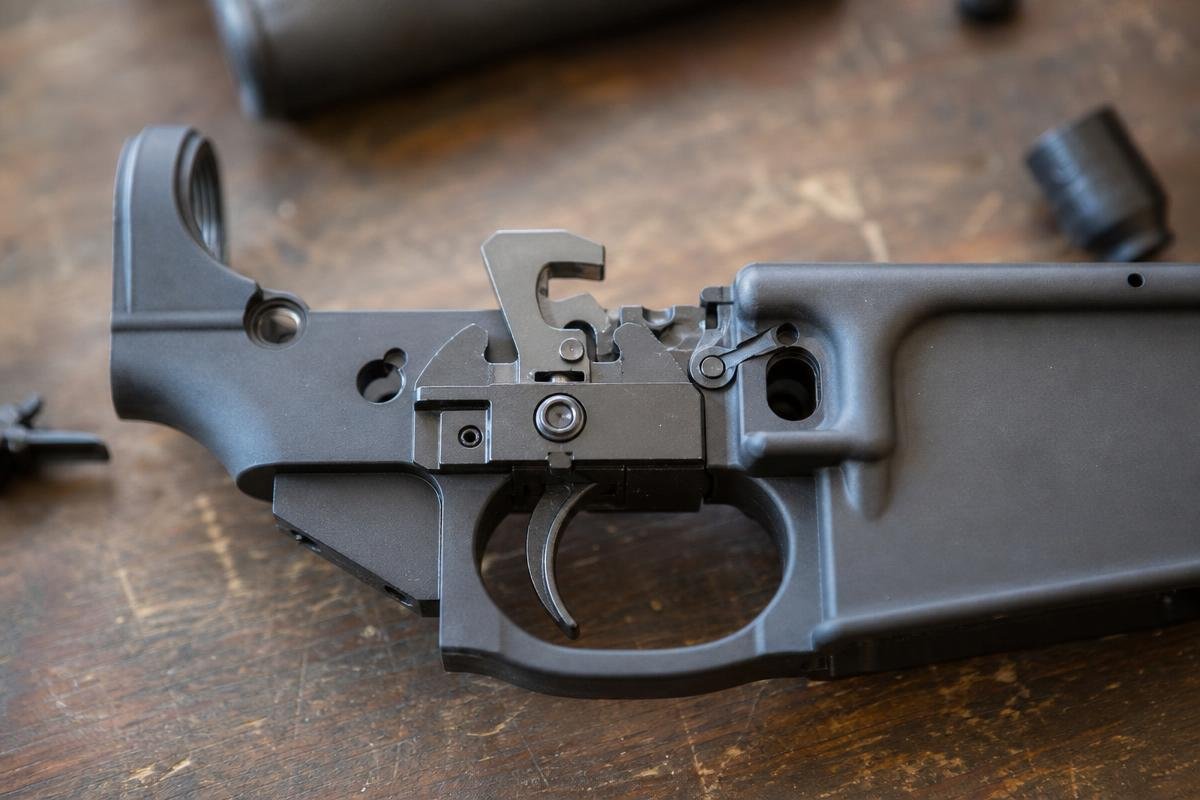
Four fire-control components inside the lower receiver determine how heavy the pull feels: the trigger, disconnector, hammer, and the sear contact surfaces between them. Spring weight matters, but it is not the whole picture. The geometry and surface finish of the sear engagement points carry equal weight. A polished sear contact surface changes the feel of the pull without touching spring tension at all. That is why two triggers with identical springs can feel completely different out of the box.
When you install new AR-15 lower parts, verifying pull weight after assembly confirms the fire-control group is functioning within spec before you take the rifle to the range.
How Pull Weight Is Measured on an AR-15
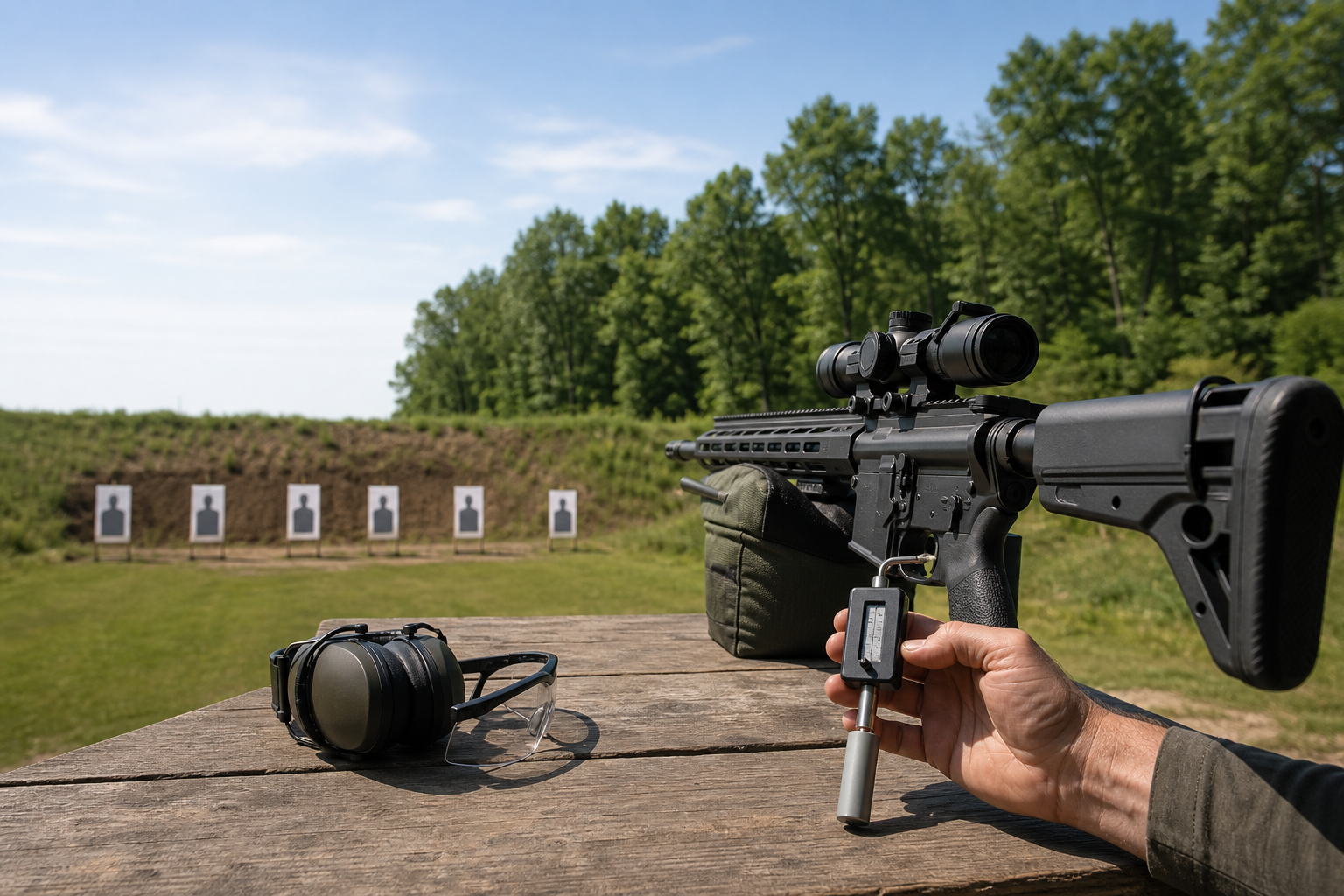
A trigger pull gauge, mechanical or digital, attaches to the trigger shoe. The rifle must be unloaded with the safety off. You apply steady upward pressure until the hammer falls, then record the peak force at the break. Take three to five pulls and average the readings. A single pull can vary by half a pound or more, so averaging gives you an accurate number.
Factory and aftermarket trigger specifications vary by model. Verify the manufacturer’s stated pull-weight range and use the same gauge method for comparison. The measurement process is straightforward, but a qualified armorer should inspect any trigger that fails a function check.
Mil-Spec vs. Aftermarket AR-15 Trigger Pull Weights: What the Numbers Mean
The gap between a mil-spec trigger and a quality aftermarket cassette is not subtle. A standard mil-spec pull is generally heavier than a quality aftermarket single-stage. The effect on shooting performance depends on the trigger, rifle, ammunition, conditions, and shooter.
The table below gives you a direct reference. Use it to match trigger type to your actual use case before you buy anything.
| Trigger Type | Typical Pull Weight Range | Take-Up / Stages | Common Use Case |
|---|---|---|---|
| Mil-Spec Single-Stage | 5.5 to 8.5 lbs | No deliberate take-up | Duty and general use |
| Aftermarket Single-Stage | 3.0 to 5.0 lbs | Minimal take-up | Competition and precision |
| Aftermarket Two-Stage | 2.0 to 4.5 lbs total | Defined first and second stage | Precision and hunting |
| Drop-In Cassette | 2.5 to 5.0 lbs | Varies by model | All-purpose upgrade |
Mil-Spec Trigger Pull Weight Range
Mil-spec pull weight exists for a documented reason. Heavier pulls reduce accidental discharge risk when a shooter is wearing gloves, fatigued, or moving under physical stress. The trade-off is a heavier, less consistent break. At distance, that inconsistency shows up in your groups.
For most general-purpose builds, mil-spec is a functional starting point. It is not a precision tool.
Single-Stage Aftermarket Triggers
A single-stage aftermarket trigger has no deliberate take-up. You apply force, and the trigger breaks at the set weight. Common manufacturer specifications often fall within the broader 3 to 5 pound range shown in the table. The break is cleaner and more repeatable than mil-spec, which is why competition shooters and precision builders reach for them first.
If you are running a complete AR-15 rifle for general-purpose use and want a measurable improvement without changing your manual of arms, a single-stage cassette is the most direct path.
Two-Stage Aftermarket Triggers
A two-stage trigger has a defined first stage with light resistance and a shorter, lighter second stage where the shot breaks. Total pull weight is the sum of both stages. The first stage gives you a tactile reference point before the break.
Ranch shooters running rifles for predator and hog control will find that first stage useful in the field. Moving through mesquite and blackland brush with a round chambered, that initial resistance is a real safety margin. The lighter second stage then supports accurate shots at distance on open pasture. Trigger choice belongs in the same planning conversation as barrel and gas system selection. Our AR-15 build resources cover how those components work together, since all three affect how the rifle performs at extended range.
How Trigger Pull Weight Affects Accuracy on Your AR-15
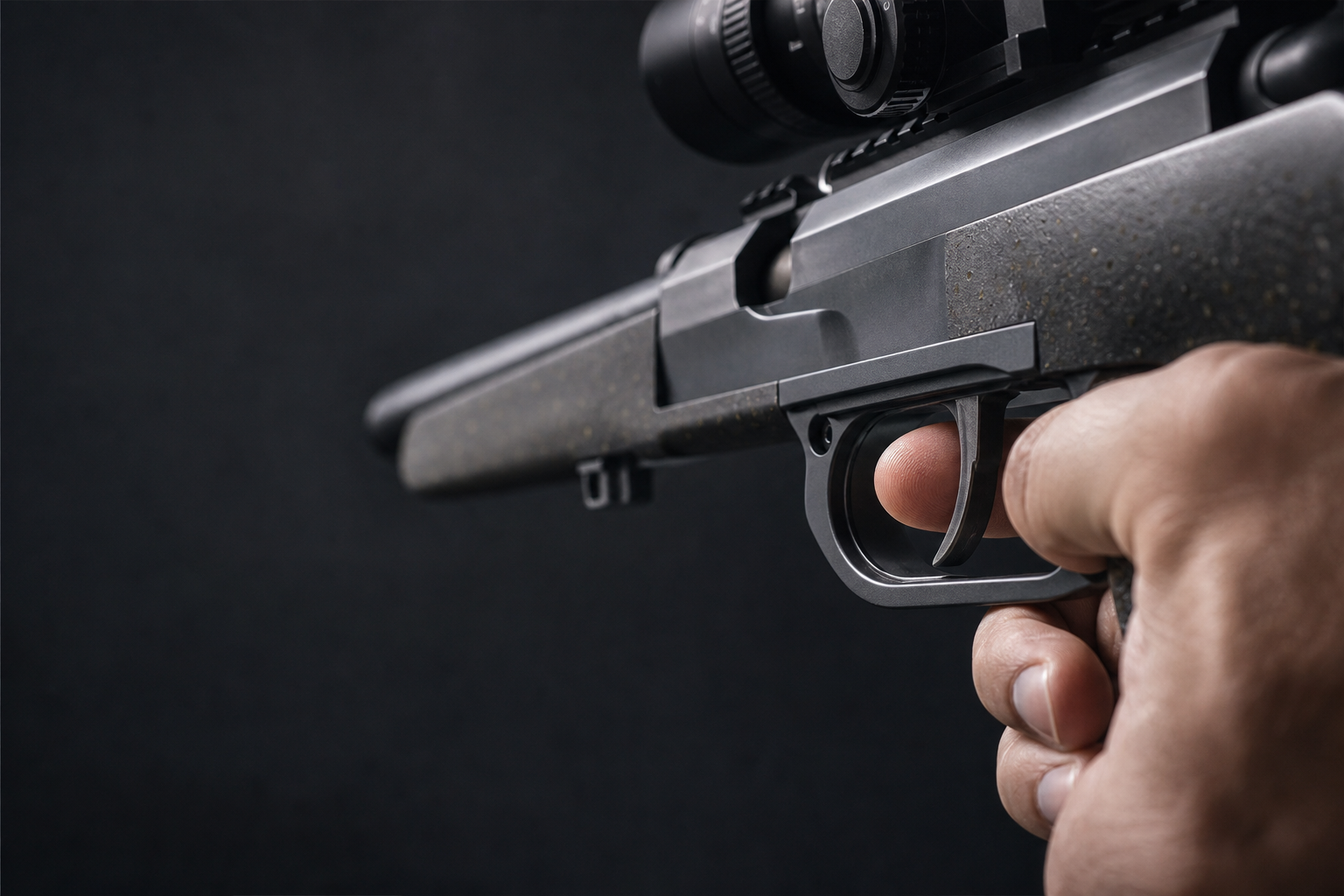
A heavy trigger does not just feel bad. It actively works against your shot. The extra muscular effort required to break a stiff mil-spec trigger introduces lateral movement in the rifle before the hammer falls. At 100 yards that movement is manageable. At 300 yards or beyond, even a small deviation at the trigger produces a real point-of-impact shift downrange.
The Physics of a Heavy Pull
When you apply increasing force to a trigger that requires 8 or 9 pounds to break, your hand muscles do not move in a perfectly straight line. They pull slightly inward or downward. The muzzle moves with them. The heavier the required force, the more pronounced that movement becomes before the sear releases. That is the core mechanical problem with a heavy, gritty trigger on a precision shot.
A lighter pull reduces the force required, but that is not the whole story. A 1-pound reduction does not automatically improve your groups. What actually reduces shooter-induced error is a more consistent, predictable break. The reduction in required force is secondary to that improvement in break quality.
Consistency Matters as Much as Weight
Three variables affect accuracy independent of raw pull weight: creep, overtravel, and reset. Creep is trigger movement before the break with no change in resistance. Overtravel is movement after the hammer falls. Reset is the distance the trigger must travel forward before it can fire again. All three introduce variability into your shot process, regardless of whether the trigger breaks at 4 pounds or 7 pounds.
A 4-pound trigger with a clean, repeatable break outperforms a 3-pound trigger with a mushy wall or excessive creep. The best pull weight for an AR-15 is whichever weight comes with the most consistent break your build allows.
Pull Weight and Effective Range
For general-purpose use inside 100 yards, pull weight matters less. Many competition shooters prefer a lighter aftermarket trigger, while hunters shooting at distance often prefer a two-stage design with a defined first-stage wall. Exact pull-weight choices should follow manufacturer guidance and the shooter’s use case. Much of the private land north of the Red River gives shooters 200 to 400 yard shots across open pasture, so trigger consistency is a real accuracy variable, not a marginal one.
If you are building a rifle for that kind of shooting, pairing a quality trigger with a purpose-built upper matters. Our 6.5 Grendel complete uppers are a common choice for shooters pushing past 200 yards. Building a precision rifle? Browse our drop-in trigger groups and match a clean break to your barrel and caliber.
Can a Trigger Be Too Light? Safety Considerations for AR-15 Owners
Yes, a trigger can absolutely be too light. The question of pull weight is not just about accuracy. Below certain thresholds, a light trigger becomes a genuine safety liability, and the risk is grounded in physiology and physics, not theory.
Accidental Discharge Risk at Low Pull Weights
Very light trigger settings can reduce the margin for handling error, and safe minimums vary by trigger design and manufacturer. Follow the manufacturer’s specifications, complete the required function checks, and consult a qualified armorer before using a light trigger in the field.
For home defense and ranch use, choose a pull weight supported by the trigger manufacturer and a qualified armorer. Real-world handling conditions should be considered alongside bench measurements.
Sympathetic Muscle Contractions and Unintended Engagement
Under physical stress, the muscles of the hand can contract involuntarily. This is a documented physiological response. When you startle, slip, or react to sudden movement, your grip tightens reflexively. A very light trigger can reduce the available handling margin during an involuntary grip response.
Shooters working local ranch land face exactly these conditions: climbing fences, moving through brush, reacting to a hog breaking cover. Those are the moments where a sub-3-pound trigger becomes a liability. For duty or home-defense use, follow manufacturer guidance and qualified-armorer recommendations rather than relying on a universal pull-weight threshold.
Legal and Practical Minimums
Texas law sets no specific minimum trigger pull weight for civilian ownership. Federal NFA and ATF rules govern fire-control group modifications, but no statute names a pound threshold. Negligent discharge statutes apply regardless of trigger configuration. That means legal compliance and safe configuration are two separate questions. Because ATF classifications can change, verify current guidance at atf.gov or with a firearms attorney before you modify anything.
Competition rules vary by organization, division, and current rulebook. Verify the applicable rulebook before selecting or modifying a competition trigger. A certified armorer should verify pull weight after any trigger modification. If you want to talk through your build before ordering, contact AR15Parts.com in Denison at (888) 706-0633.
Not sure if your current setup is safe for how you shoot? Call us at (888) 706-0633 and we'll help you dial in a safe, accurate pull weight.
Matching AR-15 Trigger Pull Weight to Your Use Case
The best pull weight for an AR-15 is not one number. It depends on what you are doing with the rifle. Home defense, competition, hunting, and general range use each put different demands on your fire-control group. Pick the pull weight that fits your primary use case, then decide whether a cassette makes sense for your build.
Home Defense and Duty Builds
Inside 25 yards, accuracy loss from a heavier trigger is minimal. Accidental-discharge resistance is not. For home defense, stay in the 5 to 6.5 pound range with a mil-spec or mil-spec-quality single-stage trigger. Under stress, fine motor control degrades fast. A heavier pull gives you a meaningful safety margin without costing you anything at typical engagement distances.
Competition and 3-Gun Builds
Split times and target transitions improve with a lighter, faster trigger. For competition and 3-Gun, many shooters choose a single-stage aftermarket trigger with a clean break and short reset. Verify the pull-weight requirements for the applicable division and rulebook. The controlled environment reduces accidental-discharge risk, so the lighter pull weight is a reasonable trade. A fire-control group upgrade in this range will produce a noticeable improvement in stage times.
Hunting and Precision Builds
Longer shots on open terrain amplify every shooter-induced error. A two-stage trigger is a common option for hunting and precision work, but the appropriate pull weight varies by model and use case. The first stage gives you a tactile warning before the break; the lighter second stage reduces flinch and movement at the shot. Precision shooters running 6.5 Grendel uppers typically treat trigger quality as equal in priority to barrel quality. The same applies to builds on 6.5 Creedmoor uppers where shots past 300 yards are common on open pasture.
General-Purpose and Range Builds
If your AR-15 covers pest control, range days, and home defense, a 4 to 5 pound single-stage aftermarket trigger is the most practical single choice. It improves feel over a factory mil-spec trigger while keeping a reasonable safety margin. This is the most common upgrade path for shooters who run one rifle across multiple roles. You get better performance out of the box without moving into pull weights that require extra discipline to handle safely.
AR-15 Trigger Pull Weight for Denison and North Texas Shooters
Local Range Conditions and Practical Considerations
Shooting on private ranch land outside Sherman or Pottsboro is a different situation than shooting a controlled indoor lane. Open terrain, gusty wind coming off Lake Texoma, and longer sight lines all make trigger quality more consequential. A mil-spec trigger at 6 to 8 pounds is workable on a bench, but it works against you when you are calling a coyote at dusk or tracking a hog across uneven ground.
For field use around the Denison area, a two-stage trigger in the 3.5 to 4.5 pound range is a practical choice. The first stage gives you a safety margin when you are moving through brush or climbing a fence. The lighter, defined second stage lets you break a clean shot when the moment comes. For indoor sessions or a local 3-Gun match, a single-stage aftermarket trigger in the 3 to 4 pound range is the more common setup. If you are also thinking about caliber selection for ranch work, our 6.5 Grendel complete uppers pair well with a quality aftermarket trigger for shots past 200 yards.
Orders ship from our Denison, TX facility. Call us at (888) 706-0633 to talk through trigger options. We can help you match pull weight to your actual use case, not a generic recommendation.
Texas Legal Context for Trigger Modifications
Trigger laws and ATF classifications can change, and the status of a specific device depends on its design and configuration. Verify current federal, state, and local requirements with official sources or a qualified firearms attorney before purchasing or modifying a trigger. Contact us in Denison with product-compatibility questions before you order.
Frequently Asked Questions
What is the standard trigger pull weight for a mil-spec AR-15?
Mil-spec and aftermarket pull-weight specifications vary by manufacturer and model. Mil-spec triggers are generally heavier than many aftermarket cassettes. Verify the current product specifications and complete the manufacturer’s function check after installation.
How do I measure trigger pull weight on my AR-15?
Use a trigger pull gauge attached to the trigger shoe with the rifle unloaded and the safety off. Take three to five measurements and average the results. Single readings can vary by half a pound or more depending on technique. Most firearms accessories suppliers carry gauges, and we stock them as well.
What trigger pull weight is best for home defense on an AR-15?
Most trainers and manufacturers recommend 5 to 6.5 pounds for a home-defense build. That range gives enough resistance to prevent accidental discharge under stress without requiring excessive force for accurate close-range shots. Going lighter than 5 pounds on a dedicated home-defense rifle introduces risk that most shooters do not need to accept.
Is a lighter trigger always more accurate on an AR-15?
Not automatically. A lighter pull reduces required force, which can reduce shooter-induced movement, but only if the trigger also has a clean break, minimal creep, and short overtravel. A poorly made 2.5-pound trigger with a mushy wall will not outperform a well-made 4-pound trigger with a crisp, consistent break. Pull weight is one variable. Trigger quality is another.
Can I legally modify my AR-15 trigger pull weight in Texas?
This is general information, not legal advice. Trigger laws and ATF classifications can change, so verify the status of a specific device with current official sources or a qualified firearms attorney before purchasing or installing it.
What is the difference between a single-stage and two-stage AR-15 trigger?
A single-stage trigger has no deliberate take-up. You apply force and the trigger breaks at the set pull weight. A two-stage trigger has a defined first stage with light resistance, followed by a shorter, lighter second stage that breaks the shot. The two-stage design gives you a tactile reference point before the break, which many precision shooters prefer. For more on how internal components interact with trigger performance, see our AR-15 BCG types and coatings guide.
If you are ready to upgrade your trigger or want to talk through which pull weight fits your build, AR15Parts.com carries a full selection of drop-in trigger groups, fire-control components, and trigger pull gauges. Browse AR-15 parts and components online, or contact us in Denison with questions. Call us at (888) 706-0633 or contact our team online. If you know your use case, we can help you find the right pull weight for it.
Ready to Get Started with AR15Parts.com?
Call (888) 706-0633 to speak with our team directly. We're ready to answer your questions, walk you through your options, and help you find the right solution for your needs. Whether you're just starting to plan or ready to move forward, we'll make the process simple and stress-free. Reach out today and let's talk about how we can help.