
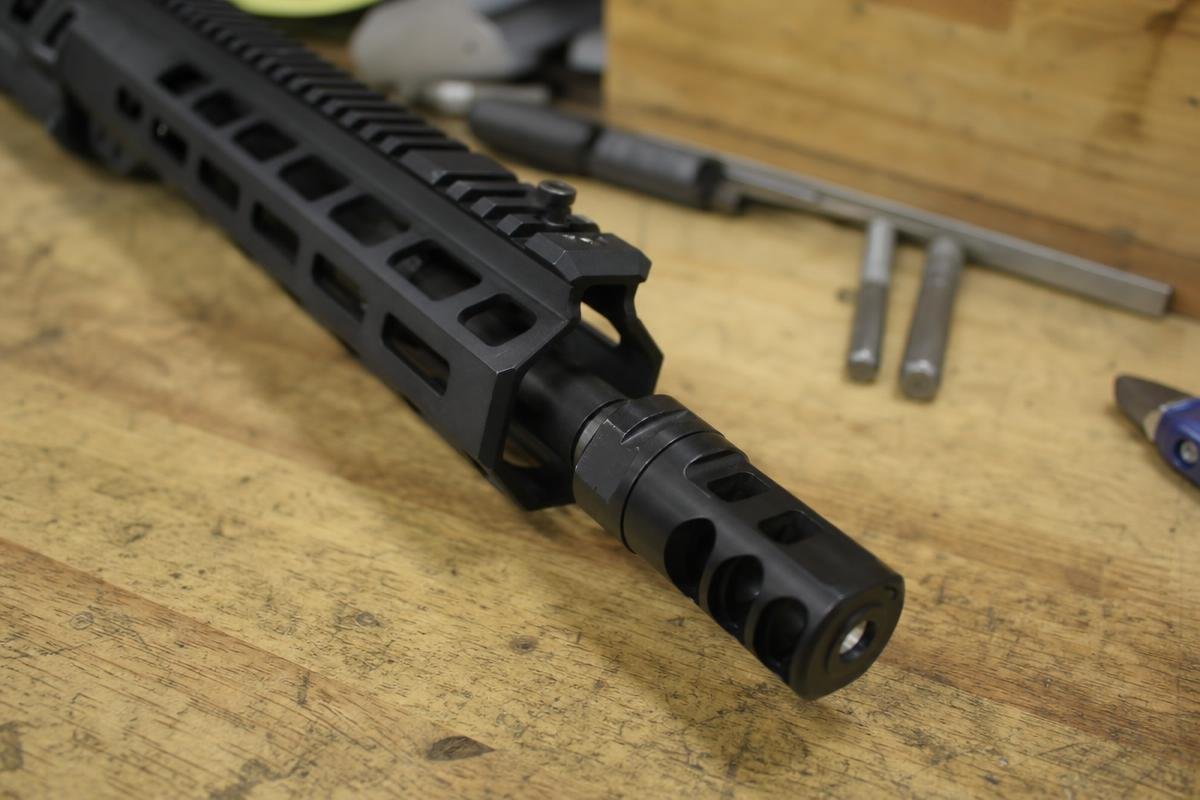
A linear compensator is a muzzle device that redirects propellant gases and muzzle blast forward, away from the shooter and anyone standing nearby. Unlike a muzzle brake, which vents gas to the sides to reduce felt recoil, a linear compensator directs more of that blast downrange. If you shoot indoors, hunt in a blind, or share a bench at a public range, that distinction matters.
We stock muzzle devices from established makers like Kaw Valley Precision, and we carry a full range of AR-15 parts for every build type, shipping nationwide from 4000 Texoma Parkway, Denison, TX 75020. Have a question about muzzle device compatibility or thread pitch for your build? We can help.
Key Takeaways
- A linear compensator redirects more muzzle blast forward rather than to the sides, reducing lateral concussion for nearby shooters.
- Linear compensators reduce perceived concussion at the shooter's position but do not reduce recoil as effectively as a muzzle brake.
- They are a practical choice for indoor ranges, hunting blinds, and some suppressor-host builds when mount compatibility is confirmed.
- Thread pitch and barrel profile must match your device before you buy, so check your specs first.
How a Linear Compensator Works
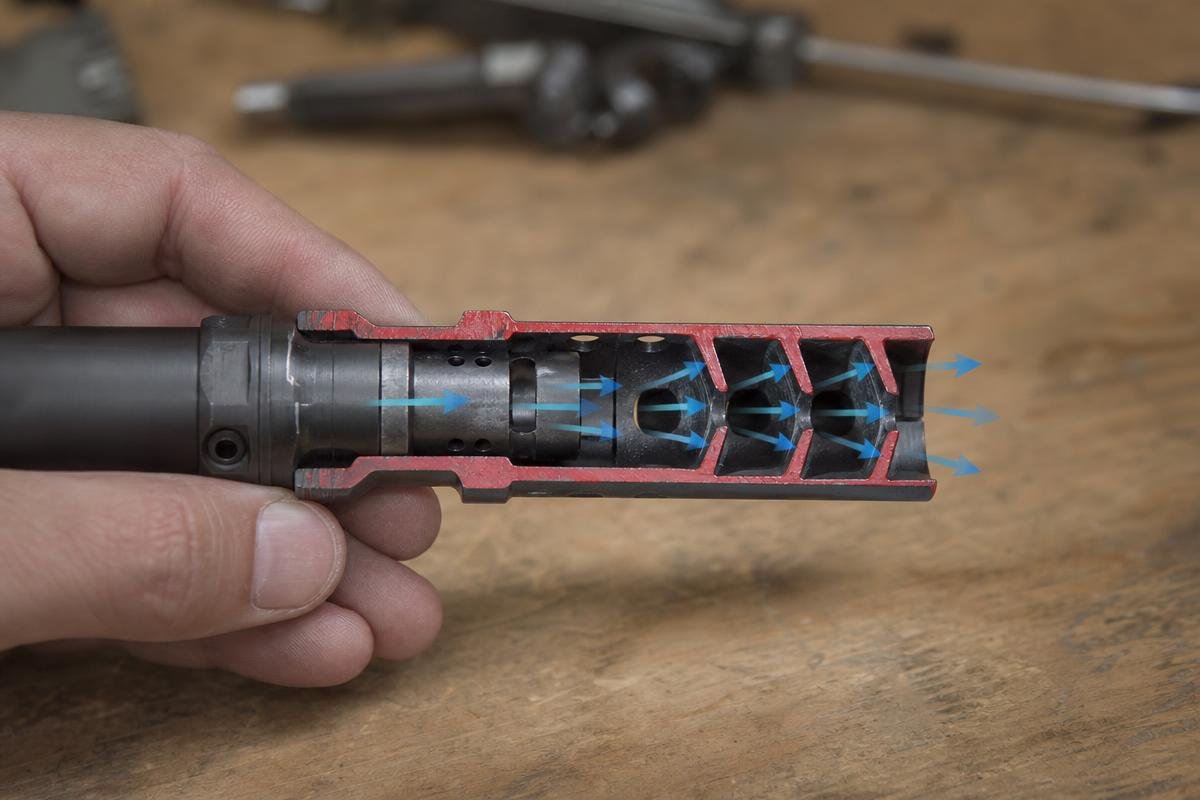
When your rifle fires, propellant gases follow the bullet out of the muzzle at high pressure. Without a muzzle device, those gases expand in every direction. A linear compensator uses a forward-facing cone or tube geometry to channel that gas downrange, protecting adjacent shooters from lateral concussive pressure.
The Mechanics: Redirecting Blast Forward
The device threads onto your barrel's muzzle and surrounds the bullet's exit path with a shaped chamber. As gases exit, the geometry forces them to follow the bore axis forward rather than venting to the sides. Concussive pressure travels downrange instead of expanding laterally into adjacent shooting positions.
This matters most in enclosed or semi-enclosed environments. If your local range has covered bays or tight indoor lanes, a lateral-venting muzzle brake hits the shooter next to you with a wall of concussion. Covered outdoor bays create the same reflected-blast problem, with pressure bouncing off overhead and side barriers back onto the firing line. A linear compensator keeps that pressure moving forward and out.
What It Does Not Do
A linear compensator does not redirect gas rearward. There is no counterforce acting against the rifle's rearward movement. Felt recoil stays essentially the same as a bare muzzle. If recoil reduction is your goal, look at a muzzle brake instead.
It also does not disperse burning gases the way a flash hider does. Muzzle flash signature in low-light conditions is not improved. If you run a 300 Blackout complete upper in low-light environments, a dedicated flash hider or suppressor mount serves that need better than a linear compensator will.
Linear Compensator vs. Muzzle Brake vs. Flash Hider: A Direct Comparison
Three muzzle devices. Three completely different jobs. Picking the wrong one for your shooting situation creates real problems, whether that's rattling the shooter in the next lane or blowing your night vision at the worst moment. Here is how each device actually works and where it belongs.
Muzzle Brake
A muzzle brake vents propellant gas through ports on the sides or top of the device, creating a counterforce that pushes back against muzzle rise and felt recoil. That gas has to go somewhere, and it goes sideways, directly toward anyone standing next to you. The lateral concussive blast from a muzzle brake is significant. On a tight indoor lane, that blast becomes a real problem for adjacent shooters. Muzzle brakes earn their place on heavy-caliber precision builds shot outdoors, where recoil management matters and no one is standing two feet to your left.
Flash Hider
A flash hider disperses burning propellant gases at the muzzle to break up the visible flash signature. It does not reduce recoil. It does not redirect blast forward or sideways in any meaningful way. Its entire purpose is keeping your position less visible in low-light conditions. If you are running a patrol or duty configuration, or shooting at dusk during deer season, a flash hider makes sense. For indoor range use, it offers nothing over a bare muzzle.
Linear Compensator
A linear compensator channels gas forward, away from the shooter and anyone standing alongside. Recoil reduction is minimal. Flash suppression is essentially zero. What you get is a meaningful drop in concussive pressure at your position and at the sides of the muzzle. That makes it the right call for indoor ranges and side-by-side shooting. Some linear compensator designs also thread directly onto a suppressor mount, making the device a blast forwarder in the unsuppressed configuration. This is common on suppressor-ready 300 Blackout platforms built to run both suppressed and unsuppressed.
Side-by-Side Comparison Table
| Feature | Muzzle Brake | Flash Hider | Linear Compensator |
|---|---|---|---|
| Primary Function | Reduce recoil and muzzle rise | Reduce visible flash | Redirect blast forward |
| Recoil Reduction | Yes, significant | None | Minimal |
| Muzzle Blast Direction | Lateral | Dispersed | Forward |
| Flash Reduction | None | Yes | None |
| Best Use Case | Outdoor precision or heavy-caliber builds | Low-light patrol or hunting | Indoor ranges, suppressor-host builds |
| Range-Friendliness | Low indoors | Moderate | High indoors |
Know which device fits your build? Browse our selection of muzzle devices and complete uppers ready to accept a linear compensator.
When Should You Run a Linear Compensator?
A linear compensator is not a universal upgrade. It solves specific problems in specific situations. Knowing those situations helps you pick the right device instead of the wrong one.
Indoor and Covered Range Shooting
Some indoor ranges restrict muzzle brakes because of lateral blast. A linear compensator directs more blast forward and may be allowed where brakes are restricted, but check the facility's current rules before visiting.
If your local covered bay or indoor facility posts device restrictions, check the rules before you show up. A linear compensator may be permitted where a brake is not. That makes it worth considering for builds used at ranges that restrict brakes.
Suppressor-Ready Builds
Some linear compensators are designed for specific suppressor-mount systems. They direct blast forward when used without a suppressor, but switching devices may change your point of impact. Confirm the exact mount interface and barrel threads with both manufacturers before making the switch.
Thread pitch and mount compatibility must match your suppressor before you buy. A 300 Blackout complete upper is a common suppressor-host platform. If you plan to switch devices, choose a suppressor-compatible model and confirm its mount type, thread pitch, and thread engagement against your suppressor's specifications.
Home Defense and Close-Quarters Configurations
A muzzle brake in a hallway is punishing. The lateral blast in a confined space hits your own ears and can be disorienting under stress. A linear compensator pushes that energy forward, away from you and anyone beside you.
Barrel length matters here. Shorter barrels produce more unburned gas at the muzzle, which increases blast intensity regardless of device. Barrel length also determines your gas system, which affects how the rifle cycles. If you are configuring a home defense build, understanding how those variables interact is worth your time before you finalize the setup.
When a Linear Compensator Is the Wrong Choice
If recoil management is your primary goal, a muzzle brake does that job better. A linear compensator trades recoil reduction for blast redirection. Shooters running heavy-recoiling calibers outdoors, where lateral blast is not a concern, will get more out of a brake. Be honest about what problem you are actually solving.
What to Look for When Buying a Linear Compensator
Thread Pitch and Barrel Compatibility
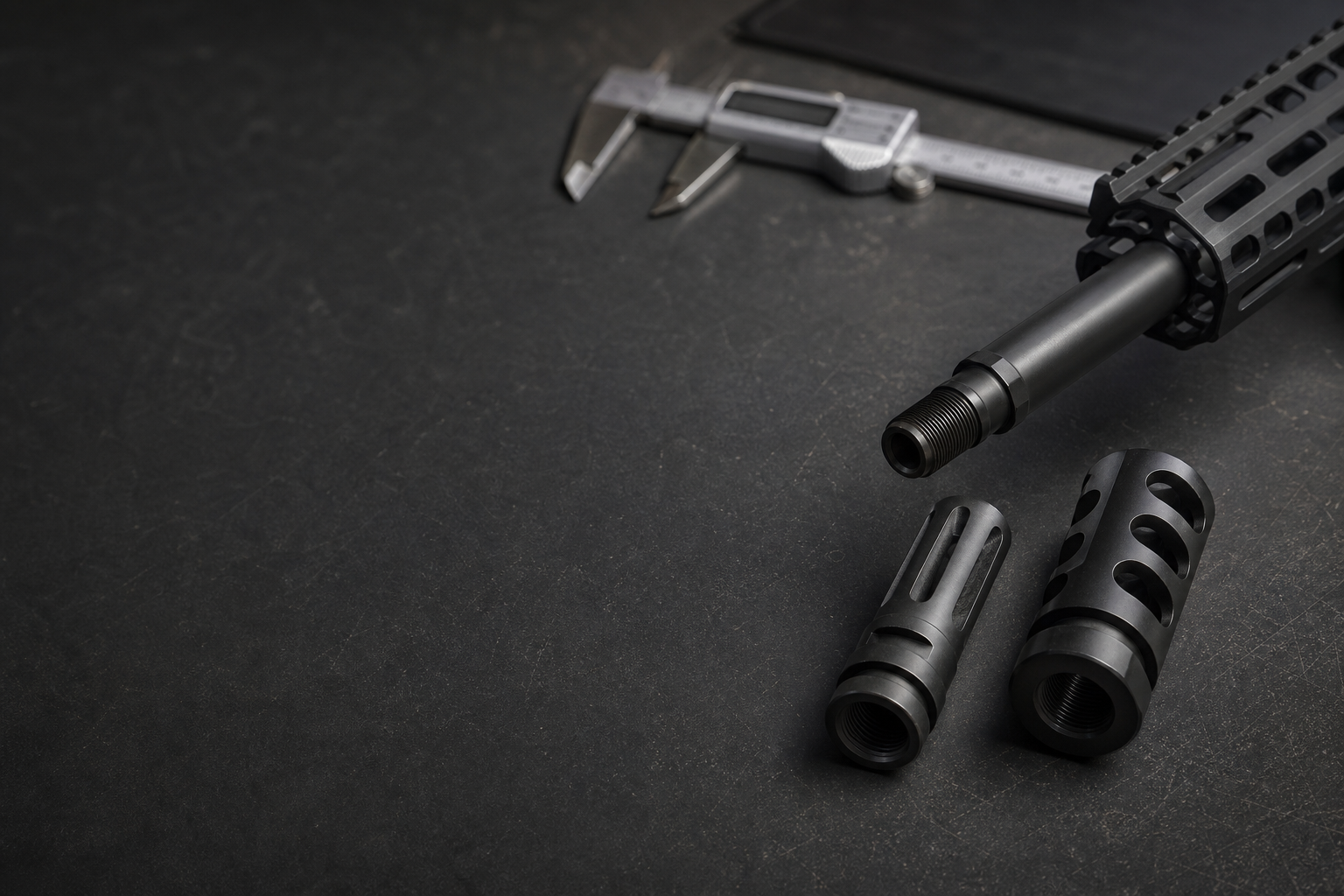
Thread pitch is the first thing to confirm before you order. Most AR-15 barrels in .223 or 5.56 NATO use a 1/2x28 thread. If you are running .308, 300 Blackout, or 6.5 Creedmoor, you need 5/8x24. Mismatched thread pitch is the most common ordering mistake we see. Check your barrel's specs before you add anything to your cart.
Material and Finish
4140 carbon steel and 17-4 stainless steel are good choices for high-round-count or duty use. Anodized aluminum saves weight and can work well for lighter use, but steel is preferable for sustained fire.
Common finishes are phosphate, nitride, and bare stainless. If visual consistency matters to your build, match the finish on the device to your barrel and upper. It is a small detail, but it shows on a finished rifle.
Cone Geometry and Port Design
A longer, tighter cone redirects muzzle blast forward more consistently. Some linear compensators add small side ports to bleed off a small amount of pressure while still directing the majority of gas downrange. That tradeoff reduces felt recoil slightly but sends a fraction of the blast sideways. Decide whether you want pure forward redirection or a mild hybrid effect before you select a ported design.
If you plan to run a suppressor later, confirm the device is suppressor-compatible. Some linear compensators are designed to thread directly onto a suppressor mount.
Quick Buying Checklist
- Correct thread pitch for your barrel (1/2x28 or 5/8x24)
- Steel construction for rifles fired at volume
- Finish that matches your existing build
- Overall length and weight and their effect on balance
- Suppressor compatibility if a can is in your future
- Ships with a crush washer or timing shim
- Verify state-level legality before ordering
Confirm current federal, state, and local requirements before ordering or configuring a rifle. Our team in Denison can answer compatibility questions directly at (888) 706-0633. Not sure which thread pitch or material is right for your build? Call us at (888) 706-0633 and we will sort it out before you order.
Linear Compensators on Common AR-15 Calibers
5.56 NATO and .223 Wylde Builds
These are the two most common AR-15 calibers, and both produce moderate muzzle blast at standard carbine lengths. A linear compensator on a 16-inch barrel is a practical, range-friendly choice. Thread pitch on both is 1/2x28, so fitment is straightforward. If you are running a 5.56 NATO complete upper or a .223 Wylde complete upper, nearly every linear compensator on the market threads right on without an adapter.
Indoor ranges that restrict muzzle brakes often allow linear compensators because blast stays in front of the muzzle. That makes this combination one of the most practical muzzle device choices for a general-purpose AR build.
300 Blackout: Suppressor-Host Considerations
300 Blackout often uses 5/8x24 muzzle threads, but verify the specifications of your barrel. If you plan to switch from a linear compensator to a suppressor, confirm the exact mount interface, thread pitch, and required thread engagement against the suppressor manufacturer's specifications. Check fit and point of impact after switching devices. Verify the muzzle threads on the specific 300 Blackout complete upper before ordering.
If you have questions about suppressor-host compatibility or which linear compensators pair well with common mounts, call us at (888) 706-0633.
Larger Calibers: .308, 6.5 Creedmoor, and Beyond
Larger calibers produce significantly more gas volume than 5.56. A linear compensator is still valid here, particularly for side-by-side range shooting or indoor sighting sessions before a hunting trip. Thread pitch for both .308 and 6.5 Creedmoor is 5/8x24. Expect more felt recoil than a muzzle brake would deliver, since a linear compensator does not redirect gas laterally to counter recoil. Our .308 complete uppers and 6.5 Creedmoor complete uppers offer caliber-matched starting points; verify the muzzle threads on the specific barrel.
For these larger chamberings, choose a muzzle device based on barrel length and intended use. Shorter barrels generate more unburned gas, which makes blast direction more noticeable to nearby shooters.
Shipping Linear Compensators and Muzzle Devices from Denison, TX
We ship muzzle devices and AR-15 components nationwide from our facility at 4000 Texoma Parkway, Denison, TX 75020. Read more about our operation on the About AR15Parts.com page.
If you have a compatibility question before you order, call us at (888) 706-0633. Thread pitch, suppressor-ready configurations, and muzzle device comparison for your specific AR-15 build are all things our team can walk you through directly. Confirm current shipping and legal requirements before ordering from outside Texas.
Muzzle device regulations vary by state. Verify your local laws before placing an order. If you are building around a specific caliber and need a matched upper, our 300 Blackout complete uppers are a common starting point for suppressor and linear compensator builds.
Frequently Asked Questions
Does a linear compensator reduce recoil?
No. A linear compensator redirects gas forward, not rearward, so it creates no counterforce against the bolt carrier. Felt recoil stays the same. If recoil reduction is your goal, a muzzle brake is the correct device. It vents gas laterally to push the muzzle down and back against the direction of travel.
Is a linear compensator legal at indoor ranges?
Some indoor ranges that restrict muzzle brakes may allow a linear compensator because more blast is directed downrange. Range policies vary. Call ahead before you show up and confirm with the specific facility before your first visit.
What thread pitch do I need?
For .223/5.56 barrels, the standard pitch is 1/2x28. For .308, 300 Blackout complete uppers, and 6.5 Creedmoor, you need 5/8x24. Check your barrel's specifications before ordering. If you are unsure, our team can confirm the correct pitch for your build. Call (888) 706-0633 with your barrel details.
Can I use a linear compensator as a suppressor mount?
Some models are designed with a suppressor-compatible interface, but not all linear compensators are suppressor-ready. Verify the specific model is rated for suppressor use before you buy. Thread pitch and mount type must match your suppressor exactly. If you are building a suppressor host and want to run a linear compensator in the meantime, confirm compatibility with both the compensator manufacturer and your suppressor manufacturer.
What is the difference between a linear compensator and a muzzle brake?
A muzzle brake vents gas out the sides and top to reduce recoil and muzzle rise. A linear compensator channels gas straight forward to reduce concussive blast at the shooter's position and to the sides. The tradeoff is clear: the linear compensator is easier on the people around you, but it does nothing for recoil. For a deeper look at how these devices compare, the earlier section on linear compensator vs. muzzle brake covers the full breakdown.
Do linear compensators reduce noise for the shooter?
They reduce perceived concussive pressure at your ears by moving the blast forward, but they do not lower the decibel level of the report. You still need hearing protection. A suppressor is the only device that meaningfully reduces noise. A linear compensator makes the experience less punishing at the muzzle, not quieter.
Is a linear compensator a good choice for a home defense AR-15?
Yes, for most builds. In a confined indoor space, a muzzle brake can produce intense lateral blast that affects you and anyone nearby. A linear compensator keeps that blast downrange. Barrel length and caliber still affect indoor blast intensity, so a shorter barrel in a pistol-caliber or 5.56 NATO complete upper with a linear compensator is a reasonable setup for home defense use.
Ready to Get Started with AR15Parts.com?
Ready to add a linear compensator to your build? Browse our full selection of AR-15 muzzle devices and components at AR15Parts.com, or call our Denison team directly at (888) 706-0633 with questions about thread pitch, suppressor compatibility, or which device fits your specific build. We ship nationwide from 4000 Texoma Parkway, Denison, TX 75020, and we can help you get the right part the first time.