
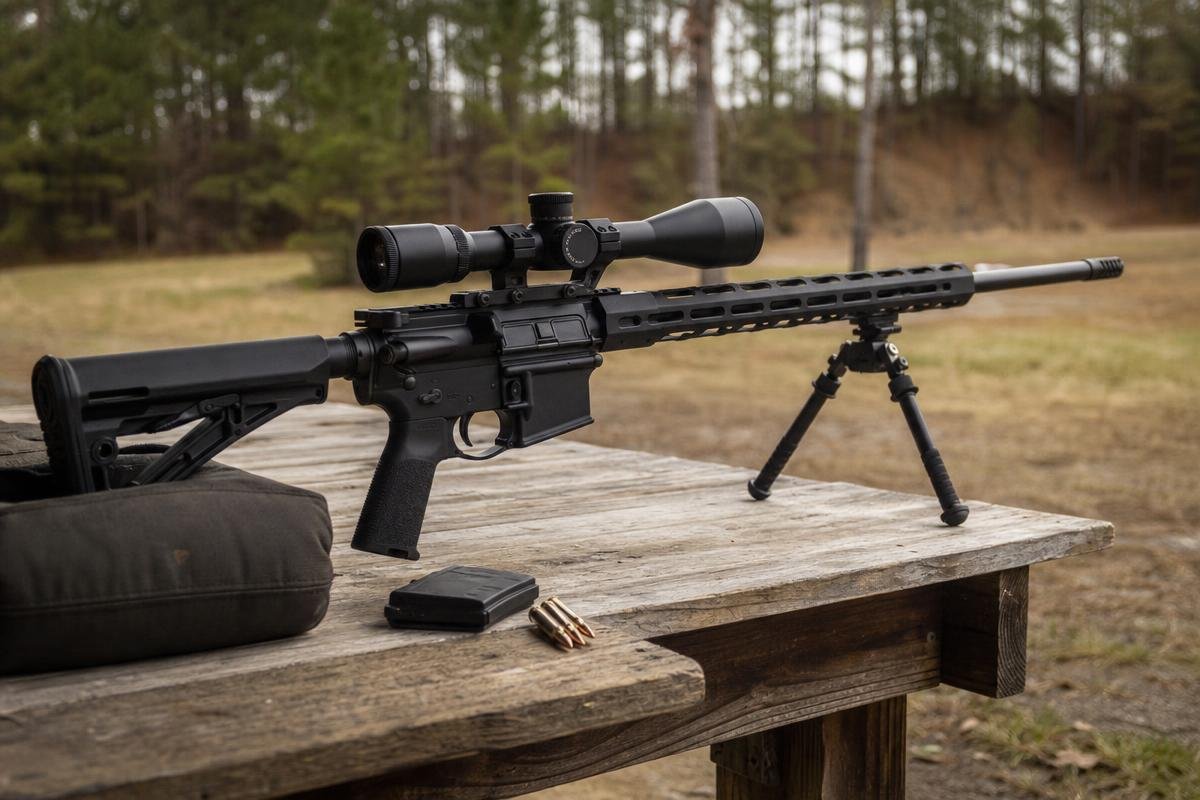
AR15Parts.com supplies AR platform parts and complete uppers from Denison, Texas. .224 Valkyrie is a distance-focused AR-15 cartridge for shooters who want to use long, high-ballistic-coefficient .22-caliber bullets for steel, target work, and legal varmint hunting with relatively light recoil. Contact our team for help matching an upper, barrel, bolt, and magazines. Planning a distance-focused AR build? Get help confirming .224 Valkyrie component compatibility before you order.
Key Takeaways
- .224 Valkyrie is designed around long .224-caliber bullets with high ballistic coefficients for distance-oriented AR-15 use.
- Common uses include steel targets, practical precision shooting, and responsible varmint hunting.
- A dedicated barrel, correct bolt face, and compatible magazines are required.
- For heavy match bullets, faster twists such as 1:7 are common, but barrel-maker guidance and bullet length should drive the final choice.
For shooters searching what .224 Valkyrie is good for, the practical answer is reaching farther with an AR-15 while keeping recoil manageable enough to observe impacts and refine wind corrections. It is a purpose-built option, not a universal replacement for 5.56 NATO or every other AR cartridge.
What Is .224 Valkyrie Good For?
.224 Valkyrie is well suited to long-range steel, precision target practice, and varmint shooting where lawful and appropriate. Its case design supports long, heavy-for-caliber .224-inch bullets in an AR-15 pattern rifle, giving shooters a flatter trajectory and less recoil than many larger-caliber AR options. Actual range and accuracy depend on the rifle, ammunition, wind, and shooter data.
Long-Range Targets and Varmint Work
.224 Valkyrie is often chosen for steel targets at extended distances and for varmint shooting where open terrain can make wind calls and follow-up shots important. In North Texas, changing winds across open fields can expose the limits of lighter .22-caliber loads, so bullet ballistic coefficient, verified velocity, and confirmed elevation data matter as much as cartridge selection.
For a simpler starting point, browse .224 Valkyrie complete uppers. A caliber-specific upper keeps the barrel, chamber, gas system, and bolt arrangement together, while a standard AR-15-pattern lower remains the foundation of the rifle.
Rifle Details Still Control Results
Barrel quality, chamber dimensions, twist rate, ammunition, optic mounting, and confirmed range data determine how well a .224 Valkyrie setup performs. Chamber freebore is not automatically good or bad. It must suit the bullet profile and loaded overall length of the ammunition you intend to use. A rifle may shoot one factory load very well and perform differently with another.
AR15Parts.com ships firearms parts and accessories nationwide from 4000 Texoma Pkwy, Denison, TX 75020. Before ordering individual components, confirm the published specifications for the barrel, bolt, and magazines rather than assuming 5.56 parts will interchange.
Why .224 Valkyrie Works for Long-Range AR-15 Shooting
.224 Valkyrie addresses a limitation of lighter .22-caliber loads at distance. As velocity falls, wind has more time to move a bullet off target. The cartridge was developed to use longer projectiles with higher ballistic coefficients while retaining familiar AR-15 handling.
Long, Heavy .22-Caliber Bullets Change the Distance Equation
Available .224 Valkyrie ammunition varies in bullet weight, including lighter varmint-style loads and heavier match-oriented options. Heavy-for-caliber bullets, commonly in the 75-grain to 90-grain class, are a major reason shooters select the cartridge for distance work. Their longer shape and higher ballistic coefficient can help reduce wind drift compared with lighter bullets under the same conditions.
Some rifle-and-load combinations can remain supersonic beyond 1,000 yards, but that is not a promise of usable precision at that distance. Muzzle velocity, bullet design, altitude, temperature, wind, barrel twist, chamber compatibility, and shooter skill all affect what is realistic.
Mild Recoil Helps You See Impacts and Correct Faster
Recoil is light compared with larger AR cartridges used for distance. From a stable prone or bench position, that can make it easier to remain in the optic, see an impact or miss, and make a correction. This is useful during target sessions where reading conditions and tracking .224 Valkyrie performance are part of the process.
A distance-oriented upper is only one part of the system. A solid optic mount, a repeatable zero, and ammunition the barrel shoots consistently are equally important when building reliable data.
AR-15 Compatibility Requires the Right Bolt and Magazines
A .224 Valkyrie upper needs a bolt with a 6.8 SPC-size bolt face and compatible 6.8 SPC/.224 Valkyrie magazines. Do not assume a standard 5.56 bolt or magazine is correct. The cartridge uses a larger case head, so the bolt face must match the cartridge, and magazine geometry must support dependable feeding with the intended ammunition.
For a mixed-parts build, check the product listing for the included bolt carrier group and magazine compatibility. Matching these components before assembly helps avoid preventable feeding and function problems.
The Best Uses for .224 Valkyrie in the Field and at the Range
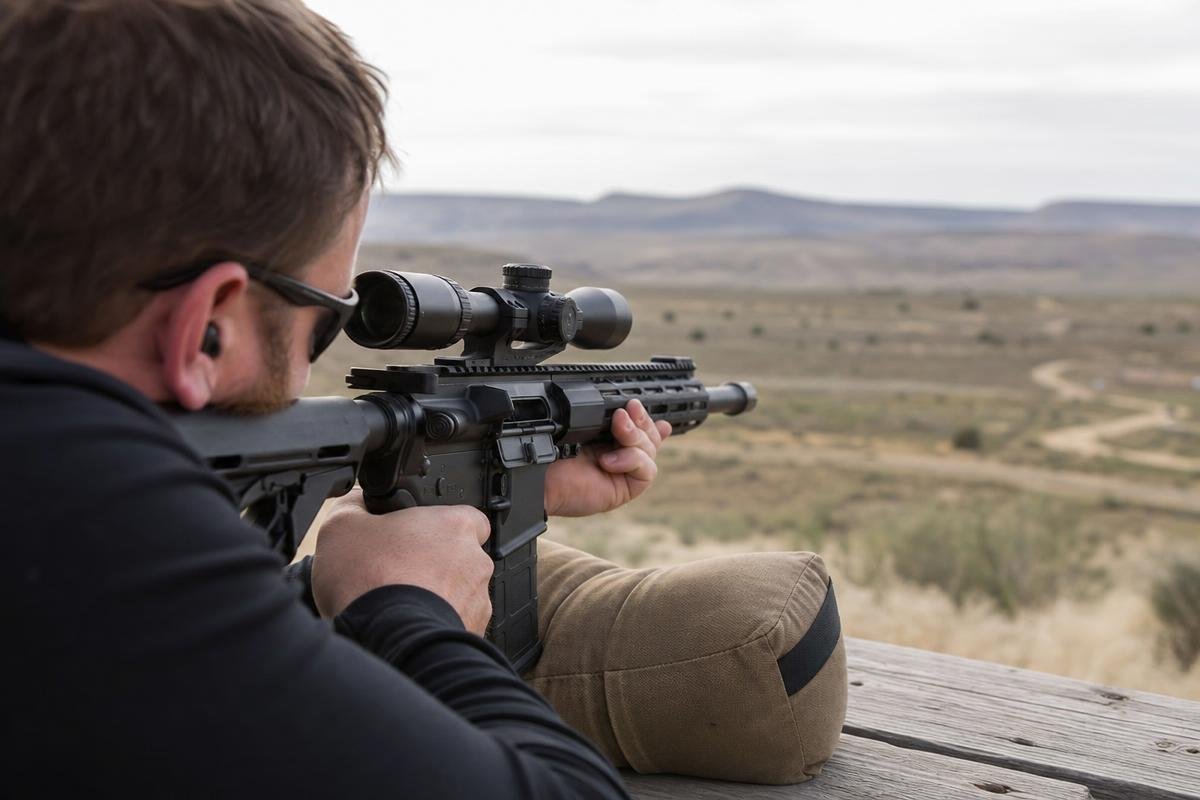
.224 Valkyrie is strongest when the goal is accurate, lower-recoil AR-15 shooting at distances beyond ordinary carbine use. It is not designed to cover every hunting, defensive, or suppressed role. Choose the cartridge for its trajectory and bullet options, then set realistic limits based on your conditions and ability.
Long-Range Steel and Practical Target Work
.224 Valkyrie works well for steel and practical target work because a shooter can use aerodynamic .22-caliber match bullets without stepping up to a larger AR platform. The lighter recoil can help with impact observation, but repeatable results still require verified elevation data, sound fundamentals, and disciplined wind calls.
Confirm your dope at known distances before moving farther out. Record the load, average muzzle velocity, temperature, optic setting, and point of impact. A purpose-built upper gives an efficient starting point, but the rifle must still be zeroed and tested with the ammunition you will actually shoot.
Is .224 Valkyrie Good for Varmint Hunting?
.224 Valkyrie can be a practical varmint option where longer shots are expected, legal, and within the shooter’s verified ability. Small targets leave little room for error, especially when wind shifts across open ground. Use a bullet designed for the intended purpose, establish a reliable zero, and avoid taking shots when range, wind, or position do not support an ethical hit.
Legal suitability and ethical suitability are different questions. Verify current Texas regulations, local rules, landowner requirements, and any restrictions on methods or projectile use before hunting. Bullet construction, game size, shot placement, and a responsible maximum range should guide every decision.
Roles Where Another Cartridge May Fit Better
Short-range defensive use, suppressed subsonic shooting, and applications requiring a larger or heavier projectile may point to cartridges designed around those needs. .224 Valkyrie is built around speed, reach, and manageable recoil, not every AR-15 task.
If your priority is general carbine use at common ranges, 5.56 NATO upper receivers may be the simpler choice. For help matching an upper to your intended use, contact AR15Parts.com at (888) 706-0633.
Build Details That Matter for a .224 Valkyrie AR-15
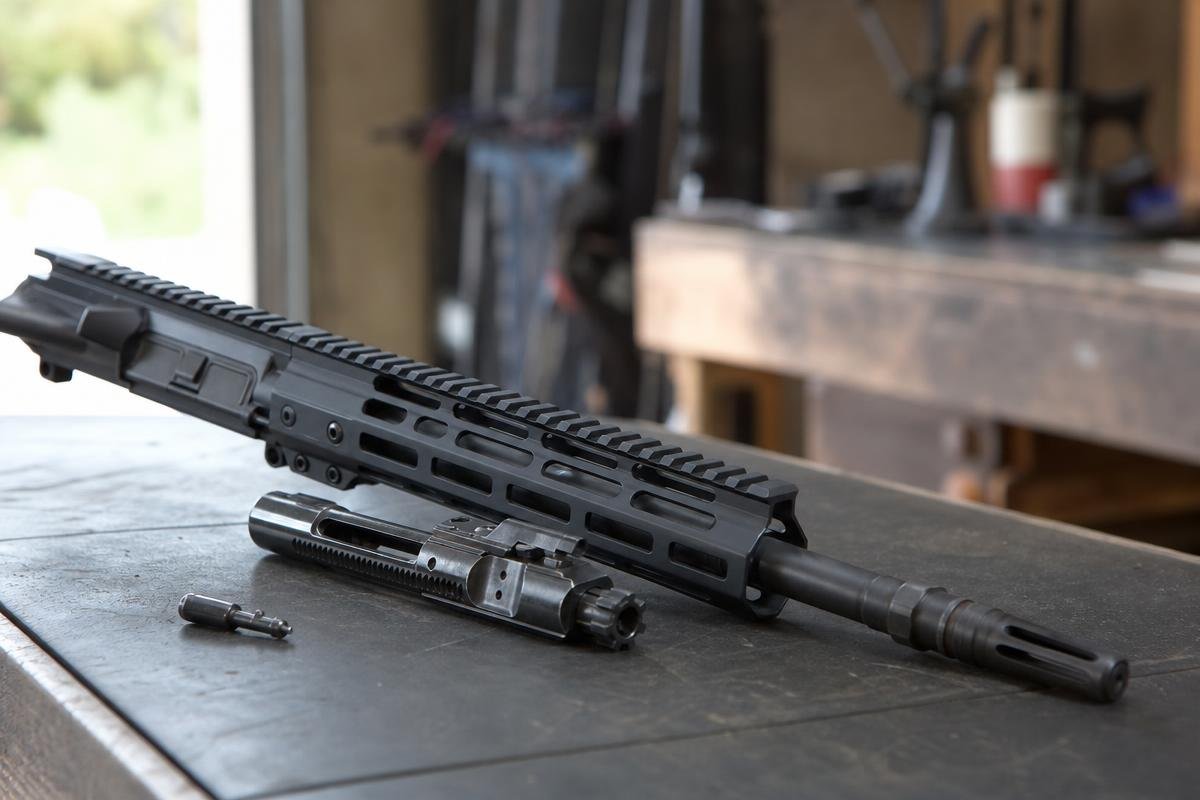
A .224 Valkyrie AR-15 upper needs matched components to deliver its potential without cycling or accuracy problems. Start with the barrel and chamber, then verify the bolt, magazine, gas system, buffer arrangement, and intended ammunition work together.
Barrel Length, Velocity, and Handling
Barrel length affects velocity and handling. A 20-inch barrel is a practical middle ground for shooters who want a distance-oriented rifle that is still manageable from field positions. A 22-inch or 24-inch barrel can provide additional velocity for bench, prairie-dog, and target configurations, with added length and weight as the tradeoff.
No barrel length is automatically best. A well-made barrel, correct chamber, suitable twist, and consistent ammunition matter more than four additional inches alone. Choose length around your primary use, whether that is range work from a rest or a rifle carried through the field.
Twist Rate Must Match Your Intended Bullet Weight
Twist rate determines whether a barrel can stabilize the bullet profile you plan to shoot. Fast twists, often 1:7, are common for long 75-grain to 90-grain match-style bullets. Lighter varmint bullets may also shoot well from a fast-twist barrel, but bullet length, construction, velocity, and the barrel maker’s guidance matter more than grain weight alone.
Check the barrel maker’s stated twist and chamber recommendations before buying ammunition in quantity. A fast twist supports many long bullets intended for distance, but the chamber and loaded ammunition must still be compatible with that bullet’s bearing surface and overall length.
Chamber, Bolt, Magazine, and Gas-System Fitment
Chamber geometry influences how a bullet enters the rifling. Freebore length, throat angle, bullet profile, and loaded overall length can all affect a particular rifle’s accuracy. This is a compatibility matter between a specific chamber and load, not a blanket criticism of factory ammunition or long freebore.
You cannot use a standard 5.56 bolt or standard 5.56 magazine for this cartridge. A .224 Valkyrie build requires a .224 Valkyrie-compatible bolt with a 6.8 SPC-size bolt face and compatible 6.8 SPC/.224 Valkyrie magazines. The gas system should also be properly matched to barrel length, gas-port configuration, buffer weight, and ammunition pressure characteristics.
Verify each part against manufacturer specifications before ordering, especially on a mixed-parts build. If you need help sorting out a barrel, bolt, and magazine combination, contact AR15Parts.com at (888) 706-0633.
.224 Valkyrie vs. .223 Remington and Other AR-15 Cartridges
The right cartridge depends on the job, not a winner label. .223 Remington and 5.56 NATO remain practical general-purpose choices, while .224 Valkyrie places greater emphasis on long, heavy .22-caliber bullets for distance-oriented shooting.
Quick Comparison of Common AR-15 Cartridge Options
| Cartridge | Intended Use | Typical Bullet Approach | AR-15 Parts Considerations | Recoil Character | Main Tradeoff |
|---|---|---|---|---|---|
| .223 Remington / 5.56 NATO | General-purpose shooting | Broad range of light to midweight .22-caliber bullets | Standard 5.56 bolt, barrel, and magazines | Light | Less case capacity for long, heavy bullets at distance |
| .224 Valkyrie | Steel, precision practice, and varmints at distance | Available in varied weights, with long heavy .22-caliber bullets a key strength | Dedicated barrel, bolt, and compatible magazines | Light | Ammo and parts may be less common than 5.56 |
| 6.5 Grendel | Distance and hunting-oriented applications | Heavier 6.5mm bullets | Dedicated barrel, bolt, and magazines | Moderate | More recoil and different trajectory characteristics |
| 22 ARC | High-performance .22-caliber shooting | Heavy .22-caliber bullets | Compare barrel, bolt, and magazine requirements carefully | Light | Confirm component and ammunition availability |
Where .224 Valkyrie Differs From .223 Remington and 5.56 NATO
In a .224 Valkyrie vs .223 Remington comparison, Valkyrie makes more sense when heavier, more aerodynamic bullets and longer target distances are the priority. .223 Remington and 5.56 NATO remain easier to source and support a broad range of general-purpose AR-15 builds.
Moving from 5.56 NATO to Valkyrie requires a dedicated barrel, correct bolt, and compatible magazines. A complete upper assembly can simplify that transition by keeping cartridge-specific components matched together.
How 6.5 Grendel and 22 ARC Change the Decision
6.5 Grendel offers a larger-diameter, heavier projectile option, with more recoil than .224 Valkyrie. .224 Valkyrie suits shooters who prefer a .22-caliber, distance-focused approach and want to retain lighter recoil for target observation and repeated practice.
22 ARC and .224 Valkyrie both warrant a close parts check before building. Compare the barrel chambering, bullet options, bolt and magazine requirements, ammunition availability, and the upper configuration you want. Cartridge names alone do not establish parts compatibility.
Need help matching a cartridge to your next upper? Call us at (888) 706-0633.
How to Get More Consistent Results from a .224 Valkyrie Rifle
Confirmed impacts matter more than a published trajectory. Your rifle, ammunition, optic height, environmental conditions, and shooting position all affect .224 Valkyrie results at distance.
Build Your Data From Your Rifle, Not a Ballistic Chart
Start by zeroing with the exact ammunition you plan to shoot. Published velocity and drop data are useful starting points, but they are not confirmed data for your barrel.
Use a chronograph if you have access to one. Record an average muzzle velocity from several shots, then enter that number, bullet weight, ballistic coefficient, sight height, and zero distance into your ballistic calculator. Keep a record of the ammunition lot used for your initial zero, particularly when testing match ammunition or changing loads.
Validate Elevation and Wind Corrections at Known Distances
Confirm elevation at progressively longer known distances. Shoot at a close zero distance first, then verify your actual holds or turret corrections at intermediate distances before moving farther out.
Wind calls can matter as much as elevation with a .22-caliber bullet. Watch mirage, vegetation, and range flags. Make a correction from the observed impact, record it, and avoid assuming a ballistic chart has accounted for the conditions between you and the target.
Range Checklist for More Repeatable Groups and Impacts
Small setup changes can move a group or create unexplained misses. Check the rifle before each range session, especially after changing optics, ammunition, or support gear.
- Torque optic mounts to the manufacturer specifications.
- Inspect scope rings, receiver fit and grip screw, handguard hardware, and muzzle-device fasteners.
- Shoot from a stable position with consistent rear-bag pressure and cheek weld.
- Keep ammunition lots consistent during load development and data collection.
- Clean the barrel according to the barrel-maker guidance, not on a fixed guesswork schedule.
Track your zero, velocity, elevation corrections, and wind notes in one log. If you need help selecting parts for a consistent setup, contact AR15Parts.com at (888) 706-0633.
A Denison Starting Point for Choosing a .224 Valkyrie Setup
Start with your intended use and bullet choice before selecting components. That makes it easier to choose a barrel length, twist rate, chamber, bolt, and magazine arrangement that fit your rifle and range plan.
Start With the Rifle's Primary Job
Define steel, varmint, or mixed use before choosing parts. Steel shooting with heavier match bullets often favors a longer barrel and an optic setup built for repeatable elevation adjustments. A field rifle may call for a shorter, easier-handling configuration.
Match twist rate to the bullets you plan to shoot. Long 75-grain to 90-grain match bullets generally call for adequate stabilization from a fast-twist barrel, while lighter varmint loads may have different preferences.
Confirm the Parts That Must Match
Confirm the upper includes, or is paired with, the correct .224 Valkyrie bolt and compatible magazines before ordering. A standard 5.56 bolt is not the correct part for this cartridge.
Check the listed chamber, barrel twist, gas system, and included bolt carrier group. If you are selecting components individually, compare each specification before assembly.
Choose Between a Complete Rifle and an Upper-Based Build
A complete .224 Valkyrie upper makes component matching easier because the barrel, bolt, gas system, and receiver are assembled as a system. Review our .224 Valkyrie complete uppers if you want a caliber-specific starting point for a compatible AR-15 lower.
A complete rifle is a practical choice if you need the full platform at once. Review our complete AR-15 rifles if you prefer a turnkey unit instead of building around an existing lower.
For product questions about a build, contact AR15Parts.com at (888) 706-0633. We can help you confirm the parts list before you place an order.
Frequently Asked Questions
Can .224 Valkyrie Reach 1,000 Yards?
Yes. .224 Valkyrie can reach 1,000 yards with the right rifle, load, optic, and verified firing data. A quality barrel, stable heavy bullet, and confirmed elevation holds matter more than a printed ballistic chart. Wind calls still become demanding at that distance.
Is .224 Valkyrie Good for Hunting?
.224 Valkyrie can work for certain hunting uses, but bullet construction, animal size, shot distance, and current regulations determine suitability. Check current Texas and local rules before hunting. For varmints and prairie dogs, flat trajectory and mild recoil can make follow-up shots easier.
Does .224 Valkyrie Work With a Standard AR-15 Lower?
Yes. .224 Valkyrie works with a standard AR-15-pattern lower receiver. You need a dedicated upper, the correct bolt, and compatible magazines. A complete assembly is ready to drop onto your lower, provided the lower is mil-spec and in proper working condition.
What Barrel Length Is Best for .224 Valkyrie?
Longer barrels generally produce more velocity, especially with heavier bullets intended for distance. A 20-inch or 24-inch barrel is common for long-range work, while a shorter barrel may better fit a lighter field rifle. Match barrel length, twist rate, and chamber to the bullet weight you plan to shoot.
Why Does .224 Valkyrie Accuracy Vary Between Rifles?
Accuracy varies because barrel quality, chamber dimensions, ammunition, optic mounting, fastener torque, and shooter technique all affect the group. Freebore dimensions and factory load preferences can also change how a rifle shoots. The best .224 Valkyrie applications depend on matching the complete setup, not just comparing .224 Valkyrie vs .223 Remington on paper.
If you are planning a .224 Valkyrie upper or comparing it with another AR-15 cartridge, contact AR15Parts.com at (888) 706-0633 or review our .224 Valkyrie complete uppers before you order. Match the barrel, bolt, magazines, optic, and intended bullet weight before building around the cartridge.
Ready to Get Started with AR15Parts.com?
Call (888) 706-0633 to speak with our team directly. We're ready to answer your questions, walk you through your options, and help you find the right solution for your needs. Whether you're just starting to plan or ready to move forward, we'll make the process simple and stress-free. Reach out today and let's talk about how we can help.