
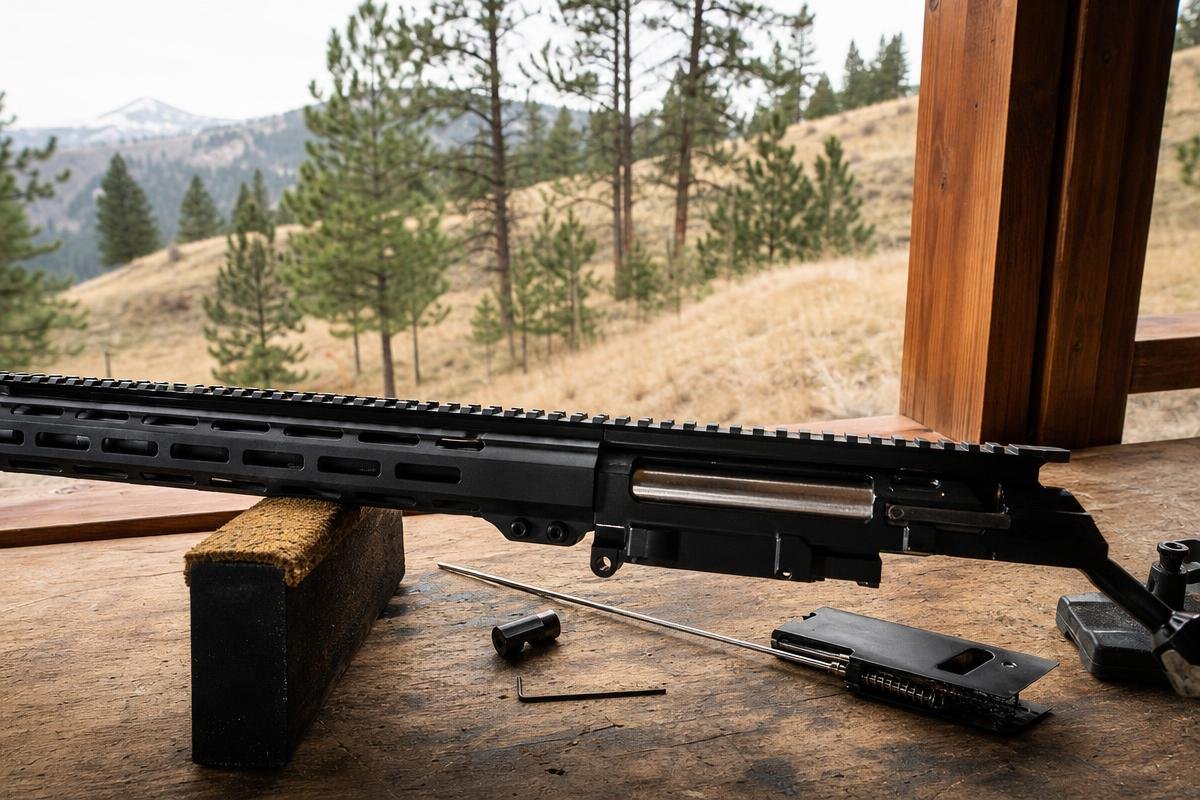
The .308 Winchester is one of the most versatile cartridges ever chambered in a semi-automatic platform, and if you hunt whitetail or feral hog in North Texas, you already know why. Shooters across Grayson County and beyond ask what is 308 Winchester good for, and the honest answer covers a lot of ground: deer hunting, hog control, long-range target work, and AR-10 builds that handle all three. Our .308 Win uppers and components ship from our Denison, TX facility where permitted. Need a .308 Win upper or parts for your next build? We can help.
Key Takeaways
- The .308 Winchester is effective on deer, feral hog, and predators at ranges from 50 to 400-plus yards.
- In an AR-10 build, the .308 Win delivers everything a bolt gun does with faster follow-up shots.
- The cartridge fires a 150 to 175 grain bullet with enough retained energy for ethical kills at extended distances.
- AR-10 platform uppers chambered in .308 Win are ready to drop onto any compatible large-frame lower receiver.
- Hunters in mixed timber and river-bottom terrain benefit from the cartridge's flexibility across open fields and tight creek bottoms.
What Is the .308 Winchester?
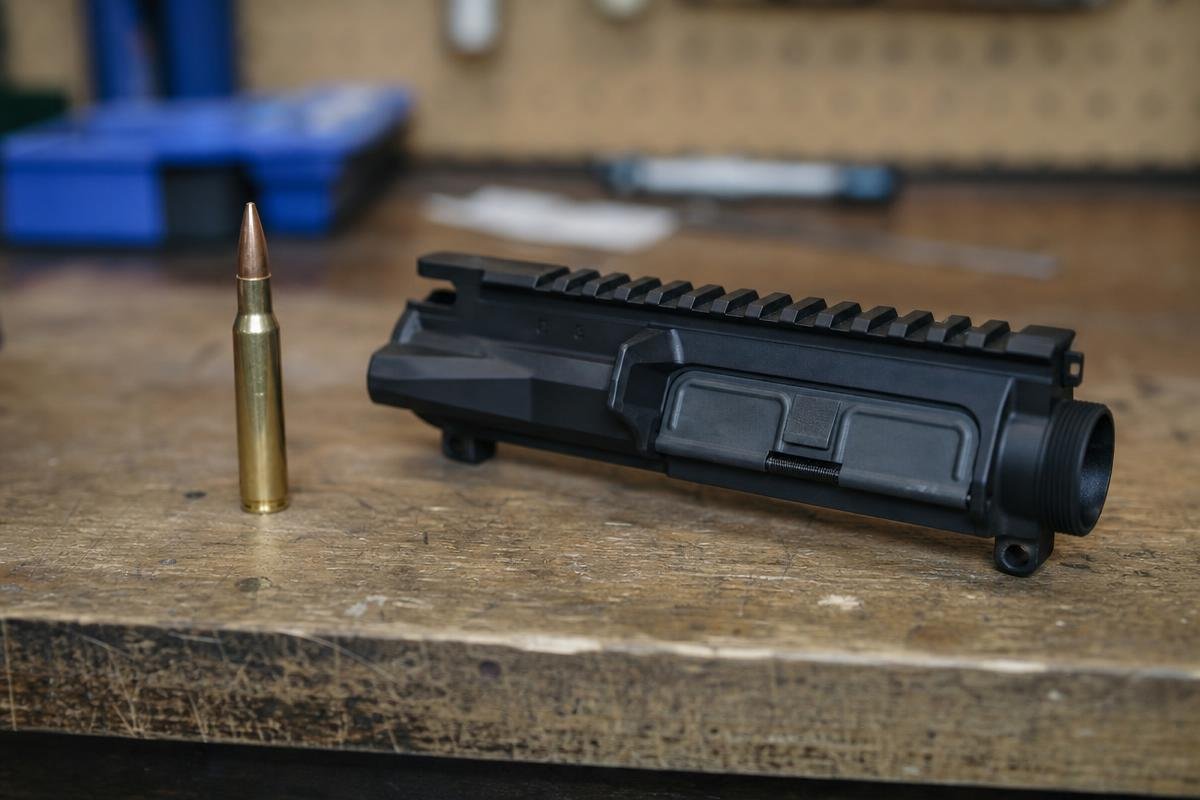
The .308 Winchester is a rimless, bottlenecked centerfire cartridge with a SAAMI-designated bullet diameter of .308 inches. Its NATO equivalent, the 7.62x51mm, shares near-identical dimensions and has been chambered in military and civilian rifles since the 1950s. That track record is not marketing. It is the result of a cartridge that consistently delivers practical power, manageable recoil, and a flat enough trajectory to handle shots from 50 yards to well past 400.
To really answer what is 308 Winchester good for, you have to look at the full platform range. Bolt-action hunting rifles, semi-automatic AR-10 builds, and dedicated precision rigs are all chambered in this round. Each platform pulls from the same broad pool of factory ammunition and reloading components. That availability is a real-world advantage, not a talking point. Below, we cover hunting applications, ballistic performance, recoil characteristics, and AR-10 build considerations.
We offer complete AR uppers in multiple calibers, including .308 Win, built to order and shipped from our Denison, TX facility.
What Makes the .308 Winchester a Do-It-All Cartridge?
The .308 Winchester earns its reputation through measurable ballistic performance across a wide range of bullet weights, not through marketing. Understanding the actual specs explains why this cartridge has stayed relevant for hunting, precision shooting, and military use since its commercial introduction in 1952.
SAAMI Specs and Bullet Weight Range
SAAMI lists the .308 Winchester with a bullet diameter of .308 inches, a case length of 2.015 inches, and a maximum average pressure of 62,000 psi. That pressure ceiling gives the cartridge consistent performance across factory loads and handloads alike.
Factory and handload bullet options commonly span approximately 110 to 220 grains, depending on the intended use and firearm specifications. Light loads in the 110 to 125 grain range work for varmints and light game. The 147 to 150 grain range covers deer and general hunting. Step up to 165 to 168 grains for elk and longer shots. The 175 grain match bullet is the standard choice for precision and long-range work. That spread covers most North American hunting and target shooting without changing platforms, and it is the core reason the round handles so many jobs.
Energy and Trajectory at Distance
A 168 grain match bullet at 2,650 fps produces approximately 2,620 ft-lbs of muzzle energy. Using standard ballistic tables for a 168gr load, retained energy at 400 yards is approximately 1,500 to 1,532 ft-lbs, and drop at 500 yards from a 100-yard zero is approximately 53.8 to 53.9 inches. Treat those as load-specific estimates and verify the exact bullet, barrel, sight height, and atmosphere.
.308 Winchester vs .30-06 Springfield
The .30-06 holds a velocity edge of roughly 100 to 150 fps with heavier bullets. That difference is real but narrow in field conditions. The .308 Winchester's shorter case fits a standard short-action receiver. That shorter action is what drove NATO adoption and what makes the cartridge compatible with the AR-10 platform. If you are building on an AR-10, our .308 Win complete uppers are assembled, headspaced, and function-checked in-house and ready to drop onto your lower.
Hunting Applications: What Game Is the .308 Winchester Built For?
The .308 Winchester is one of the most practical hunting cartridges in this part of Texas. Local terrain shifts from tight cedar breaks and river-bottom hardwoods along the Red River to wide-open CRP fields where shots can push 400 yards. That range of conditions is exactly where the cartridge proves its value.
Whitetail Deer and Feral Hog Hunting in North Texas
Whitetail deer are dense across Grayson, Cooke, Fannin, and Collin counties. A 150 to 165 grain hunting bullet may suit deer within a load-specific distance when the manufacturer’s impact-velocity guidance, current regulations, and shooter proficiency are satisfied. Confirm the chosen bullet’s intended use rather than assuming universal performance.
Feral hogs are a different problem. Feral hogs can require substantial penetration. Select a manufacturer-approved hunting bullet and verify its construction, impact-velocity window, and suitability for the animal rather than relying on weight alone.
Elk, Black Bear, and Larger North American Game
For elk or black bear, confirm that the exact cartridge and bullet are legal and designed for the animal, and stay within the bullet manufacturer’s impact-velocity guidance and your demonstrated limits. Avoid universal range or shot-placement prescriptions.
If you are planning a dedicated elk hunt in the Rockies with long shots expected, a larger cartridge makes more sense. For whitetail-sized game and opportunistic elk hunting, the .308 covers the job.
Varmint and Predator Use
Coyote and predator control is a legitimate application, but it is not the most efficient one. Lighter loads in the 110 to 125 grain range will anchor coyotes cleanly. The problem is cost per round and barrel heat on high-volume shoots. For calling coyotes in the post oak savanna and mixed hardwood breaks that dominate this region, the .308 works well, and it holds up when a hog crosses the same stand. For shooting prairie dogs all afternoon, though, it is overkill.
Our .243 Winchester uppers share the same parent case and are a more efficient choice for volume varminting at lighter recoil and lower cost per trigger pull. Ready to build? Browse our .308 Win uppers, built to order, assembled and headspaced in Denison, and shipped where permitted.
Long-Range and Precision Shooting: Where Does the .308 Win Stand?
The .308 Winchester ballistics story is honest: it is a capable precision cartridge with a real ceiling. Loaded with 175 gr Sierra MatchKing or Berger Hybrid bullets, it competes well in precision rifle matches out to 800 yards. Past that, the bullet enters the transonic zone at roughly 1,340 fps, and stability degrades in ways you can measure on paper.
Effective Range for Precision Rifle Competition
The .308 Winchester remains a common precision cartridge at 500 to 800 yards, although performance depends on the load, conditions, and competition format. Beyond 800 to 1,000 yards, the physics work against it. Cartridges like the 6.5 Creedmoor carry higher ballistic coefficient projectiles that stay supersonic longer and drift less in crosswinds. If you want a direct side-by-side breakdown, our 6.5 Creedmoor vs .308 post covers the trajectory and wind-drift numbers in detail. For most local ranges, where practical shooting distances top out well under 800 yards, the cartridge is fully adequate.
Recoil Management
A .308 Winchester in a standard 8.5 lb bolt-action produces approximately 20 ft-lbs of recoil energy. That is roughly 30% more than a 6.5 Creedmoor and meaningfully less than a .300 Win Mag at around 30 ft-lbs. Building your .308 on an AR-10 platform changes the equation. The gas-operated system distributes the recoil impulse across the operating cycle, and felt recoil drops noticeably compared to a bolt gun of equal weight. If you are looking at 6.5 Grendel complete uppers or other calibers for comparison, the recoil difference is worth factoring into your build decision.
Barrel Twist Rate
Twist rate matters for accuracy at distance. A 1:10 or 1:11.25 twist stabilizes 168 to 175 gr match bullets correctly. If you are running lighter 147 to 150 gr loads, a 1:12 twist handles those well. Getting the twist wrong for your bullet weight costs you consistency at range, especially past 500 yards where small stability errors compound.
.308 Winchester in an AR-10 Build: What You Need to Know
The .308 Winchester is not just a bolt-gun cartridge. The AR-10 platform chambers it natively, and that changes what the round can do for you. Faster follow-up shots, a modular upper system, and a gas-operated action that absorbs more felt recoil than a bolt rifle make the AR-10 a serious option for hunters and precision shooters alike.
Why the AR-10 Platform Works for .308 Win
The cartridge's short-action case length fits the AR-10 magazine well without any modification. The gas-operated system cycles the action automatically, which can support faster follow-up shots than manually operating a bolt for many shooters. The modular design also means you can swap uppers on the same lower if you want to run a different caliber down the road.
One thing builders get wrong: AR-10 components are not universal. DPMS-pattern and ArmaLite-pattern lowers are not cross-compatible. Confirm your upper and lower are the same pattern before you order. Mixing them creates fitment problems that no amount of fitting will fix.
Key Components for a .308 AR-10 Build
A complete .308 AR-10 build needs these parts matched correctly:
- A .308 Win complete upper with barrel, bolt carrier group, charging handle, and handguard
- A .308-compatible lower receiver and lower parts kit in the matching pattern (DPMS or ArmaLite)
- A .308-spec magazine, the 20-round PMAG .308 is a common and reliable choice
- A buffer system tuned for .308, a large-frame-compatible buffer, spring, and receiver extension must be selected together to provide the required carrier travel and reliable cycling
Each product listing identifies the included components and applicable assembly, headspace, and function-check information. They are ready to drop onto any compatible .308 lower without additional fitting. If you want a turnkey option, browse our complete rifles page for fully assembled AR-10 builds.
.308 Win vs 6.5 Creedmoor for AR Builds
This is a real question and neither answer is wrong. The 6.5 Creedmoor fires higher ballistic coefficient projectiles and handles wind drift better past 600 yards. If you are building a dedicated long-range target rifle, our 6.5 Creedmoor complete uppers are worth a look.
The .308 Winchester counters with broader ammo availability, market-dependent ammunition cost, and a wider bullet weight selection from 110 to 220 grains that covers deer, hogs, and predators. For hunters working shots from 50 yards in creek-bottom timber out to 400 yards across open CRP fields, the .308 covers the full range without a specialty load.
Ready to start your .308 AR-10 build? Call us at (888) 706-0633 or browse our complete upper inventory online. Shipping availability for assembled, headspaced uppers depends on the product, destination, and applicable law.
Ammo Availability, Cost, and Component Compatibility
Ammo Availability Across Retail and Surplus Channels
Finding .308 Winchester ammo is not a problem. It is widely offered by major manufacturers including Federal, Hornady, Winchester, Remington, and Nosler in multiple bullet weights. Local inventory and relative cost vary, so confirm current availability before choosing a load.
One question we hear often: is .308 Winchester the same as 7.62x51mm NATO? Dimensionally similar, yes. Identical, no. Published NATO and SAAMI pressure figures are not directly comparable because the test methods differ, and chamber specifications can vary. Follow the firearm manufacturer’s chamber marking and ammunition guidance rather than relying on a general interchangeability rule.
Brass and Reloading Economics
.308 Winchester brass is thick and durable. Case life and reloading cost vary with brass, chamber dimensions, pressure, sizing method, component availability, inspection, and labor. Follow current published load data and discard any case that shows damage or falls outside specification. The wide availability of brass also means reloading components are easy to source, unlike some newer cartridges where brass supply is inconsistent.
If you are building an AR-10 platform around this round, our complete AR uppers in multiple calibers include .308 Win options, all headspaced and function-checked in-house and ready to drop onto your lower.
Local Context: .308 Winchester for Hunting and Shooting in Denison, TX
North Texas Terrain and Shot Distance Reality
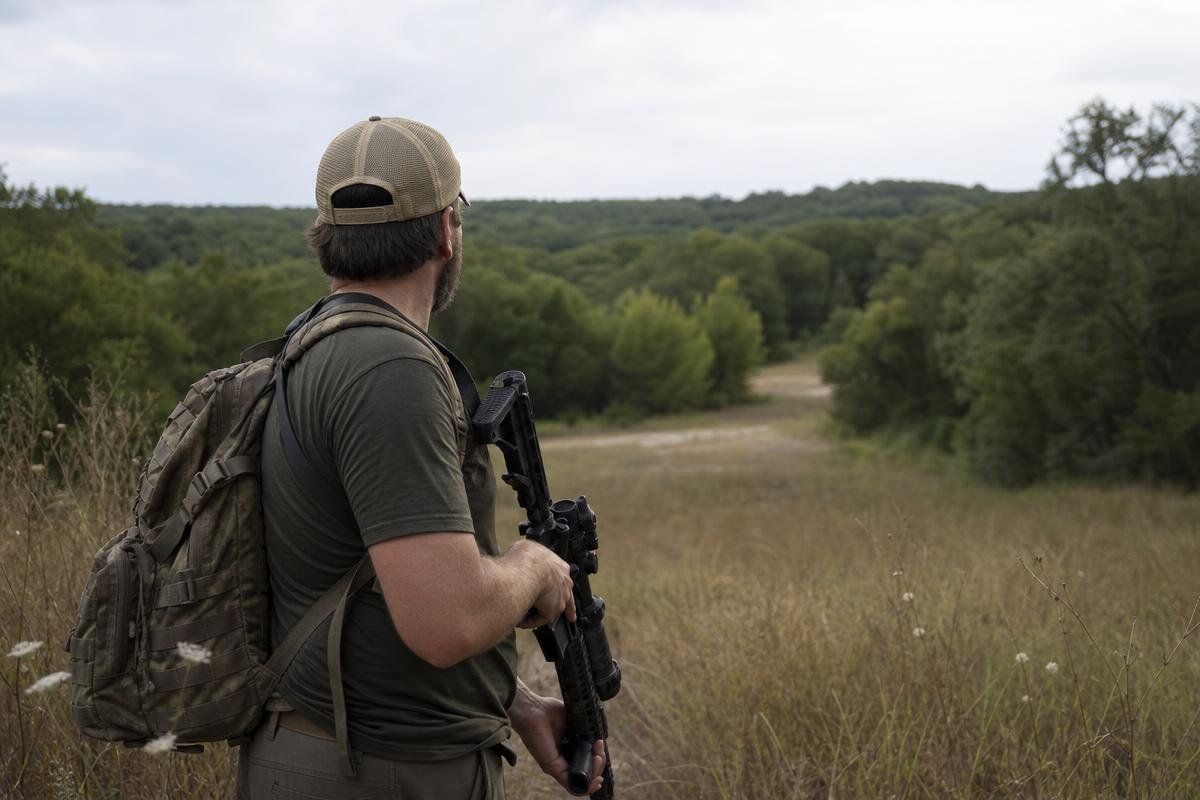
The Red River corridor runs through some genuinely mixed terrain. From the Lake Texoma shoreline west into the surrounding counties, you get cedar breaks, post oak savanna, river-bottom hardwoods, and open CRP fields all within the same lease. That variety forces a real question: what cartridge covers a 60-yard shot through a creek bottom and a 350-yard shot across an open pasture without swapping rifles?
The .308 Winchester handles both ends without compromise. Bullet weights from 150 to 175 grains give you enough flexibility to run a heavier load through dense cover and step out to open ground with the same rifle. That is a practical advantage specific to this region's terrain, not a generic talking point.
Practical Distance Considerations for Local Hunters
Private ranch land across the region typically produces shots from 50 yards in tight timber to 400-plus yards across open pasture. The .308 Winchester can be used at extended distances only when the exact load, atmosphere, shot conditions, and shooter proficiency have been verified. Do not treat 500 yards as a universal hunting limit.
Feral hog pressure in the region is high. The .308's penetration on heavy-shouldered hogs at close to moderate range is well documented. It drives through the shoulder of a large hog where lighter cartridges can deflect or fail to reach vitals.
If you are building an AR-10 platform for this kind of hunting, we stock complete AR uppers in a range of calibers, assembled and headspaced in-house, ready to drop onto your lower for the upcoming season.
Frequently Asked Questions
Is the .308 Winchester good for deer hunting?
Yes, when the exact bullet is intended for deer and its impact-velocity requirements, current regulations, shot conditions, and shooter proficiency are satisfied. Legality varies by jurisdiction, season, weapon type, and local restrictions. Check current regulations before hunting, and verify the load against the distances and conditions you expect.
What is the effective range of the .308 Winchester?
For hunting deer-sized game, no universal practical ceiling replaces load-specific data and demonstrated shooter proficiency. The bullet goes transonic between 800 and 1,000 yards depending on bullet weight and elevation. That transonic threshold marks where precision starts to break down for most shooters.
Can you use .308 Winchester in an AR-10 build?
Yes, but the upper, lower, BCG, and magazine must all be .308-pattern components. The receiver set and BCG do not interchange with standard AR-15 parts; follow the manufacturer’s specifications for any smaller components that may overlap. Our .308 Win complete uppers are assembled, headspaced, and function-checked in-house and are ready to drop onto a compatible .308-pattern lower.
Is .308 Winchester the same as 7.62x51mm NATO?
Dimensionally similar, not identical. Published NATO and SAAMI pressure figures use different test methods and should not be directly compared. Do not rely on a general interchangeability rule. Follow the firearm manufacturer’s chamber marking and ammunition guidance before using loaded .308 Winchester or 7.62x51mm NATO cartridges.
How does .308 Winchester compare to 6.5 Creedmoor for long-range shooting?
The 6.5 Creedmoor carries a higher ballistic coefficient, drifts less in wind, and stays supersonic farther downrange. Beyond 600 yards in competition, it has a measurable edge. The .308 Winchester counters with broader ammo availability, market-dependent ammunition cost, and a wider bullet weight selection for hunting applications.
What bullet weight should I use for .308 Winchester hunting?
Use 150 to 165 grain bonded or soft-point for deer and feral hogs. Step up to 165 to 180 grain controlled-expansion bullets such as the Barnes TTSX, Swift A-Frame, or Nosler Partition for elk and larger game. For precision and target work, 168 to 175 grain match bullets like the Sierra MatchKing or Berger Hybrid are the standard choice.
Ready to build or upgrade your .308 platform? AR15Parts.com stocks complete .308 Win uppers assembled, headspaced, and function-checked in-house at 4000 Texoma Parkway, Denison, TX 75020, with shipping available where permitted. Browse our .308 Win complete uppers, compare 6.5 Creedmoor options, or call us at (888) 706-0633 to talk through your build before you order.
Ready to Get Started with AR15Parts.com?
Call (888) 706-0633 to speak with our team directly. We're ready to answer your questions, walk you through your options, and help you find the right solution for your needs. Whether you're just starting to plan or ready to move forward, we'll make the process simple and stress-free. Reach out today and let's talk about how we can help.