
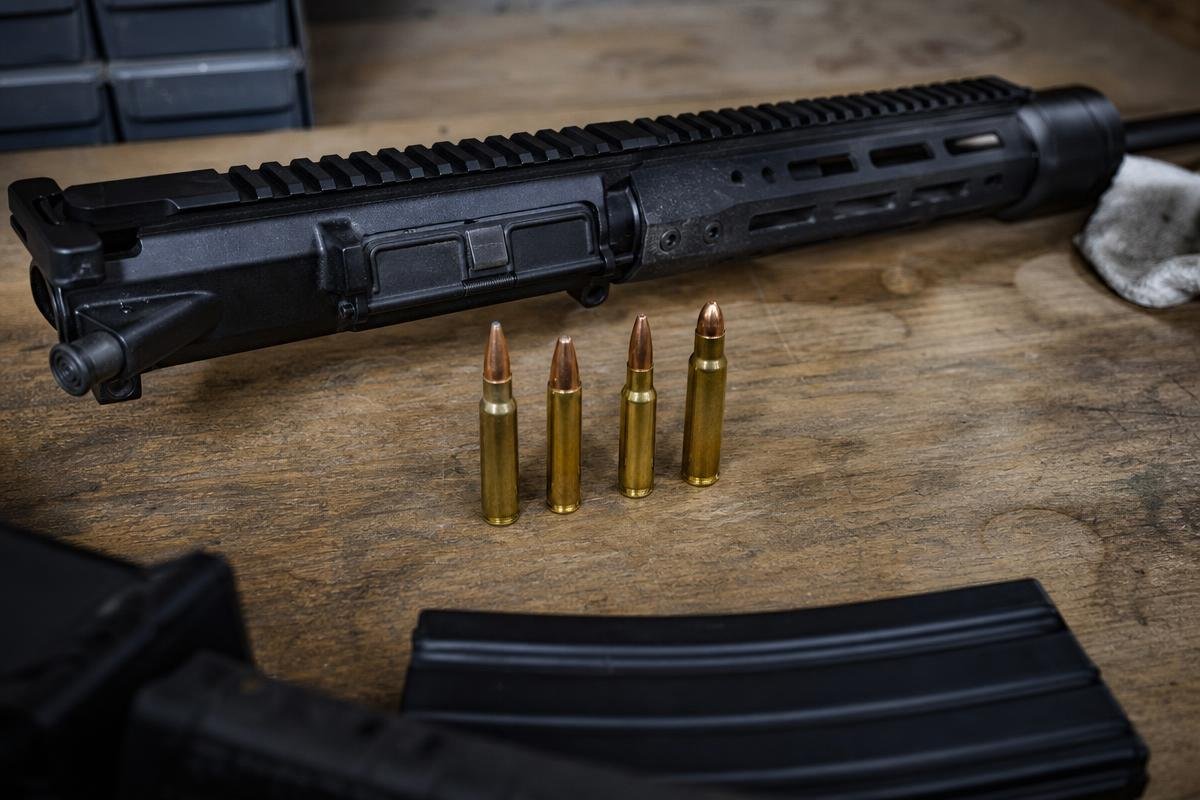
The .458 SOCOM was designed to deliver heavy, close-range performance from the AR-15 platform, and it has since found a place in hunting and defensive builds. If you have been asking what is 458 SOCOM good for, the short answer is: heavy, hard-hitting performance in an AR-15 platform that drops onto any standard mil-spec lower.
AR15Parts.com is an FFL dealer based at 4000 Texoma Parkway in Denison, Texas, and our 458 SOCOM complete uppers are built to order, assembled in-house, headspaced, and function-checked before shipping from our Denison, TX facility. Not sure which barrel length fits your hunting setup? Our team in Denison can help you configure the right upper for the game and terrain you actually hunt.
Key Takeaways
- The .458 SOCOM was developed around a close-range, heavy-projectile design goal and is now used in hunting and defensive builds.
- Best uses: deer and hog hunting, home defense, and close-range big-game work inside 200 yards.
- A 458 SOCOM upper is compatible with the lower you already own, with no additional modifications required.
- Only the barrel, barrel extension, and bolt differ from a standard 5.56 build, keeping conversion costs low.
- Close-range hunting in brushy terrain suits the cartridge's heavy-projectile performance well.
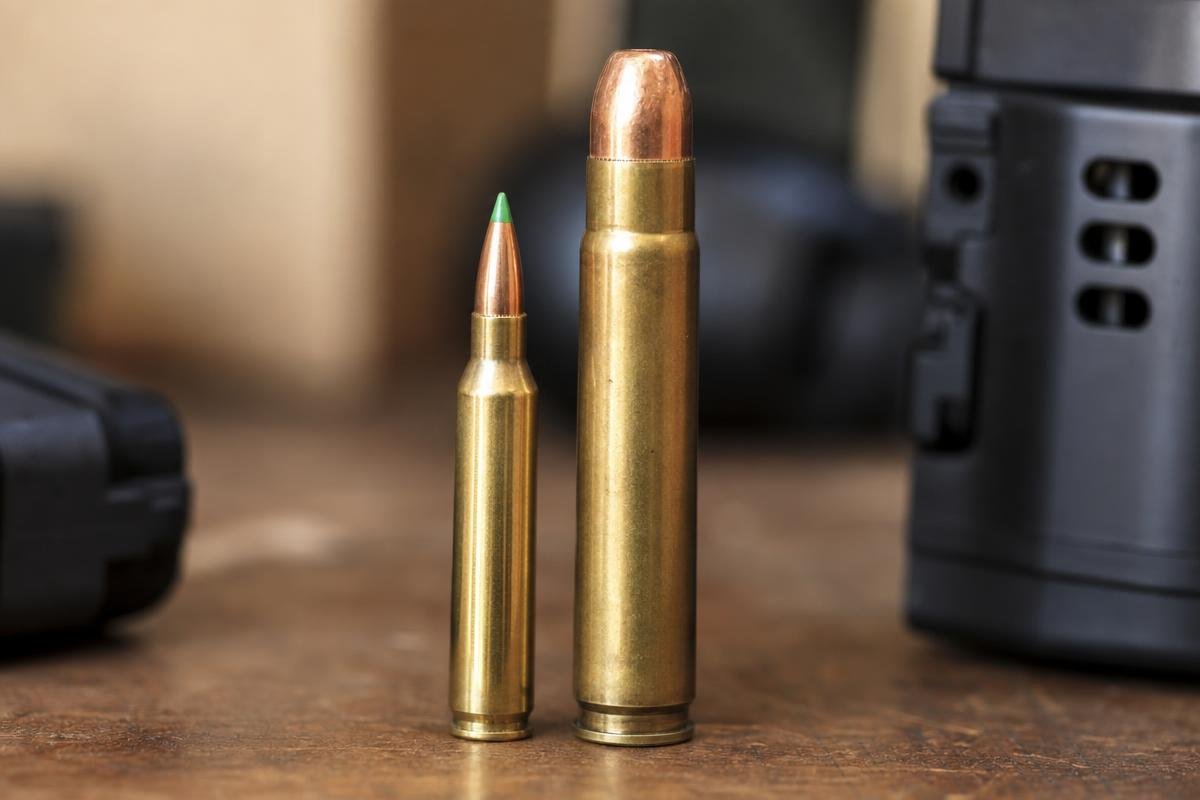
The .458 SOCOM fires a .458-inch diameter projectile in bullet weights ranging from 250 to 600 grains. That range is wider than almost any other AR-15 cartridge on the market. The cartridge's development is commonly associated with a request for greater short-range projectile mass from a platform that still ran on a standard AR-15 lower receiver. The resulting design requires a caliber-specific barrel, barrel extension, and bolt. Your existing lower, stock, and trigger stay exactly as they are.
So what makes this cartridge worth building in practical terms? Three things, mainly. Tactical and home defense applications where terminal performance at short range matters. Deer and feral hog hunting, where the heavy projectile hits hard at close range. And larger game like elk, where bullet weight carries energy downrange. If you are ready to build, a complete 458 SOCOM upper works with the lower you already own.
For shooters near Denison, the cartridge lines up well with local conditions. Feral hogs are a well-known problem for landowners across North Texas, and the cartridge suits close-range hunting in brushy terrain. That is exactly where this cartridge's heavy projectile performs at its best. It is a practical choice here, not an exotic one.
Where Did the 458 SOCOM Come From?
The After-Action Problem That Sparked the Cartridge
The .458 SOCOM's development is commonly linked to discussions about increasing short-range projectile mass in the AR-15 platform. The design brief centered on fitting a much heavier projectile into a standard AR-15 lower while preserving familiar controls.
Marty ter Weeme and the Teppo Jutsu Design Brief
Marty ter Weeme of Teppo Jutsu LLC took on the engineering problem around 2000. He worked with Tony Rumore of Tromix to develop the cartridge around a hard constraint: the bullet had to be as large and heavy as possible while still feeding reliably from a standard AR-15 magazine in a single-stack configuration. The answer was a rebated-rim case design. The cartridge requires a dedicated bolt face, along with a caliber-specific barrel and barrel extension.
The case headspaces on the case mouth, not the rim. That single decision kept the 458 SOCOM compatible with most existing AR-15 lowers and bolt carriers, which is a large part of why the cartridge found an audience.
From Prototype to Production: Early Adoption
The cartridge was finalized around 2000 to 2001. Cor-Bon was among the first commercial producers to load it. Early commercial availability was limited, which kept the round relatively niche through the mid-2000s. Adoption grew steadily as more shooters recognized that the cartridge uses standard AR-15 magazines and most mil-spec lower receivers, making it a practical caliber conversion rather than a whole new rifle. If you want to explore those applications on your own build, our complete 458 SOCOM upper assemblies are built on mil-spec components and ship ready to run.
What Is 458 SOCOM Actually Good For? Three Real-World Use Cases
The honest answer to what is 458 SOCOM good for comes down to three situations: close-range defensive use, hunting medium game like deer and hogs, and taking larger animals like elk inside 200 yards. Each use case has real tradeoffs worth knowing before you build.
Tactical and Home Defense
A standard 5.56 load produces roughly 1,300 ft-lbs of muzzle energy, depending on load and barrel length. A 300-grain 458 SOCOM projectile at 1,900 fps from a 16-inch barrel produces approximately 2,400 ft-lbs. That is substantially more energy in the same AR-15 platform, with the same lower receiver and controls you already know.
The tradeoff is capacity. Expect 7 to 10 rounds per magazine instead of 30. Subsonic 600-grain loads at approximately 1,050 fps pair well with a suppressor and keep energy in the .45-70 Government class while staying quiet. This is one of the few AR-15 chamberings whose suppressed subsonic performance genuinely rivals dedicated pistol-caliber carbines, since the heavy projectile carries real energy at whisper-quiet velocities.
For any suppressed build, follow the suppressor and upper manufacturers' compatibility and tuning guidance. For home defense, the question is whether you need that much energy in a confined space. For some applications, the answer is yes.
Deer and Feral Hog Hunting
This is where 458 SOCOM hunting makes the most practical sense. A 300-grain expanding bullet at 1,900 fps produces clean kills inside 200 yards on whitetail and feral hogs up to 300 lbs. The cartridge does not ask you to stretch shots. It asks you to get close and hit hard.
Feral hogs are a well-known problem for landowners across North Texas. Check current Texas hunting regulations and obtain landowner permission before hunting on private property. If you are building for this terrain, browse our complete AR uppers in multiple calibers to compare options side by side.
Hunters outside Texas benefit too. Hunters outside Texas should confirm current state cartridge and season rules before using .458 SOCOM.
Elk, Moose, and Large Game
Using the dataset in the companion ballistics draft, a 350-grain load retains approximately 1,244 ft-lbs at 200 yards. Suitability for elk depends on the specific load, local rules, shot distance, and shot placement. For heavy game, a bonded or solid-copper 350 to 400-grain projectile at 1,850 fps is the sound choice, since it holds together and drives deep through bone and thick muscle. The platform advantage is real: semi-auto operation gives you a fast follow-up shot on a large animal that does not go down immediately.
Be honest about the ceiling, though. Keep shots on elk inside 200 yards and skip the 250-yard-plus attempts entirely. Beyond that distance, velocity drops enough that terminal performance on heavy animals becomes unpredictable, and a marginal hit on a large, thick-hided animal is an ethics problem, not just a recovery problem. If your hunt involves open country and long shots, a different cartridge fits better.
If you are hunting timber or river-bottom elk country where shots stay close, a complete 458 SOCOM upper is a legitimate choice on an AR-15 platform. Call us at (888) 706-0633 if you want help spec'ing a barrel and twist rate for heavy-bullet big-game loads.
458 SOCOM vs. 450 Bushmaster vs. 300 Blackout: Which Big-Bore AR Cartridge Fits Your Build?
These three cartridges share an AR-15 platform but serve different priorities. The numbers below show exactly where each one lands. No single cartridge wins across every category, and that is the point.
Ballistics Comparison at a Glance
| Cartridge | Typical Bullet Weight | Muzzle Velocity (16-in barrel) | Muzzle Energy | Effective Range | Magazine Capacity |
|---|---|---|---|---|---|
| 458 SOCOM | 300 gr | 1,900 fps | 2,400 ft-lbs | ~200 yds | 7 to 10 rds |
| 450 Bushmaster | 250 gr | 2,200 fps | 2,686 ft-lbs | ~250 yds | 5 rds |
| 300 Blackout (supersonic) | 125 gr | 2,200 fps | 1,344 ft-lbs | ~300 yds | 30 rds |
| 300 Blackout (subsonic) | 220 gr | 1,050 fps | 537 ft-lbs | ~100 yds | 30 rds |
Yes, the 450 Bushmaster produces more muzzle energy than the 458 SOCOM at the muzzle. It also carries a flatter trajectory out to 250 yards. The trade is a five-round magazine and no practical subsonic loading. Supersonic and subsonic loads also produce different gas and pressure behavior, so compare the specific ammunition and upper configuration before choosing.
Which Cartridge Fits Which Shooter
The 458 SOCOM is the right pick when bullet diameter and weight matter most and you want a suppressed subsonic option in the same rifle. You can load compatible SOCOM magazines with an appropriate subsonic projectile and use a properly rated suppressor, but reliable cycling may require configuration-specific tuning. The 300 Blackout does the same job with less energy but keeps a standard 30-round magazine. That is not a weakness. It is a different design priority built around capacity and suppressor-first performance.
Local hog hunters running suppressed night setups often face exactly this choice. Both cartridges work. The 458 SOCOM hits harder at close range in brushy creek bottoms, where most shots stay inside 150 yards. The 300 Blackout gives you more rounds before a reload. The 450 Bushmaster fits neither suppressed role well but outperforms both at distance on open agricultural fields.
If you are building a dedicated hunting upper for whitetail or hogs in the river-bottom country, a 450 Bushmaster upper makes sense for open-field shots where that extra velocity and energy at range pays off. For a suppressed close-range build, the 458 SOCOM or 300 Blackout fits better. Pick the cartridge that matches your actual shooting conditions, not the one with the highest single-category number.
Not sure which caliber fits your build? Call us at (888) 706-0633 and we will walk you through the options.
What Parts Do You Actually Need to Build a 458 SOCOM AR-15?
Good news for shooters near Denison who already own a standard AR-15 lower: 458 SOCOM AR-15 compatibility is straightforward. You do not need a new rifle. Three components change. Everything else transfers directly from your existing build.
The Three Parts That Change
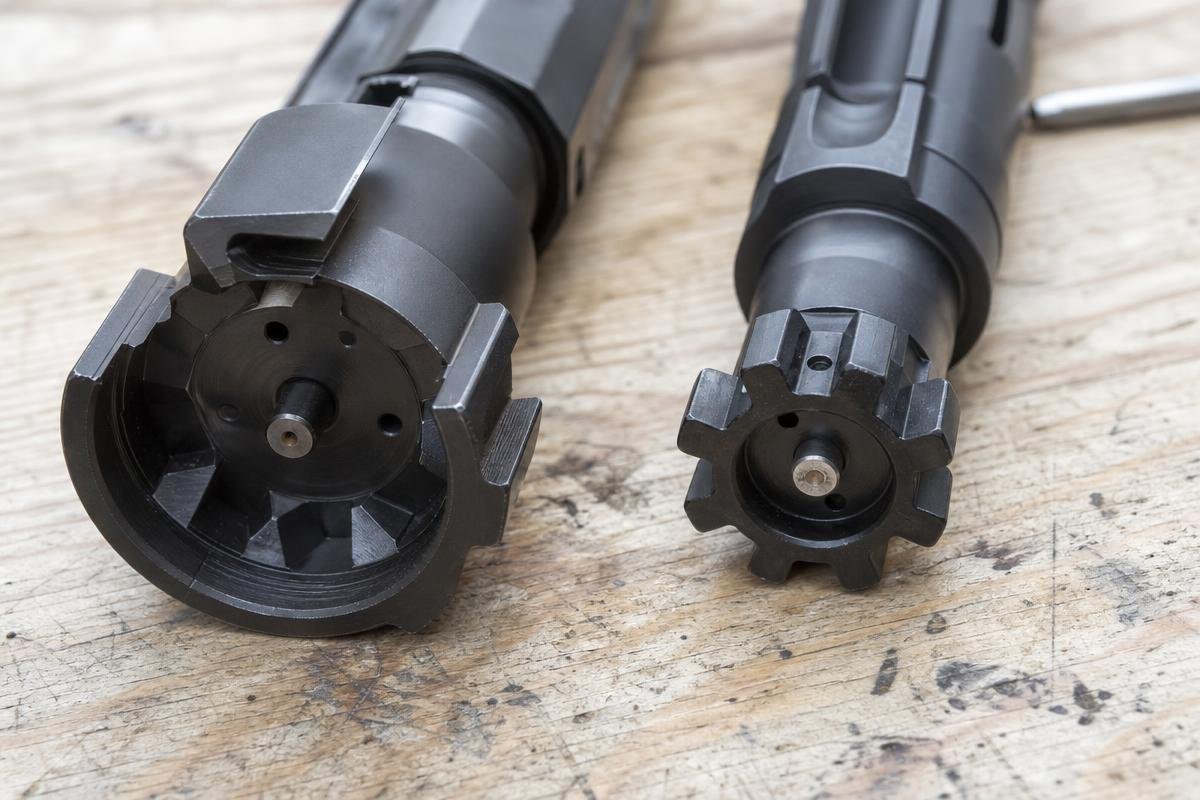
The barrel is chambered specifically for 458 SOCOM and includes the correct barrel extension with feed ramps cut for the larger .458-inch case. Standard 5.56 feed ramps will not work. The bolt requires an enlarged bolt face to accept the rebated-rim case. You need a dedicated 458 SOCOM bolt, not a full BCG swap in most builds, though browsing our bolt carrier groups will help you understand which carrier group pairs correctly with your chosen bolt.
What Stays the Same on Your Existing Lower
Your lower receiver, lower parts kit, trigger group, pistol grip, and buffer tube all carry over without modification. A standard carbine or rifle-length buffer system works with most 458 SOCOM builds. Many shooters run an H2 or H3 buffer to manage the heavier bolt carrier impulse, but the hardware is mil-spec compatible. Your fixed, adjustable, and folding stock options transfer without any changes as well.
If you already own a quality mil-spec lower, you are most of the way to a capable big-bore build. The cost to convert is significantly lower than buying a complete new rifle.
Complete Upper vs. Parts Build: Which Path Makes Sense
A parts build requires a barrel vise, torque wrench, and headspace gauges to verify go/no-go fit between the bolt and barrel extension. If you do not own those tools or have not headspaced a barrel before, the margin for error is real. A bad headspace condition is a safety issue, not just a function issue.
A 458 SOCOM complete upper arrives assembled, headspaced, and function-checked in-house, ready to drop onto your lower. For most shooters, that is the right call. You skip the tooling cost, skip the headspace verification step, and get a verified unit out of the box. If you want big-bore capability for the creek bottoms and agricultural fields around Grayson County without the bench-work, a complete upper is the direct path.
458 SOCOM in Denison, TX: Local Hunting and Shooting Applications
North Texas Feral Hog and Whitetail Country
Feral hogs are a well-known problem for landowners across North Texas. For close-range hunting in brushy terrain, a 300-grain expanding projectile at around 1,900 fps offers substantial energy. Choose ammunition suited to the game and conditions.
Texas whitetail are often smaller than deer in northern states. The cartridge is more than enough for clean, ethical kills at the ranges you actually shoot in agricultural fields and brushy draws near the state line. If you want a ready-to-run setup, our complete 458 SOCOM upper is compatible with your existing lower and is built on mil-spec components.
Straight-Wall Cartridge Regulations: Texas and Beyond
The state has no straight-wall restriction for deer hunting, so 458 SOCOM competes openly against .308 Win and 6.5 Creedmoor here. If you travel for hunting, verify each state's current cartridge and season rules before ordering. We ship from 4000 Texoma Parkway, subject to destination restrictions. Browse our full lineup of complete AR uppers in multiple calibers if you need a second build for a different season.
Frequently Asked Questions
Is 458 SOCOM good for home defense?
Yes, with real tradeoffs. Terminal energy at close range is decisive. A 300-grain load hits hard enough to stop a threat immediately. The downside is capacity: most 458 SOCOM magazines hold 7 to 10 rounds, and recoil is noticeably heavier than 5.56. Subsonic loads change terminal behavior, but they do not eliminate overpenetration risk. Load selection and safe backstops still matter.
How far can you shoot with 458 SOCOM?
Plan for 200 yards on game and 250 yards on paper. Past 250 yards, the projectile drops steeply and energy falls below 1,200 ft-lbs. This is not a long-range cartridge. It was designed for close-range stopping power, and that is exactly what it delivers well.
Will 458 SOCOM work on my standard AR-15 lower receiver?
Yes. Your existing mil-spec lower needs no modification. Swap in a new upper assembly with the correct barrel, barrel extension, and bolt. Your trigger, lower parts kit, buffer system, and stock transfer directly. That is one of the main reasons 458 SOCOM builds are so popular among shooters who already own an AR platform.
How does 458 SOCOM compare to .45-70 Government?
A 300-grain 458 SOCOM load produces roughly 2,400 ft-lbs at the muzzle. Higher-pressure .45-70 loads intended for modern lever actions can produce 2,500 to 2,800 ft-lbs, depending on the load, while standard-pressure .45-70 loads may produce less energy than the .458 SOCOM load above. What 458 SOCOM offers in return is semi-auto follow-up shots, a detachable magazine, and a platform most AR shooters already know. For hunters covering brushy creek bottoms where a second shot matters, that difference is real.
What barrel length is best for 458 SOCOM?
A 16-inch barrel is the most common choice and covers most hunting and range uses well. Shorter barrels, 12.5 to 14.5 inches, are popular for suppressed SBR builds. Longer barrels, 18 to 20 inches, add modest velocity but are less common because this cartridge was designed around carbine-length performance from the start.
Since Jan 1, 2026, the NFA tax on suppressors and SBRs is $0, but ATF Form 4 (or Form 1) registration and approval are still required.
Can you suppress a 458 SOCOM build?
Subsonic 458 SOCOM loads, typically 500 to 600 grains at 1,000 to 1,050 fps, produce very low muzzle blast when suppressed. You need a suppressor rated for .458-inch bore or larger at rifle pressures. Most .45-caliber pistol suppressors are not rated for rifle pressures. Check the suppressor's rifle-rated specification before mounting. Do not assume pistol-rated .45 cans will hold up.
If you are ready to build, browse our complete 458 SOCOM upper options or explore complete AR uppers in multiple calibers to compare configurations. We ship from 4000 Texoma Parkway, Denison, TX 75020 where permitted, subject to destination restrictions. Call us at (888) 706-0633 with any build questions.
Ready to Get Started with AR15Parts.com?
Call (888) 706-0633 to speak with our team directly. We're ready to answer your questions, walk you through your options, and help you find the right solution for your needs. Whether you're just starting to plan or ready to move forward, we'll make the process simple and stress-free. Reach out today and let's talk about how we can help.