
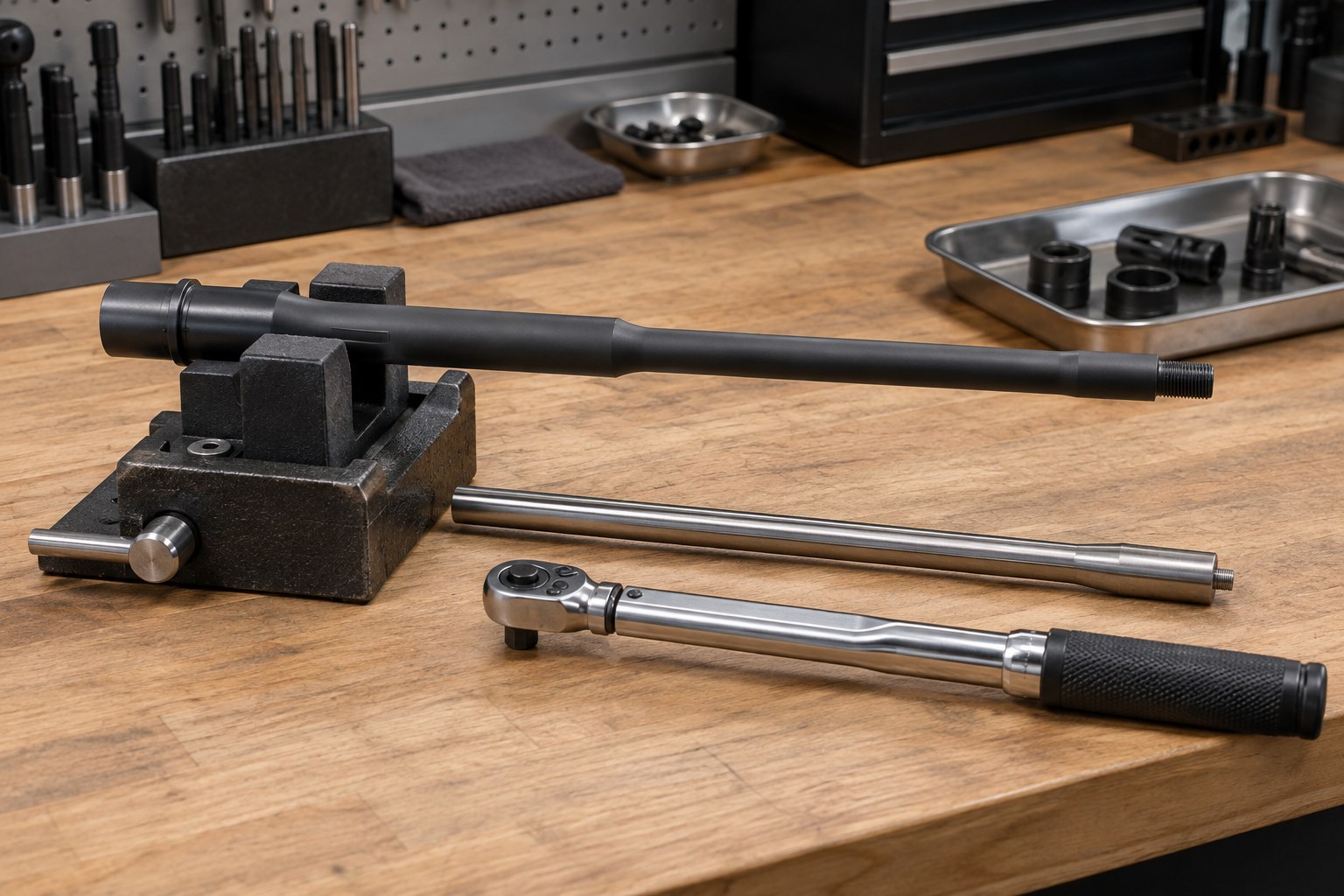
A cold hammer forged barrel starts life as a bored steel blank that gets pounded, blow after blow, around a hardened mandrel carrying the rifling pattern in reverse. It is one of several ways manufacturers put lands and grooves inside an AR-15 barrel, alongside button rifling and cut rifling, and each method leaves the finished barrel with a different balance of cost, consistency, and durability. AR15Parts.com stocks barrels from several manufacturers for builders across Denison and the wider Texoma area. Understanding what cold hammer forging actually does helps you read a spec sheet with more confidence before you order.
Have questions about a specific barrel or caliber?
Key Takeaways
- A cold hammer forged barrel is made by hammering a bored blank around a mandrel that carries the rifling profile in reverse, forming the bore, rifling, and often the exterior contour in one operation.
- Cold hammer forging differs from button rifling, which draws a carbide button through a reamed bore, and from cut rifling, which removes metal one groove at a time with a single-point cutter.
- Hammer forging is associated with a dense, work-hardened bore and is the process behind many chrome lined military and duty-pattern barrels, but it requires expensive dedicated machinery and a stress relief step afterward.
- Cold hammer forging shows up most often on high-volume, duty-oriented barrel lines, while many match-grade stainless steel barrels are produced with button rifling instead.
- Rifling method is not always spelled out on a barrel listing, so confirm how a given barrel was made with the product page or our team before you assume it is cold hammer forged.
- The right choice for a Denison AR-15 build depends more on intended use, caliber, and finish than on rifling method alone.
How Does Cold Hammer Forging Actually Work?
Cold hammer forging begins with a solid steel blank that has already been gun drilled and reamed to a controlled bore diameter. A hardened mandrel, typically tungsten carbide or hardened tool steel, is machined with the rifling lands and grooves cut into it in reverse relief, then inserted into that bored hole. Rotary hammers surround the blank and strike it from multiple sides, thousands of times per minute, while the blank is drawn over the mandrel. The hammering compresses the steel down onto the mandrel so the reversed rifling pattern is transferred into the bore, and it can also form the barrel's exterior contour and chamber area in the same pass.
The Mandrel and the Forging Hammers
Because the mandrel can be positioned precisely along the length of the bore during the strikes, manufacturers using this equipment can hold bore diameter to very tight, repeatable tolerances along the full length of the barrel. That precision is one reason cold hammer forging became the standard process for military small-arms barrel production and remains common among barrel makers who produce high volumes of duty-pattern 5.56 NATO and .223 Wylde barrels.
Why It Is Called "Cold" Forging
The "cold" in cold hammer forging refers to the blank temperature during the hammering itself, not to the finishing steps. The steel is forged well below the temperature used in hot forging, which keeps dimensional control tight but concentrates more mechanical stress in the material. Some forging setups use added heat to reduce the force the hammers must exert and can improve grain structure, but true cold hammer forging keeps the blank at or near room temperature throughout the strikes.
Cold Hammer Forged vs Button Rifled vs Cut Rifled: What Is the Difference?
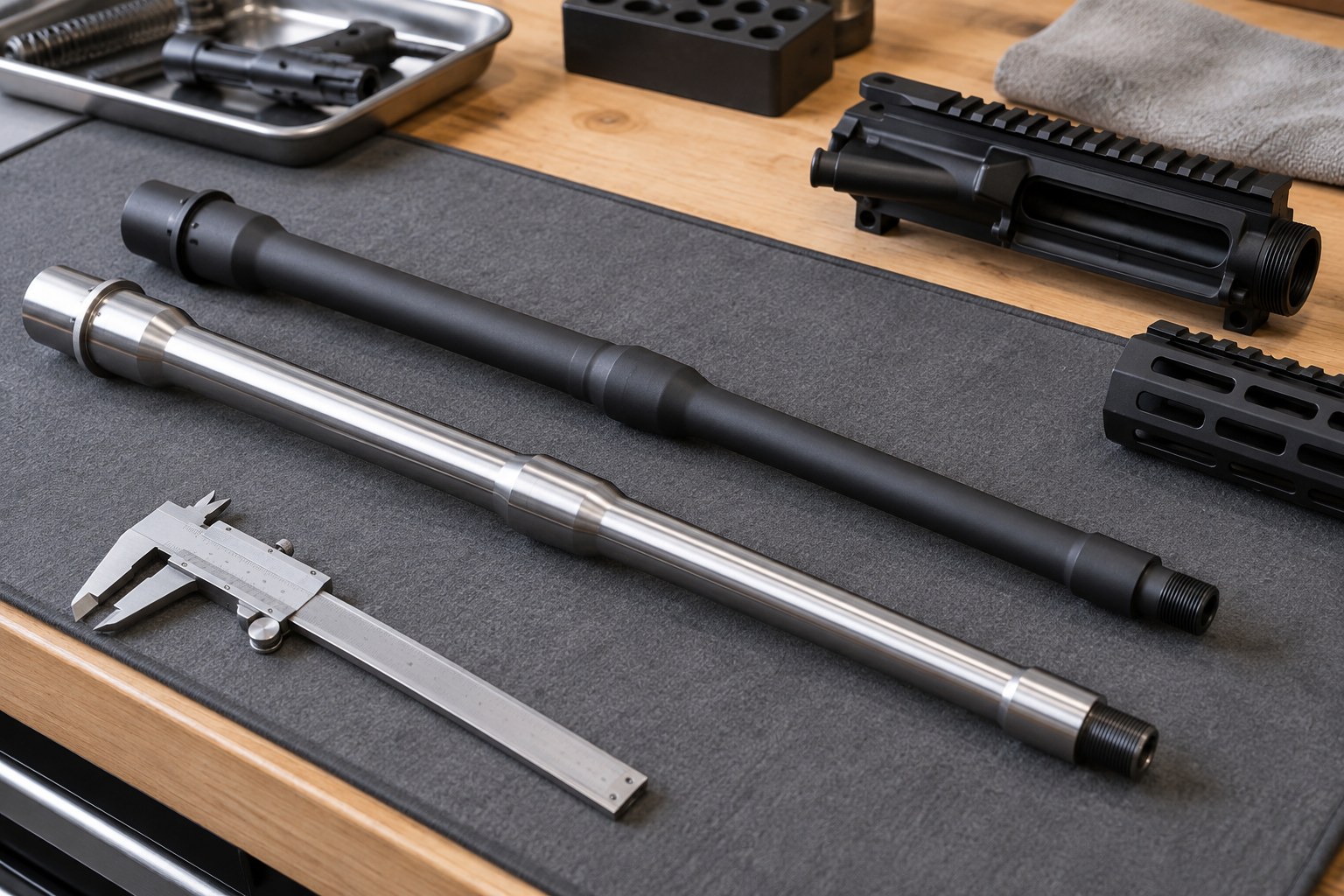
All three processes put rifling inside an AR-15 barrel, but they get there in very different ways. Button rifling is the most widely used method across the commercial barrel market today. A rifling button, a superhard carbide plug ground with the reverse groove pattern, is pushed or pulled through a reamed bore, and its passage irons the rifling into the steel without removing material. Cut rifling is older and slower. A single-point cutter is drawn through the bore and adjusted to remove roughly half a thousandth of an inch of metal per pass, repeating dozens of times per groove until the final depth is reached.
Cold hammer forging takes a different approach, since the rifling is neither drawn through the bore nor cut into it. The bore is compressed onto the mandrel from the outside in, which is why hammer forging can shape rifling, chamber area, and exterior contour together rather than in separate operations.
| Rifling Method | How Rifling Is Created | Typical Strengths | Typical Trade-offs |
|---|---|---|---|
| Cold Hammer Forged | Blank hammered around a reversed-pattern mandrel | Dense, work-hardened bore; can form contour and chamber in one pass; well suited to chrome lining | High equipment cost; needs a stress relief step; less common on small production runs |
| Button Rifled | Carbide button drawn or pushed through a reamed bore | Fast, repeatable, widely used for match and duty barrels alike; lower tooling cost than hammer forging | Cold-forms the bore, so it also benefits from stress relief; button wear must be managed |
| Cut Rifled | Single-point cutter removes metal one pass at a time | Minimal stress introduced into the steel; favored for some high-end precision and large-bore barrels | Slowest method; more machine time per barrel |
Need help figuring out which barrel fits your build?
What Are the Advantages of a Cold Hammer Forged Barrel?
The main appeal of hammer forging is what the hammering does to the steel itself. The repeated impact compresses and work-hardens the material around the mandrel, which barrel makers describe as producing a dense, directional grain structure and a rigid bore. That density is a large part of why cold hammer forging became the process behind many military and law enforcement duty barrels built for sustained, high round count use.
Density, Rigidity, and Duty-Pattern Durability
A hammer forged barrel is also very well suited to chrome lining, since the compressed bore surface takes a chrome lining evenly. FN America, for example, markets cold hammer forged, chrome lined barrels on several of its rifles, a pairing often chosen for sustained, high-volume fire. That pairing, hammer forging plus chrome lining, is common on barrels designed around durability and heat tolerance rather than absolute minimum group size, the same reason many parkerized 300 BLACKOUT carbine barrels favor 4150 chrome moly steel over other options for that role.
One-Pass Manufacturing for Contour and Chamber
Because forging can shape the exterior profile and chamber area along with the rifling, a hammer forging line can turn out finished barrel blanks with fewer separate machining steps than cut or button rifling requires. For a manufacturer running large production volumes, that efficiency is part of why cold hammer forging remains attractive despite the up-front equipment cost.
What Are the Downsides of Cold Hammer Forging?
Cold hammer forging is not free of trade-offs, and those trade-offs are exactly why not every barrel on the market, including many excellent match and hunting barrels, is made this way.
Equipment Cost and Production Scale
Hammer forging machines are large, specialized, and expensive, which is why the process tends to show up at manufacturers running high production volumes rather than small custom shops. That cost structure is one reason many boutique and match-barrel makers favor button or cut rifling instead.
Stress Relief Is Not Optional
Hammering a blank around a mandrel introduces significant internal stress into the steel. Barrel makers address this with a stress relief step after forging, heating the barrel and then cooling it in a controlled way before the chamber is finish-cut and any threading or final finish is applied. Skipping or shortchanging that step risks a barrel that moves or warps as it ages, so reputable hammer forging operations always build stress relief into the process.
When Does Cold Hammer Forging Matter for an AR-15 Build?
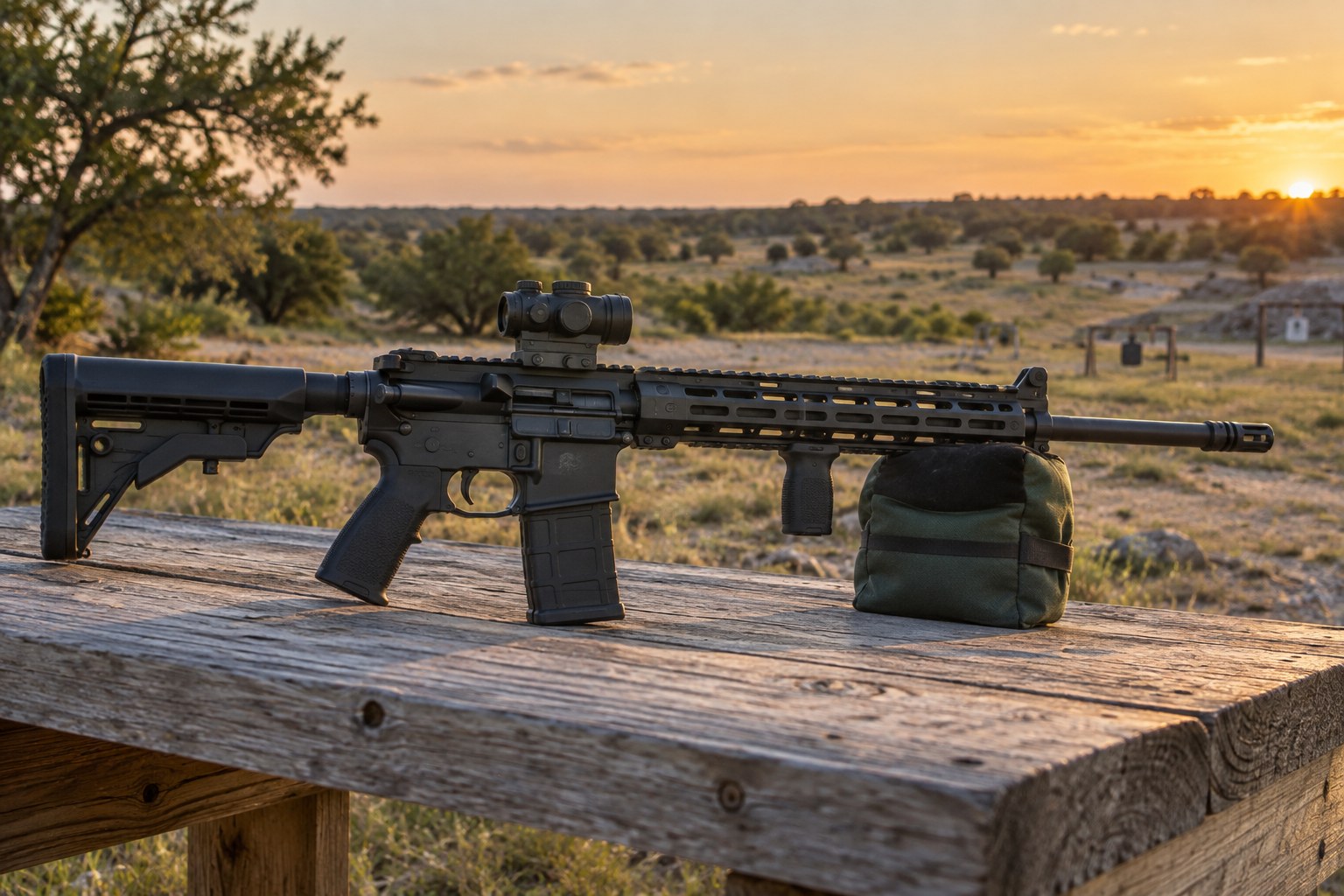
For most Denison-area builders, the honest answer is that rifling method matters less than caliber, twist rate, gas system length, and finish. But there are situations where knowing whether a barrel is cold hammer forged, button rifled, or cut rifled is genuinely useful context.
Duty, Training, and High Round Count Builds
If your AR-15 is going to see heavy, sustained range use, training classes, or a duty role, a cold hammer forged, chrome lined barrel is a common choice in that segment of the market because of the density and wear resistance the process is associated with. This is the same logic behind many military and law enforcement barrel programs.
Match and Precision Stainless Builds
If your priority is the smallest possible group size at distance, many of the top precision shooters and barrel makers still favor button rifled or cut rifled stainless steel barrels, since those processes are widely used for premium 416R stainless match barrels such as the options built around 6mm ARC or 6.5 Creedmoor chamberings. Cold hammer forging is not required for accuracy, and plenty of the most accurate barrels made today are not hammer forged at all.
Browse the current catalog to compare calibers, twist rates, and finishes for your build.
What Should You Look For When Shopping for a Hammer Forged Barrel?
Because "cold hammer forged" describes a manufacturing process rather than a material or finish, it will not always be obvious from a product title alone. Here is what to check before you assume how a barrel was made.
- Read the full product description and manufacturer spec sheet, since rifling method is a manufacturing detail that is not always listed in a short title.
- Do not assume a barrel is cold hammer forged just because it is chrome lined. Chrome lining can be applied over hammer forged, button rifled, or cut rifled bores, so lining and rifling method are two separate questions.
- Confirm the base steel and heat treatment (for example 4150 chrome moly vanadium or 416R stainless) separately from the rifling method, since both affect how the barrel performs and wears.
- If a listing does not state the rifling method, contact the seller or manufacturer directly rather than guessing, especially if the method matters for your intended use.
- Match your priorities, whether that is sustained duty use, hunting, or match accuracy, to the barrel's overall spec sheet rather than to rifling method alone.
- If your build also needs a complete AR-15 upper or other AR-15 parts, confirm the barrel extension, bolt, and chamber marking all match before you order.
For a deeper technical breakdown of the two most common commercial methods, see our AR Upper Hub guide on cold hammer forged versus button rifled barrels, and for how rifling interacts with chrome lining and nitride treatments, see the AR Upper Hub guide to chrome lined, nitride, and stainless AR-15 barrels.
Cold Hammer Forged Barrel Help for Denison and Texoma Builders
North Texas humidity off Lake Texoma, long range days, and steady use for deer and hog hunting all put real wear on a rifle over a season. Whether you are building a duty-style carbine for heavy range use or a lighter precision rifle for a fall hunt, matching the barrel's manufacturing process and finish to how you actually shoot the rifle matters more than chasing a single spec.
Our team is glad to talk through what a given barrel listing does and does not tell you about how it was rifled, lined, or finished. If you plan to hunt with a new build, always check current Texas Parks and Wildlife Department (TPWD) regulations for legal calibers and equipment before the season opens.
Reach AR15Parts.com at 4000 Texoma Parkway, Denison, TX 75020, or call (888) 706-0633 with questions about any barrel on our site.
Frequently Asked Questions
Is a Cold Hammer Forged Barrel Better Than a Button Rifled Barrel?
Neither process is universally better. Cold hammer forging is associated with a dense, work-hardened bore well suited to chrome lining and sustained, high-volume fire, while button rifling is fast, widely used, and the standard choice behind many of the most accurate stainless steel match barrels made today. The better choice depends on your intended use.
Does a Chrome Lined Barrel Have to Be Cold Hammer Forged?
No. Chrome lining is a separate finishing step that can be applied to hammer forged, button rifled, or cut rifled bores. A barrel can be chrome lined without being cold hammer forged, and hammer forging does not automatically mean a barrel is chrome lined unless the manufacturer states it is.
Why Do Hammer Forged Barrels Need Stress Relief?
Hammering a blank around a mandrel introduces significant internal stress into the steel. Barrel makers relieve that stress with a controlled heating and cooling step after forging, before the chamber is cut and the final finish applied, to reduce the risk of the barrel moving or warping later.
Are All Military Rifle Barrels Cold Hammer Forged?
Many are, since hammer forging has long been a standard production method for military small-arms barrels, and manufacturers like FN America build both duty rifle programs and commercial AR-15 barrels using cold hammer forging. It is not the only method used across every military or duty barrel program, however.
Does AR15Parts.com Sell Cold Hammer Forged Barrels?
Rifling method is not always spelled out on a barrel listing. AR15Parts.com carries barrels in materials such as 4150 chrome moly steel and 416R stainless from brands including Ballistic Advantage, Wilson Combat, Satern Barrels, and Shaw Barrels. Check the individual product listing or contact our team to confirm rifling method and specifications before you order.
Does Barrel Length Affect Whether a Build Is Legal?
Yes. Under federal law, a rifle with a barrel shorter than 16 inches is a short-barreled rifle, which still requires registration under the National Firearms Act regardless of any other feature on the build. Always confirm your planned configuration meets current Bureau of Alcohol, Tobacco, Firearms and Explosives (ATF) requirements before assembling a short-barreled build.
Ready to Get Started with AR15Parts.com?
Our team can help you compare rifling methods, materials, and finishes across the current barrel lineup, whether you are weighing a cold hammer forged barrel against a button rifled stainless option or something else entirely, so you order the right fit the first time. Reach us at (888) 706-0633 or [email protected], Monday through Friday from 8:00 AM to 4:00 PM Central.