
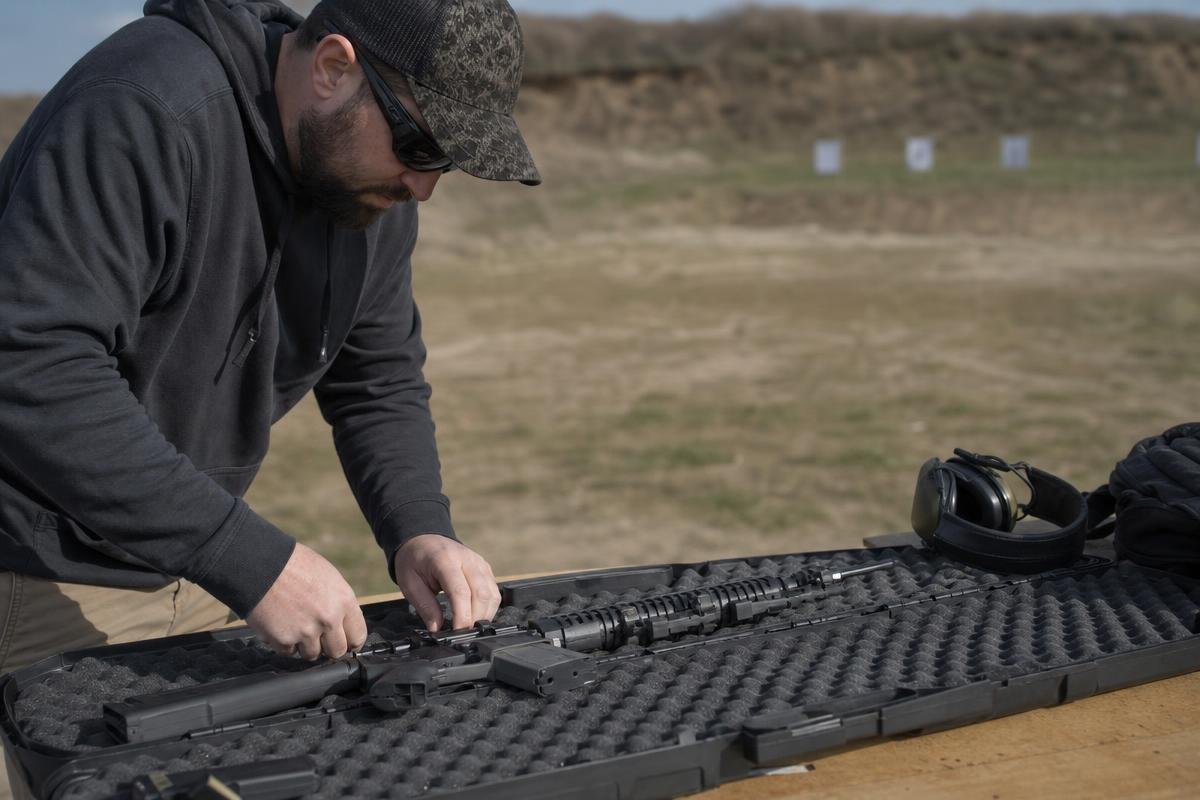
AR15Parts.com is an online retailer shipping from our Denison, TX facility, and we help shooters prepare their equipment before range day. These gun range rules cover safe transport, muzzle control, hearing and eye protection, and following the range officer’s commands. Editorial note: AR15Parts.com does not operate a shooting range, so the facility’s posted instructions and staff direction always control.
Preparing an AR-platform rifle for the range? Ask our team about compatible range accessories and components.
Key Takeaways
- Keep firearms cased, bagged, or holstered until the range directs you to your assigned lane.
- Always keep firearms pointed in a safe direction, generally downrange toward the approved target area.
- Gun range rules require you to follow range officer commands, even if they differ between facilities.
- Before leaving Denison, review the range’s current policies for ammunition, targets, lane access, waivers, guests, and reservations.
What Should You Do First at a Shooting Range?
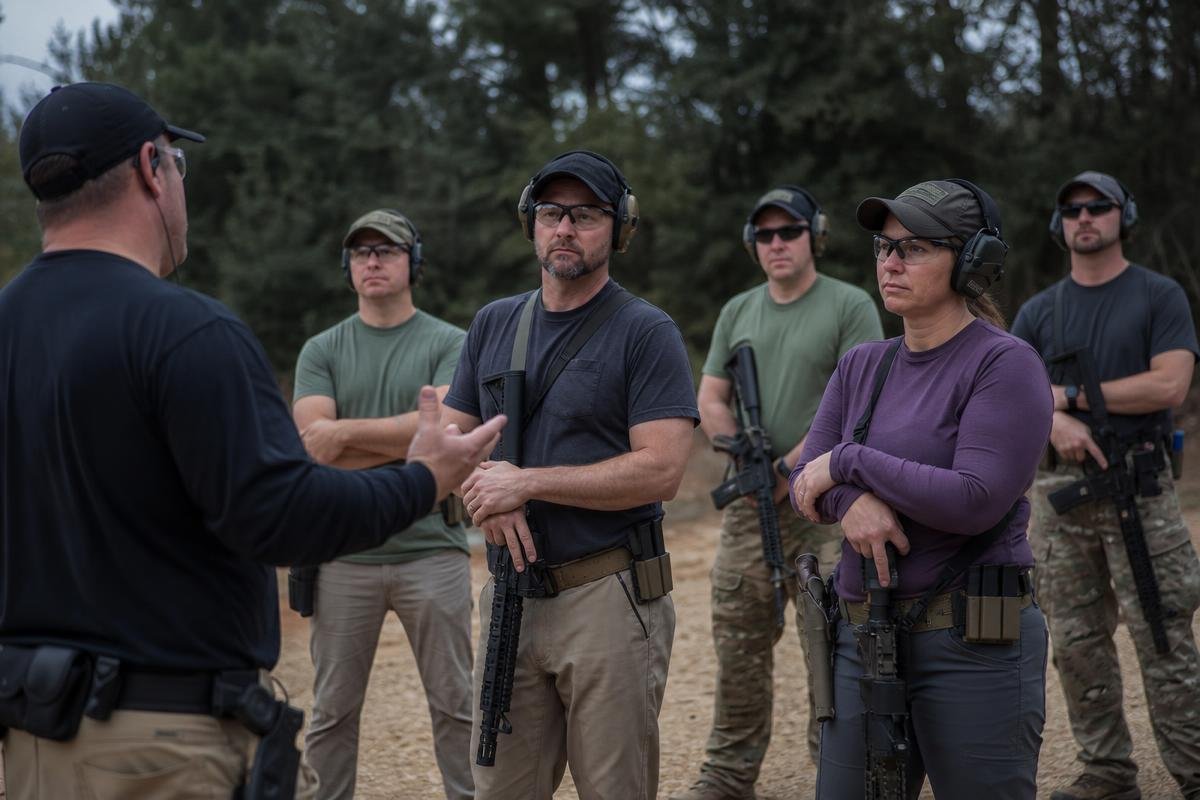
Read the posted rules, check in with staff, and follow the range safety officer’s directions before handling your firearm. The officer has final authority on the firing line, and facility rules may differ across the Denison and greater Texoma area because lanes, backstops, target systems, and outdoor bay layouts differ.
Range Commands You Should Know
Listen for commands before you uncase a firearm or step to the bench. A hot range means firing may begin under the officer's direction. A cold range means firearms must remain untouched while people are downrange.
A cease fire means stop shooting immediately. Keep the muzzle pointed in a safe direction, remove your finger from the trigger, and wait for instructions. “Line is clear” means the officer has confirmed the firing line is safe to approach or reset as directed.
These shooting range safety rules apply whether you brought a familiar rifle or a newly assembled setup. Firearm range etiquette starts with watching the officer, not assuming the next step.
Confirm Facility Rules Before You Pack
Check each facility’s current rules before arrival. Ask about steel-core, tracer, and incendiary ammunition, plus rapid fire, holster work, shotguns, approved target types, and caliber limits. A rule that works at one range may be prohibited at another.
Also confirm waiver, rental, and guest procedures. Some facilities limit guest access, require signed waivers before entry, or restrict rental firearms to certain lanes. Range policies in Texas vary by facility, including how loaded firearms may be handled outside an active firing position.
For gear questions before range day, call us at (888) 706-0633 or contact our team. For facility-specific rules, contact the range directly and rely on its current posted guidance.
Transport Firearms to Your Assigned Lane Safely
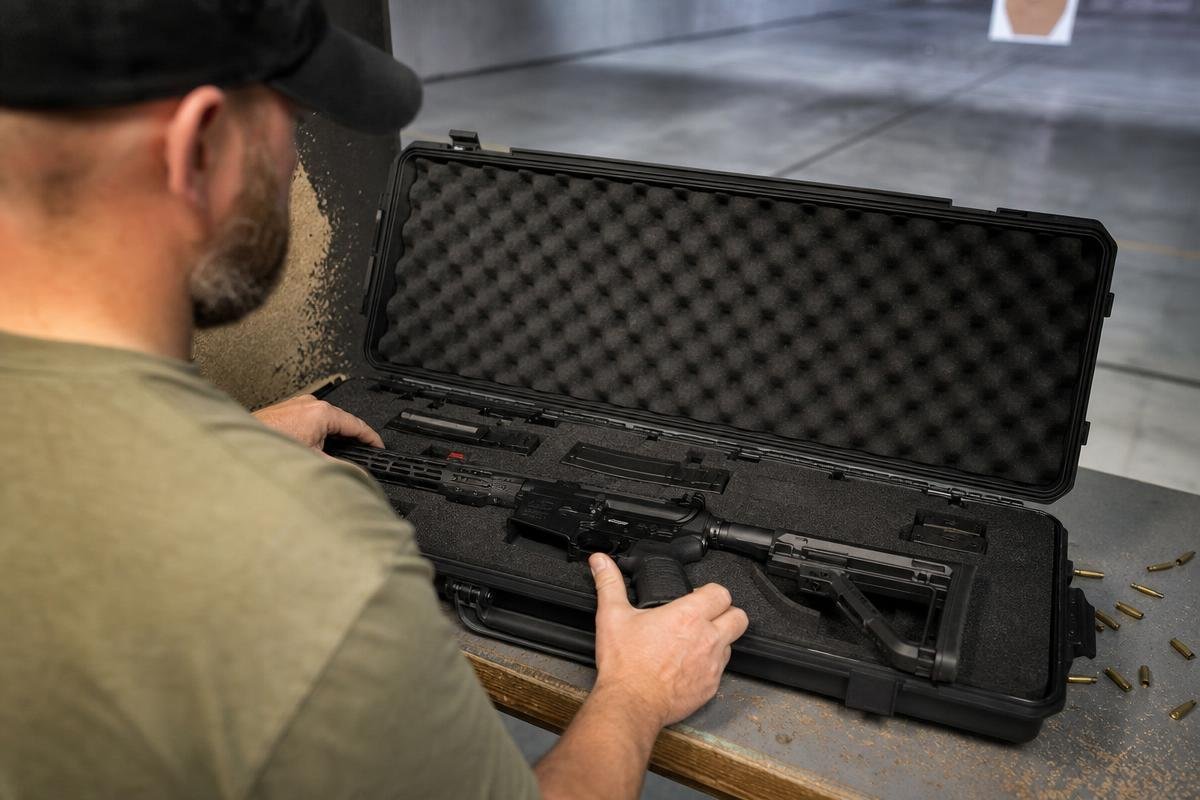
Arrive with your rifle case, range bag, eye protection, and hearing protection organized before you enter. Many facilities require firearms to remain cased, bagged, or holstered until staff assigns a lane or gives another instruction, so check before uncasing.
Keep Firearms Secured Until Staff Directs Otherwise
Transport the firearm unloaded unless the facility specifically instructs otherwise. Do not handle a firearm in a lobby, parking area, restroom, or other common space. Those areas are not the firing line.
Ask staff if you are unsure where uncasing is allowed. Keep rifles and upper assemblies protected in a case or range bag until you are at the correct bench or bay.
Set Up the Bench With the Muzzle Downrange
At your assigned lane, place the case on the bench with the muzzle facing downrange before opening it. Keep the action open when the firearm is not in use. Keep ammunition separate until the line is hot and you are ready to load.
- Point all firearms in a safe direction, downrange toward the target.
- Keep your finger outside the trigger guard until you are on target and ready to fire.
- Do not turn around or carry a firearm behind the firing line.
- Follow staff commands immediately during a cease-fire.
These are general gun range rules, not legal advice about vehicle carry, permits, or Texas transport laws. For legal questions, consult current official Texas resources or qualified legal counsel.
Follow These Firing-Line Rules Every Time You Shoot
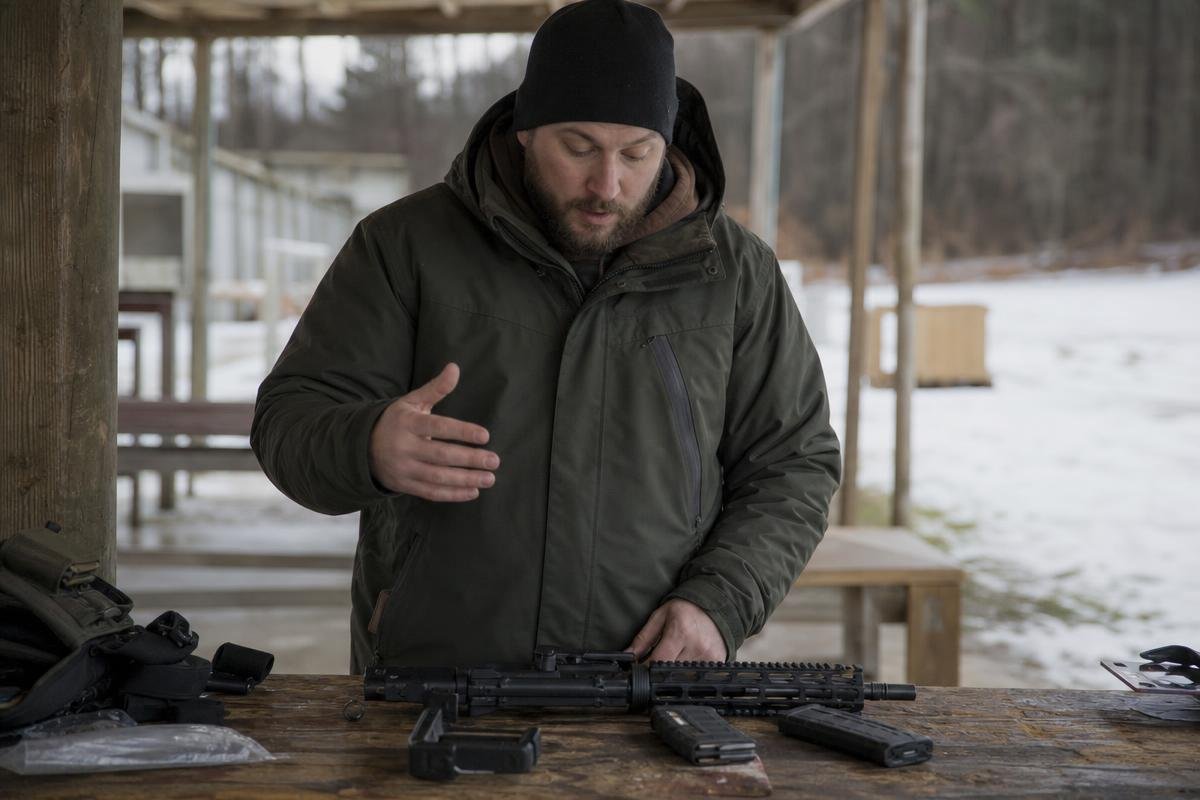
Firing-line rules keep a routine adjustment, malfunction, or conversation from becoming a muzzle-direction problem. These shooting range safety rules apply in indoor lanes and outdoor bays, although staff direction controls the exact procedure at every facility.
Muzzle Direction and Trigger Discipline
Keep firearms pointed downrange at all times. Your trigger finger stays straight and outside the trigger guard until your sights are on the target and you intend to fire. This applies while loading, unloading, checking an optic, or setting a rifle on the bench.
Handle a loaded firearm only at the active firing position. Do not turn around with a firearm in your hands. If you need help with a sling, magazine, optic, or rifle component, set the firearm down safely and ask before moving.
What Should You Do When a Range Calls Cease Fire?
Stop firing immediately, keep the muzzle downrange, remove your finger from the trigger, and make the firearm safe exactly as the range officer directs. Step back from the bench when instructed and do not touch firearms during a cold range.
An AR-15 cycling, extraction, or bolt-related issue must be handled with the muzzle safely downrange. Keep the rifle oriented toward the backstop, keep your finger off the trigger, and do not turn around to show another shooter the problem. Ask the range safety officer for direction if the stoppage is not immediately clear.
Good firearm range etiquette means following the facility’s commands over any general guidance you read elsewhere.
Prepare a Range Day Checklist Before You Leave Home
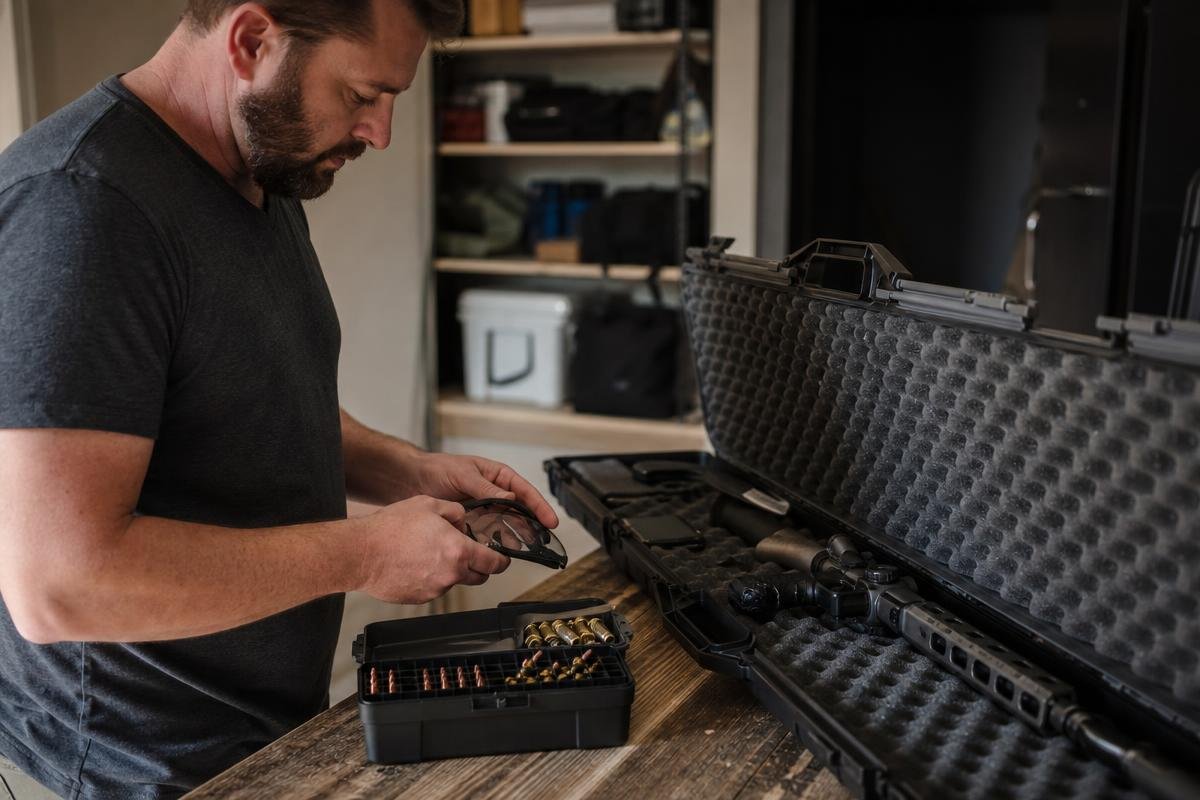
A range day checklist prevents avoidable problems at the counter or your assigned lane. Denison shooters may drive to indoor lanes, outdoor bays, or longer-distance rifle facilities, and those settings can have different target, distance, reservation, and ammunition rules.
Safety and Transport Gear
- Pack wraparound eye protection and hearing protection for every shooter and observer.
- Bring a firearm case, range bag, or holster that keeps the firearm secured during transport.
- Verify the firearm is unloaded before departure. Remove the magazine, clear the chamber, and follow the facility's transport rules.
- Carry government-issued identification and have signed-waiver readiness if the facility requires it.
- Pack a chamber flag if required by the range or useful during cease-fire periods.
A chamber flag does not replace clearing the firearm, but it can give staff and other shooters a visible indication of an open action. Keep the firearm secured until the facility tells you otherwise.
Firearm, Ammunition, and Target Checks
- Match ammunition to the barrel's marked chambering. Do not rely on cartridge appearance alone.
- Bring loaded magazines only if the facility permits them outside the firing line.
- Confirm sights are mounted securely and zeroed after changing an optic, backup sights, mounts, or upper components.
- Pack only approved targets for the facility, including the correct target type for indoor backstops or outdoor yard targets.
- Inspect your firearm before leaving. Check the bore, bolt, magazines, and sling attachment points.
If you changed configurations, confirm your setup before the trip. A barrel marking and the ammunition you pack must match.
Facility Rules to Confirm Before Departure
- Check current gun range rules for waivers, identification, guest procedures, and minor supervision.
- Confirm lane availability, reservations, caliber limits, and private-bay requirements.
- Ask about holster draws, rapid strings, steel targets, and restricted ammunition types before arrival.
- Review rental policies if anyone in your group plans to rent a firearm.
One call or a review of the range’s current website rules can prevent a wasted drive, especially when weather, maintenance, events, or capacity affect outdoor access. Need help checking a rifle setup, upper, or magazine before range day? Call AR15Parts.com at (888) 706-0633.
Guests, Observers, and Coaches Need Their Own Safety Plan
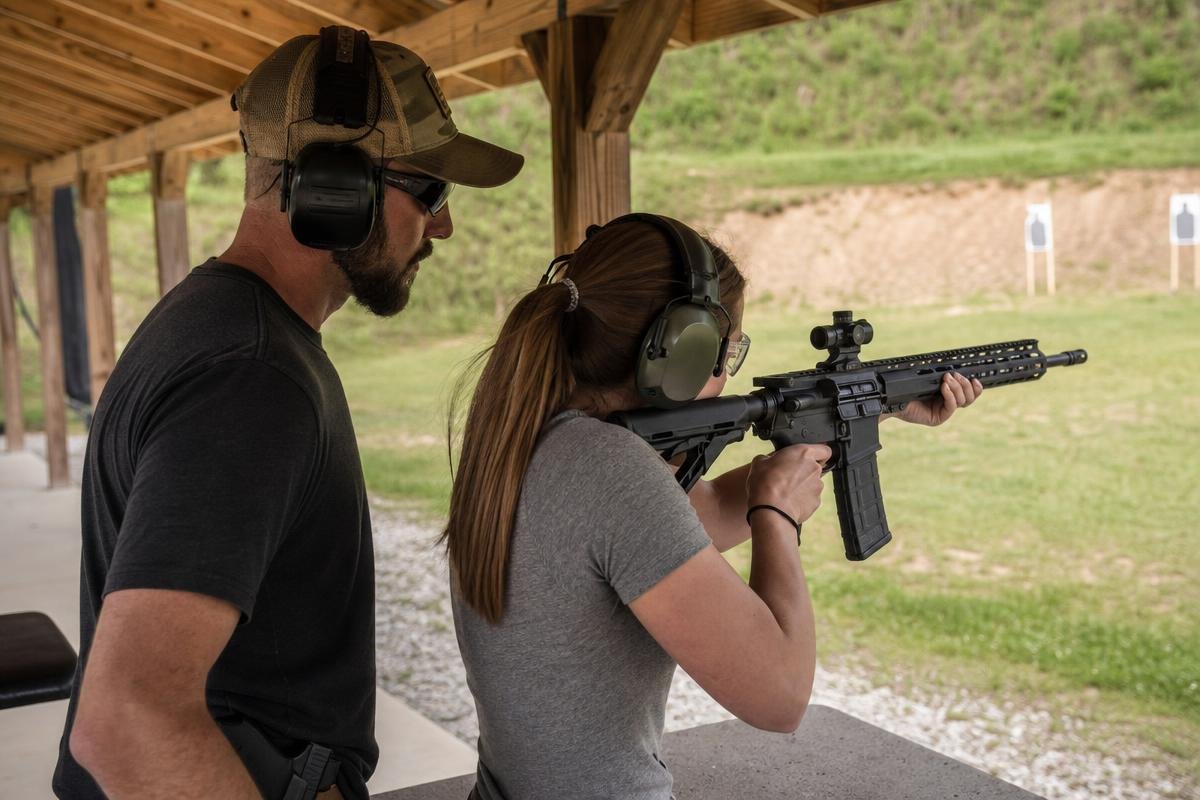
A safe range visit needs a plan for every person present, not only the shooter. For Denison families and first-time shooters, confirm the facility’s current waiver, guest, observer, minor supervision, and age policies before you arrive.
Keep Non-Shooters Behind the Line
Non-shooters should remain behind the firing line unless the range safety officer gives different instructions. They need hearing protection and eye protection too. They should not lean over a bench, reach toward a firearm, or pick up equipment without first telling the shooter.
Ask the range if observers may enter the lane area and how many guests may accompany one shooter. A facility may set different limits during busy periods, in private lanes, or when minors are present.
Coach New Shooters Without Crowding Them
A coach should stand close enough to communicate clearly and watch muzzle direction, trigger discipline, loading steps, and range commands. Stand slightly behind and to the side, not directly in front of the shooter or pressed against them.
Start simple: one firearm, one shooter, one coach. Explain “cease fire,” loading procedures, and how to ask for help before loading. Never reach across the firearm or grab it unexpectedly. Say what you are about to do, then wait for acknowledgment.
Bring a familiar, properly configured rifle for the lesson. If you need a rifle, browse our AR-15 complete rifles ahead of range day, but the facility’s shooting range safety rules always come first.
Confirm Gun Range Rules Before You Drive
Range policies in Texas vary by facility, so confirm current requirements before you load up. Indoor lanes, outdoor bays, and longer rifle-distance facilities can have different limits for calibers, ammunition, targets, and firing pace.
Check Caliber and Target Rules for Your Setup
Ask about lane availability, maximum distance, permitted calibers, target materials, rapid-fire policies, reservations, waivers, and guest rules. Confirm whether the facility permits your planned zeroing, positional practice, or longer-distance session.
Indoor lanes often have backstop and target-carrier restrictions, while outdoor facilities may have weather-related closures, specific bay assignments, or procedures for target changes. Check chamber markings and ammunition compatibility before range day, especially after changing an upper, barrel, or load. A new configuration should receive a safe function check under facility operating rules before you plan an extended session.
Recheck Facility Rules on Range Day
Call or read a facility’s current rules on the same day if possible. Policies can change for lane capacity, weather, maintenance, special events, steel targets, magnetic ammunition, or rifle-caliber access.
Ask what paperwork must be completed before entry and what identification is required. Confirm how guests are handled, because some facilities require each person present to sign a waiver. For help matching a build to your planned ammunition, contact AR15Parts.com before your trip.
Frequently Asked Questions
What Are the Basic Gun Range Rules?
Basic gun range rules are simple: follow range officer commands, keep firearms pointed in a safe direction, keep your finger off the trigger, and obey posted facility rules. These shooting range safety rules apply to every lane, firearm, and shooter.
Do Firearms Need to Be Unloaded When Entering a Range?
Many facilities require firearms to arrive unloaded and remain cased, bagged, or holstered until you reach an assigned lane. Posted Texas gun range rules control, so confirm that policy before handling any firearm.
Can Guests and Observers Stand Near the Firing Line?
Guests and observers often must stay behind the firing line unless a range officer permits closer supervision. Some facilities also require signed waivers, adult supervision, or limits on how many people may occupy a lane.
What Should I Do if My Firearm Malfunctions?
Keep the muzzle pointed downrange, keep your finger off the trigger, and request range officer assistance. Do not turn around with a firearm in hand or attempt a repair while other shooters are active.
Is Eye and Hearing Protection Required at a Shooting Range?
Most ranges require eye and hearing protection for shooters, guests, and anyone near active lanes. Safety glasses protect against ejected brass and debris, while earplugs or earmuffs reduce repeated blast exposure.
What Ammunition Is Allowed at a Shooting Range?
Allowed ammunition depends on each facility’s posted policy. Ranges may restrict steel-core, tracer, incendiary rounds, certain calibers, or target combinations because of backstop and fire concerns. Confirm ammunition rules before bringing a 5.56 NATO complete upper or another caliber setup.
Firearm range etiquette starts with checking current facility rules and packing only approved gear. Before your next range day, check your facility's current rules and pack your gear with purpose. If you need AR-15 parts, accessories, or a setup check before you go, contact AR15Parts.com at (888) 706-0633.
Ready to Get Started with AR15Parts.com?
Call (888) 706-0633 to speak with our team directly. We're ready to answer your questions, walk you through your options, and help you find the right solution for your needs. Whether you're just starting to plan or ready to move forward, we'll make the process simple and stress-free. Reach out today and let's talk about how we can help.