
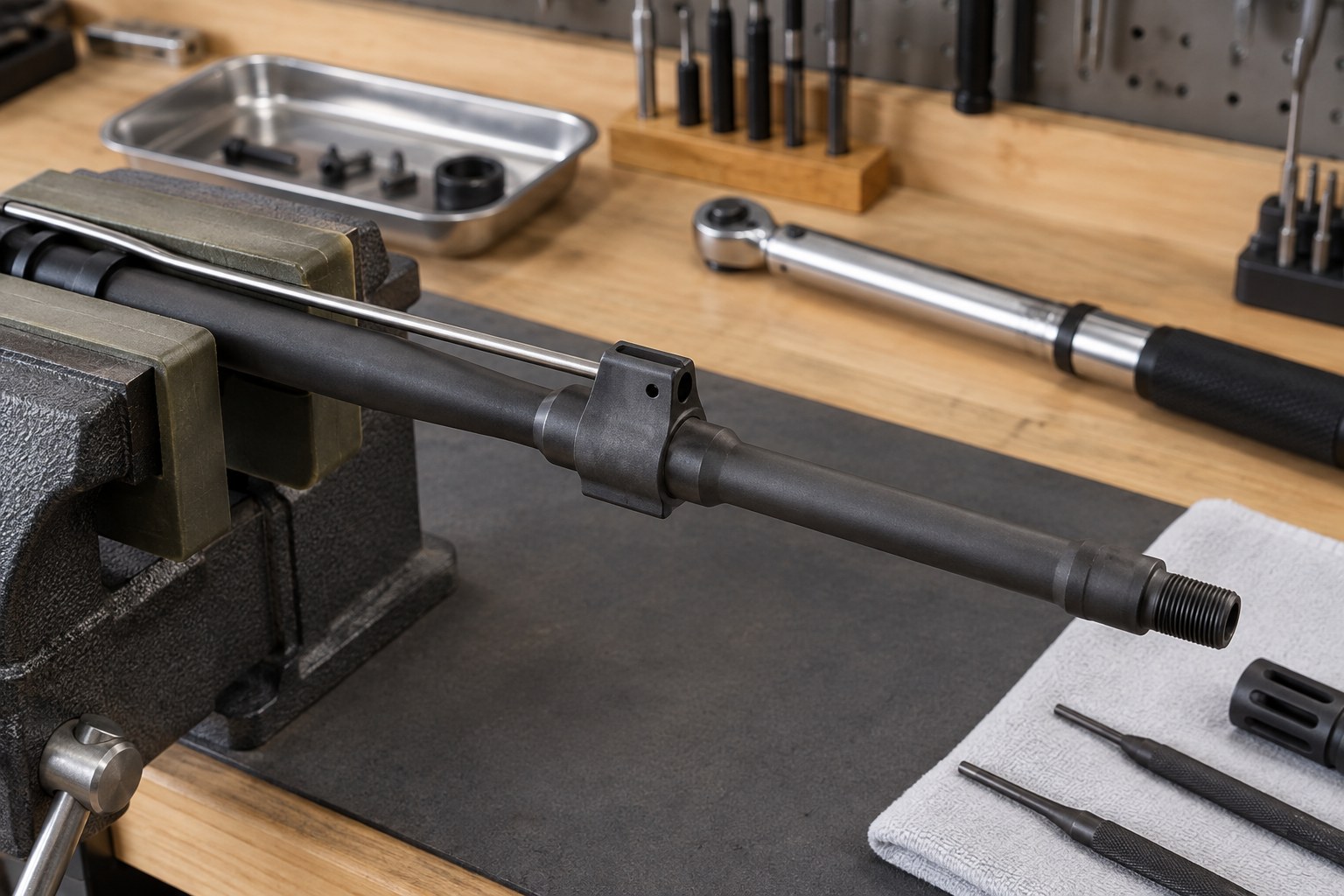
AR15 gas port size is the diameter of the small hole drilled through the barrel under the gas block, and it is one of the quiet variables that decides whether a rifle cycles smoothly or fights you at the range. AR15Parts.com ships barrels built around a matched gas system length, from short pistol-length setups to full rifle-length builds, and understanding how port size interacts with barrel length, gas system length, and ammunition helps explain why two similar-looking uppers can run very differently. That matters most for Denison and Texoma-area builders troubleshooting a new build or adding a suppressor. Have questions about a specific barrel or gas system combination?
Key Takeaways
- The gas port is the hole drilled through the barrel under the gas block, and its diameter works together with gas system length to control how much pressure reaches the bolt carrier group.
- Manufacturers size the gas port to match the barrel's intended gas system length, so the right port size for a 16 inch carbine-length barrel is not the right size for an 18 inch rifle-length barrel.
- Dwell time, the interval between the bullet passing the gas port and leaving the muzzle, is what actually determines how much gas energy reaches the action before pressure drops.
- An over-gassed rifle tends to eject brass forward and hard, cycle harshly, and beat up components faster, while an under-gassed rifle can short-stroke, fail to lock back, or fail to eject.
- Brass ejection pattern is a useful diagnostic clue, not a precise measurement, and should be confirmed alongside other checks before changing parts.
- An adjustable gas block is the standard tool for fine-tuning gas flow after the barrel is built, and gas port drilling itself should always be left to a qualified gunsmith.
What Is the AR15 Gas Port and Why Does Its Size Matter?
The gas port is a single hole drilled through the barrel wall, positioned along the gas system length under where the gas block clamps or pins in place. When a round fires, expanding gas follows the bullet down the bore. Once the bullet passes the port, a portion of that gas bleeds off through the hole, travels through the gas block and gas tube, and pushes against the bolt carrier group to unlock the action, extract the spent case, and strip a fresh round from the magazine.
AR15 gas port size is simply how large that hole is. A larger port lets more gas volume into the system at a given pressure, and a smaller port restricts flow. Because the port sits at a fixed distance from the chamber for each gas system length, port size and gas system length are always considered together rather than as separate variables.
How Gas System Length Changes the Picture
AR15 barrels commonly use one of four gas system lengths, measured by roughly how far the gas port sits from the chamber: pistol, carbine, mid-length, and rifle-length. A rifle-length system places the port farthest down the barrel, so the bullet travels longer before gas is tapped, while a pistol-length system taps gas almost immediately after the bullet leaves the chamber area. Because the available dwell time is so different between these lengths, a barrel maker does not use the same gas port diameter across all of them. Manufacturers size the port for the barrel's intended gas system length, twist, caliber, and expected use, which is why choosing the correct gas system length for a build is part of the same decision as gas port size, not a separate one.
| Gas System Length | Typical Barrel Length Range | General Port Location |
|---|---|---|
| Pistol | Under 10 inches | Closest to the chamber |
| Carbine | 10 to 16 inches | A short distance down the barrel |
| Mid-length | 14 to 18 inches | Roughly midway down a shorter barrel |
| Rifle-length | 18 inches and longer | Farthest from the chamber |
Browse current AR-15 and AR-10 barrel options to compare gas system length across calibers and profiles. Each product listing notes the gas system length, which is the detail worth checking before ordering a gas block or gas tube.
How Does Gas Port Size Affect Dwell Time and Bolt Velocity?
Dwell time is the window between the moment the bullet passes the gas port and the moment it exits the muzzle. During that window, gas keeps flowing into the system and pressure keeps driving the bolt carrier group rearward. A longer dwell time, typical of rifle-length systems, spreads that same energy delivery over more distance and time, which tends to produce a smoother, lower-stress cycling impulse. A shorter dwell time, typical of pistol-length and short carbine-length systems, delivers a shorter but often sharper pulse of pressure, so those barrels commonly use a proportionally larger gas port to get enough gas volume into the system before the bullet clears the muzzle.
Bolt velocity, meaning how fast the bolt carrier group accelerates rearward, is the practical result of gas port size, gas system length, and chamber pressure working together. Too little energy reaching the carrier and it will not travel far enough rearward to complete the cycle. Too much energy and the carrier moves rearward faster and harder than the design intends. Neither the gas port nor the gas system length works in isolation. Buffer weight, spring rate, ammunition pressure, and whether a suppressor is attached all change how much bolt velocity a given port size actually produces.
Why Manufacturers Do Not Publish One Universal Port Diameter
There is no single correct gas port diameter for every AR15 barrel, because the right size depends on the combination of gas system length, barrel length, caliber, and intended use. A barrel intended for suppressed fire, for example, is often paired with a different tuning approach than the same length barrel intended to run only unsuppressed, since a suppressor adds backpressure to the system. Rather than guessing at a diameter, follow the barrel manufacturer's published specification for that specific product, or ask the manufacturer directly if the listing does not include it.
What Are the Symptoms of an Over-Gassed or Under-Gassed AR15?
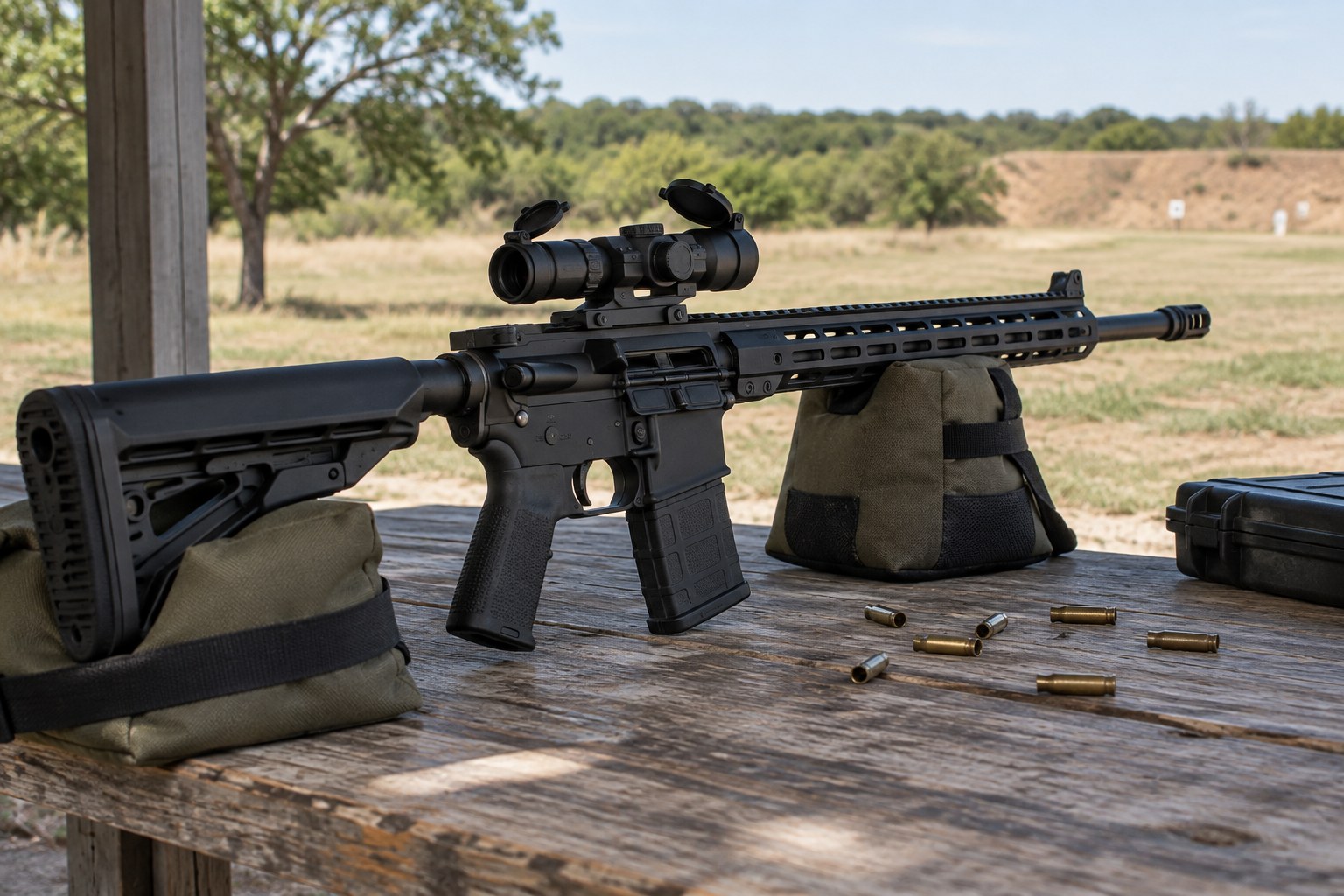
Because gas port size and gas system length are difficult to inspect visually, most shooters learn to read the symptoms a rifle produces during cycling. These symptoms are not exclusive to gas port size. A dirty gas system, a bent gas tube, a worn buffer spring, or the wrong buffer weight can produce very similar signs, so treat these as starting points for diagnosis rather than a final answer.
Signs of an Over-Gassed Rifle
- Recoil impulse feels harsher and snappier than expected for the caliber.
- The bolt carrier group slams into the buffer tube hard enough to feel through the stock.
- Spent brass ejects forward and to the right with unusual force.
- Components such as the buffer, extractor, and bolt lugs show accelerated wear over time.
- Excess gas is blown back toward the shooter's face, especially with a suppressor attached.
Signs of an Under-Gassed Rifle
- Short stroking, where the bolt carrier group does not travel far enough rearward to fully eject the spent case or strip a fresh round.
- Failure to lock back on an empty magazine.
- Sluggish or inconsistent ejection, sometimes with brass barely clearing the ejection port.
- Occasional failures to feed the next round.
Reading Brass Ejection Pattern as a Diagnostic Clue
Where fired brass lands relative to the shooter, often described using clock positions with the muzzle as twelve o'clock, is commonly used as a rough diagnostic indicator. Brass that ejects consistently far forward can point toward an over-gassed condition, while brass that dribbles out closer to six o'clock or fails to clear the action can point toward an under-gassed condition. This pattern is influenced by more than gas port size alone, including ejector tension, buffer weight, and how the rifle is held, so it works best alongside other checks rather than as a standalone diagnosis.
How Do Barrel Length, Ammunition, and Suppressors Change Gas Needs?
Barrel length and gas system length are related but not identical, since two barrels of the same overall length can use different gas system lengths depending on how the manufacturer designed them. A shorter barrel generally leaves less room between the gas port and the muzzle, which shortens dwell time and often calls for a larger gas port relative to a longer barrel using the same gas system length. If you are comparing complete builds, our complete AR-15 and AR-10 uppers list the gas system length for each configuration alongside barrel length.
Ammunition also changes the equation. Handloads or factory loads running notably higher or lower pressure than the load a barrel was tuned around can shift dwell time and bolt velocity even with the gas port unchanged. This is one reason a rifle that ran reliably with one type of ammunition can behave differently with another. Reviewing the caliber-specific specifications on our AR-15 parts and accessories pages before ordering a gas tube or gas block can help confirm the gas system length you already have.
Suppressors add measurable backpressure to the gas system, which increases the gas volume and pressure reaching the bolt carrier group even though the gas port itself has not changed. A rifle that was well tuned unsuppressed can become noticeably over-gassed once a suppressor is added, which is one of the most common reasons shooters look at gas port size and gas system tuning in the first place.
How Does an Adjustable Gas Block Help Tune Gas Port Behavior?
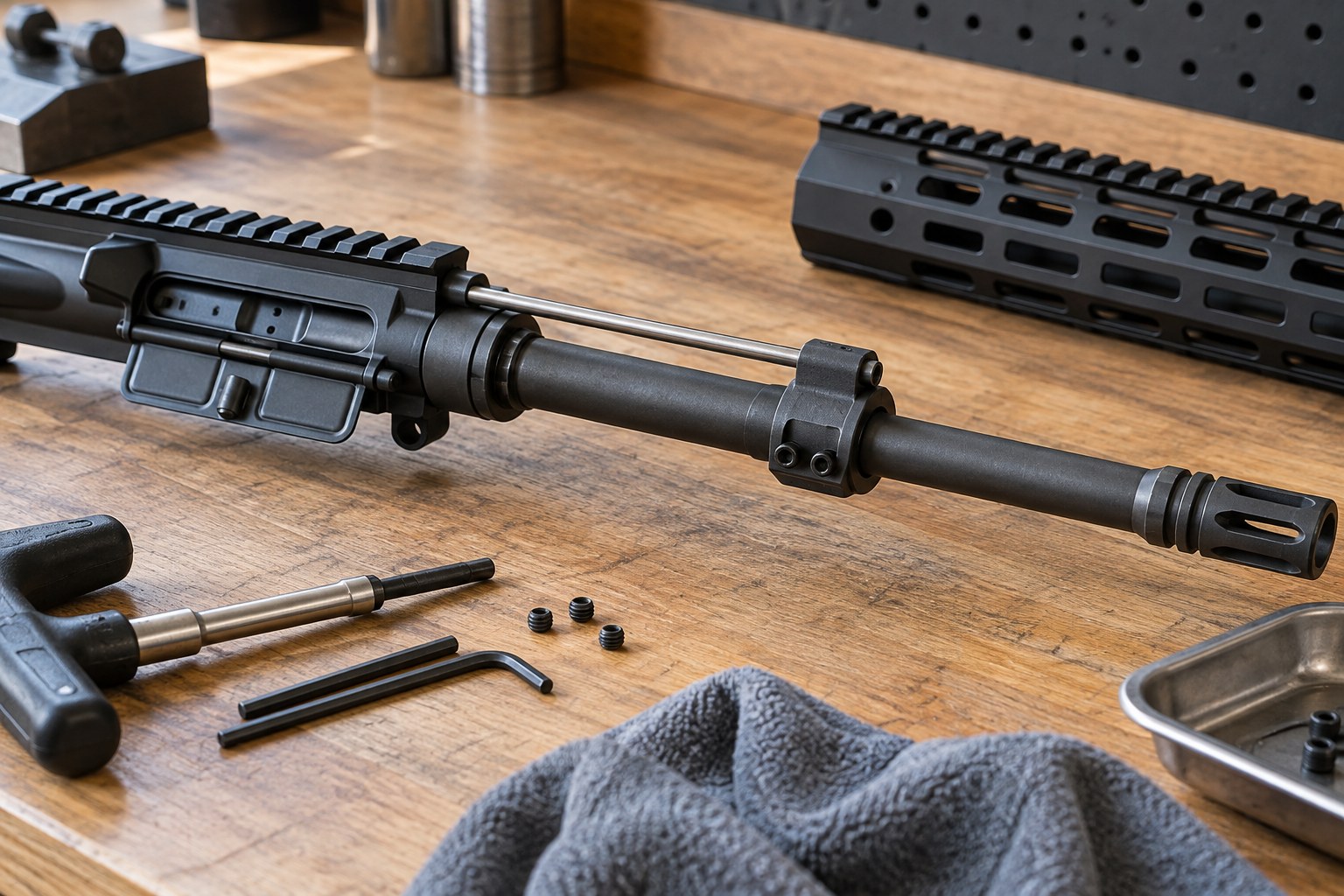
An adjustable gas block replaces a standard fixed gas block and adds a set screw or dial that restricts how much gas passes from the gas port into the gas tube. It does not change the gas port itself, but it lets a shooter reduce the effective gas flow reaching the bolt carrier group without touching the barrel. This makes it a practical way to correct an over-gassed condition, particularly one caused by adding a suppressor, or to fine-tune cycling for different ammunition.
An adjustable gas block cannot fix an under-gassed rifle by adding more gas than the fixed port allows, and it is not a substitute for correct gas system length in the first place. For more background on selecting and installing one, see the adjustable gas block guide from our AR Upper Hub. If tuning does not resolve a persistent cycling problem, or if the rifle needs a different gas port size than it currently has, that work calls for a qualified gunsmith rather than drilling or reaming the port at home.
Why Enlarging a Gas Port Yourself Is Not the Answer
Enlarging a gas port changes it permanently, and an oversized port cannot be made smaller again without replacing the barrel. A port that is too large for the barrel's intended gas system length can create an over-gassed condition that stresses components and cannot be corrected with an adjustable gas block once the hole has been opened too far. If a rifle appears to need more gas than an adjustable gas block can provide, have a qualified gunsmith evaluate the barrel, gas system length, and ammunition before any material is removed from the gas port.
Ready to compare barrel options with a specific gas system length in mind?
Gas System Help for Denison and Texoma Builders
North Texas humidity around Lake Texoma, along with the dust and grit that come with range days and hunting trips for deer and hogs, can accelerate carbon buildup in a gas system. That buildup can mimic gas port or gas system problems even on a correctly built barrel, so a clean gas tube, gas key, and bolt carrier group should be part of any troubleshooting checklist before assuming the gas port itself is the issue.
If a build is short stroking, ejecting harshly, or behaving differently after a suppressor was added, our team can help you confirm the right gas system length and gas setup for the barrel you are running. AR15Parts.com is reachable at 4000 Texoma Parkway, Denison, TX 75020, or by phone at (888) 706-0633.
For questions specific to a caliber, twist rate, or barrel profile, our customer service team can walk through current product specifications and help confirm the gas system length that matches your build before you order a gas block or gas tube.
Frequently Asked Questions
What Is a Normal AR15 Gas Port Size?
There is no single normal size, because the correct diameter depends on gas system length, barrel length, caliber, and intended use. Manufacturers size each barrel's gas port to match its specific gas system length and design goals, so always check the barrel manufacturer's published specification rather than assuming one number applies across every build.
Can a Gas Port Be Too Small?
Yes, a port that is undersized for its gas system length and barrel combination can restrict gas flow enough to cause short stroking, failure to lock back, or inconsistent ejection. This is more common on shorter barrels with reduced dwell time, where the system has less margin for error, and it should be diagnosed by a qualified gunsmith rather than assumed from symptoms alone.
Can a Gas Port Be Too Large?
Yes, an oversized port can deliver more gas energy than the buffer, spring, and other components are designed to absorb, leading to harsh cycling, forward brass ejection, and faster wear on parts like the extractor and buffer. Because a port cannot be made smaller again once material is removed, any question about port size should go to a qualified gunsmith before modifying the barrel.
Does a Suppressor Change What Gas Port Size I Need?
A suppressor does not change the gas port itself, but it adds backpressure that increases the gas volume and pressure reaching the bolt carrier group. Many suppressed shooters address the resulting over-gassed symptoms with an adjustable gas block rather than modifying the barrel, since that keeps the change reversible.
How Do I Know If My Ejection Pattern Means My Rifle Is Over-Gassed?
Brass that ejects consistently far forward with noticeable force is a common indicator of an over-gassed rifle, but it should be confirmed alongside other symptoms like recoil impulse and how hard the bolt carrier group hits the buffer tube. Ejector tension and buffer weight also influence ejection pattern, so treat it as one data point rather than a complete diagnosis.
Should I Try to Drill Out My Own Gas Port?
No, drilling or reaming a gas port is not reversible and should always be left to a qualified gunsmith who can evaluate the barrel, gas system length, and intended use first. An adjustable gas block is the appropriate tool for reducing gas flow on an over-gassed build, and a qualified gunsmith should evaluate any rifle that still short strokes or fails to lock back after basic cleaning and inspection.
Ready to Get Started with AR15Parts.com?
Call (888) 706-0633 or email [email protected] to talk through gas system length, gas port size, and barrel options for your next build. Our team is available Monday through Friday, 8:00 AM to 4:00 PM Central, and can help you compare barrels before you order.