
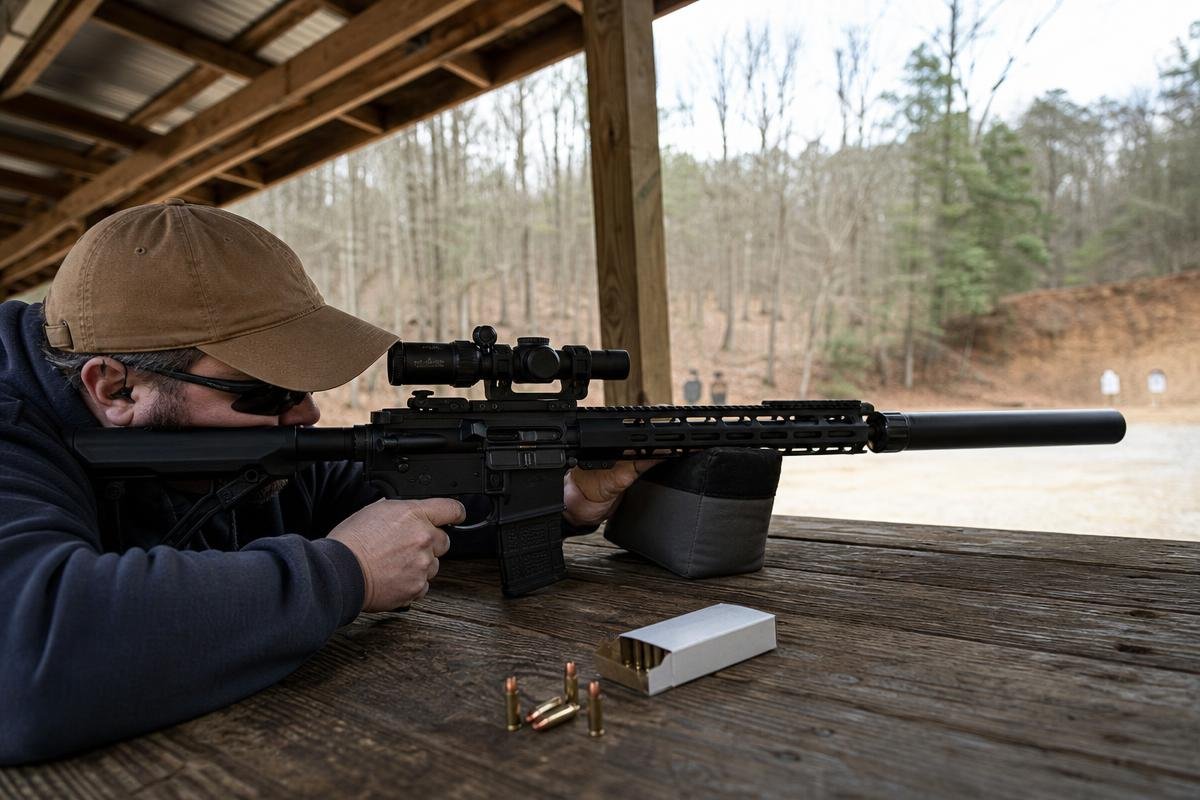
Why subsonic ammo matters for suppressed AR-15 shooting is simple: a load that remains below the local speed of sound avoids the ballistic crack produced by a supersonic bullet. That can reduce the rifle’s overall sound signature, although a semiautomatic AR-15 still produces muzzle, action, and impact noise. Reliable function and practical trajectory are separate considerations. Need help selecting parts for a suppressed AR-15 setup? contact our team or call our team.
Key Takeaways
- Subsonic loads are designed to stay below the local speed of sound, but actual velocity can vary by barrel length, temperature, ammunition lot, and conditions.
- A suppressor primarily reduces muzzle blast, while a subsonic projectile avoids the downrange ballistic crack associated with supersonic flight.
- .300 Blackout is commonly chosen for quiet AR builds because it supports heavy subsonic bullets in the AR-15 platform.
- Reliable cycling depends on the barrel, gas system, buffer system, suppressor, and the specific load being used.
Why Subsonic Ammo Matters for a Suppressed AR-15
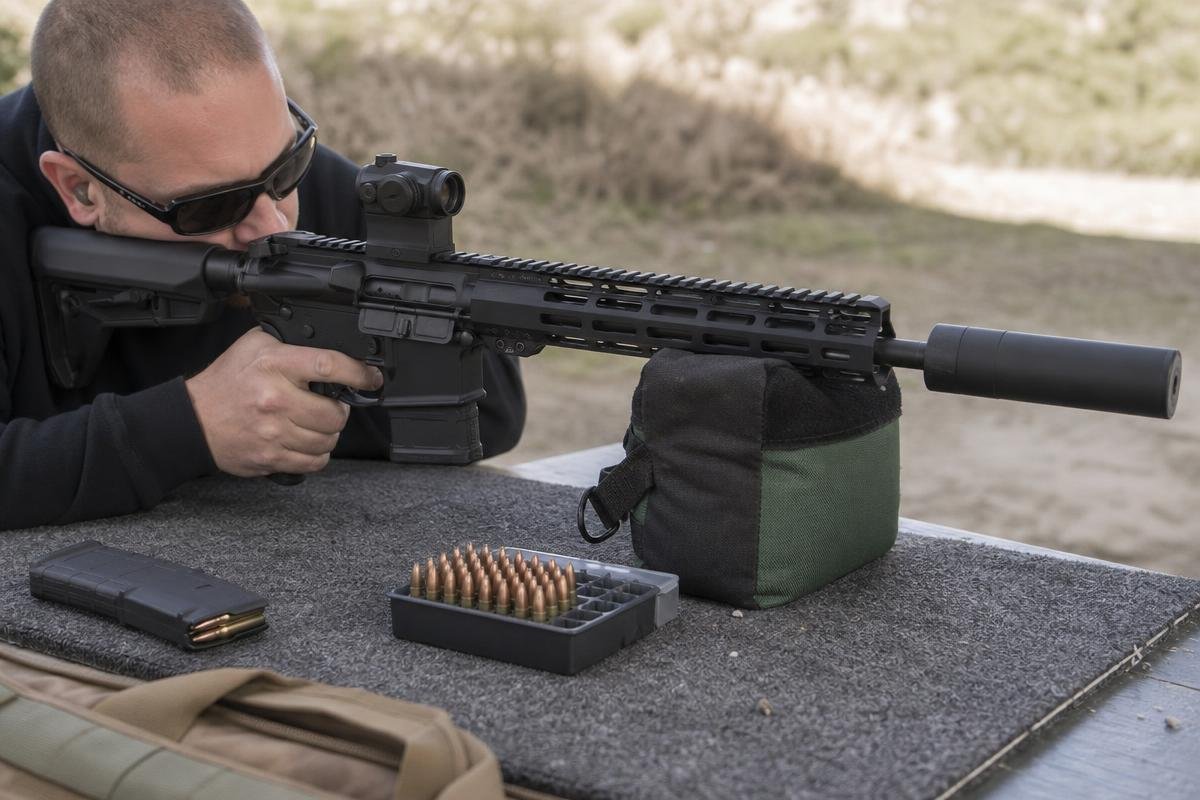
For a shooter prioritizing reduced report, bullet velocity matters as much as the suppressor itself. A projectile traveling above the speed of sound creates a pressure wave in flight, often called a sonic crack. A load that stays below that threshold removes that particular source of sound, but it does not make the firearm silent.
You will still hear the bolt carrier cycling, gas venting from the action, the bullet striking the target, and reflected sound from nearby surfaces. Lower velocity also means more drop, more holdover at distance, and different terminal-performance considerations than a faster load.
Sound Reduction Starts With Bullet Speed
Subsonic AR ammunition is most often associated with .300 Blackout because the cartridge can use heavy bullets while remaining below the sound barrier in practical AR barrel lengths. Many subsonic .300 Blackout loads use bullets in roughly the 190-grain to 220-grain range, though published velocities and projectile weights vary by manufacturer. Our 300 Blackout uppers offer a dedicated chambering option for shooters planning this type of build.
If avoiding a ballistic crack is important, do not rely solely on the word “subsonic” on the box. Confirm velocity safely in your own rifle with a chronograph when possible, since a load's speed can change with barrel length, temperature, elevation, lot variation, and ammunition condition.
Does Subsonic Ammo Make a Suppressed AR-15 Quiet?
No. Subsonic ammunition can substantially reduce the overall sound signature by avoiding the ballistic crack, but a suppressed semiautomatic AR-15 is not silent.
The shooter’s experience can differ significantly from what someone hears beside or downrange of the rifle. Barrel length, suppressor design, ammunition, gas setting, shooting position, and walls or covered structures all influence perceived sound. Wear appropriate hearing protection and follow the rules of the specific facility or property where you shoot.
Four Potential Sound Sources From a Suppressed Rifle
A suppressed semiautomatic AR-15 still has several distinct sound sources:
- Muzzle blast: Expanding propellant gas at the muzzle, which the suppressor is designed to reduce.
- Mechanical action noise: The bolt carrier cycling, buffer movement, and magazine spring movement.
- Impact noise: The bullet striking a berm, steel target, or other backstop.
- Downrange sonic crack: The pressure wave from a bullet moving faster than sound.
At a covered bench or near hard barriers, reflected sound can make a setup seem louder than it does in open air. That is one reason sound comparisons between rifles are difficult without identical ammunition, meters, placement, and environmental conditions.
Why Bullet Speed Changes the Sound Downrange
The speed of sound is not a single fixed number for every shooting condition. It changes with air temperature and other atmospheric conditions. Loads marketed as subsonic are intended to remain below that threshold, but a particular barrel may produce more velocity than the manufacturer’s test barrel.
Supersonic loads generally offer a flatter trajectory and more retained velocity at distance. Subsonic loads trade that reach for a lower sound signature. A .300 Blackout rifle can accommodate both roles, but the rifle should be zeroed and tested with the load actually intended for use.
Subsonic Vs Supersonic Ammo for a Suppressed AR-15
Subsonic ammunition is generally the better choice when reduced sound signature is the priority. Supersonic ammunition generally provides a flatter trajectory and more retained energy at distance. The better option depends on the range, target, and function requirements of your specific setup.
Side by Side Differences That Matter at the Range
A subsonic load can reduce overall sound, while a supersonic load usually makes range estimation and hits at longer distances easier because of its flatter flight path. Those tradeoffs become especially noticeable when switching between heavy subsonic .300 Blackout and lighter supersonic .300 Blackout loads.
| Factor | Subsonic | Supersonic |
|---|---|---|
| Sonic crack | Designed to avoid a ballistic crack when velocity stays below the local sound barrier | Ballistic crack remains |
| Perceived suppressed sound | Lower overall signature | Higher due to bullet crack |
| Recoil impulse | Often softer, varies by load and gas setup | Usually sharper |
| Trajectory | More drop and holdover | Flatter at distance |
| Retained energy | Limited by lower velocity | Generally higher at range |
| Cycling margin | Can be narrower | Usually broader |
| Common use | Close-range training, sound reduction | General range use, longer shots |
Choosing the Load Around Your Actual Use
Heavy subsonic bullets can retain useful momentum, but their slower speed produces meaningful drop as distance increases. Zero a rifle with the specific load you plan to use, record confirmed holds at practical distances, and do not assume a zero for a light supersonic round will transfer to a heavy subsonic round.
A 300 Blackout AR is often selected because it can be configured around both subsonic and supersonic ammunition, but a setup optimized for one may not run the other the same way. Powder type, gas-port size, buffer weight, suppressor backpressure, magazine condition, and ammunition lot can all affect function.
Compare a dedicated .300 Blackout configuration with your intended ammunition before you build.
Will Subsonic 300 Blackout Cycle in Every AR-15?
No. A subsonic .300 Blackout load will not necessarily cycle every AR-15 reliably, even when a suppressor is installed.
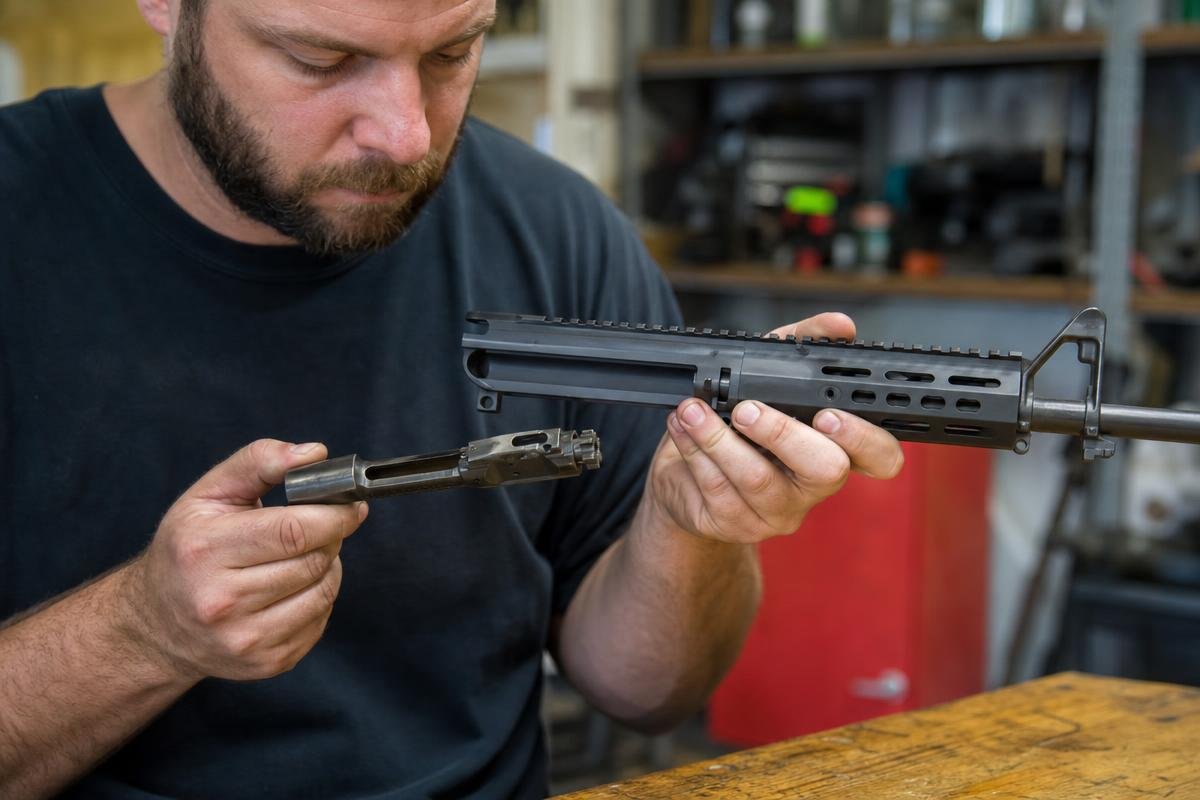
Reliable function depends on whether the rifle receives enough gas and bolt-carrier energy to complete extraction, ejection, feeding, and bolt lock-back. Subsonic loads have different pressure and dwell-time characteristics from supersonic loads, so troubleshooting should begin with the complete system rather than one part.
Start With Ammunition, Chambering, and Basic Function
Confirm that the ammunition matches the chamber before diagnosing the rifle. .300 Blackout is a common choice for suppressed AR use, but no individual load is guaranteed to cycle every rifle. Barrel length, bullet weight, powder charge, suppressor backpressure, and the rifle’s gas system all matter.
Begin with a clean, properly lubricated bolt carrier group. Verify that the carrier moves freely in the upper, the gas key is secure, and magazines feed the selected ammunition reliably. Test with consistent factory ammunition before changing parts, and keep clear notes on load, suppressor, settings, and malfunctions.
Check Gas Delivery Before Changing Parts
Do not change the buffer first. Inspect gas-block alignment, the gas tube, the carrier gas key, and the gas system for carbon leakage or loose hardware before assessing buffer weight and spring selection.
Test with the intended suppressor where lawful, using the same ammunition you plan to shoot. A suppressor can add backpressure and help cycling, but it cannot correct a blocked gas port, misaligned block, dry carrier, damaged magazine, or weak ammunition. Carbon buildup and dry conditions can expose a rifle that already has limited cycling margin.
Tune One Variable at a Time
Change one part or setting, then test again with a controlled number of rounds. A lighter buffer or different spring may help a properly gassed rifle cycle a particular subsonic load, but it can also change how the rifle handles supersonic ammunition.
An adjustable gas block can help tune a specific rifle, load, and suppressor combination. It cannot create gas energy that the barrel and ammunition do not produce. Do not open a gas port indiscriminately, and do not stack buffer, spring, and gas changes at the same time.
AR15Parts.com ships from our Denison, TX facility. Call (888) 706-0633 with your chambering, barrel length, intended ammunition, and current setup if you need help comparing build components.
Need to compare components for a suppressed-build configuration?
Choosing a Cartridge and Upper for Suppressed Subsonic Shooting
Choose the cartridge and upper before buying ammunition based only on sound claims. Chambering affects projectile weight, gas behavior, trajectory, magazine use, intended range, and the parts needed for reliable operation. Plan the rifle around the load you expect to shoot most often.
Why 300 Blackout Is a Common Starting Point
300 Blackout is common because it was developed around the AR-15 platform and is available in both subsonic and supersonic loadings. Heavy subsonic options are widely used for sound-conscious setups, while lighter supersonic loads provide a flatter trajectory for other applications.
Standard 5.56 NATO ammunition is typically supersonic. Subsonic 5.56 options exist but are uncommon and rarely optimized for semiautomatic cycling, making them less practical for that use than .300 Blackout. A dedicated 300 Blackout upper also keeps the chamber and barrel matched to the cartridge. Check magazine markings carefully and verify feed reliability with the exact bullet profile you intend to use.
Barrel Twist, Gas Setup, and Upper Configuration
Heavy subsonic bullets need sufficient twist to remain stable in flight. Read barrel specifications and ammunition-maker recommendations before purchase. Barrel length also affects velocity, which means a load advertised as subsonic can perform differently from one rifle to another.
Gas-port size, gas-system length, buffer weight, and bolt-carrier mass affect cycling. An adjustable gas block may help refine a setup after basic function is confirmed, especially if the rifle will alternate between loads. Make changes methodically and confirm reliability with the exact ammunition and suppressor combination you intend to use.
A complete upper is a practical starting point because it is ready to drop onto your lower. We stock complete AR-15 uppers for shooters who want a matched assembly instead of sourcing each part separately. Suppressor compatibility, legal compliance, ammunition selection, and function testing remain your responsibility.
As an online store, we ship from our Denison, TX facility. Our team can help you compare compatible build components before you head out to shoot.
Need help matching a 300 Blackout upper and ammunition? Call us at (888) 706-0633.
When Subsonic Ammo Is the Right Choice, and When It Is Not
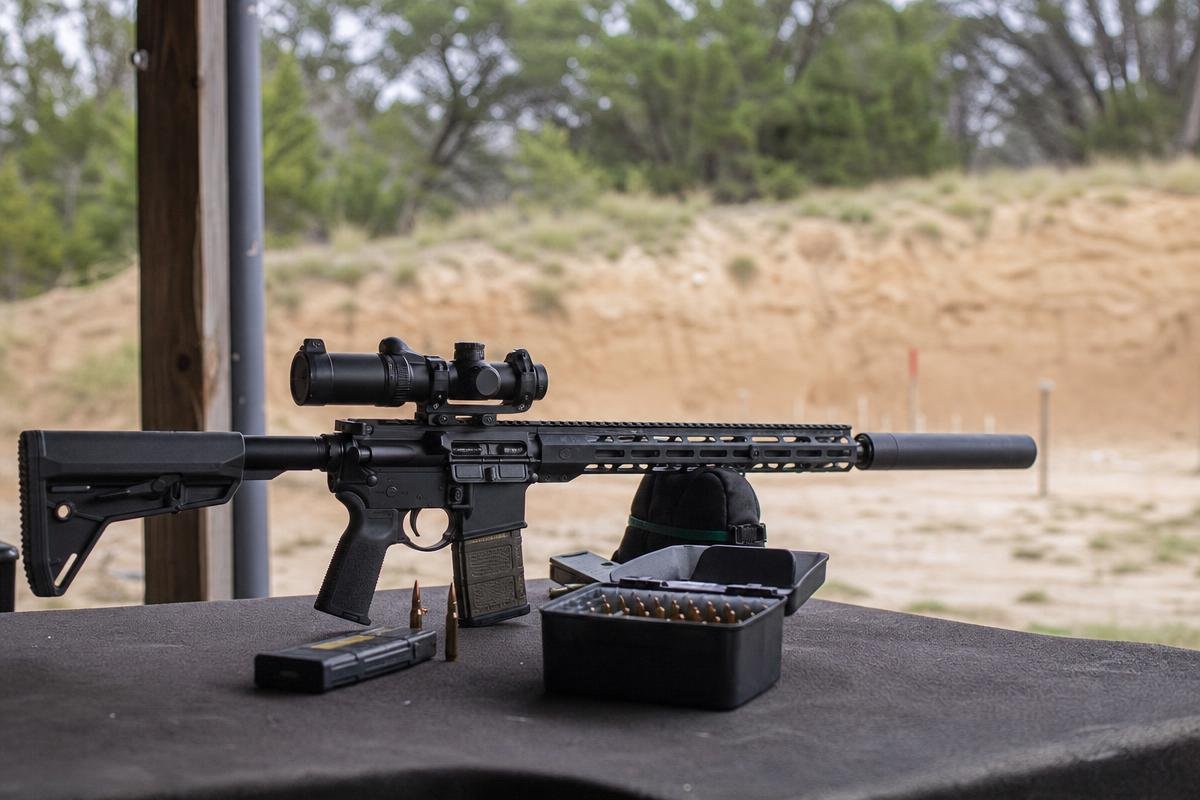
Subsonic ammunition makes the most sense when reduced sound signature matters more than flat trajectory and long-range energy. For a suppressed AR-15, it can be a practical option for close-range practice and controlled training, provided the rifle is zeroed and functioning reliably with that load.
Good Fits for Reduced Sound Signature
Subsonic .300 Blackout is generally best suited to closer distances where bullet drop is manageable, and the shooter has confirmed the zero and holds. It can feed from standard AR-15 magazines, but magazine markings and ammunition segregation are important because 300 Blackout and 5.56 cartridges should never be mixed.
Each range and hunting area sets its own rules. Check the rules at the specific North Texas range or hunting property before bringing a suppressor or using a particular ammunition type. A manually operated firearm can also remove semiautomatic action noise, but slower follow-up shots are the tradeoff.
Limits in Trajectory, Distance, and Terminal Performance
Subsonic loads lose velocity quickly and drop more at distance than supersonic rounds. That makes them a poor fit if you need a flatter trajectory, more retained energy, or consistent hits at longer ranges. A 6.5 Grendel setup is a better contrast for shooters focused on longer-range capability rather than a subsonic suppressed setup.
You can hunt with subsonic ammunition, but the answer depends on bullet construction, impact velocity, intended game, expected distance, and applicable legal requirements. Verify how a specific load performs at your expected distance before relying on it. The rifle’s sound signature is only one part of the decision, and terminal performance still matters.
Suppressed AR-15 and Subsonic Ammo Guidance in Denison, TX
For a quiet 300 Blackout build, start with the intended load and select compatible components around it. AR15Parts.com ships from our Denison, TX facility.
Plan the Build Around the Load You Expect to Shoot
Your cartridge, bullet weight, barrel length, gas system, bolt carrier group, and handguard clearance all affect the final setup. A suppressor changes backpressure, but it does not correct a barrel, gas port, or ammunition combination that is mismatched.
Start with an upper that fits your intended use. If you already have a compatible lower, review our complete AR-15 uppers. If you want a turnkey starting point, compare our AR-15 complete rifles before selecting parts.
Parts and Firearms Support From Our Denison Team
Share your build plan, cartridge choice, barrel details, and intended ammunition type with our team. We can help you compare compatible parts for the handling and function characteristics you want, without guessing at fitment.
Before transporting, possessing, or using regulated items, verify range rules and all applicable federal, state, and local requirements. Call (888) 706-0633 if you need help finding firearms, parts, or accessories for your planned build.
Ready to compare parts for your planned rifle setup?
Frequently Asked Questions
Does Subsonic Ammo Make a Suppressed AR-15 Silent?
No. Subsonic ammunition removes the bullet’s supersonic crack, while a suppressor reduces muzzle blast. Action noise, bullet impact, and nearby surfaces still create sound.
Do I Still Need Hearing Protection?
Yes, hearing protection remains prudent. Perceived sound changes with cartridge, barrel length, suppressor, ammunition, shooting position, and the range environment.
Can Subsonic Ammunition Damage an AR-15?
Correctly chambered factory ammunition should not inherently damage a properly maintained AR-15. Incompatible rounds, bore obstructions, damaged brass, and unsafe rifle modifications are separate hazards.
Why Does My Rifle Cycle Some Subsonic Loads but Not Others?
Subsonic loads can produce different gas pressure and dwell-time results, even in the same chambering. This helps explain why some subsonic loads cycle reliably while others do not, including in 300 Blackout rifles.
Does Subsonic Ammo Have Less Recoil?
Usually, but not always by a large margin. Bullet weight, velocity, gas-system behavior, buffer setup, and suppressor backpressure all affect felt recoil when comparing subsonic and supersonic ammunition in a suppressed AR-15.
Can I Hunt With Subsonic Ammunition?
Yes, where legal and appropriate for the game, distance, and bullet design. Confirm local rules for your specific North Texas shooting location, and choose ammunition with suitable terminal performance.
Ready to Get Started with AR15Parts.com?
Call (888) 706-0633 to speak with our team directly. We're ready to answer your questions, walk you through your options, and help you find the right solution for your needs. Whether you're just starting to plan or ready to move forward, we'll make the process simple and stress-free. Reach out today and let's talk about how we can help.